

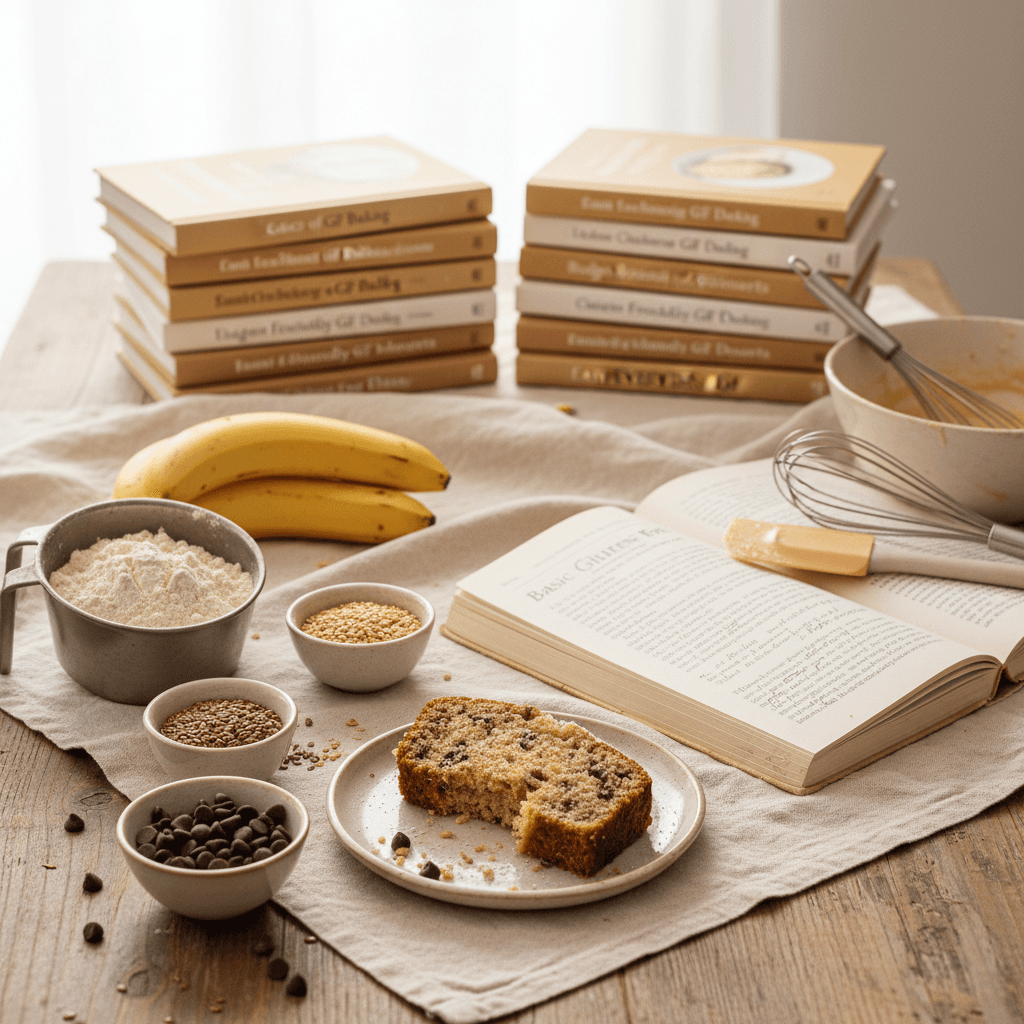
Choosing the right gluten-free cookbook when you're just starting out can save you months of frustration, wasted flour, and flat bakes. We've compared dozens of cookbooks and narrowed it down to the eight that genuinely teach beginners how to bake gluten-free with confidence.
Key takeaways
- The best gluten-free cookbook for beginners explains why recipes work, not just what to mix together — look for books that teach technique alongside recipes.
- Some cookbooks use a single all-purpose GF flour blend, while others teach you to build custom blends from individual flours like brown rice flour, tapioca starch, and arrowroot powder.
- Cookbooks focused on one-for-one substitution are easiest for beginners but limit your growth; books that explain the science set you up for long-term success.
- Several top picks also cover dairy-free and egg-free options, making them ideal for bakers managing multiple dietary needs.
- A kitchen scale and a reliable flour blend matter more than any single cookbook — pair your book with the right tools and you'll see results immediately.
What to look for in a gluten-free cookbook for beginners
The best beginner gluten-free cookbook does three things: it explains the basics of how gluten-free flours behave differently from wheat, it provides tested recipes with clear instructions, and it builds your skills so you can eventually adapt your own recipes. Not every cookbook does all three.
Before we get into individual picks, here's what separates a great beginner GF cookbook from a mediocre one:
- Educational content up front. A good book will have at least a chapter explaining what gluten does in baking and how substitutes replicate those functions.
- A master flour blend recipe. Beginners need a reliable starting point. The best books include a homemade flour blend recipe you can mix in bulk.
- Accessible ingredients. If every recipe calls for obscure starches you can't find locally, you'll give up fast.
- Realistic photography and expectations. Gluten-free baked goods look different from wheat-based ones. Honest cookbooks show you what to actually expect.
- Troubleshooting guidance. Beginners need to know why something went wrong, not just follow steps blindly.
If you want a structured foundation before diving into any cookbook, our Confident Gluten-Free Baker Toolkit walks you through flour science, blend ratios, and recipe conversion in a hands-on format that pairs perfectly with any of the books below.
The 8 best gluten-free cookbooks for beginners
We evaluated each cookbook on beginner-friendliness, recipe reliability, educational depth, and ingredient accessibility. Here's how they compare at a glance:
| Cookbook | Author | Best for | Flour approach | Educational depth |
|---|---|---|---|---|
| How Can It Be Gluten Free Cookbook | America's Test Kitchen | Science-minded beginners | Custom blends + commercial | Excellent |
| Gluten-Free Baking At Home | Jeffrey Larsen | Bread and pastry lovers | Individual flours | Very good |
| Gluten-Free on a Shoestring | Nicole Hunn | Budget-conscious families | Single master blend | Good |
| The How Can It Be Gluten Free Cookbook Volume 2 | America's Test Kitchen | Expanding your repertoire | Custom blends + commercial | Excellent |
| Gluten-Free Wish List | Jeanne Sauvage | Classic comfort foods | Single master blend | Good |
| Cannelle et Vanille | Aran Goyoaga | Naturally GF whole-grain baking | Individual flours | Moderate |
| The Joy of Gluten-Free, Sugar-Free Baking | Peter Reinhart & Denene Wallace | Low-sugar and keto-friendly | Nut and seed flours | Good |
| Gluten-Free Artisan Bread in Five Minutes a Day | Jeff Hertzberg & Zoe Francois | Bread baking specifically | Single master blend | Moderate |
1. How Can It Be Gluten Free Cookbook by America's Test Kitchen
This is the single best gluten-free cookbook for beginners who want to understand the science behind every recipe. America's Test Kitchen tested thousands of variations of each recipe, and they show you what failed and why. That approach teaches you more about gluten-free baking in one chapter than most books teach in their entirety.
The book includes a custom flour blend recipe (based on brown rice flour, potato starch, and tapioca starch) but also tells you which commercial blends work as substitutes. Recipes span cookies, cakes, muffins, breads, pizza dough, and pie crusts.
Why beginners love it: The side-by-side testing photos and detailed explanations of what went wrong in failed batches give you a mental framework for troubleshooting your own bakes.
One caveat: Some recipes use xanthan gum, which can be tricky for beginners to measure correctly. If you're new to binders, our guide on gluten-free baking fundamentals can help you understand how they work.
Pick up a copy: How Can It Be Gluten Free Cookbook
2. Gluten-Free Baking At Home by Jeffrey Larsen
Jeffrey Larsen's approach is different from most GF cookbooks — he teaches you to work with individual flours rather than relying on a single all-purpose blend. This is incredibly valuable for beginners who want to actually understand what each flour brings to a recipe.
You'll learn how sorghum flour adds tenderness, how sweet rice flour creates chewiness, and how different starches affect crumb structure. The bread recipes are outstanding, and the pastry section covers everything from croissants to Danish dough.
Why beginners love it: Once you understand individual flours, you can adapt any recipe — not just the ones in the book.
One caveat: You'll need to stock more flours upfront, which means a higher initial investment in your pantry.
Pick up a copy: Gluten-Free Baking At Home
3. Gluten-Free on a Shoestring by Nicole Hunn
Nicole Hunn's cookbook is the best pick for beginners on a budget. She uses a single master flour blend for nearly every recipe, which means you buy fewer specialty flours and get baking faster. The recipes focus on everyday favorites — sandwich bread, pizza, muffins, pancakes — rather than elaborate showpieces.
Her writing is practical and encouraging, and she's honest about which recipes are dead ringers for their wheat counterparts and which are simply delicious in their own right.
Why beginners love it: Low barrier to entry. Buy the blend ingredients, and you can make almost anything in the book.
One caveat: Because it relies on a single blend, some recipes (especially bread) don't reach the heights of books that use custom flour combinations.
Pick up a copy: Gluten-Free on a Shoestring
4. The How Can It Be Gluten Free Cookbook Volume 2 by America's Test Kitchen
If you buy Volume 1 and love it (you will), Volume 2 is the natural next step. It expands into more ambitious territory — yeasted breads, layer cakes, pastries — while maintaining the same rigorous testing approach. The whole-grain chapter is particularly useful for bakers interested in working with buckwheat flour, teff flour, and millet flour.
Why beginners love it: It builds on Volume 1's foundation, so you're not re-learning basics — you're leveling up.
Pick up a copy: How Can It Be Gluten Free Cookbook Volume 2
5. Gluten-Free Wish List by Jeanne Sauvage
Jeanne Sauvage's cookbook is perfect for beginners who miss specific foods. Bagels, soft pretzels, flour tortillas, cinnamon rolls — she tackles the recipes that most GF cookbooks avoid because they're hard to pull off without gluten. Her master blend is simple to make, and her instructions are exceptionally clear.
Why beginners love it: When you're newly diagnosed and craving the foods you used to eat, this book delivers those specific wins that keep you motivated.
Pick up a copy: Gluten-Free Wish List
6. Cannelle et Vanille by Aran Goyoaga
This is the most beautiful cookbook on the list, and the recipes match the photography. Aran Goyoaga takes a naturally gluten-free approach, building recipes around almond flour, oat flour, and other whole-grain flours rather than trying to replicate wheat-based textures exactly.
Many recipes are also dairy-free, making this a strong choice for bakers managing multiple food sensitivities. The flavor profiles lean European and seasonal.
Why beginners love it: It shifts your mindset from "replacing wheat" to "celebrating naturally gluten-free ingredients."
One caveat: Less educational content about flour science than the ATK books. Pair it with a resource like our complete beginner's guide to gluten-free baking for the technical foundation.
Pick up a copy: Cannelle et Vanille
7. The Joy of Gluten-Free, Sugar-Free Baking by Peter Reinhart and Denene Wallace
This cookbook is ideal for beginners who need to manage blood sugar alongside going gluten-free. Peter Reinhart (one of the most respected bread baking authors alive) partnered with Denene Wallace to create recipes built on nut flours, seed meals, and alternative sweeteners.
The approach is different from traditional GF baking — you won't find rice flour blends here. Instead, expect recipes built around almond flour, coconut flour, and flaxseed meal.
Why beginners love it: If you're managing celiac disease and diabetes (or just want lower-carb options), this is the only cookbook you need.
Pick up a copy: The Joy of Gluten-Free, Sugar-Free Baking
8. Gluten-Free Artisan Bread in Five Minutes a Day by Hertzberg and Francois
If bread is your primary goal, start here. Jeff Hertzberg and Zoe Francois adapted their wildly popular "Artisan Bread in Five Minutes a Day" method for gluten-free bakers. You mix a large batch of dough, store it in the fridge, and pull off pieces to bake fresh bread whenever you want.
The method is genuinely simple, and the results are surprisingly good for how little effort is involved. It's a fantastic confidence builder for beginners who've been intimidated by gluten-free bread baking.
Why beginners love it: Fresh bread with minimal active time. The batch method means you're baking bread multiple times a week, which builds skill fast.
Pick up a copy: Gluten-Free Artisan Bread in Five Minutes a Day
How to get the most out of your first gluten-free cookbook
Buying a cookbook is step one. Actually learning from it requires a bit of strategy. Here's what we recommend for beginners:
Read the intro chapters first. We know it's tempting to jump straight to the chocolate chip cookie recipe. Resist that urge. The introductory chapters in books like ATK's are where the real education happens. Understanding what gluten does and how GF flours compensate will make every recipe you bake turn out better.
Invest in a kitchen scale. Every serious GF cookbook measures by weight, and for good reason — a cup of rice flour can vary by 30% depending on how you scoop it. A reliable digital scale is non-negotiable. The OXO Good Grips 11lb Food Scale is a solid choice.
Make the master blend first. If your cookbook includes a flour blend recipe, mix a big batch before you start any recipes. Having it ready to go removes friction and makes weeknight baking actually doable.
Bake the same recipe three times. Your first attempt teaches you the process. Your second teaches you what to adjust. Your third gives you a result you're proud of. Don't bounce between recipes too quickly.
Which cookbook should you start with?
If you can only buy one cookbook, get How Can It Be Gluten Free Cookbook by America's Test Kitchen. It's the most educational, the most thoroughly tested, and the most likely to give you consistent results from day one. It covers the widest range of baked goods and teaches you enough science to eventually go off-script.
If you're specifically focused on bread, start with Gluten-Free Artisan Bread in Five Minutes a Day instead. And if budget is your primary concern, Gluten-Free on a Shoestring will get you baking well without a huge pantry investment.
No matter which book you choose, pair it with a solid understanding of how to convert recipes to gluten-free. That skill will serve you long after you've baked through every page.
Frequently asked questions
What is the best gluten-free cookbook for someone just diagnosed with celiac disease?
The How Can It Be Gluten Free Cookbook by America's Test Kitchen is the best starting point for newly diagnosed celiacs. It explains the science behind gluten-free baking in plain language and every recipe has been tested extensively for reliability. For additional support on navigating your diagnosis, our guide on starting gluten-free baking after a celiac diagnosis covers the practical first steps.
Do I need to buy special flours for gluten-free cookbook recipes?
Most beginner-friendly cookbooks use common GF flours you can find at any well-stocked grocery store — typically rice flour, potato starch, and tapioca starch. Some books like Cannelle et Vanille lean on almond flour and oat flour, which are also widely available. You don't need a huge pantry to get started, especially if you choose a book that uses a single master blend.
Can I use a store-bought gluten-free flour blend instead of the cookbook's blend?
In most cases, yes. Bob's Red Mill 1-to-1 and King Arthur Measure for Measure are the most commonly recommended substitutes. However, results may vary slightly because each blend has different starch-to-flour ratios. For the most reliable results, use the blend the author developed their recipes around, or learn to make your own blend with proven ratios.
Are there good gluten-free cookbooks that are also dairy-free and egg-free?
Cannelle et Vanille by Aran Goyoaga includes many dairy-free recipes, and several other books on this list offer dairy-free and egg-free variations. For dedicated vegan gluten-free baking, look for books specifically marketed as both, though the titles on our list cover the broadest range of beginner needs. You can also learn about vegan egg substitutes and apply them to almost any GF cookbook recipe.
Is a gluten-free cookbook better than an online course for learning to bake?
They serve different purposes. A cookbook gives you a permanent recipe reference and is great for self-directed learners. An online course or toolkit provides structured, step-by-step instruction with more guidance on technique and troubleshooting. Many bakers find the best results come from combining both — a course for foundational skills and a cookbook for ongoing recipe inspiration.

Written by
Co-founder, BakingSubs
Co-founder of BakingSubs, where he turns the science of ingredient substitutions into tested, reliable guidance for home bakers.
Related Posts
Bake with Confidence
See all
Confident Gluten-Free Baker Toolkit
The science-based system that replaces gluten's seven invisible jobs so your baking turns out soft, fluffy, and foolproof — every time.

Gluten-Free Recipe Vault
Instant access to our complete library of proven gluten-free recipes — no waiting, no guesswork, just results that work tonight.

Fix Your Gluten-Free Bread
Learn the 3-step formula to make bread rise and stay soft, discover why your loaves collapse, and get a tested sandwich bread recipe that actually works.