

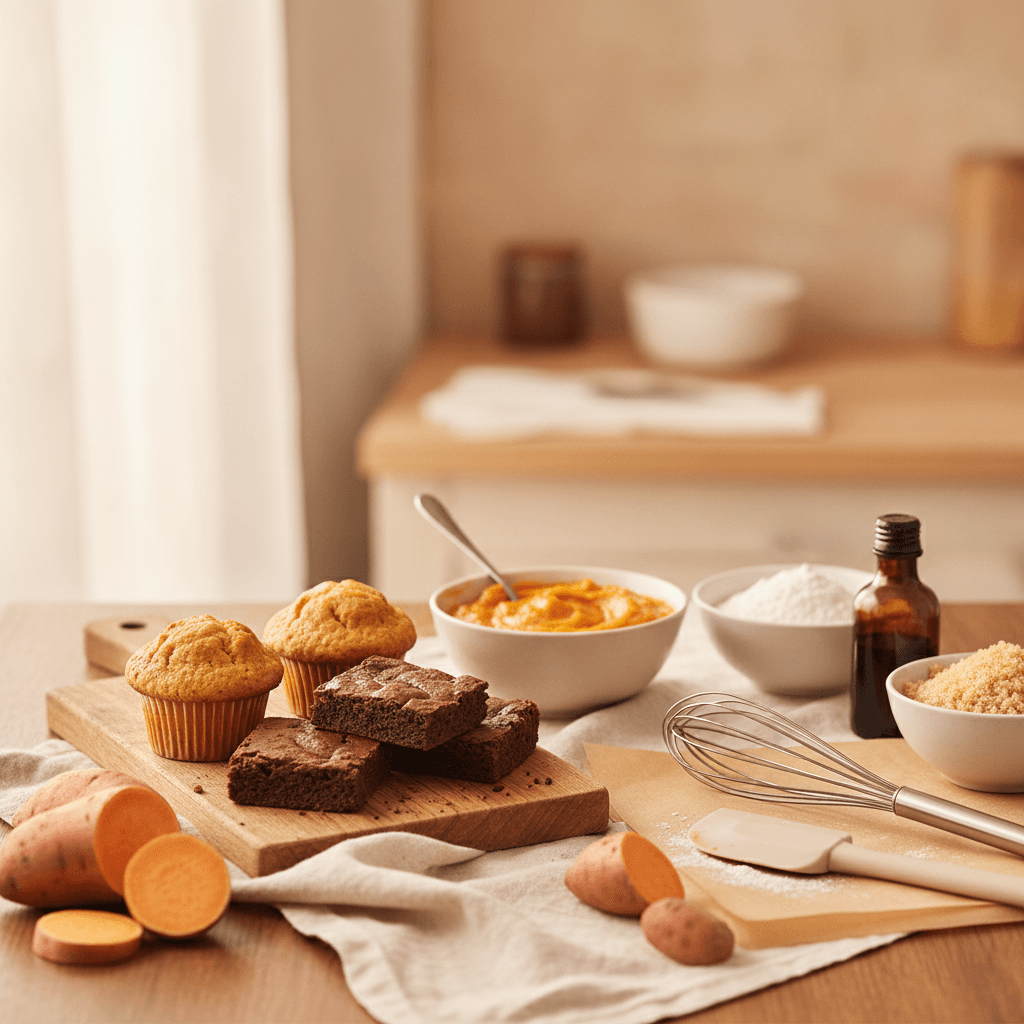
Sweet potato puree can replace some or all of the butter, oil, or shortening in certain baked goods — but it changes moisture, texture, and sweetness in ways that catch bakers off guard. Here's what actually happens when you swap fat for sweet potato puree, and where the limits are.
Key takeaways
Sweet potato puree generally works best as a partial fat replacement (around half the fat), not a full 1:1 swap, especially in recipes that rely on fat for structure like pie crusts and puff pastry.
The puree adds moisture and natural sugar, so you may need to reduce other liquids and sweeteners in the recipe to compensate.
Muffins, quick breads, and brownies are the most forgiving applications. Cookies and laminated doughs are the hardest.
The orange color and mild earthy-sweet flavor will carry into your final product — it's not a neutral substitute.
Sweet potato puree adds dietary fiber and some micronutrients, but the calorie reduction depends entirely on how much fat you actually replace.
Why sweet potato puree works as a fat replacement at all
Fat does several things in baking: it tenderizes by coating flour proteins and limiting gluten development, it adds richness and mouthfeel, it traps air during creaming for leavening, and it carries flavor. Sweet potato puree can mimic some of these functions — but not all of them.
The puree has a thick, smooth consistency that provides body and moisture similar to what fat contributes. Its natural starches and pectin create a tender crumb by interfering with gluten formation, much the same way fat does. That's why it works reasonably well in dense, moist baked goods like muffins and brownies.
But sweet potato puree cannot trap air the way solid fat does during creaming. If a recipe calls for creaming butter and sugar together — a step that builds structure through tiny air pockets — replacing all the butter with puree removes that mechanism entirely. The result is a denser, heavier product. This is the single biggest limitation, and it's the reason partial replacement tends to outperform full replacement in most applications.
If you're exploring other fruit- and vegetable-based fat swaps, avocado works as a butter substitute through a similar moisture-and-body mechanism, though it brings a different flavor profile and a higher fat content of its own.
The standard ratio and how to adjust it
The commonly cited starting point is replacing half the fat with an equal weight of sweet potato puree. So if a recipe calls for 1 cup (227g) of butter, you'd use half a cup (113g) of butter plus half a cup (about 120–130g) of sweet potato puree.
A few things to watch:
Moisture: Sweet potato puree is roughly 75–80% water. Butter is only about 15–17% water, and oil is 0%. That extra moisture matters. If the batter looks noticeably wetter than usual, reduce another liquid in the recipe (milk, water, juice) by 2–3 tablespoons per cup of puree added.
Sweetness: Cooked sweet potato has natural sugars. If you're already using a full measure of sugar, the final product may taste sweeter than expected. Reducing sugar by 1–2 tablespoons per cup of puree is a reasonable starting adjustment. For more on how reducing sugar affects texture, see why low sugar baking fails and what fixes texture.
Color: Orange-fleshed sweet potatoes will tint your batter. This is a non-issue in chocolate baked goods (the cocoa masks it) but very visible in vanilla cakes or sugar cookies.
Going beyond 50% replacement is possible in some recipes — particularly brownies and dense quick breads — but the texture trade-offs become more pronounced. Full replacement (100%) typically produces a noticeably gummy or heavy result in anything that's supposed to be light.
Where sweet potato puree works well
Muffins and quick breads
These are the sweet spot. Muffins and quick breads are already dense, moist products that don't rely on creaming. Replacing half the oil or melted butter with sweet potato puree usually produces a tender, slightly denser crumb with a mild sweetness. The flavor pairing works naturally here — sweet potato muffins with cinnamon and nutmeg are a well-established combination.
Brownies
Brownies are another strong candidate. The cocoa or chocolate in brownies masks the sweet potato color and most of its flavor. The puree's moisture contributes to a fudgy texture, which many bakers actually prefer. A 50% fat replacement in brownies tends to produce a chewier, more fudge-like result rather than a cakey one.
Pancakes and waffles
These aren't traditional "baking" in the oven sense, but they're worth mentioning because sweet potato puree integrates easily into pancake and waffle batters. The puree adds body without requiring structural fat, and the natural sweetness reduces the need for added sugar.
Chocolate cake
Dense, single-layer chocolate cakes handle the swap reasonably well at the 50% level. The chocolate flavor dominates, and the extra moisture from the puree can actually help keep the cake from drying out. Multi-layer cakes that need to support frosting weight are riskier — the softer crumb may not hold up as well.
Where sweet potato puree fails or struggles
Cookies that need spread and snap
Crisp cookies rely on fat melting and spreading during baking. Sweet potato puree doesn't melt — it just sits there. Cookies made with puree instead of butter tend to be cakey and puffy rather than thin and crisp. If you're making a chewy cookie, a partial swap might work. If you want a snappy, buttery shortbread, sweet potato puree is the wrong tool.
This is a common pattern with fruit and vegetable puree substitutions. Applesauce as a sugar replacement runs into similar texture issues in cookies — the moisture changes the fundamental structure.
Pie crusts and laminated doughs
Pie crust depends on cold fat creating flaky layers. Croissants and puff pastry depend on butter sheets that melt during baking to create steam and separation. Sweet potato puree cannot replicate either of these functions. Don't attempt it in any recipe where flakiness is the goal.
Light, airy cakes
Angel food cake, chiffon cake, and genoise all rely on whipped eggs and minimal fat for their structure. Adding sweet potato puree to these recipes weighs down the batter and collapses the air structure. These cakes typically call for very little fat to begin with, so there's not much to replace anyway.
Yeast breads
Sweet potato puree can be added to enriched yeast breads (like sweet potato rolls), but it functions more as a flavoring and moisture agent than a true fat substitute. The fat in enriched breads serves a specific tenderizing role that puree doesn't fully replicate. You can reduce the fat somewhat, but eliminating it entirely changes the bread's character. For more on how different flours and ingredients interact in bread, low carb flour alternatives for bread covers some related structural challenges.
How to make your own sweet potato puree for baking
Store-bought canned sweet potato puree works, but it sometimes contains added sugar, salt, or spices. Check the label — you want 100% sweet potato with nothing else added. Canned "yams" in syrup are not the same thing and will throw off your recipe's sugar and moisture balance.
To make puree from scratch:
Wash medium sweet potatoes and pierce them several times with a fork.
Bake at 400°F (200°C) for 45–60 minutes until completely soft when pierced with a knife.
Let them cool enough to handle, then scoop out the flesh.
Blend or process until smooth. A food processor or immersion blender works well. A fork produces a chunkier result that won't integrate as smoothly.
If the puree seems watery, spread it on a clean kitchen towel or cheesecloth and let it drain for 10–15 minutes. Excess water will make your batter too wet.
One medium sweet potato (about 150g raw) yields roughly half a cup of puree. The puree keeps in the refrigerator for about 5 days or in the freezer for up to 3 months.
Sweet potato puree vs. other puree-based fat substitutes
Sweet potato puree isn't the only option for replacing fat with a fruit or vegetable puree. Here's how it compares to the most common alternatives:
Puree | Best for | Flavor impact | Color impact | Moisture level |
|---|---|---|---|---|
Sweet potato | Muffins, brownies, quick breads | Mild earthy sweetness | Orange tint | High |
Muffins, cakes, quick breads | Mild apple flavor | Minimal | Very high | |
Brownies, chocolate cake | Mild, slightly grassy | Green tint (hidden by chocolate) | Moderate | |
Banana | Muffins, pancakes, quick breads | Strong banana flavor | Slight browning | High |
Pumpkin | Muffins, quick breads, brownies | Mild squash flavor | Orange tint | High |
Cakes, muffins, scones | Slight tang | None | Moderate |
Sweet potato stands out for its natural sweetness and body — it's thicker than applesauce, which means less moisture adjustment. But banana brings stronger binding properties thanks to its higher starch content when ripe, and Greek yogurt offers fat-like richness with a more neutral color.
The right choice depends on what you're baking and how much flavor or color change you can tolerate.
Common mistakes when using sweet potato puree as fat substitute
A baker named Rachel, posting in a popular home baking forum, described making banana bread with sweet potato puree replacing all the oil. The loaf came out dense, wet in the center, and took an extra 20 minutes to bake through. Her mistake was common: too much puree, no liquid adjustment, and full (not partial) fat replacement in a recipe that already had banana adding moisture.
Here are the most frequent errors:
Using puree that's too watery. If you don't drain excess moisture from homemade puree, your batter will be too wet. The puree should hold its shape on a spoon, not run off.
Replacing 100% of the fat in a recipe designed for creaming. If the recipe says "cream butter and sugar," it needs at least some solid fat to function. Keep a minimum of 25–50% of the original fat.
Not adjusting bake time. Higher-moisture batters often need 5–10 extra minutes in the oven. Use a toothpick or thermometer (an internal temperature of about 200–210°F / 93–99°C indicates doneness for most quick breads and muffins) rather than relying on the original recipe's timing.
Ignoring the added sweetness. Sweet potatoes contain natural sugars. If you don't reduce the recipe's added sweetener, the result can taste cloying. This is especially noticeable in recipes that are already on the sweet side.
Using sweet potato puree in gluten-free recipes without adjusting binders. Gluten-free baked goods already struggle with structure. Removing fat and adding moisture makes them more prone to gummy centers. If you're baking gluten-free, consider keeping more of the original fat and using the puree as a partial swap only.
A contrarian take: sometimes the fat is doing more than you think
There's a widespread assumption in health-conscious baking circles that reducing fat is always an improvement — that you're making the recipe "healthier" by swapping butter for puree. But fat serves functions in baked goods that go beyond calories.
Fat carries flavor compounds that are fat-soluble. Vanilla, spices, and chocolate all taste more intense when there's fat in the recipe to dissolve and distribute those flavor molecules. Remove the fat, and you may need to increase your vanilla extract or spice quantities to get the same flavor impact.
Fat also affects staling. Baked goods with adequate fat stay soft longer because the fat coats starch molecules and slows retrogradation (the process where starches recrystallize and make bread go stale). Sweet potato puree adds moisture, which helps initially, but that moisture evaporates faster than fat-based tenderness fades. A muffin made with puree instead of butter may taste great on day one but go dry and crumbly by day three. For more on this issue in gluten-free contexts, see why gluten-free baked goods stale quickly.
The point isn't that sweet potato puree is a bad substitute — it's that "less fat" doesn't automatically mean "better baked good." Partial replacement preserves the structural benefits of fat while still reducing the total amount.
Tips for getting the best results
Start at 50% replacement and adjust from there. Going straight to 100% replacement is the most common cause of disappointing results.
Weigh your puree rather than measuring by volume. A cup of thick, drained puree weighs more than a cup of loose, watery puree, and the difference matters. A basic OXO Good Grips food scale makes this easy.
Match flavors intentionally. Sweet potato pairs well with cinnamon, nutmeg, ginger, brown sugar, pecans, and chocolate. It clashes with citrus-forward recipes and delicate vanilla-only profiles where the earthy flavor becomes distracting.
Use it in chocolate recipes for the easiest wins. Cocoa and chocolate mask both the color and the flavor of the puree, so the substitution is essentially invisible.
Reduce oven temperature by 25°F (about 15°C) if you notice the outside browning too fast. The natural sugars in sweet potato caramelize quickly.
Frequently asked questions
Can you replace all the butter with sweet potato puree in baking?
You can, but the results are usually noticeably different — denser, moister, and sometimes gummy. Most bakers get better results replacing about half the fat with sweet potato puree and keeping the rest as butter or oil. Recipes that call for creaming butter and sugar are especially poor candidates for full replacement because the puree can't trap air the way solid fat does.
Does sweet potato puree change the taste of baked goods?
Yes. Sweet potato puree adds a mild earthy sweetness that's noticeable in vanilla or plain-flavored baked goods. In chocolate recipes, the flavor is largely masked. If you're sensitive to the taste, stick to recipes with warm spices (cinnamon, ginger, nutmeg) or cocoa, which complement the sweet potato flavor rather than competing with it.
How much sweet potato puree equals one cup of butter?
The standard starting ratio is 1:1 by volume for the portion you're replacing. If you're replacing half the butter in a recipe that calls for 1 cup, use half a cup of butter and half a cup of sweet potato puree. Make sure the puree is well-drained and thick — watery puree will throw off the recipe's moisture balance.
Is sweet potato puree a good fat substitute for gluten-free baking?
It can work, but proceed cautiously. Gluten-free baked goods already face structural challenges, and removing fat while adding moisture can make problems like gummy centers or dry, crumbly texture worse. A partial swap of no more than 25–50% of the fat is a safer approach in gluten-free recipes.
Can you use canned sweet potato instead of making puree from scratch?
Yes, as long as you use plain canned sweet potato (100% sweet potato, no added sugar or syrup). Canned "yams" packed in syrup contain added sugar and liquid that will change your recipe's sweetness and moisture levels. Drain and blend the canned sweet potato until smooth before measuring.

Written by
Co-founder, BakingSubs
Co-founder of BakingSubs, where he turns the science of ingredient substitutions into tested, reliable guidance for home bakers.
Related Posts
Bake with Confidence
See all
Confident Gluten-Free Baker Toolkit
The science-based system that replaces gluten's seven invisible jobs so your baking turns out soft, fluffy, and foolproof — every time.

Gluten-Free Recipe Vault
Instant access to our complete library of proven gluten-free recipes — no waiting, no guesswork, just results that work tonight.

Fix Your Gluten-Free Bread
Learn the 3-step formula to make bread rise and stay soft, discover why your loaves collapse, and get a tested sandwich bread recipe that actually works.