
Silken Tofu as Egg Substitute in High Protein Baking: When It Works, When It Doesn't, and What to Adjust
Silken tofu replaces eggs and adds ~3g protein per swap — but only in certain baked goods. See which ones work, which fail, and the adjustments that matter.

Malik
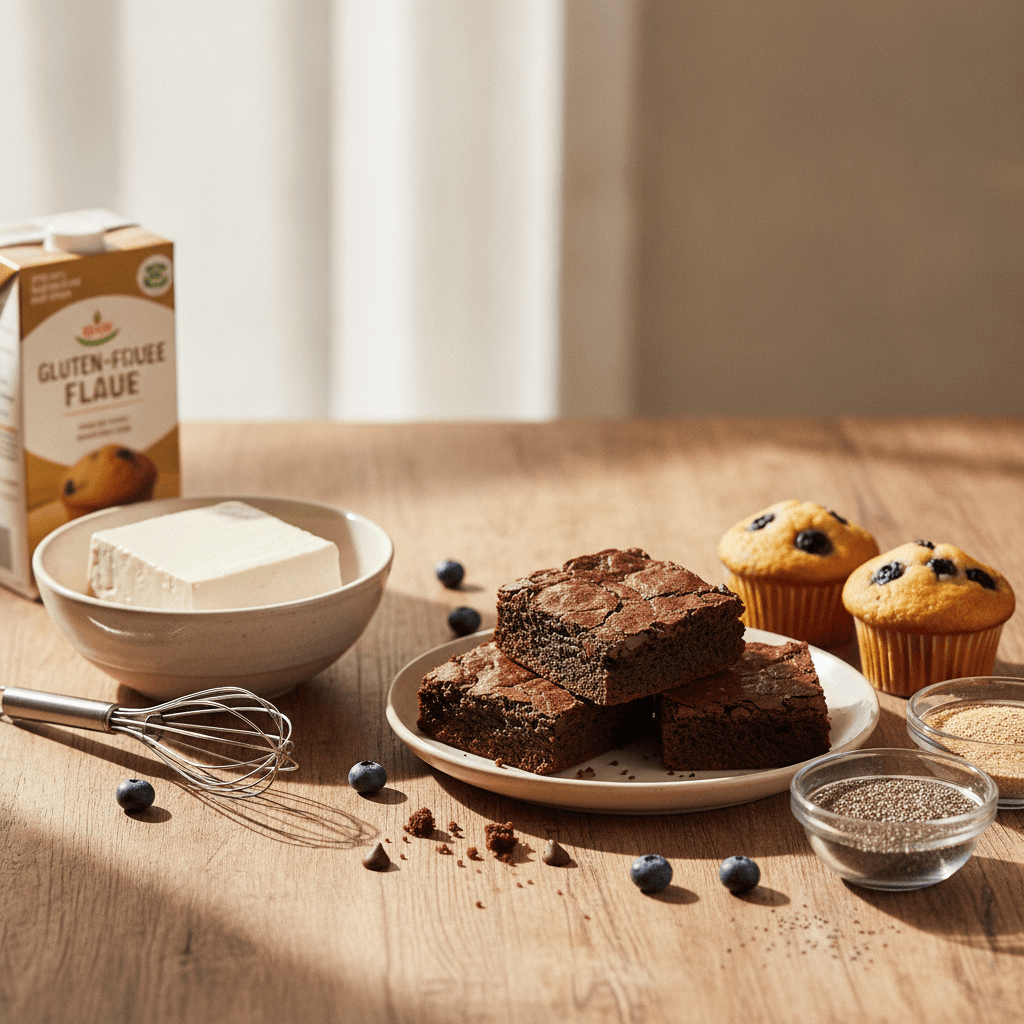
Silken tofu is one of the few egg substitutes that adds meaningful protein to baked goods rather than just mimicking texture. But it behaves nothing like eggs in a batter, and treating it as a simple 1:1 swap is where most high protein baking projects fall apart.
Here's what actually changes when you use silken tofu instead of eggs, which baked goods it works best in, and the adjustments that keep your results from going sideways.
Key takeaways
About 60g (roughly 1/4 cup) of blended silken tofu replaces one egg, contributing approximately 3g of protein per egg replaced — comparable to the egg itself.
Silken tofu works best as a binder and moisture source in dense, moist baked goods like brownies, muffins, and quick breads. It struggles in anything that depends on eggs for lift or structure, like sponge cakes or choux pastry.
Tofu adds moisture without fat, which changes crumb texture — expect denser, more fudgy results rather than light and airy ones.
Unlike flax or chia egg replacements, silken tofu contributes a complete protein with all essential amino acids, making it a better fit for high protein baking goals.
You may need to reduce other liquids by 1-2 tablespoons per egg replaced, since silken tofu is roughly 85-90% water.
Silken tofu has a mild but detectable flavor in delicate baked goods — chocolate, spice, and nut-forward flavors mask it well.
Why silken tofu works as an egg substitute (and where it falls short)
Eggs do multiple jobs in baking — they bind, leaven, emulsify fats, and contribute to browning. Silken tofu only handles one of those reliably: binding. It holds ingredients together through its protein network, which coagulates gently during baking, similar to how egg proteins set.
What silken tofu does not do is trap air. Whole eggs and especially whipped egg whites create foam structures that give cakes their rise. Tofu can't replicate that. If you're baking a protein-boosted angel food cake, silken tofu is the wrong tool entirely.
Silken tofu also doesn't emulsify fats the way egg yolks do. Lecithin in egg yolks creates stable emulsions between water and fat in batters. Without that emulsification, batters made with tofu can sometimes separate or produce a slightly gummy texture if the fat ratio is high.
The sweet spot for silken tofu is in baked goods where eggs primarily serve as a binder and moisture contributor — think brownies, banana bread, dense muffins, protein bars, and pancakes.
The protein advantage over other vegan egg substitutes
If you're baking with high protein goals, the egg substitute you choose matters more than most people realize. Here's how common options compare on protein content per single-egg replacement:
Egg substitute (per 1 egg equivalent) | Approximate protein | Primary role in batter |
|---|---|---|
Silken tofu (60g blended) | ~3g | Binder, moisture |
Flax egg (1 Tbsp ground flax + 3 Tbsp water) | ~1.3g | Binder |
Chia egg (1 Tbsp chia + 3 Tbsp water) | ~1.7g | Binder |
Aquafaba (3 Tbsp) | ~0.5g | Foaming, leavening |
Commercial egg replacer (varies) | ~0g | Binding, sometimes leavening |
Applesauce (1/4 cup) | ~0g | Moisture, some binding |
The difference is significant when a recipe calls for 3 or 4 eggs. Replacing four eggs with silken tofu adds roughly 12g of protein to the total recipe, while four flax eggs contribute only about 5g. For bakers already using high protein flours or adding protein powder, that gap compounds.
Silken tofu also provides a complete protein — meaning it contains all nine essential amino acids — which isn't the case for flax or chia seed alternatives.
How to blend silken tofu for baking (texture matters more than you'd think)
You can't just mash silken tofu with a fork and expect smooth results. Tofu that isn't fully pureed leaves tiny curds in your batter, which show up as visible white specks and uneven texture in the finished product.
The best approach is to blend silken tofu in a food processor or blender until it's completely smooth and resembles a thick, pourable cream. This usually takes 30-45 seconds of continuous blending. A hand immersion blender works well for small batches.
A few practical notes:
Drain it first. Silken tofu often sits in liquid in its package. Pour that off. You don't need to press it the way you would firm tofu — just drain the excess.
Blend before adding to batter. Blend the tofu separately, then fold it into your dry-wet mixture. Adding chunks of tofu directly to batter and trying to mix it smooth doesn't work — you'll overmix the batter trying to break down the tofu.
Use it immediately. Blended silken tofu starts to weep liquid if it sits. Blend, measure, and add it to your batter within a few minutes.
Which baked goods silken tofu works in (and which ones it ruins)
This is where most advice online gets too optimistic. Silken tofu is not a universal egg replacement. Its strengths and weaknesses are specific.
Where silken tofu works well
Brownies. This is arguably the best application. Brownies rely on eggs mainly for binding and moisture, and the dense, fudgy texture that tofu produces is actually desirable here. The chocolate flavor completely masks any tofu taste.
Protein muffins and quick breads. Especially those already using almond flour or other nut flours, which are naturally dense. The tofu's moisture helps prevent the dryness that plagues many high protein baked goods.
Pancakes and waffles. Silken tofu produces tender pancakes with good hold. They won't be as fluffy as egg-based versions, but they're satisfying and protein-rich.
Protein bars and no-bake bites. Tofu acts as a smooth binder that holds ingredients together without the grittiness that protein powder alone can cause.
Dense cakes with strong flavors. Carrot cake, chocolate cake, spice cake — anything where the crumb is meant to be moist and close-textured rather than light.
Where silken tofu fails
Sponge cakes and genoise. These depend entirely on whipped eggs for structure. Tofu can't create or hold air bubbles the way beaten eggs do.
Meringue-based anything. Obviously. But it's worth stating because some sources suggest combining tofu with aquafaba for meringue, which produces unpredictable results at best.
Choux pastry. Eggs provide both the steam-driven rise and the structural set in choux. Tofu can't do either job here.
Cookies where spread matters. Eggs help control cookie spread through protein coagulation. Tofu-based cookies tend to hold their shape too much or, paradoxically, turn cakey rather than chewy. If cookies are your focus, a banana-based substitute or flax egg often performs better.
Delicately flavored baked goods. Vanilla sponge, lemon bars, shortbread — the mild beany note of tofu can come through when there's no strong competing flavor.
Adjustments you'll need to make in high protein batters
High protein baking already changes the rules. Protein powder absorbs more liquid than flour, nut flours behave differently than wheat flour, and adding silken tofu on top of those changes means you need to think about the batter as a system, not just swap one ingredient.
Reduce other liquids
Silken tofu is roughly 85-90% water by weight. When you add 60g of blended tofu to replace one egg, you're adding about 50-54g of water along with the protein. If your recipe already includes milk, yogurt, or another liquid, reduce it by 1-2 tablespoons per egg replaced. Otherwise, you'll end up with a batter that's too wet, which leads to gummy centers and underbaking.
Consider adding a small amount of fat
Eggs contribute about 5g of fat each, mostly from the yolk. Silken tofu has very little fat — roughly 1.5g per 60g serving. In recipes where egg yolk fat contributes to tenderness (muffins, quick breads), adding 1-2 teaspoons of neutral oil per egg replaced can help maintain the crumb texture you're expecting.
Add a leavening boost
Since tofu doesn't trap air the way eggs do, high protein batters made with tofu tend to come out denser. Adding an extra 1/4 teaspoon of baking powder per egg replaced can partially compensate. This won't replicate egg foam, but it introduces some chemical leavening to lighten the crumb.
Watch your protein powder ratio
If you're already replacing a portion of flour with protein powder, the tofu adds even more protein to the system. Too much total protein in a batter creates a dry, rubbery texture because protein absorbs water aggressively and forms tight networks when heated. A useful rule of thumb is to keep total protein from all sources below about 30% of the dry ingredient weight to prevent that rubber-band texture. Above that threshold, the crumb gets tough regardless of how much moisture you add.
Silken tofu vs. firm tofu: why the type matters
This seems obvious, but it trips people up constantly. Firm and extra-firm tofu have significantly less water and more concentrated protein. They don't blend smooth the way silken does — you get a grainy, thick paste rather than a pourable cream.
Firm tofu can work in some baking applications (protein bars, certain dense breads), but it's a different ingredient with different behavior. When baking resources say "tofu" as an egg substitute, they mean silken, specifically. Some brands label their softest variety as "soft" rather than "silken" — either works, as long as it has that custard-like, jiggly texture before blending.
Mori-Nu is probably the most widely available shelf-stable silken tofu brand in the US, and it's sold in aseptic boxes rather than the water-packed tubs you see with firm tofu. The shelf-stable packaging makes it convenient to keep in a pantry for baking, since you don't need to use it within days of buying.
Flavor masking: how to deal with the tofu taste
Silken tofu has a mild, slightly beany flavor. In savory cooking, this is a non-issue. In baking, it can be noticeable if you're not strategic about it.
Flavors that reliably mask tofu:
Chocolate and cocoa. The most effective mask. Even 2-3 tablespoons of cocoa powder in a recipe will completely cover any tofu flavor.
Warm spices. Cinnamon, ginger, nutmeg, and cardamom all overpower the mild beany note.
Peanut butter and other nut butters. The strong flavor and fat content of nut butters pair well with tofu and hide it entirely.
Coffee and espresso. Even a teaspoon of instant espresso powder in chocolate baked goods eliminates any trace of tofu flavor.
Banana. The strong fruit flavor dominates, which is why tofu works well in banana bread and banana muffins.
Flavors that don't mask tofu well:
Plain vanilla — too subtle
Lemon or other citrus — the acidity can actually accentuate the beany note
Coconut alone — not strong enough unless paired with another flavor
A note on soy allergies and alternatives
Silken tofu is a soy product, which is one of the major allergens. If you're baking for others — especially if you sell baked goods — this needs to be clearly labeled. For bakers who want the protein benefits but need to avoid soy, there's no direct tofu equivalent. The closest alternatives in terms of protein contribution are other vegan egg substitutes combined with a protein boost from the flour itself. Using a chickpea flour blend or adding a scoop of pea protein isolate to a flax egg can approximate the protein content, though the texture and binding behavior will differ.
Frequently asked questions
How much silken tofu replaces one egg in baking?
About 60g (roughly 1/4 cup) of blended silken tofu replaces one egg. The tofu must be pureed until completely smooth — lumpy tofu creates visible curds in your baked goods. This substitution works best in recipes where eggs serve primarily as a binder rather than a leavener.
Does silken tofu add protein to baked goods?
Yes. Approximately 60g of silken tofu provides about 3g of protein, which is comparable to the protein in one large egg (roughly 6g, though the tofu contributes slightly less). Over a recipe calling for multiple eggs, this adds meaningful protein — especially when combined with high protein flours or protein powder.
Can you taste tofu in baked goods?
In strongly flavored baked goods like chocolate brownies or spice cake, no. In delicately flavored items like vanilla cake or lemon bars, a mild beany note can come through. Cocoa, coffee, warm spices, and nut butters are the most effective flavor masks.
Can I use firm tofu instead of silken tofu as an egg substitute?
Firm tofu is not a good substitute for silken tofu in this context. It has less water and more concentrated protein, so it doesn't blend into a smooth, pourable cream. The result is a grainy paste that creates uneven texture in baked goods. Stick with silken (or soft) tofu for egg replacement.
Does silken tofu work in gluten-free high protein baking?
It can, but gluten-free batters are already prone to density and gummy centers, and tofu adds moisture that can worsen those issues. Reduce other liquids carefully, add a leavening boost, and pair tofu with a well-balanced gluten-free flour blend rather than a single flour. Monitor baking time closely — these batters often need a few extra minutes in the oven.

Written by
Co-founder, BakingSubs
Co-founder of BakingSubs, where he turns the science of ingredient substitutions into tested, reliable guidance for home bakers.
Related Posts

Bake with Confidence
See all
Confident Gluten-Free Baker Toolkit
The science-based system that replaces gluten's seven invisible jobs so your baking turns out soft, fluffy, and foolproof — every time.

Gluten-Free Recipe Vault
Instant access to our complete library of proven gluten-free recipes — no waiting, no guesswork, just results that work tonight.

Fix Your Gluten-Free Bread
Learn the 3-step formula to make bread rise and stay soft, discover why your loaves collapse, and get a tested sandwich bread recipe that actually works.