

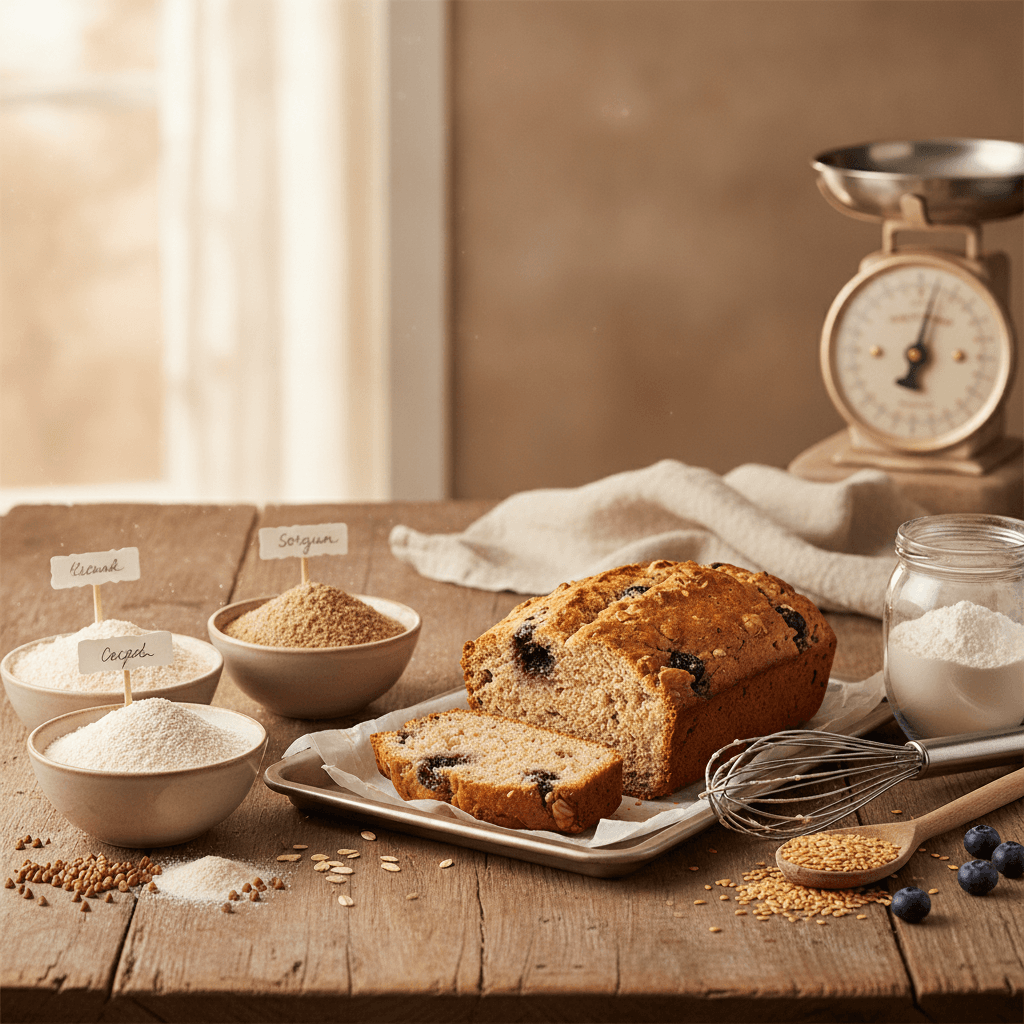
Oat flour brings a soft, slightly sweet crumb to healthy baked goods — but allergies, availability, or cross-contamination concerns can take it off the table fast. Here are seven substitutes that actually hold up, with specific guidance on when to reach for each one.
Key takeaways
- Oat flour is mild, absorbent, and naturally gluten-free (when certified), so the best substitute depends on which of those traits matters most in your recipe.
- Buckwheat flour is the closest match for moisture absorption and tender crumb in muffins, pancakes, and quick breads.
- Almond flour adds fat and density — it works well in cookies and bars but needs structural support in cakes.
- Cassava flour is the most neutral-tasting option and handles 1:1 swaps better than most alternatives.
- Blending two flours almost always outperforms a single-flour swap because oat flour balances protein, starch, and fiber in ways no single alternative replicates perfectly.
- If you're baking gluten-free, check that your substitute flour is also certified gluten-free — some (like buckwheat) are naturally gluten-free but can be processed in shared facilities.
Why oat flour is hard to replace
Oat flour behaves differently from most gluten-free flours because of its beta-glucan content — a soluble fiber that absorbs water and creates a soft, slightly sticky crumb. That fiber also contributes to moisture retention, which is why oat flour muffins stay tender for two or three days while rice flour versions dry out overnight. Any substitute needs to account for that moisture-holding ability, or the texture shifts noticeably.
Oat flour also has a mild, slightly sweet flavor that disappears into batters. Stronger-tasting alternatives like buckwheat flour or amaranth flour will change the flavor profile of delicate baked goods. That's not always a problem — buckwheat in banana muffins is genuinely good — but it's something to plan for rather than discover after the timer goes off.
7 oat flour substitutes ranked by versatility
1. Buckwheat flour — best all-around swap
Despite the name, buckwheat flour is not related to wheat and is naturally gluten-free. It absorbs moisture at a rate similar to oat flour, produces a tender crumb, and works in pancakes, muffins, quick breads, and cookies without major formula changes. The flavor is earthy and slightly nutty — noticeable in vanilla sugar cookies, barely detectable in chocolate or spiced recipes.
In something like pumpkin muffins, a 1:1 swap works well as long as you pair buckwheat with warm spices that complement the earthiness — cinnamon, ginger, or cardamom.
Use buckwheat flour at a 1:1 ratio by weight. If measuring by volume, use slightly less buckwheat (about 7/8 cup per 1 cup oat flour) because buckwheat is denser.
2. Cassava flour — most neutral flavor
Cassava flour is made from the whole cassava root, giving it a fine, powdery texture and an almost blank flavor canvas. It's one of the few gluten-free flours that handles 1:1 weight substitutions without dramatic texture changes in most quick bread and muffin recipes.
The catch: cassava flour is starchier than oat flour and lower in protein and fiber. Baked goods made entirely with cassava can lean slightly gummy if over-mixed or over-hydrated. Reduce liquid by about 10-15% when swapping cassava for oat flour, or add a tablespoon of ground flaxseed per cup of flour to bring back some of that fiber-driven structure. If gummy textures are a recurring issue in your gluten-free baking, our guide to fixing gummy centers covers the mechanics in detail.
3. Almond flour — best for cookies, bars, and low-carb baking
Almond flour is high in fat and protein but low in starch, which makes it behave very differently from oat flour. Cookies and bars translate well because the extra fat adds richness and chew. Cakes and muffins need more help — almond flour on its own produces a dense, heavy crumb that won't dome properly without additional leavening or eggs.
For healthy baking specifically, almond flour is popular because it's lower in carbohydrates and higher in protein than oat flour. But it's also significantly higher in calories per gram, so "healthier" depends entirely on what you're optimizing for.
Almond flour is not a 1:1 swap. Because it contains no starch, you'll typically need to add a small amount of arrowroot powder or tapioca starch (roughly 2 tablespoons per cup of almond flour) to provide the binding that oat flour's starch normally handles.
4. Brown rice flour — budget-friendly and widely available
Brown rice flour is one of the most accessible gluten-free flours, available at most grocery stores for $3-5 per pound. It has a mild flavor and reasonable protein content, making it a serviceable oat flour substitute in recipes where texture perfection isn't critical — think pancakes, simple muffins, or crumble toppings.
The downside is grittiness. Brown rice flour has a noticeably coarser texture than oat flour, and that graininess can come through in tender baked goods like cake. Soaking the batter for 20-30 minutes before baking helps hydrate the particles and reduces grit. Our guide to fixing gritty texture in gluten-free baking explains this technique further.
Use brown rice flour at a 1:1 ratio by weight, but expect a slightly drier crumb. Adding a tablespoon of oil or a mashed banana per cup of flour compensates for the lower moisture retention compared to oat flour.
5. Sorghum flour — the underrated middle ground
Sorghum flour doesn't get nearly enough attention. It has a mild, slightly sweet flavor that's closer to oat flour than almost any other alternative, and it provides decent protein and fiber. It works well in muffins, pancakes, and quick breads — basically all the same applications where oat flour shines.
The main limitation is availability. Sorghum flour isn't stocked at every grocery store, and online prices can run $6-9 per pound depending on the brand. Bob's Red Mill and Anthony's both produce certified gluten-free versions that are widely available online.
Sorghum flour can be used at a 1:1 ratio by weight. It pairs especially well with tapioca starch — a blend of 75% sorghum flour and 25% tapioca starch mimics oat flour's balance of structure and tenderness more closely than sorghum alone.
6. Coconut flour — only for recipes designed around it
Coconut flour absorbs roughly three to four times more liquid than oat flour. That makes it impossible to use as a simple 1:1 swap — you'd end up with a dry, crumbly brick. But in recipes specifically formulated for coconut flour, or when used as a partial substitute (replacing 25% of the oat flour), it adds fiber and a subtle sweetness that works nicely in healthy baking.
If you're reducing sugar in your recipe at the same time as swapping flours, coconut flour's natural sweetness can help compensate. For more on managing sweetness and texture together, see our post on low-sugar baking substitutes that actually fix texture.
A practical ratio when blending: use 1/4 cup coconut flour plus 3/4 cup brown rice flour to replace 1 cup oat flour, and increase eggs or liquid by about 25% to account for coconut flour's absorption.
7. Amaranth flour — high protein, strong flavor
Amaranth flour packs more protein per gram than oat flour and adds an earthy, grassy flavor that polarizes people. It works best blended with milder flours — a 50/50 mix of amaranth and cassava flour gives you protein and fiber from the amaranth with the neutral taste and starch from the cassava.
Amaranth flour on its own can taste bitter in large quantities, especially in lightly flavored baked goods. Keep it to 50% or less of your total flour weight, and pair it with chocolate, molasses, or warm spices that mask the grassiness.
Comparison table: oat flour substitutes at a glance
| Substitute | Flavor | Best for | Swap ratio (by weight) | Key adjustment |
|---|---|---|---|---|
| Buckwheat flour | Earthy, nutty | Muffins, pancakes, quick breads | 1:1 | Pair with warm spices |
| Cassava flour | Very mild | Quick breads, muffins, flatbreads | 1:1 | Reduce liquid 10-15% |
| Almond flour | Nutty, rich | Cookies, bars, low-carb baking | 1:1 plus starch | Add 2 tbsp arrowroot per cup |
| Brown rice flour | Mild, slightly gritty | Pancakes, muffins, crumbles | 1:1 | Soak batter 20-30 min |
| Sorghum flour | Mild, slightly sweet | Muffins, pancakes, quick breads | 1:1 | Blend with 25% tapioca starch |
| Coconut flour | Mildly sweet, coconut | Partial swaps, high-fiber baking | 1/4 cup per 1 cup (blend only) | Increase liquid 25% |
| Amaranth flour | Earthy, grassy | High-protein baking, blends | Up to 50% of total flour | Blend with neutral flour |
Why blending two flours beats a single swap
Oat flour works well on its own because it naturally balances protein, starch, and soluble fiber. Most alternative flours are strong in one area but weak in another — almond flour has protein but no starch, cassava flour has starch but little protein, and coconut flour has fiber but absorbs too much liquid.
Blending two flours lets you reconstruct that balance. A blend of 60% sorghum flour and 40% tapioca starch, for example, gives you mild flavor and moderate protein from the sorghum with the light, stretchy texture that tapioca starch contributes. That combination handles muffins and quick breads nearly as well as oat flour does.
Another effective blend: 70% brown rice flour and 30% arrowroot powder. The rice flour provides bulk and mild flavor while the arrowroot smooths out the gritty texture and adds a bit of binding power.
Common mistakes when substituting oat flour
The biggest mistake is ignoring moisture differences. Oat flour's beta-glucan fiber holds water in a way that most substitutes don't replicate. If you swap in brown rice flour or cassava flour without adjusting liquid, you'll often end up with either a dry crumb or a gummy center — two opposite problems caused by the same root issue of mismatched hydration.
Second mistake: measuring by volume instead of weight. Oat flour, almond flour, and coconut flour have dramatically different densities. One cup of oat flour weighs roughly 120 grams, while one cup of almond flour weighs about 96 grams and one cup of coconut flour weighs around 112 grams. A kitchen scale like the OXO Good Grips 11lb eliminates this variable entirely and costs under $30.
Third: forgetting about binding. Oat flour has enough protein and starch to hold baked goods together reasonably well on its own. Some substitutes — especially almond flour and coconut flour — don't. If your substitute is low in starch, adding a small amount of a binding agent like arrowroot powder, tapioca starch, or ground flaxseed prevents crumbling.
A note on cross-contamination and labeling
Oats are naturally gluten-free, but conventional oat flour is frequently contaminated with wheat during growing and processing. If you're substituting oat flour because of celiac disease or gluten sensitivity, make sure your replacement flour is also certified gluten-free. Buckwheat, sorghum, and amaranth are all naturally gluten-free grains, but they can be processed on shared equipment with wheat unless the manufacturer specifically certifies otherwise.
For more on navigating gluten-free baking challenges beyond flour swaps, our gluten-free baking guide covers common pitfalls including dry, crumbly results and quick staling.
Contrarian take: sometimes the problem isn't the flour
Here's something that goes against the usual substitution advice: if your oat flour recipe isn't working with a substitute, the flour swap might not be the real issue. Many healthy baking recipes that call for oat flour also reduce sugar and fat simultaneously, which compounds texture problems. Swapping the flour is one variable. Cutting sugar is another. Reducing oil is a third. Change all three at once and you're troubleshooting in the dark.
Before blaming the substitute flour, try the swap in a recipe that uses standard amounts of sugar and fat. If it works there but not in your reduced-sugar version, the flour isn't the problem — it's the cumulative effect of too many substitutions at once. Fix one variable at a time.
Frequently asked questions
Can I substitute oat flour with all-purpose flour?
Yes, all-purpose flour can replace oat flour at a 1:1 ratio by weight in most recipes. However, all-purpose flour contains gluten, so this only works if you're not baking gluten-free. The texture will be slightly different — less tender, more structured — because all-purpose flour has more protein and less soluble fiber than oat flour.
What is the best gluten-free substitute for oat flour?
Buckwheat flour is the most versatile single-flour substitute because it matches oat flour's moisture absorption and produces a similar tender crumb. For the most neutral flavor, cassava flour is a better choice. For the closest overall match, a blend of 75% sorghum flour and 25% tapioca starch replicates oat flour's balance of protein, starch, and mild sweetness.
Can I make oat flour at home from rolled oats?
Yes — pulse rolled oats in a blender or food processor for 30-60 seconds until they reach a fine, powdery consistency. This is one of the most cost-effective ways to get oat flour, since rolled oats typically cost $2-4 per pound compared to $5-8 per pound for pre-milled oat flour. If you need certified gluten-free oat flour, start with certified gluten-free rolled oats.
Why does my baking turn out gummy when I substitute oat flour?
Gumminess usually means too much moisture relative to the starch and fiber in your substitute flour. Oat flour's beta-glucan fiber absorbs and holds water without turning gummy, but substitutes like cassava flour or tapioca starch can become sticky and dense with the same amount of liquid. Reduce liquid by 10-15% when using starchier substitutes, and avoid over-mixing the batter.
Is oat flour healthier than almond flour?
It depends on what "healthy" means for your goals. Oat flour is lower in fat and calories per gram and higher in fiber, making it a better fit for people focused on heart health or calorie management. Almond flour is higher in protein and healthy fats and lower in carbohydrates, which suits low-carb or keto-style baking. Neither is universally "healthier" — they serve different nutritional priorities.

Written by
Co-founder, BakingSubs
Co-founder of BakingSubs, where he turns the science of ingredient substitutions into tested, reliable guidance for home bakers.
Related Posts

Bake with Confidence
See all
Confident Gluten-Free Baker Toolkit
The science-based system that replaces gluten's seven invisible jobs so your baking turns out soft, fluffy, and foolproof — every time.

Gluten-Free Recipe Vault
Instant access to our complete library of proven gluten-free recipes — no waiting, no guesswork, just results that work tonight.

Fix Your Gluten-Free Bread
Learn the 3-step formula to make bread rise and stay soft, discover why your loaves collapse, and get a tested sandwich bread recipe that actually works.