

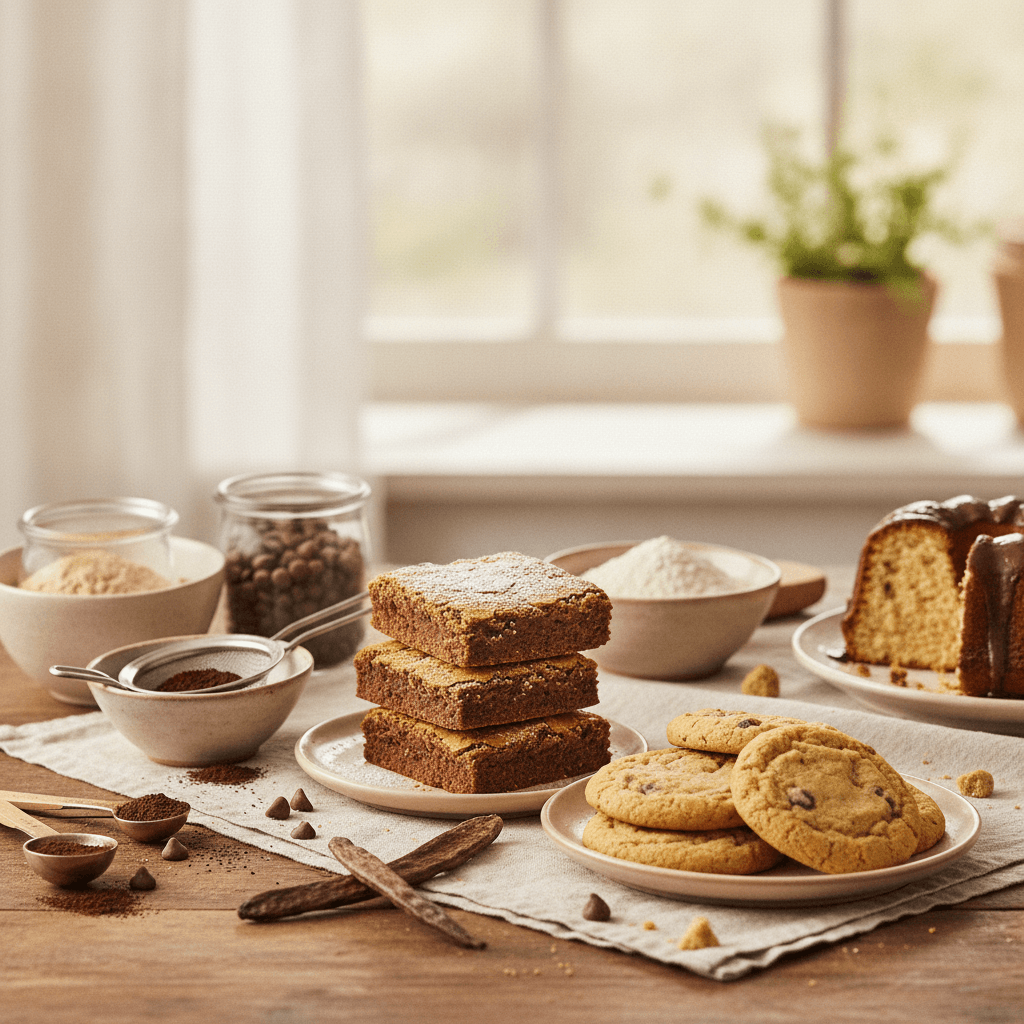
Carob looks like cocoa powder, smells vaguely like it, and costs about the same — so swapping one for the other should be simple. It isn't. Carob behaves differently in batter, tastes nothing like dark chocolate, and can wreck textures if you treat it as a 1:1 drop-in without adjustments.
Here's what actually happens when you use carob as a chocolate substitute in baking, where it genuinely works, and where it falls flat.
Key takeaways
- Carob powder is naturally sweeter than cocoa powder, which means you need to reduce added sugar by roughly 25% when substituting.
- Carob contains no caffeine and no theobromine — the two compounds that make chocolate problematic for people with sensitivities or pets.
- The flavor is closer to malt and caramel than actual chocolate. Expecting a dark chocolate taste will lead to disappointment every time.
- Carob absorbs less liquid than cocoa powder, so batters can turn out wetter than expected without small adjustments.
- Carob chips melt differently than chocolate chips — they hold their shape longer and produce a softer, less snappy set.
- The substitution works best in recipes where chocolate is a background flavor (banana bread, spice cookies, energy bars) rather than the star (flourless chocolate cake, ganache).
What carob actually is (and why it isn't chocolate)
Carob comes from the pod of the carob tree (Ceratonia siliqua), a legume native to the Mediterranean. The pods are dried, roasted, and ground into a powder that looks remarkably similar to cocoa powder. But the similarity is mostly visual.
Cocoa powder gets its characteristic bitterness from theobromine and its complexity from hundreds of volatile flavor compounds developed during fermentation and roasting. Carob skips fermentation entirely. The result is a powder that tastes more like toasted malt, dates, and caramel — pleasant on its own terms, but distinctly not chocolate.
Carob is also naturally sweeter than cocoa. Where unsweetened cocoa powder has essentially zero sugar, carob powder contains roughly 40–50% natural sugars by weight. That sweetness is the reason carob was marketed as a health-food chocolate alternative in the 1970s and '80s, and it's also the reason so many people were disappointed — they expected chocolate and got something else entirely.
How carob powder compares to cocoa powder in batter
The physical differences between carob and cocoa matter more than most bakers realize. Here's a side-by-side look at the properties that affect your baked goods:
| Property | Cocoa powder (unsweetened) | Carob powder |
|---|---|---|
| Flavor profile | Bitter, complex, roasted | Sweet, malty, caramel-like |
| Natural sugar content | Negligible | 40–50% by weight |
| Fat content | 10–22% (depending on processing) | Less than 1% |
| Caffeine | Present | None |
| Theobromine | Present | None |
| Acidity | Natural cocoa is acidic (pH ~5); Dutch-process is neutral | Mildly alkaline |
| Liquid absorption | Moderate to high | Lower than cocoa |
That acidity difference matters if your recipe relies on baking soda for leavening. Natural cocoa powder reacts with baking soda to produce carbon dioxide, which helps batter rise. Carob is mildly alkaline, so it won't trigger the same reaction. If you're swapping carob into a recipe that uses baking soda as its primary leavener, you may need to switch to baking powder or add a small amount of acid (like a teaspoon of lemon juice or apple cider vinegar) to compensate.
The ratio that works — and the sugar trap most bakers fall into
The standard substitution ratio is 1:1 by volume — one tablespoon of carob powder for one tablespoon of cocoa powder. That part is straightforward. The problem is sugar.
Because carob is naturally sweet, using the same amount of sugar your recipe calls for will produce something noticeably sweeter than the original. A good fix is to cut the sugar in any carob-adapted recipe by about 25% — roughly 50g less per cup of sugar the recipe originally called for.
That 25% reduction is a reasonable starting point, though the exact amount depends on the recipe. Recipes that are already lightly sweetened (like banana bread or date-sweetened baked goods) may need an even larger reduction. Heavily sweetened recipes like frosted cupcakes can usually tolerate the full swap with a smaller cut. If you're also reducing sugar for other reasons, our guide to low sugar baking substitutes covers how sweetener reductions affect texture more broadly.
Where carob actually works well
Carob shines in recipes where chocolate is a supporting player rather than the headliner. These are the applications where the malty, caramel-like flavor of carob becomes an asset instead of a liability:
Banana bread and quick breads
The natural sweetness of carob pairs well with banana, cinnamon, and warm spices. Since banana bread already has strong competing flavors, the absence of true chocolate flavor is barely noticeable. The lower fat content of carob powder compared to cocoa also means the crumb stays slightly lighter.
Spice cookies and molasses-based recipes
Carob's caramel and malt notes blend naturally with ginger, cloves, and molasses. In a spice cookie, carob reads as "warm and toasty" rather than "not chocolate." This is one of the few applications where carob can genuinely taste better than cocoa to some palates.
Energy bars and no-bake treats
No-bake bars made with oats, nut butters, and dried fruit are forgiving environments for carob. The sweetness works in your favor here, and the lack of bitterness means you can skip additional sweeteners entirely in some formulations.
Smoothie-style muffins and protein-dense bakes
If you're working with alternative flours like almond flour or oat flour, carob's gentler flavor profile can complement the nuttiness of these flours without the bitterness that cocoa sometimes adds to gluten-free batters.
Where carob fails as a chocolate substitute
Honesty matters here: there are recipes where carob simply cannot do what chocolate does. Pretending otherwise leads to wasted ingredients and disappointing results.
Flourless chocolate cake
A flourless chocolate cake is essentially a chocolate delivery system. The entire point is deep, complex, bittersweet chocolate flavor. Carob cannot replicate that. The result will be edible but will taste like a different dessert entirely — one that nobody asked for.
Ganache and chocolate glazes
Ganache depends on the cocoa butter in chocolate to set properly. Carob chips contain very little fat, and carob powder has almost none. You can make a carob-flavored glaze, but it won't have the glossy snap or mouthfeel of real ganache. The texture tends to be matte and slightly grainy.
Chocolate mousse
Mousse relies on chocolate's ability to set when cooled — a function of cocoa butter crystallization. Carob doesn't crystallize the same way. A carob mousse will be softer and less stable, and it won't hold peaks or sliceable structure the way chocolate mousse does.
Any recipe where "chocolate" is in the name
This is a judgment call more than a technical one. If someone expects chocolate chip cookies and gets carob chip cookies without warning, they'll notice. Carob chips have a waxy melt, a milder sweetness, and none of the slight bitterness that makes chocolate chips satisfying. The swap works if everyone at the table knows what they're eating. It fails if they don't.
Carob chips vs. chocolate chips: what changes in cookies and bars
Carob chips are widely available and often marketed as a direct chocolate chip replacement. They're not identical, and the differences show up most clearly in cookies.
Chocolate chips contain cocoa butter, which melts at body temperature and resolidifies with a snap. That's why a chocolate chip cookie has pools of melted chocolate that firm up as the cookie cools. Carob chips are typically made with palm kernel oil or other vegetable fats instead of cocoa butter. These fats have a higher melting point, so carob chips hold their shape during baking more than chocolate chips do. The result is chips that look intact in the finished cookie but feel softer and waxier when you bite into them.
For some bakers, that's a feature — the chips don't burn as easily at higher temperatures. For others, it's a dealbreaker because the mouthfeel is noticeably different. If you're baking cookies and want to understand how other ingredient swaps affect the final product, our post on sugar substitutes for baking cookies covers the texture side in detail.
Why people choose carob (it's not always about flavor)
Most bakers don't reach for carob because they think it tastes better than chocolate. They reach for it because of specific dietary or medical constraints:
- Caffeine sensitivity: Cocoa contains caffeine (roughly 12mg per tablespoon of cocoa powder). Carob contains none. For people who are highly sensitive to caffeine or who avoid it for medical reasons, carob is one of the few ways to get a "chocolate-adjacent" flavor in baked goods.
- Theobromine avoidance: Theobromine is the compound in chocolate that's toxic to dogs and can cause migraines in some people. Carob is theobromine-free.
- Reflux and digestive issues: Chocolate can trigger acid reflux in some individuals, partly due to theobromine relaxing the lower esophageal sphincter. Carob doesn't have this effect for most people, though individual tolerance varies.
- Allergy or intolerance to cocoa: True cocoa allergy is rare but does exist. Carob is botanically unrelated to cocoa (it's a legume), so it's generally safe for people with cocoa-specific allergies. However, anyone with legume allergies should check with their doctor first.
If your reason for substituting is flavor preference rather than a medical need, it's worth asking whether you actually want carob or whether you'd be happier with a different alternative sweetening approach that keeps real cocoa in the recipe.
Adjustments that make carob work better in baked goods
If you've decided carob is the right choice for your situation, these adjustments help close the gap between "edible" and "genuinely good":
Add a pinch of instant espresso powder
This sounds counterintuitive if you're avoiding caffeine, but for those who aren't, a quarter teaspoon of instant espresso powder per batch adds depth and roasted complexity that carob lacks on its own. It won't make carob taste like chocolate, but it pushes the flavor toward "dark and interesting" rather than "sweet and flat."
Increase vanilla extract
Carob benefits from more vanilla than a typical chocolate recipe calls for. Where a chocolate cake recipe might use 1 teaspoon of vanilla, a carob version often tastes better with 1.5 to 2 teaspoons. The vanilla adds aromatic complexity that compensates for carob's simpler flavor profile.
Toast the carob powder lightly
Spreading carob powder on a sheet pan and toasting it at 150°C (300°F) for about 8–10 minutes deepens the malty, caramel notes and reduces the raw, slightly chalky taste that some people notice in untoasted carob. Watch it carefully — carob burns faster than cocoa because of its sugar content.
Reduce liquid slightly
Because carob absorbs less moisture than cocoa powder, batters can end up wetter than intended. Reducing the liquid in the recipe by about 1–2 tablespoons per quarter cup of carob powder helps keep the texture on track. This is especially important in cakes and muffins where a wet batter leads to gummy centers.
Pair with complementary flavors
Carob's natural sweetness and malt notes pair exceptionally well with certain ingredients: toasted coconut, cinnamon, cardamom, orange zest, tahini, and almond butter. Building a recipe around these pairings rather than trying to mimic a chocolate recipe produces much better results.
The contrarian take: stop trying to make carob taste like chocolate
Here's an opinion that goes against most carob substitution advice: the biggest mistake bakers make with carob is treating it as a chocolate impersonator. It isn't one. It never will be. And every time you frame it that way — to yourself or to the people eating your baked goods — you set it up to fail.
Carob is its own ingredient with its own strengths. A carob and tahini cookie is a legitimately delicious thing. A carob and orange zest quick bread can be wonderful. But a "carob brownie" that's supposed to taste like a fudge brownie? That's a promise carob can't keep.
The bakers who actually enjoy working with carob are the ones who stopped comparing it to chocolate and started treating it as a distinct flavor — more like a spice or a nut butter than a cocoa substitute. If you approach it that way, you'll get better results and fewer disappointed faces at the table.
Frequently asked questions
Can you substitute carob powder for cocoa powder 1:1?
Yes, the volume substitution is 1:1 — one tablespoon of carob powder for one tablespoon of cocoa powder. However, you'll need to reduce the sugar in the recipe by roughly 25% because carob is naturally much sweeter than unsweetened cocoa. You may also need to adjust leavening if the original recipe relies on baking soda reacting with cocoa's acidity, since carob is mildly alkaline.
Does carob taste like chocolate?
No. Carob has a malty, caramel-like sweetness that is sometimes described as reminiscent of chocolate, but the flavor profile is distinctly different. It lacks the bitterness, complexity, and roasted depth of cocoa. People who enjoy carob tend to appreciate it as its own flavor rather than as a chocolate replacement.
Is carob better for you than chocolate?
Carob is caffeine-free and theobromine-free, which makes it a better option for people who are sensitive to those compounds. It's also naturally sweeter, which can mean less added sugar in a recipe. Beyond those well-established differences, broad health claims about carob being "healthier" than chocolate are oversimplified — both ingredients have different nutritional profiles, and which one is "better" depends entirely on individual dietary needs.
Can you use carob chips instead of chocolate chips in cookies?
You can, but expect differences in texture and flavor. Carob chips are typically made with palm kernel oil rather than cocoa butter, so they hold their shape more during baking, melt less dramatically, and have a softer, waxier texture when cooled. The flavor is milder and sweeter. The swap works best when everyone eating the cookies knows to expect carob rather than chocolate.
Why does my carob batter seem wetter than the original recipe?
Carob powder absorbs less liquid than cocoa powder. When you substitute carob 1:1, the batter retains more moisture than the recipe intended. Reducing the liquid in the recipe by 1–2 tablespoons per quarter cup of carob powder typically corrects this. If you're baking gluten-free, this is especially important since excess moisture can cause gummy, underbaked centers.

Written by
Co-founder, BakingSubs
Co-founder of BakingSubs, where he turns the science of ingredient substitutions into tested, reliable guidance for home bakers.
Related Posts
Bake with Confidence
See all
Confident Gluten-Free Baker Toolkit
The science-based system that replaces gluten's seven invisible jobs so your baking turns out soft, fluffy, and foolproof — every time.

Gluten-Free Recipe Vault
Instant access to our complete library of proven gluten-free recipes — no waiting, no guesswork, just results that work tonight.

Fix Your Gluten-Free Bread
Learn the 3-step formula to make bread rise and stay soft, discover why your loaves collapse, and get a tested sandwich bread recipe that actually works.