

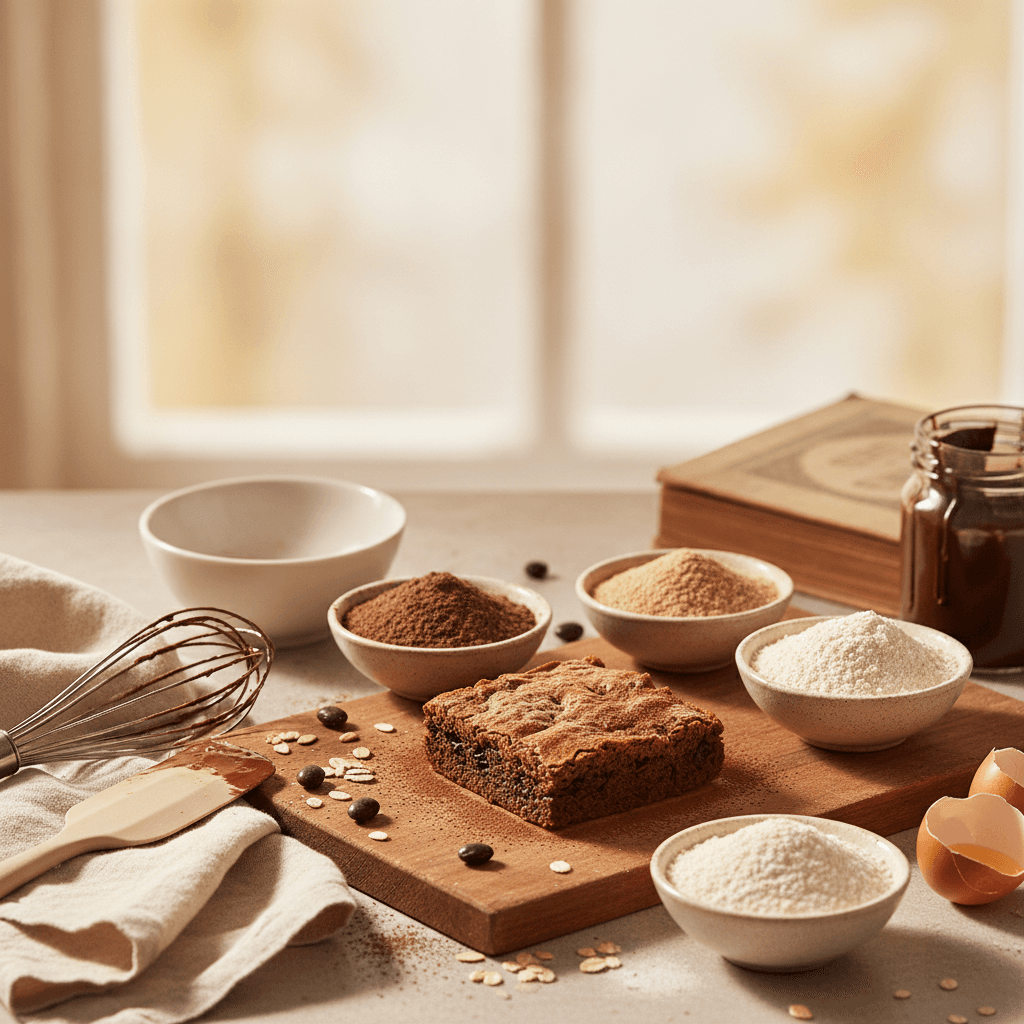
Black bean flour gives brownies a fudgy, protein-rich base without wheat, but it is not always available, affordable, or tolerable for every baker. Here are five substitutes that preserve the dense, moist texture black bean flour is known for — plus the tradeoffs each one brings.
Key takeaways
- Black bean flour works in brownies primarily as a structure-builder and moisture-holder, not a flavor driver — so the best substitutes replicate those functions, not the bean flavor.
- Chickpea flour is the closest functional match but carries a stronger legume taste that needs cocoa or espresso to mask.
- Almond flour paired with a starch produces a rich, fudgy brownie but changes the fat balance significantly.
- Oat flour is the most budget-friendly swap, typically running $0.12–$0.18 per ounce compared to $0.30–$0.50 per ounce for black bean flour.
- Cassava flour is the best option for nut-free, grain-free, and legume-free diets but needs extra fat to avoid a cakey result.
- No single substitute is a perfect 1:1 drop-in — each requires at least one small adjustment to liquid, fat, or leavening.
Why black bean flour works so well in brownies
Before swapping anything, it helps to understand what black bean flour actually does in a brownie batter. It brings three things to the party: high protein content that creates structure without gluten, natural starch that holds moisture, and a mild earthy flavor that cocoa powder easily overwhelms. That combination is why black bean brownies come out dense and fudgy rather than crumbly or dry.
Any substitute needs to cover at least two of those three roles. If you pick a flour that is low in both protein and starch — like coconut flour used alone — the brownie will fall apart or turn into a dry sponge. The substitutes below are ranked by how closely they replicate the full package.
1. Chickpea flour: the closest functional match
Chickpea flour (also called besan or garbanzo bean flour) is another legume flour with a similar protein-to-starch ratio. It binds well, holds moisture, and produces that same dense crumb. You can swap it at a 1:1 ratio by weight without adjusting liquids.
The catch is flavor. Chickpea flour has a stronger, more savory legume taste than black bean flour. In a brownie loaded with cocoa and sugar, most of that taste disappears — but if your recipe uses a modest amount of cocoa, the beany note can peek through. Adding a teaspoon of instant espresso powder to the batter is a well-known trick among gluten-free bakers for pushing the chocolate flavor forward and burying any legume undertones.
Chickpea flour is also widely available. Bob's Red Mill and Anthony's both sell it at most grocery stores for roughly $0.20–$0.30 per ounce, making it cheaper than most black bean flour options. If you are baking for someone with a gluten-free diet but no legume allergy, chickpea flour is the first substitute to try.
Watch out for grittiness
Coarse-ground chickpea flour can create a slightly gritty texture in brownies. Look for finely milled versions, or sift the flour twice before adding it to the batter. If your brownies come out with a grainy mouthfeel, that is almost always a grind-size issue, not a hydration problem. Our guide on fixing gritty texture in gluten-free baking covers this in more detail.
2. Almond flour plus a starch: the fudge-forward option
Almond flour brings fat and protein but very little starch. Used alone, it makes brownies that are rich but crumbly. The fix is blending it with a starch — arrowroot powder or tapioca starch both work well — at roughly a 3:1 ratio (three parts almond flour to one part starch, by weight).
This combination produces an intensely fudgy brownie. The extra fat from almonds means you may want to reduce any butter or oil in the recipe by about a tablespoon to keep the brownies from becoming greasy. The protein in almond flour is different from legume protein — it does not bind as tightly — so the brownies will be more tender and less chewy than the black bean version.
| Factor | Black bean flour | Almond flour + starch |
|---|---|---|
| Protein binding | Strong | Moderate |
| Natural fat content | Low | High |
| Flavor impact | Mild, earthy | Nutty, sweet |
| Cost per ounce (typical) | $0.30–$0.50 | $0.35–$0.55 (blended) |
| Allergen concern | Legume | Tree nut |
Almond flour is not a good choice if you are baking for a school event, a nut-free household, or anyone with a tree nut allergy. But for personal or adult-audience baking, it is one of the most forgiving swaps because the natural fat content masks a lot of small measurement errors.
3. Oat flour: the budget-friendly workhorse
Oat flour is the cheapest substitute on this list and one of the easiest to make at home — just pulse rolled oats in a blender until fine. It provides moderate protein, decent starch, and a neutral flavor that lets cocoa dominate.
The main tradeoff is texture. Oat flour brownies lean slightly more cakey than black bean flour brownies. To push them back toward fudgy, reduce any leavening agent in the recipe (if the recipe calls for baking powder, cut it by about a quarter) and make sure you are not over-mixing the batter. Over-mixing develops the small amount of protein in oats into a tighter crumb, which amplifies the cakey effect.
A note on gluten: oats are naturally gluten-free, but most commercial oats are processed in facilities that also handle wheat. If you are baking for someone with celiac disease, you need certified gluten-free oats specifically. Bob's Red Mill and GF Harvest both offer certified options. This matters — cross-contamination in standard oat products is well-documented and not trivial.
At $0.12–$0.18 per ounce (or essentially free if you already have rolled oats), oat flour is the go-to for bakers who want to keep ingredient costs low. If you sell brownies through a farmers market, the cost difference between black bean flour and oat flour on a full batch can be $2–$4 — which adds up across a season.
4. Cassava flour: the allergy-friendly option
Cassava flour is grain-free, nut-free, legume-free, and gluten-free. For bakers working around multiple dietary restrictions, it is often the only flour that checks every box. It is made from the whole cassava root and has a neutral, slightly sweet flavor that works well in chocolate baked goods.
Cassava flour is starch-heavy and protein-light, which is the opposite profile of black bean flour. That means cassava brownies can turn gummy if you use too much, or cakey if you do not add enough fat to compensate for the missing protein structure. The general approach is to use about 25% less cassava flour by weight than the recipe calls for in black bean flour, and add an extra tablespoon of oil or melted butter.
If your brownies come out with a gummy center — a common problem with starch-heavy flours — our guide on gummy centers in gluten-free baking walks through the causes and fixes.
Cassava flour typically costs $0.25–$0.40 per ounce. Otto's Naturals is widely considered the gold standard for consistency, though Anthony's offers a more affordable option that performs well in brownies specifically because brownies are forgiving of slight texture differences between brands.
5. Sunflower seed flour: the underrated dark horse
Sunflower seed flour is rarely the first substitute people think of, but it deserves a spot on this list. It has a protein and fat profile similar to almond flour without the tree nut allergen, and its mild, slightly savory flavor disappears behind cocoa powder.
There is one well-known quirk: sunflower seed flour reacts with baking soda (and sometimes baking powder) to turn baked goods green. This is a chlorogenic acid reaction, and it is harmless but visually alarming. The fix is simple — add a teaspoon of lemon juice or apple cider vinegar to the batter to lower the pH and prevent the color change. In brownies, the dark cocoa color usually masks any green tint anyway, but the acid step is worth doing as insurance.
Sunflower seed flour runs about $0.25–$0.40 per ounce and is available from brands like Gerbs and SunButter. You can also make it at home by grinding raw, unsalted sunflower seeds in a food processor — just stop before it turns into sunflower butter, which happens faster than you would expect (usually around 45–60 seconds of continuous processing).
How to choose the right substitute for your situation
The "best" substitute depends entirely on why you are replacing black bean flour. Here is a quick decision framework:
| Your situation | Best substitute | Why |
|---|---|---|
| Closest match, no dietary restrictions beyond GF | Chickpea flour | Nearly identical protein/starch ratio |
| Richest, most fudgy result | Almond flour + starch | High fat content pushes brownies toward fudge |
| Lowest cost per batch | Oat flour | $0.12–$0.18/oz, or DIY from rolled oats |
| Multiple allergies (nut-free, legume-free, GF) | Cassava flour | Avoids all major allergen categories |
| Nut-free but want richness | Sunflower seed flour | Similar fat/protein to almond flour, seed-based |
Common mistakes when substituting bean flours in brownies
A few errors come up repeatedly when bakers swap out black bean flour, regardless of which substitute they choose.
Measuring by volume instead of weight
Bean flours and their substitutes have wildly different densities. One cup of black bean flour weighs roughly 120–130 grams, while one cup of almond flour weighs closer to 96 grams. Swapping cup-for-cup without accounting for weight differences throws off the entire recipe. A kitchen scale like the OXO Good Grips 11lb eliminates this problem entirely and costs under $30.
Ignoring the fat balance
Black bean flour is very low in fat. Almond flour and sunflower seed flour are not. If you swap in a high-fat flour without reducing the added fat (butter or oil), the brownies will be greasy and may not set properly in the center. Conversely, swapping in a low-fat, high-starch flour like cassava without adding fat produces a dry, crumbly result.
Over-baking to compensate for a wet center
Many of these substitutes produce a batter that looks wetter than a black bean flour batter. The temptation is to bake longer. Resist it. Fudgy brownies are supposed to look slightly underdone in the center when you pull them out — the residual heat finishes the job during cooling. Over-baking turns any brownie into a dry brick, but it is especially punishing with gluten-free flours that lack the elastic network to retain moisture under extended heat.
Skipping the rest period
Black bean flour brownies benefit from resting at room temperature for at least an hour after baking, and most substitutes need this even more. The starches in cassava flour and oat flour continue to set as they cool. Cutting into the brownies too early gives you a gooey mess that looks undercooked but is actually just not finished setting. Give them 60–90 minutes before slicing.
A contrarian take: you might not need a flour substitute at all
Here is something that goes against most substitution advice: if you are making black bean brownies specifically for the protein and fudgy texture, you may get a better result using whole cooked black beans pureed in a blender rather than any flour at all. The original "black bean brownie" concept — popularized in the early 2010s — did not use black bean flour. It used a can of rinsed, drained black beans blended smooth with eggs, cocoa, sugar, and vanilla. No flour of any kind.
That approach sidesteps the entire flour-substitution problem. The pureed beans provide structure, moisture, and binding all at once. The texture is denser and more truffle-like than any flour-based brownie. A 15-ounce can of black beans costs $0.89–$1.50 depending on brand, which is cheaper per batch than any of the flours listed above.
The downside is that pureed-bean brownies do not behave like traditional brownies. They do not develop a crackly top, they are harder to cut cleanly, and the texture is polarizing — some people love the fudge-like density, others find it too heavy. But if you have been chasing the black bean flour experience and cannot find a substitute that satisfies you, going back to the whole-bean method is worth considering.
If you are adjusting sugar levels alongside the flour swap, our post on low-sugar baking substitutes that fix texture covers how sweetener changes interact with structure in gluten-free baked goods.
Frequently asked questions
Can I use regular all-purpose flour instead of black bean flour in brownies?
Yes, all-purpose flour works as a substitute if you do not need the brownies to be gluten-free or higher in protein. The texture will shift from dense and fudgy toward a more traditional cakey brownie. Use about 15–20% less all-purpose flour by weight than the recipe calls for in black bean flour, since wheat flour absorbs liquid differently and the gluten provides structure that bean protein does not.
Does black bean flour make brownies taste like beans?
In most recipes, no. The cocoa powder, sugar, and vanilla in a typical brownie recipe overpower the mild earthy flavor of black bean flour. Recipes that use a high ratio of bean flour to cocoa may have a faint legume undertone, but this is more common with chickpea flour than with black bean flour. Adding espresso powder or a pinch of cinnamon helps mask any residual bean flavor in either case.
Is black bean flour the same as black bean powder?
They are often used interchangeably, but there can be differences. Black bean flour is typically made from cooked, dried, and ground black beans, resulting in a fine flour suitable for baking. Some products labeled "black bean powder" are made from raw or partially processed beans and may have a coarser grind and stronger flavor. Check the label — if it says "ready to use in baking" or "pre-cooked," it should work the same as black bean flour.
Which black bean flour substitute is best for vegan brownies?
All five substitutes on this list are naturally vegan. The bigger question for vegan brownies is what you are using in place of eggs, since that affects structure more than the flour choice. Chickpea flour is particularly useful in vegan baking because it has strong binding properties that partially compensate for the missing egg protein. Combining chickpea flour with a flax egg (one tablespoon ground flaxseed plus three tablespoons water, rested for 5 minutes) is a reliable pairing for fudgy vegan brownies.
Can I mix two substitutes together to get closer to black bean flour?
Absolutely, and this is often the smartest approach. Blending a protein-rich flour (chickpea or sunflower seed) with a starch-rich flour (cassava or arrowroot) at a ratio of roughly 70% protein flour to 30% starch mimics the natural protein-starch balance of black bean flour more closely than any single substitute can. This is the same principle behind most commercial gluten-free flour blends — they combine multiple flours to cover each other's weaknesses.

Written by
Co-founder, BakingSubs
Co-founder of BakingSubs, where he turns the science of ingredient substitutions into tested, reliable guidance for home bakers.
Related Posts

Bake with Confidence
See all
Confident Gluten-Free Baker Toolkit
The science-based system that replaces gluten's seven invisible jobs so your baking turns out soft, fluffy, and foolproof — every time.

Gluten-Free Recipe Vault
Instant access to our complete library of proven gluten-free recipes — no waiting, no guesswork, just results that work tonight.

Fix Your Gluten-Free Bread
Learn the 3-step formula to make bread rise and stay soft, discover why your loaves collapse, and get a tested sandwich bread recipe that actually works.