
Best Unflavored Protein Powder for Baking (10 Brands Compared): Why Most Bakers Pick the Wrong One
We compared 10 unflavored protein powders for baking across absorption, browning, max flour replacement, and sweetener stability. Ranked picks with a full comparison table.

Malik
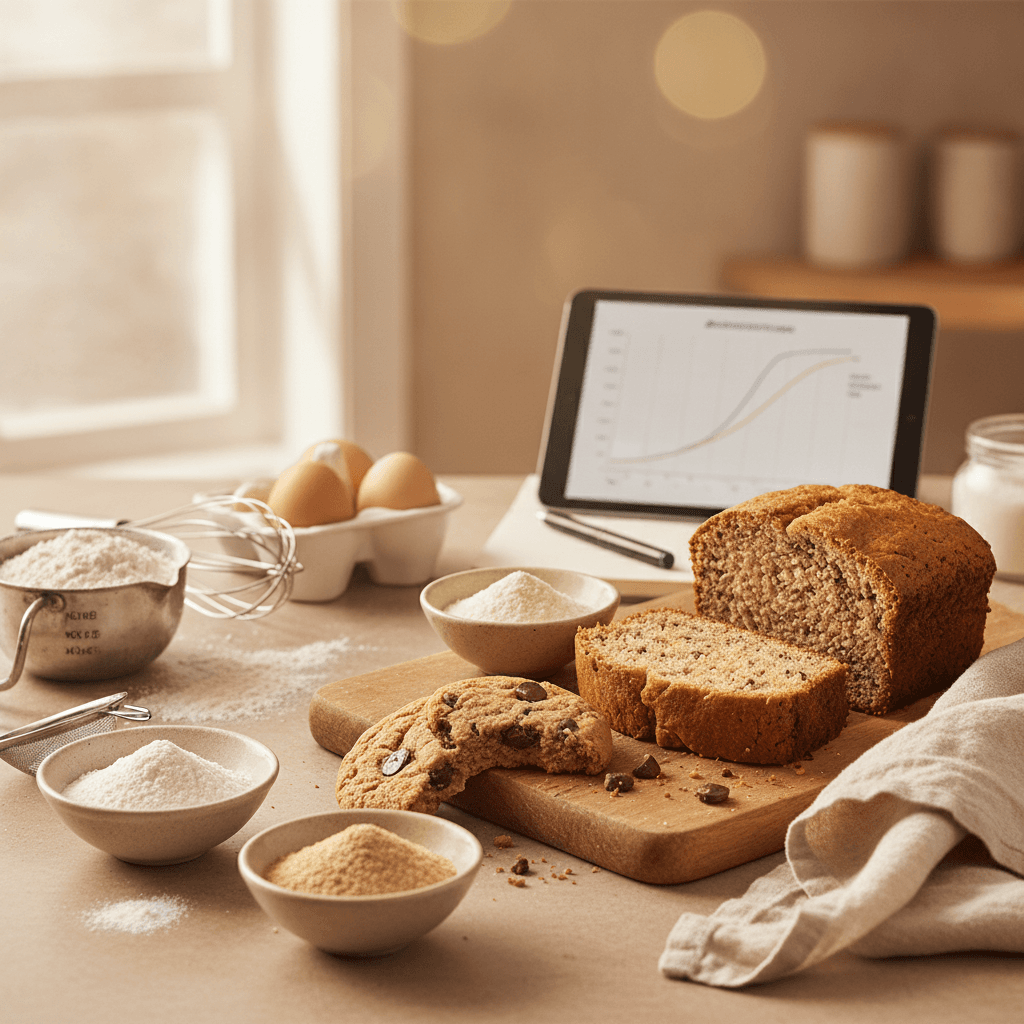
Most protein powders are designed for shaker bottles, not ovens. The wrong pick absorbs too much liquid, turns your crumb rubbery at 20% flour replacement, or leaves a bitter aftertaste from sweeteners that break down at 350°F. We compared 10 popular brands across five protein types to find the ones best suited to baking.
Here is the ranked verdict first, then the details that explain why.
Key takeaways
Whey protein isolate is the most forgiving protein type for baking. It browns well, absorbs roughly 1.2x its weight in liquid (versus flour at about 0.6x), and can replace up to 25% of flour before the crumb turns rubbery.
Unflavored beats vanilla in almost every recipe. Vanilla versions contain sucralose or stevia that can turn bitter above 350°F, and the flavor competes with chocolate, lemon, and spice profiles.
Collagen powder adds protein on paper but contributes almost zero structure. It will not thicken batter, hold air, or create crumb. We have a full breakdown of why collagen mostly fails in baking.
Egg white protein powder creates the best structure of any protein type but dries baked goods out fast. You need to add 2 to 3 extra tablespoons of liquid per 30g scoop.
Plant blends (pea, rice, hemp) cap out at about 15% flour replacement before grittiness and beany off-flavors take over.
Our ranked picks for baking
After comparing absorption, browning, sweetener stability, and maximum flour replacement across all 10 brands, here is how they stack up for baking specifically (not for shakes).

Isopure Zero Carb 100% Pure Whey Isolate Protein Powder, Gluten Free, with Vitamins, Unflavored, 25g Protein Per Serving, 1 Lb, 16 Servings (Packaging May Vary)
Check price on Amazon →Isopure Unflavored WPI — 25g protein per scoop, zero sweeteners, zero flavor additives. Replaces up to 25% of all-purpose flour. Our top pick.
Naked Whey Unflavored — 25g protein, only one ingredient (whey concentrate), slightly more moisture absorption than Isopure but excellent browning.
Bulk Supplements WPI — 27g protein per 30g serving, no additives, budget-friendly at roughly $0.60 per serving. Solid all-around performer.
Anthony's Egg White Protein — 25g protein, creates excellent structure in cakes and meringue-based bakes, but demands extra liquid.
Optimum Nutrition Gold Standard (Unflavored) — 24g protein, widely available, contains a small amount of soy lecithin that actually helps emulsification in batters.
The remaining five brands are covered in the comparison table below, along with the specific reasons they rank lower for baking use.
Full comparison table: 10 protein powders ranked for baking
Brand | Protein type | Protein/scoop | Sweetener | Liquid absorption vs flour | Max flour replacement | Browning | Baking verdict | Buy |
|---|---|---|---|---|---|---|---|---|
Whey isolate | 25g | None | ~1.2x flour | 25% | Even golden | Best overall for baking | ||
Whey concentrate | 25g | None | ~1.3x flour | 25% | Deep golden (lactose sugars) | Excellent; slightly more browning | ||
Whey isolate | 27g | None | ~1.2x flour | 25% | Even golden | Best budget pick | ||
25g | None | ~1.8x flour | 30% | Pale (low sugar content) | Best structure, needs extra liquid | |||
Whey blend | 24g | None (natural line) | ~1.3x flour | 20% | Even golden | Good; soy lecithin helps emulsify | ||
Whey isolate | 22g | None (unflavored) | ~1.2x flour | 25% | Even golden | Good but pricier per gram | ||
Collagen | 20g | None | ~0.3x flour | 10% (no structure) | Minimal | Adds protein, not structure | ||
Pea/rice blend | 21g | None (unflavored) | ~1.5x flour | 15% | Dull, grayish | Gritty above 15%; beany notes | ||
Whey blend | 25g | Sucralose (flavored only) | ~1.3x flour | 20% | Even golden | No true unflavored option; sucralose turns bitter above 375°F | ||
Whey blend | 25g | Sucralose + stevia | ~1.3x flour | 20% | Golden | No unflavored SKU; sweetener bitterness at oven temps |
Why protein type matters more than brand
The biggest variable is not the brand on the tub. It is the protein source inside it. Whey, casein, egg white, collagen, and plant blends each behave completely differently in an oven, and picking the wrong type will sabotage your bake no matter how good the recipe is.
Whey (isolate and concentrate)
Whey proteins denature and coagulate between 160°F and 180°F, which is right in the zone where batters set. This makes whey act like a secondary structural network alongside gluten (or alongside xanthan gum in gluten-free baking). The result is a crumb that holds together without being gummy. Whey concentrate contains residual lactose, which participates in Maillard browning and gives you a deeper golden crust. Whey isolate has most of that lactose stripped out, so it browns more evenly but less dramatically. Both absorb roughly 1.2 to 1.3 times their weight in liquid, compared to all-purpose flour at about 0.6x. That means you need to add extra liquid when substituting: roughly 1 to 2 tablespoons of milk or water per 30g scoop of whey swapped in for flour.
Casein
Casein forms a gel when heated. In baking, this translates to a denser, chewier crumb. It works well in protein bars and dense brownies but makes cakes and muffins heavy. Casein absorbs about 1.5x its weight in liquid, so dryness is a bigger risk. Casein works better as a 10% flour replacement blended with whey rather than used alone. We did not include a standalone casein powder in our top 10 because the unflavored options on the market are limited and the baking results are consistently inferior to whey for general use.
Egg white protein
Egg white protein powder is essentially dried, pasteurized egg whites. It creates outstanding structure because it whips, foams, and sets just like fresh egg whites do (though less efficiently). Anthony's is the standout here. The catch: egg white protein absorbs about 1.8x its weight in liquid. If you do not compensate, your muffins will be dry enough to crumble in your hand. Add 2 to 3 tablespoons of extra liquid per 30g scoop. Egg white protein also browns very little on its own because it contains almost no sugar, so your crust will look pale unless you brush with milk or egg wash. For more on this, see our guide to egg white substitutes for high-protein baking.
Collagen
Collagen peptides dissolve in liquid and do not coagulate when heated. They will not set, hold air, or build crumb structure. You can stir collagen into a batter and it will add grams of protein to the nutrition label, but it will not replace flour's structural role at all. At more than 10% flour replacement, batters become thin and baked goods collapse. Vital Proteins is the most popular collagen brand, and it is fine for smoothies, but collagen mostly fails as a flour supplement in baking. Use it only as a nutritional booster at 5 to 10% of total flour weight, and expect zero structural contribution.
Plant blends (pea, rice, hemp)
Plant-based protein powders like Orgain's pea/rice blend have a grittier texture than whey or egg white. Pea protein in particular has a distinct beany flavor that becomes more noticeable when heated. These blends absorb about 1.5x their weight in liquid and cap out at roughly 15% flour replacement before the texture turns sandy and the flavor becomes hard to mask. If you need a plant-based option, sticking to 10% flour replacement and pairing with strong flavors (chocolate, banana, peanut butter) gives the best results. Hemp protein has its own set of quirks that we cover separately.
Unflavored versus vanilla: why unflavored wins for baking
Vanilla-flavored protein powders seem like a natural fit for baking, but they introduce two problems. First, almost every flavored protein powder contains artificial or high-intensity sweeteners. Sucralose (used in Ghost and Ryse) begins to break down above 375°F and can produce a metallic, bitter aftertaste in cookies and thin cakes that spend time at high surface temperatures. Stevia and monk fruit are more heat-stable, but stevia in particular intensifies its characteristic licorice-like aftertaste when concentrated in a baked crumb.
Second, the vanilla flavoring in protein powders is calibrated for liquid. When you bake with it, the flavor concentrates as moisture evaporates, and what tasted subtle in a shake becomes overpowering in a muffin. If you want vanilla flavor, add 1 teaspoon of real vanilla extract to your batter instead. You will get a cleaner, more balanced result.
Of the 10 brands we compared, only Isopure, Naked Whey, Bulk Supplements, Anthony's, Optimum Nutrition (natural line), Legion, Vital Proteins, and Orgain offer a truly unflavored SKU. Ghost and Ryse do not have an unflavored option, which is a significant drawback for bakers.
How much flour can you actually replace?
This is where most protein baking goes wrong. Protein powder is not flour. It does not contain starch, so it cannot gelatinize and create the tender crumb that starch provides. Replace too much flour and you get a dense, rubbery, or dry result. Here are the practical limits:
Protein type | Max flour replacement | What happens if you exceed it |
|---|---|---|
Whey isolate | 25% | Rubbery, bouncy crumb |
Whey concentrate | 25% | Rubbery crumb, over-browning |
30% | Dry, crumbly, pale | |
Casein | 15% | Dense, gummy, heavy |
Collagen | 10% | Batter thins, structure collapses |
Plant blend | 15% | Gritty, beany, sandy |
For a deeper look at the mechanics of this swap, including five fixes that actually work, see our guide on protein powder as flour replacement in baking. And if you are scaling a recipe up or down to hit a specific protein target, our recipe scaler can help you keep the ratios right.
Troubleshooting: dryness, rubberiness, and cratering
These are the three failures that send people searching for answers after their first protein baking attempt. Each has a specific cause and a specific fix.
Dryness
Protein powder absorbs significantly more liquid than flour. If you swap 30g of protein powder for 30g of flour without adding extra liquid, you are effectively removing moisture from the batter. The fix: add 1 to 3 tablespoons of liquid (milk, water, yogurt, or applesauce) per 30g scoop of protein powder. Egg white protein needs the most compensation (closer to 3 tablespoons), while whey isolate needs the least (closer to 1 tablespoon). Fat also helps: adding 1 tablespoon of melted coconut oil per scoop makes a dry batch much less likely.
Rubberiness
This happens when you replace too much flour with protein powder. The protein network becomes too tight and the crumb bounces back like a sponge when you press it. The fix: stay within the replacement limits in the table above. If you are already at 25% whey and the crumb is still too springy, reduce by 5% and add back all-purpose flour or a starch like arrowroot. Reducing the mixing time also helps, because vigorous mixing develops the protein network further, just like over-mixing develops gluten.
Cratering (sinking in the center)
Protein powder does not provide the same gelatinization that starch does. When too much flour is replaced, the center of the bake does not set firmly enough to support its own weight as it cools, and it collapses inward. This is especially common with collagen powder (which provides no structure at all) and with plant blends above 15% replacement. The fix: reduce protein powder percentage, make sure your leavening is not excessive (protein batters need about 15% less baking powder than standard recipes because the denser batter cannot support as much rise), and avoid opening the oven door before the bake is 75% done.
What to look for when buying protein powder for baking
Not every buying criterion that matters for shakes matters for baking. Here is what to prioritize:
Ingredient list length. Shorter is better. Isopure's unflavored isolate has one ingredient: whey protein isolate. Naked Whey has one ingredient: whey protein concentrate. The fewer additives, the more predictable the baking behavior.
Sweetener type (or absence). If the label lists sucralose, expect bitterness in anything baked above 375°F. Stevia is more heat-stable but can leave a licorice note. Monk fruit holds up best of the three, but truly unflavored (no sweetener at all) is the safest choice.
Protein percentage per serving. Bulk Supplements WPI delivers 27g of protein in a 30g serving, which is a 90% protein content. That high ratio means less filler and more predictable absorption. Compare that to some plant blends that deliver 21g in a 43g serving (49% protein), with the rest being fiber, fat, and starches that change how the powder behaves in batter.
Soy lecithin. A small amount (as in ON Gold Standard) actually helps emulsify batters and can improve crumb tenderness. It is not a negative for baking.
A reliable kitchen scale is essential here. Scoops vary wildly in actual weight, and protein baking is more sensitive to ratios than standard baking. A single "scoop" can vary by several grams depending on how packed it is. Weigh everything.
How to add protein powder to any recipe
The general method that works across recipe types:
Calculate 20% of the total flour weight in your recipe. For a recipe calling for 200g of all-purpose flour, that is 40g.
Remove that amount of flour and replace it with the same weight of unflavored whey protein isolate.
Add 1 tablespoon (15ml) of extra liquid per 30g of protein powder added.
Reduce baking powder by about 15% (so if the recipe calls for 2 teaspoons, use 1 and 3/4 teaspoons).
Mix the batter less than you normally would. Stop as soon as the dry ingredients are incorporated.
For a more comprehensive look at seven different methods for boosting protein in baked goods (not just powder), see our guide on how to add protein to baked goods without ruining texture.
Frequently asked questions
Can you bake with flavored protein powder or does it have to be unflavored?
You can bake with flavored protein powder, but the results are less predictable. Vanilla and chocolate flavors concentrate as moisture evaporates during baking, often becoming overpowering. More importantly, the sweeteners in flavored powders (especially sucralose) can turn bitter at oven temperatures above 375°F. Unflavored powder gives you a neutral base and lets you control sweetness and flavor with real ingredients like vanilla extract, cocoa powder, or coconut sugar.
Why do my protein muffins always come out dry?
Protein powder absorbs 1.2 to 1.8 times its weight in liquid, compared to flour at about 0.6x. If you swap flour for protein powder gram-for-gram without adding extra liquid, your batter loses a significant amount of available moisture. Add 1 to 3 tablespoons of milk, yogurt, or applesauce per 30g scoop of protein powder. Adding a tablespoon of oil or melted butter per scoop also helps coat the protein particles and slow moisture absorption.
How much protein powder can replace flour before texture suffers?
For whey protein (isolate or concentrate), the practical ceiling is about 25% of total flour weight. Egg white protein can go up to 30% if you add enough extra liquid. Plant blends and casein top out around 15%. Collagen should not exceed 10% because it provides no structural support. Going beyond these limits results in rubbery, dry, or collapsed baked goods.
Does protein powder change how baked goods brown?
Yes. Whey concentrate browns more than whey isolate because it contains residual lactose that participates in Maillard reactions. Egg white protein barely browns at all because it has almost no sugar. Collagen contributes minimal browning. Plant blends tend to produce a dull, slightly grayish crust. If browning is important to you (it usually is), whey concentrate like Naked Whey gives the richest color.
Is whey protein isolate or concentrate better for baking?
Both work well, and the differences are subtle. Isolate is purer (90%+ protein), absorbs slightly less liquid, and browns more evenly. Concentrate retains more lactose and milk fat, which means deeper browning and a slightly richer flavor. Concentrate is usually cheaper per serving. For most home bakers, either works. If you are baking for someone who is lactose-sensitive, isolate is the safer choice because most of the lactose has been filtered out.

Written by
Co-founder, BakingSubs
Co-founder of BakingSubs, where he turns the science of ingredient substitutions into tested, reliable guidance for home bakers.
Related Posts
Bake with Confidence
See all
Confident Gluten-Free Baker Toolkit
The science-based system that replaces gluten's seven invisible jobs so your baking turns out soft, fluffy, and foolproof — every time.

Gluten-Free Recipe Vault
Instant access to our complete library of proven gluten-free recipes — no waiting, no guesswork, just results that work tonight.

Fix Your Gluten-Free Bread
Learn the 3-step formula to make bread rise and stay soft, discover why your loaves collapse, and get a tested sandwich bread recipe that actually works.