

Short answer: the Vitamix E310 Explorian is our top pick for cottage cheese baking. It has the power to turn every brand covered here, from chunky Friendship curds to watery Trader Joe's tubs, into a dead-smooth puree. A $35 immersion blender can get you 80% of the way there if you strain first, but if you bake with cottage cheese regularly, the Vitamix pays for itself in texture consistency alone. Below, we break down exactly which cottage cheese brands blend smooth, which stay stubbornly grainy, and which blender category actually matters for your recipes.
Key takeaways
Full-fat, small-curd cottage cheese (like Good Culture or Daisy) blends smoothest with the least effort, regardless of blender type.
A high-speed countertop blender (600+ watts) is the only reliable way to fully eliminate graininess from large-curd brands like Friendship or Breakstone's.
Immersion blenders work well for small batches (under 2 cups) but leave behind grainy bits in low-fat or large-curd varieties.
Food processors chop curds but do not truly puree them. They are better for recipes where some texture is acceptable, like cottage cheese pancakes.
Draining excess whey before blending gives you more control over batter hydration, especially with watery brands like Kirkland or Trader Joe's.
Cottage cheese curdles when exposed to direct high heat. Blend it into batters rather than adding it on top, and keep oven temps at or below 375F for custard-style bakes.
Why cottage cheese brand matters more than your blender
It is a common question: "Why is my cottage cheese batter still lumpy?" More often than not, it is the brand, not the blender. Cottage cheese varies wildly in curd size, moisture content, protein density, and fat percentage. Those differences determine how easily it breaks down into a smooth puree.
A brand like Good Culture has small, soft curds with relatively low free whey. It blends smooth quickly, even with a cheap immersion blender. Friendship, on the other hand, has firm, large curds packed with protein. It resists blending and can stay grainy in a mid-range blender.
If you are using cottage cheese as a high-protein ingredient in baking, knowing your brand's behavior saves you from troubleshooting texture problems after the fact. Here is how nine widely available brands compare.
Cottage cheese brand comparison for baking
Brand | Protein per 100g | Fat % | Curd size | Water content | Blends smooth? | Where to buy |
|---|---|---|---|---|---|---|
Good Culture (4% milkfat) | 12g | 4% | Small | Medium | Yes, easily | Whole Foods, Target, Walmart |
Daisy (4% milkfat) | 11g | 4% | Small | Medium | Yes, easily | Walmart, Target, Kroger |
Breakstone's (4% milkfat) | 11g | 4% | Large | Medium-high | Needs high-speed blender | Walmart, Target, most grocery chains |
Nancy's Organic (whole milk) | 11g | 4% | Small-medium | Medium | Yes, with 20-30 sec blending | Whole Foods, natural grocers |
Friendship (4% milkfat) | 13g | 4% | Large, firm | Low | Stays grainy without high-speed blender | Walmart, ShopRite, East Coast grocery |
Kalona SuperNatural (4%) | 12g | 4% | Medium | Medium | Yes, with 20-30 sec blending | Whole Foods, natural grocers |
Muuna (2% milkfat) | 13g | 2% | Small | Medium-low | Yes, but slightly drier puree | Target, Whole Foods, some Walmarts |
Trader Joe's (4% milkfat) | 11g | 4% | Small | High | Yes, very easily (runny result) | Trader Joe's only |
Kirkland (Costco, 4%) | 11g | 4% | Small-medium | High | Yes, but very liquid | Costco only |
A few patterns jump out. Full-fat (4%) small-curd brands like Good Culture and Daisy are the most forgiving. They blend smooth fast and have moderate moisture, so they do not flood your batter. Large-curd brands like Friendship and Breakstone's need real blending power or they leave behind gritty bits that show up in finished muffins and pancakes.
The high-water brands, Trader Joe's and Kirkland, blend effortlessly but add so much liquid that you may need to drain them first or reduce other liquids in your recipe. If you are scaling a recipe up from a single-serve tub to a Costco-sized container, watch your hydration carefully. A 3-pound Kirkland tub can release 4 to 6 tablespoons more free whey than the same weight of Good Culture.
Three blender types compared for cottage cheese baking
We compared three categories: a high-speed countertop blender, an immersion (stick) blender, and a food processor. Here is what each one does well and where it falls short.
High-speed countertop blender
The Vitamix E310 Explorian ($349 retail, often $289 on sale) has the power to handle every brand in the table, including Friendship's large, firm curds. With a watery brand like Trader Joe's, expect an almost too-liquid puree. For baking, this is the tool if you use cottage cheese more than once a week.
The Ninja Professional Plus BN701 ($89) is a capable alternative, though expect longer blending and possibly a scrape-down of the sides. At roughly a quarter of the Vitamix price, it is the best value pick for most home bakers. Friendship's firm curds are its weak spot: a few tiny granules can remain, which matter more in a smooth cheesecake batter than in muffins.
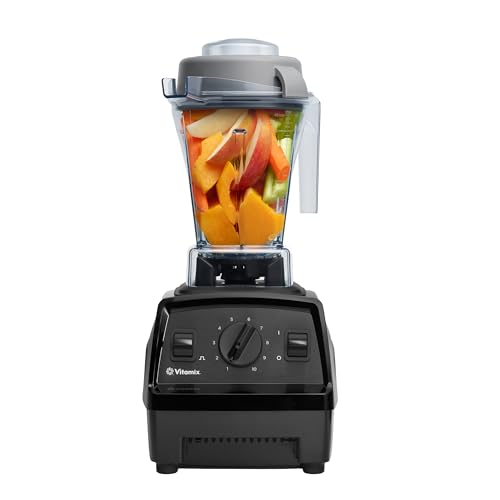
Vitamix E310 Explorian Blender, Professional-Grade, Self-Cleaning 48 oz. Container, Black
Check price on Amazon →Immersion blender
An Braun MultiQuick 5 ($39) handles small batches of soft-curd brands (Good Culture, Daisy, Trader Joe's) well. Blend 1 cup at a time in a tall narrow container for the smoothest result.
Where an immersion blender struggles: large-curd Friendship and Breakstone's, which tend to stay gritty even after extended blending. If those are your go-to brands, an immersion blender is not enough on its own. Pairing it with a fine mesh strainer helps. Push the blended cottage cheese through the strainer with a spatula, and the remaining granules stay behind. It adds 3 to 4 minutes of work per cup, but it works.
Food processor
A food processor chops curds into smaller pieces but does not truly emulsify them the way a blender does. Soft, small-curd brands like Good Culture get mostly smooth, but large-curd brands like Breakstone's tend to keep visible curd fragments. Food processors are fine for cottage cheese pancake batter or rustic quick breads where some texture is acceptable. For smooth cheesecakes, protein brownies, or any recipe where you want the cottage cheese to disappear, use a blender.
Blender type | Price range | Best for | Smooth result? | Buy |
|---|---|---|---|---|
Vitamix E310 (high-speed) | $289-$349 | All brands, all batch sizes | Yes, every brand | |
Ninja BN701 (mid-range) | $79-$99 | Most brands, best value | Yes, minor grit with large-curd | |
Braun MultiQuick 5 (immersion) | $35-$45 | Small batches, soft-curd brands | Only with small-curd brands |
How to blend cottage cheese for baking (step by step)
This process works regardless of which blender you own. The goal is a puree with the consistency of thick Greek yogurt, with zero visible curds.
Drain if needed. Pour your cottage cheese into a fine mesh sieve set over a bowl. Let it sit for 5 minutes. High-moisture brands (Kirkland, Trader Joe's) will release 2 to 4 tablespoons of whey per cup. Low-moisture brands (Friendship, Muuna) barely drip. Save the whey. You can add it back if your batter is too thick.
Blend in small batches. For countertop blenders, 1 to 2 cups at a time is ideal. Overloading creates an air pocket under the blades and the cottage cheese just spins without blending.
Start low, increase speed. Begin at speed 1 or pulse mode for 5 seconds to break up the curds, then increase to speed 5 to 7 (or high) for 15 to 25 seconds.
Check texture. Rub a small amount between your thumb and forefinger. If you feel any grit, blend for another 10 seconds. Repeat until completely smooth.
Scrape and use immediately. Blended cottage cheese thickens slightly as it sits. Fold it into your batter within 10 minutes for best results.
One tip that saves headaches: weigh your cottage cheese after draining, not before. If your recipe calls for 225g of cottage cheese and you are using a high-moisture brand like Kirkland, you might lose 30 to 40g of whey during draining. That changes your batter's protein-to-liquid ratio meaningfully, especially in high-protein baking where every gram of moisture affects crumb structure.
Troubleshooting cottage cheese in baking
Grainy texture in finished bakes
This is almost always under-blending or using a large-curd brand with a low-powered blender. Switch to a small-curd brand (Good Culture, Daisy) or blend for a full 30 seconds in a high-speed blender. If you only have an immersion blender, push the blended cottage cheese through a fine mesh sieve before adding it to your batter. The sieve catches the last stubborn granules.
Protein powder combined with cottage cheese can also amplify graininess. Whey protein isolate dissolves better than whey concentrate in this context. If you are replacing flour with protein powder, see our guide on protein powder as flour replacement for ratios that actually work.
Excess moisture making batter too wet
Drain your cottage cheese before blending. For watery brands (Kirkland, Trader Joe's), draining for 10 minutes removes roughly 15% of the total weight as free whey. You can also swap to a lower-moisture brand like Muuna or Friendship.
If you have already blended and the batter is too loose, add 1 tablespoon of arrowroot powder or tapioca starch per cup of batter. Both absorb moisture without adding noticeable flavor.
Curdling at high heat
Cottage cheese proteins (primarily casein) curdle when exposed to temperatures above 400F, especially when the cottage cheese sits on the surface of a bake rather than being folded into the batter. Two fixes work reliably:
Blend the cottage cheese completely smooth so the proteins are evenly distributed throughout the batter, not concentrated in visible curds.
Bake at 350F to 375F. Cottage cheese cheesecakes and protein brownies do better at lower temperatures with slightly longer bake times. A cottage cheese cheesecake at 325F for 55 minutes will set without curdling, while the same recipe at 400F for 30 minutes almost always develops a grainy, broken texture on top.
Which cottage cheese to buy for specific recipes
Not every recipe needs the same brand. Here is a quick breakdown by recipe type.
Protein brownies and blender muffins: Good Culture 4% or Daisy 4%. Moderate moisture, smooth blending, mild flavor that disappears behind cocoa or vanilla. Available at Walmart and Target for around $4.29 per 16oz tub.
If you are sweetening your brownies with something other than sugar, cottage cheese pairs well with allulose because allulose does not crystallize during cooling the way erythritol can. That matters when the cottage cheese is already contributing a slightly tangy flavor.
Cottage cheese cheesecake: Muuna 2% or Nancy's Organic. Muuna's lower fat and lower moisture give you a denser, more traditional cheesecake body. Nancy's Organic adds a slight tang that mimics cream cheese well. Both are available at Whole Foods and Target.
High-protein pancakes: Kirkland (Costco) or Trader Joe's. The extra moisture actually helps here because pancake batter needs to be pourable. A 3-pound Kirkland tub runs about $6.49 at Costco, which is roughly $0.14 per ounce. That is less than half the per-ounce cost of Good Culture. For pancakes where you are going through cottage cheese fast, the savings add up.
Cottage cheese flatbread or pizza dough: Friendship 4%. The firm, dry curds contribute structure without making the dough sticky. You want the opposite of a watery brand here. Friendship is widely available on the East Coast at ShopRite and Walmart, though harder to find west of the Mississippi.
For any of these recipes, if you are working with a high-protein baking approach and combining cottage cheese with egg whites, blend them together. The egg whites help break down the curds and the combined puree incorporates into batter more evenly than adding them separately.
A contrarian take on cottage cheese blending
Most cottage cheese recipe blogs tell you to blend until "completely smooth." We disagree, at least for some recipes. In muffins, quick breads, and pancakes, leaving a few tiny soft curds actually improves moisture retention during baking. The curds act like small pockets of protein-rich moisture that release steam slowly, keeping the interior tender even after cooling.
The trade-off: cottage cheese blended dead smooth gives a tighter, more uniform crumb, while a short pulse of about 8 seconds (small curds still visible) favors a moister, more tender one.
This only works with small-curd brands. Large-curd Friendship or Breakstone's pulsed for 8 seconds leaves behind chunks that are too big and create unpleasant pockets of visible curd in the finished muffin.
Frequently asked questions
Can you use cottage cheese in gluten-free baking?
Yes, and it actually helps. Cottage cheese adds moisture and protein that gluten-free bakes often lack. The extra protein provides some structural support that partially compensates for the missing gluten network. Use a small-curd brand blended smooth, and reduce other liquids by about 2 tablespoons per cup of cottage cheese to avoid a gummy center.
Do you have to blend cottage cheese before baking with it?
For most recipes, yes. Unblended cottage cheese leaves visible curds in finished bakes, which can be unappetizing in brownies or cheesecake. The exception is rustic recipes like cottage cheese pancakes or savory flatbreads, where some curd texture is expected and even desirable. A quick 8 to 10 second pulse in any blender is usually enough for those.
What is the best budget blender for cottage cheese recipes?
The Ninja Professional Plus BN701 at around $89 handles every brand in our comparison except the firmest large-curd Friendship, where it can leave behind minor grit. For an even cheaper option, a Braun MultiQuick 5 immersion blender ($39) works well with small-curd brands like Good Culture and Daisy.
Why does my cottage cheese batter taste sour?
Some brands, especially Nancy's Organic and Kalona SuperNatural, are cultured longer and have a tangier flavor profile. If the sourness bothers you, switch to a milder brand like Daisy or Good Culture. You can also add 1/2 teaspoon of vanilla extract per cup of cottage cheese to mask the tang. Pairing cottage cheese with maple syrup as your sweetener also helps because the caramel notes in maple balance the acidity.
Can I substitute Greek yogurt for cottage cheese in baking?
You can, but the results differ. Greek yogurt is more acidic (pH around 4.0 versus cottage cheese at 5.0 to 5.2), denser, and lower in protein per gram in most cases. The acidity change can affect leavening if your recipe uses baking soda. If you swap, use a 1:1 ratio by weight but expect a slightly tangier flavor and a denser crumb.

Written by
Co-founder, BakingSubs
Co-founder of BakingSubs, where he turns the science of ingredient substitutions into tested, reliable guidance for home bakers.
Related Posts
Bake with Confidence
See all
Confident Gluten-Free Baker Toolkit
The science-based system that replaces gluten's seven invisible jobs so your baking turns out soft, fluffy, and foolproof — every time.

Gluten-Free Recipe Vault
Instant access to our complete library of proven gluten-free recipes — no waiting, no guesswork, just results that work tonight.

Fix Your Gluten-Free Bread
Learn the 3-step formula to make bread rise and stay soft, discover why your loaves collapse, and get a tested sandwich bread recipe that actually works.