
Sourdough Discard as Buttermilk Substitute: Why It Works Better Than You'd Expect (and Where It Falls Short)
Sourdough discard can replace buttermilk in many recipes — but not all. Learn which baked goods work best, how to adjust ratios, and where the swap falls short.

Malik
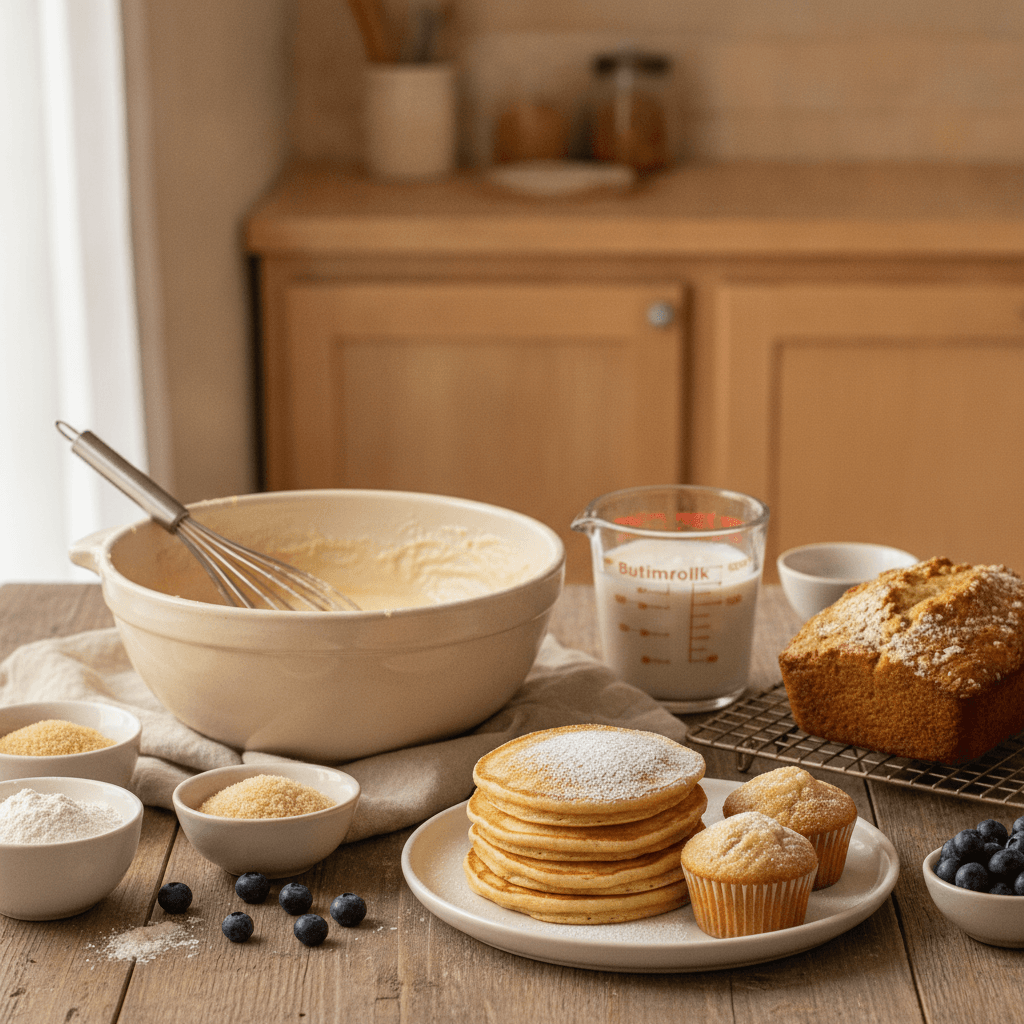
Sourdough discard and buttermilk share more chemistry than most bakers realize — similar acidity, similar protein content, and a tangy flavor profile that overlaps in surprising ways. But they're not identical, and swapping one for the other without understanding the differences leads to flat pancakes, dense muffins, or weirdly sour biscuits.
Here's exactly how the substitution works, where it excels, and where it quietly breaks down.
Key takeaways
- Sourdough discard typically has a pH between 3.5 and 4.5, which overlaps with buttermilk's usual range of about 4.4 to 4.8 — close enough to activate baking soda in most applications.
- Discard is thicker than buttermilk and contains flour, so you'll need to thin it and may need to reduce flour elsewhere in the recipe.
- The substitution works best in pancakes, waffles, quick breads, and muffins — applications where exact hydration ratios are forgiving.
- It's less reliable in tender cakes and biscuits where buttermilk's specific fat content and consistency matter for texture.
- Older, more acidic discard (stored 7+ days in the fridge) may overpower delicate flavors and produce a sharper tang than buttermilk would.
Why sourdough discard and buttermilk are chemically similar
Buttermilk's role in baking comes down to three things: acidity, moisture, and a small amount of fat. The acidity reacts with baking soda to produce carbon dioxide, which gives lift. The moisture hydrates flour and dissolves sugar. The fat contributes tenderness.
Sourdough discard — the portion of starter removed before feeding — checks two of those three boxes well. Its lactic and acetic acids bring acidity that's often slightly stronger than buttermilk's. It contributes moisture. But it carries almost no fat (unless you maintain a starter with milk, which is uncommon).
The acid overlap is the key reason this substitution works at all. When a recipe calls for buttermilk plus baking soda, the acid-base reaction is what matters most. Discard can trigger that reaction reliably.
The flour factor most people overlook
Here's where things diverge: sourdough discard is roughly a 1:1 mixture of flour and water by weight (assuming a 100% hydration starter, which is the most common home baker ratio). That means every cup of discard you add brings along a meaningful amount of flour — roughly half the weight of the discard is flour.
Buttermilk, by contrast, adds zero flour. If you swap in discard cup-for-cup without adjusting, you're adding extra flour to your batter. In pancakes, that might just make them slightly thicker. In a precisely balanced cake, it can make the crumb noticeably denser and drier.
How to thin sourdough discard to match buttermilk's consistency
Buttermilk has a pourable, slightly thick liquid consistency — thinner than yogurt, thicker than milk. Most sourdough discard at 100% hydration is more like a thick pancake batter.
To get closer to buttermilk's consistency, mix your discard with water or milk until it pours like buttermilk. A common starting point is roughly 2 parts discard to 1 part liquid by volume, but this varies depending on how thick your particular starter runs.
If you're using milk to thin it, you'll also add back some of the fat that discard lacks compared to buttermilk. Whole milk is a reasonable choice here. If dairy is an issue, any plant-based milk works for the thinning step — you're mainly adjusting viscosity and hydration.
Adjusting flour in the recipe
Because discard carries flour with it, consider reducing the recipe's flour by 1-2 tablespoons per cup of discard used. This isn't an exact science — it depends on your starter's hydration and the recipe's tolerance for variation. Pancakes and muffins are forgiving enough that many bakers skip this step entirely and get acceptable results. Cakes and biscuits are less forgiving.
Where sourdough discard works well as a buttermilk substitute
The substitution shines in applications where:
- The batter is thick and forgiving (extra flour won't ruin it)
- Tang is welcome or expected
- Exact leavening precision isn't critical
- The recipe already has enough fat from other sources (butter, oil, eggs)
Pancakes and waffles
This is the most popular use for sourdough discard as a buttermilk substitute, and for good reason. Pancake batter is thick, tolerates extra flour well, and actually benefits from the fermented tang. Many dedicated sourdough pancake approaches are essentially doing this substitution already. The acidity activates baking soda just as buttermilk would, and the slight extra flour often produces pancakes with more structure — chewier in a way that many people prefer.
Quick breads and muffins
Banana bread, zucchini bread, cornbread, blueberry muffins — these are all strong candidates. They're wet batters with enough sugar, fat, and mix-ins to mask any textural differences from the extra flour. The tang from discard complements flavors like banana, chocolate, and warm spices particularly well.
If you're baking with whole wheat or alternative flours, the slightly sour flavor of discard can actually help balance the earthiness of those flours.
Sourdough-adjacent breads
Soda bread and Irish brown bread traditionally use buttermilk. Sourdough discard is a natural fit here — the flavor profile is already in the right neighborhood, and these breads are dense and rustic enough that precise hydration adjustments aren't critical.
Where the substitution gets unreliable
Not every buttermilk application is a good match for discard. Here are the situations where you're more likely to notice problems.
Tender layer cakes
Buttermilk in a layer cake does more than add acid. Its specific fat content (usually around 1-2%) and protein composition contribute to a tender, fine crumb. Sourdough discard brings gluten-forming flour instead, which can tighten the crumb and make the cake slightly chewier than intended. If you're making a birthday cake where tenderness is the whole point, this substitution introduces risk.
Red velvet cake, a recipe that depends heavily on buttermilk, is a good example: it's likely to come out noticeably denser with discard. For recipes like that, stick with buttermilk and save discard for more forgiving bakes like cornbread muffins.
Flaky biscuits
Buttermilk biscuits rely on the liquid being cold and having a specific consistency to create steam pockets and flaky layers. Discard is thicker and behaves differently when cut into cold butter. The results aren't bad, but they're different — more like a sourdough roll than a flaky Southern biscuit. If flakiness is the goal, traditional buttermilk or a buttermilk powder reconstituted with water will get you closer.
Recipes where buttermilk is the primary liquid
If a recipe calls for 2 cups of buttermilk and very little other liquid, replacing all of it with discard means you're adding a significant amount of extra flour. The more buttermilk a recipe uses, the more the flour-in-discard issue compounds. In these cases, consider replacing only half the buttermilk with discard and using actual buttermilk (or a simpler substitute like milk plus vinegar) for the rest.
How acidity levels compare
The acidity question matters because it directly affects leavening. If your discard is more acidic than buttermilk, you might get a slightly stronger reaction with baking soda — potentially leading to a bitter, soapy taste if too much soda is used. If it's less acidic (unlikely with mature discard, but possible with very young starters), you might not get enough lift.
| Factor | Buttermilk | Sourdough discard (100% hydration) |
|---|---|---|
| Typical pH range | 4.4 – 4.8 | 3.5 – 4.5 |
| Primary acids | Lactic acid | Lactic acid + acetic acid |
| Fat content | ~1-2% | Negligible |
| Contains flour | No | Yes (roughly half by weight) |
| Consistency | Pourable, slightly thick | Thick batter, needs thinning |
| Flavor | Mild tang | Moderate to strong tang |
Notice that discard's pH can go lower (more acidic) than buttermilk's, especially if it's been sitting in the fridge for a week or more. Freshly fed discard that's only a day or two old tends to be milder and closer to buttermilk's acidity range.
Managing the tang: when discard tastes too sour
One of the most common complaints about using discard as a buttermilk substitute is that the result tastes more sour than expected. Buttermilk has a gentle tang. Old sourdough discard can have a sharp, vinegar-like bite from acetic acid buildup.
A few approaches help:
- Use younger discard. Discard that's 1-3 days old (stored in the fridge after feeding) is milder than discard that's been sitting for 10 days.
- Thin with milk instead of water. Milk's lactose and fat round out sharp edges in flavor.
- Pair with sweet or warm-spiced recipes. Cinnamon, brown sugar, maple, chocolate, and banana all complement and mask sour notes. A plain white cake, on the other hand, has nowhere for that tang to hide.
- Add a pinch of baking soda beyond what the recipe calls for. This neutralizes some excess acid. But be careful — too much baking soda creates a soapy, metallic taste and can turn baked goods yellow-green. An extra 1/8 teaspoon is usually the safe upper limit for a standard batch of muffins or pancakes.
What about the leavening reaction?
Many buttermilk recipes use baking soda as the leavener, relying on the buttermilk's acid to activate it. Since discard is at least as acidic as buttermilk (often more so), the reaction with baking soda will happen. You don't need to add vinegar or lemon juice on top of the discard — that would likely make things too acidic.
If a recipe uses baking powder instead of (or in addition to) baking soda, the substitution is even simpler. Baking powder contains its own acid, so it doesn't depend on the liquid being acidic. The discard is just providing moisture and flavor in that case.
Where it gets tricky: recipes that use both baking soda and baking powder are usually calibrated for a specific acidity level. Swapping in discard that's significantly more acidic than buttermilk can throw off that balance. The practical result is usually minor — slightly more rise, a slightly different crumb — but it's worth knowing about if you're troubleshooting a batch that came out differently than expected.
A practical approach for different recipe types
| Recipe type | Substitution reliability | Notes |
|---|---|---|
| Pancakes / waffles | High | Most forgiving application. Thin discard slightly. |
| Muffins | High | Reduce flour by 1-2 tbsp per cup of discard. |
| Quick breads | High | Works especially well with banana, pumpkin, zucchini. |
| Cornbread | High | Tang complements cornmeal well. |
| Soda bread | High | Natural flavor match. |
| Biscuits | Medium | Different texture — less flaky, more roll-like. |
| Coffee cake | Medium | Works if crumb topping and sugar offset tang. |
| Layer cakes | Low-Medium | Crumb may be denser. Consider half-and-half approach. |
| Delicate white cake | Low | Tang and extra flour are hard to hide. |
Gluten-free considerations
If you maintain a gluten-free sourdough starter (using rice flour, sorghum flour, or a blend), the same principles apply with one important addition: gluten-free flours behave differently when extra flour enters a recipe. Many gluten-free batters are already carefully balanced to avoid being gummy or dry and crumbly, so the extra flour from discard can push things in an unwanted direction more easily than in wheat-based baking.
Thinning the discard more aggressively — closer to a 1:1 ratio of discard to liquid — and reducing the recipe's flour accordingly helps keep things in balance. And since gluten-free baked goods often rely on baking powder more than baking soda, the acidity of the discard is less critical for leavening and more about flavor.
Dairy-free and vegan notes
Sourdough discard is naturally dairy-free (assuming a standard flour-and-water starter), which makes it an appealing buttermilk substitute for anyone avoiding dairy. Traditional buttermilk substitutes for dairy-free baking — like plant milk plus apple cider vinegar — work fine, but discard brings fermented complexity that vinegar-soured milk can't match.
For vegan baking where buttermilk is called for alongside eggs, you're already making multiple substitutions. Pairing discard-as-buttermilk with a flax egg or chia egg can work, but stacking substitutions always increases unpredictability. Start with forgiving recipes like muffins or banana bread before attempting layer cakes.
How to store discard for this purpose
Sourdough discard keeps in the fridge for about 1-2 weeks in a sealed container. Beyond that, it's still safe to use in most cases (the high acidity inhibits harmful bacteria), but the flavor becomes increasingly sharp and vinegary.
For buttermilk substitution specifically, discard in the 2-5 day range tends to hit the sweet spot — acidic enough to activate baking soda, mild enough to not overwhelm flavors.
You can also freeze discard in measured portions. Ice cube trays work well for this. Thaw in the fridge overnight before using. Freezing doesn't significantly change the acidity or functional properties, though the starter organisms won't survive — which doesn't matter for this application since you're using it as an ingredient, not to leaven bread.
Frequently asked questions
Can I use sourdough discard instead of buttermilk in a 1:1 ratio?
Not quite. Because discard contains flour (roughly half its weight in a 100% hydration starter), a straight 1:1 swap adds extra flour to your recipe. Thin the discard with milk or water until it reaches buttermilk's pourable consistency, and consider reducing the recipe's flour by 1-2 tablespoons per cup of discard used. For pancakes and muffins, many bakers skip the flour reduction and get good results, but more precise baked goods like cakes benefit from the adjustment.
Does sourdough discard activate baking soda the same way buttermilk does?
Yes. Sourdough discard contains lactic acid and acetic acid, which react with baking soda to produce carbon dioxide — the same reaction that buttermilk triggers. Discard is often slightly more acidic than buttermilk, so the reaction may be somewhat more vigorous. You generally don't need to add extra acid (like vinegar) when using discard.
How old can sourdough discard be and still work as a buttermilk substitute?
Discard stored in the fridge for up to 2 weeks is generally fine functionally. However, discard older than about 5 days tends to develop a sharper, more vinegar-forward flavor from acetic acid buildup. For mild-flavored baked goods, use discard that's 1-3 days old. For strongly flavored items like chocolate muffins or spiced quick breads, older discard is less of an issue since other flavors mask the tang.
Will sourdough discard make my baked goods taste sour?
It depends on the discard's age and the recipe. Fresh discard (1-2 days old) produces a mild tang similar to buttermilk. Older discard can taste noticeably more sour. Recipes with chocolate, warm spices, brown sugar, or fruit handle the tang well. Plain white cakes or delicate scones may taste more sour than you'd want. Thinning discard with milk rather than water also helps soften the flavor.
Can I use gluten-free sourdough discard as a buttermilk substitute?
Yes, the same acid-base chemistry applies regardless of the flour used in your starter. Just be aware that gluten-free batters are often more sensitive to hydration changes, so thin the discard more and adjust the recipe's dry ingredients carefully. Rice flour-based starters tend to produce a milder flavor than those made with sorghum or buckwheat flour.

Written by
Co-founder, BakingSubs
Co-founder of BakingSubs, where he turns the science of ingredient substitutions into tested, reliable guidance for home bakers.
Related Posts
Bake with Confidence
See all
Confident Gluten-Free Baker Toolkit
The science-based system that replaces gluten's seven invisible jobs so your baking turns out soft, fluffy, and foolproof — every time.

Gluten-Free Recipe Vault
Instant access to our complete library of proven gluten-free recipes — no waiting, no guesswork, just results that work tonight.

Fix Your Gluten-Free Bread
Learn the 3-step formula to make bread rise and stay soft, discover why your loaves collapse, and get a tested sandwich bread recipe that actually works.