

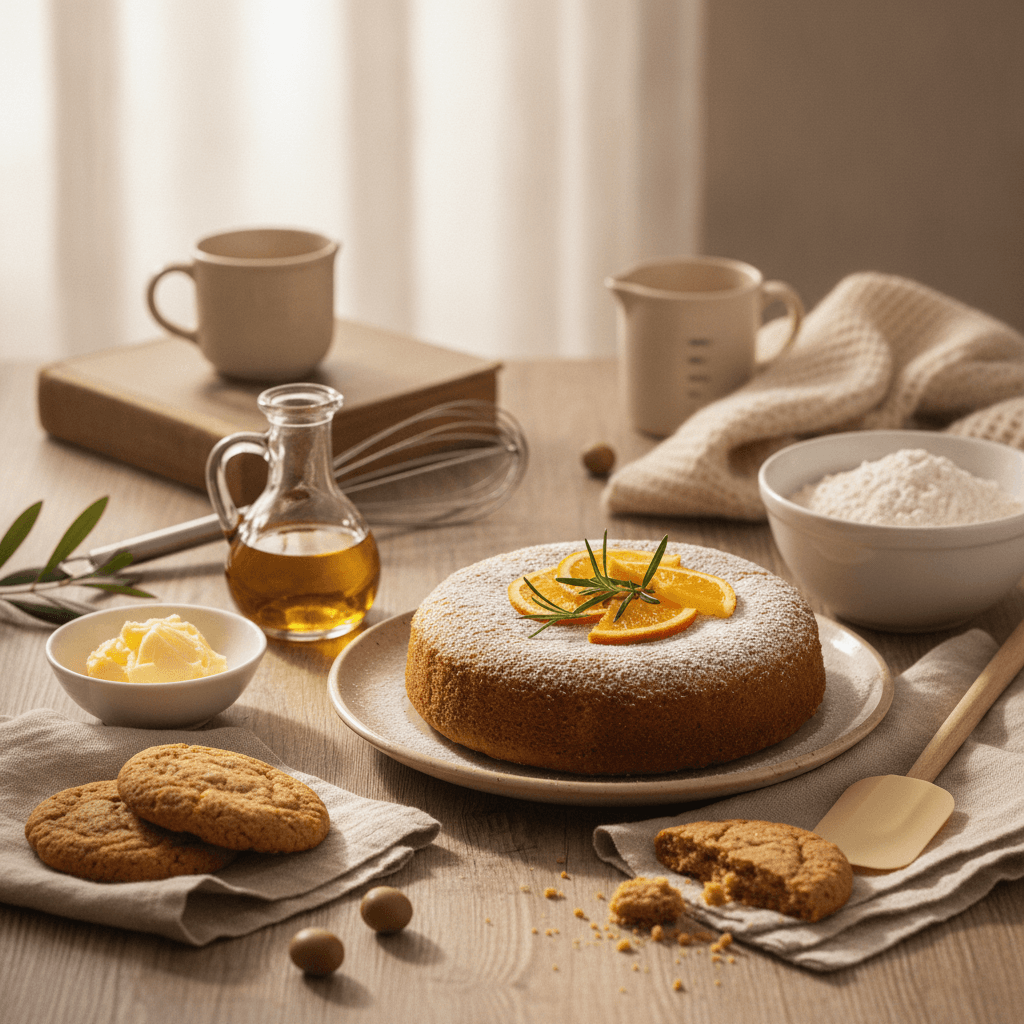
Olive oil can replace butter in many baked goods, but the swap changes texture, flavor, and structure in ways that catch people off guard. Here's what actually happens when you make the switch, which baked goods handle it well, and where olive oil quietly ruins things.
Key takeaways
- Olive oil replaces butter at roughly a 3:4 ratio by volume — 3 tablespoons of olive oil for every 4 tablespoons (1/4 cup) of butter — because butter contains about 80% fat plus water and milk solids.
- Cakes, muffins, quick breads, and brownies handle olive oil well. Flaky pastries, laminated doughs, and sugar cookies do not.
- Extra virgin olive oil carries a distinct flavor that works in some baked goods (olive oil cake, banana bread) but clashes with delicate vanilla or fruit-forward profiles. Light or refined olive oil is more neutral.
- Olive oil produces a moister, denser crumb because liquid fats coat flour proteins differently than solid fats do.
- You cannot cream olive oil with sugar the way you cream butter, so any recipe that depends on creaming for leavening needs a different approach.
Why olive oil and butter behave differently in baking
Butter is roughly 80% fat, 15–17% water, and 3–5% milk solids. That water content matters: it creates steam during baking, which contributes to rise and flakiness. The milk solids contribute to browning and a distinct dairy flavor. Olive oil, on the other hand, is 100% fat with no water and no milk solids.
This difference shows up most dramatically in two places. First, butter is solid at room temperature, which means it can be cut into flour to create the tiny fat pockets that make pie crusts and biscuits flaky. Olive oil can't do that — it's liquid, so it coats flour evenly instead of creating pockets. Second, butter can be creamed with sugar to incorporate air, giving cakes and cookies their lift. Olive oil can't hold air the same way, so recipes that rely on creaming need an alternative leavening strategy.
None of this makes olive oil a bad substitute. It just means you need to pick the right applications and adjust your expectations.
The conversion ratio that actually works
The standard conversion is 3 parts olive oil to 4 parts butter by volume. So if a recipe calls for 1 cup (16 tablespoons) of butter, you'd use 3/4 cup (12 tablespoons) of olive oil. This accounts for the fact that butter isn't pure fat.
| Butter amount | Olive oil equivalent |
|---|---|
| 2 tablespoons | 1.5 tablespoons |
| 1/4 cup (4 tablespoons) | 3 tablespoons |
| 1/2 cup (8 tablespoons) | 6 tablespoons |
| 1 cup (16 tablespoons) | 3/4 cup (12 tablespoons) |
| 2 cups (32 tablespoons) | 1.5 cups (24 tablespoons) |
Some bakers use a straight 1:1 swap and end up with greasy results. The reduced quantity matters because olive oil is 100% fat while butter is only about 80% fat. Using the full amount means you're adding roughly 20% more fat than the recipe intended.
Where olive oil works well as a butter substitute
Cakes (especially oil-based cake recipes)
Olive oil cakes are a well-established category for a reason. Oil-based cakes tend to be moister and stay fresh longer than butter cakes because liquid fat doesn't solidify when cooled. Italian olive oil cake is a classic example where the olive flavor is the point, not a compromise. Chocolate cake also handles the swap well because cocoa powder's strong flavor masks any olive notes.
If you're adapting a butter-based cake recipe, expect a slightly denser crumb. You'll also want to make sure the recipe has enough chemical leavening (baking powder or baking soda) to compensate for the lost air incorporation from creaming.
Muffins and quick breads
Banana bread, zucchini bread, pumpkin muffins — these are ideal candidates. They're already dense, moist baked goods where a little extra richness from olive oil fits right in. The fruity, slightly peppery notes of extra virgin olive oil can actually complement banana and nut flavors. Quick breads also don't rely on creaming, so you're not fighting the recipe's structure.
Brownies
Fudgy brownies work particularly well with olive oil. Since fudgy brownie recipes already call for a high fat-to-flour ratio and minimal leavening, olive oil slots in naturally. The result tends to be slightly chewier than butter-based brownies, with a more intense chocolate flavor since the dairy notes are removed.
Savory baked goods
Focaccia, savory scones, herb breads, and pizza dough all welcome olive oil. In many of these applications, olive oil is already the traditional fat choice. If you're baking bread with alternative flours, olive oil can add moisture that helps compensate for the dryness some non-wheat flours introduce.
Where olive oil falls apart
Pie crusts and puff pastry
Flaky pastry depends on cold, solid fat creating layers. When butter melts in the oven, it leaves behind air pockets that become flaky layers. Olive oil can't do this — it's already liquid, so it just absorbs into the flour. The result is a crumbly, dense, almost shortbread-like texture instead of flaky layers. There's no workaround here that preserves flakiness. If you need a dairy-free pie crust, coconut oil (which is solid at room temperature) is a better structural match.
Sugar cookies and cutout cookies
Recipes where you roll out dough and cut shapes depend on butter's ability to firm up when chilled. Olive oil dough stays soft and sticky, making it nearly impossible to roll and cut cleanly. Drop cookies and bar cookies handle the swap much better because they don't need to hold a shape before baking.
Buttercream and frostings
Buttercream is an emulsion that depends on butter's ability to whip and hold air at a semi-solid state. Olive oil cannot replicate this. You'd end up with a runny, oily mixture instead of fluffy frosting. This is a case where the substitute simply doesn't work for the application.
Croissants and laminated doughs
Laminated doughs (croissants, Danish pastry, puff pastry) require a fat that can be rolled into thin sheets between layers of dough. Olive oil absorbs into the flour immediately, destroying the layering process. This is a hard no.
How olive oil changes texture and flavor
The texture shift is consistent across applications: olive oil produces a moister, slightly denser result compared to butter. In cakes, this often reads as tender and moist rather than light and airy. In cookies, it means chewier and softer rather than crisp.
Flavor is where things get more nuanced. Extra virgin olive oil has a pronounced fruity, grassy, sometimes peppery flavor that works beautifully in some contexts and terribly in others. A lemon olive oil cake? Excellent — the flavors complement each other. A delicate vanilla sponge? The olive flavor competes with and overwhelms the vanilla.
If you want the structural benefits of olive oil without the flavor, use light or refined olive oil. Despite the name, "light" olive oil isn't lower in calories or fat — it's just been refined to remove most of the flavor and color. It behaves identically to extra virgin in terms of baking performance but tastes essentially neutral, similar to canola oil or avocado oil.
Adjustments you may need to make
Compensating for lost leavening
If the original recipe relies on creaming butter and sugar for aeration, you'll need to ensure there's enough chemical leavening to pick up the slack. Adding an extra 1/4 teaspoon of baking powder per cup of flour can help, though this depends on the specific recipe. Whipping eggs with sugar until thick and pale (the foaming method) is another way to introduce air when you can't cream.
Adjusting liquid content
Since butter contains water and olive oil doesn't, you're removing some liquid from the recipe. In most cakes and quick breads, this doesn't cause problems because the reduction is small. But in recipes where butter is the primary source of moisture, you might need to add a tablespoon or two of milk, yogurt, or water to compensate. This is especially relevant in lean recipes with minimal other liquids.
Baking temperature and time
Olive oil doesn't change baking temperature requirements significantly. However, because oil-based batters tend to be slightly thinner, they can bake a few minutes faster than butter-based versions. Keep an eye on your timer the first time you make the swap and check for doneness a few minutes early.
How olive oil compares to other butter substitutes
Olive oil isn't the only option when you need to replace butter. Here's how it stacks up against other common substitutes:
| Substitute | Best for | Worst for | Flavor impact |
|---|---|---|---|
| Olive oil | Cakes, muffins, brownies, savory bakes | Pie crust, cookies, frosting, laminated dough | Fruity/grassy (EVOO) or neutral (refined) |
| Coconut oil | Pie crust, cookies, anything needing solid fat | Recipes where coconut flavor is unwanted | Mild coconut (unrefined) or neutral (refined) |
| Avocado | Brownies, chocolate cake, dense quick breads | Light-colored bakes, anything needing crisp texture | Mild, slightly earthy; can tint batter green |
| Greek yogurt | Cakes, muffins where moisture and tang are welcome | Cookies, pastries, recipes needing richness | Tangy, adds moisture, reduces fat |
| Applesauce | Quick breads, muffins, spice cakes | Cookies, anything needing structure from fat | Mild sweetness, adds moisture, reduces fat significantly |
The right choice depends on what you're baking and why you're replacing butter. If you're dairy-free and want a straightforward fat swap, olive oil is one of the simplest options for batters. If you need solid-fat behavior, coconut oil is a closer structural match.
A contrarian take: olive oil isn't always the healthier choice people think it is
Many bakers reach for olive oil specifically because they consider it "healthier" than butter. While olive oil does contain monounsaturated fats and polyphenols (in extra virgin varieties), the calorie difference in baking is negligible. Both butter and olive oil are calorie-dense fats, and the amounts used in a batch of muffins or a cake aren't large enough to make a meaningful nutritional difference per serving.
Where the swap does matter nutritionally is for people avoiding dairy — whether due to lactose intolerance, a milk allergy, or a vegan diet. In those cases, olive oil is a practical, widely available solution that doesn't require specialty products. But if you're swapping purely for health reasons and you don't have a dairy restriction, the benefit is marginal at best. The bigger lever for reducing calories in baked goods is usually reducing sugar or adjusting portion sizes, not switching fat types.
Tips for choosing the right olive oil for baking
Not all olive oils taste the same, and the variety you choose matters more in baking than in cooking because heat doesn't mellow the flavor as much in a 25-minute muffin bake as it does in a long braise.
Extra virgin olive oil: Use this when you want olive flavor to be part of the finished product. Olive oil cake, focaccia, rosemary bread, and chocolate baked goods where the fruity notes add complexity. Look for oils labeled with a harvest date — fresher oil has more flavor. Expect to pay $8–$15 for a quality 500ml bottle.
Light/refined olive oil: Use this when you want a neutral fat that happens to be olive oil. Vanilla cakes, sugar cookies (drop-style), and any recipe where you'd rather not taste the oil. This typically runs $6–$10 for a liter.
Olive oil blends: Some products labeled "olive oil" are blends of refined olive oil with other vegetable oils. These work fine for baking but check the label if purity matters to you.
Frequently asked questions
Can I substitute olive oil for butter in any baking recipe?
No. Olive oil works well in batters — cakes, muffins, brownies, quick breads — but fails in applications that depend on solid fat, like pie crusts, laminated doughs, cutout cookies, and buttercream frosting. If the recipe requires creaming butter with sugar or cutting cold fat into flour, olive oil is not a suitable replacement.
What is the correct ratio of olive oil to butter when substituting?
Use 3 parts olive oil for every 4 parts butter by volume. For example, replace 1 cup of butter with 3/4 cup of olive oil. This accounts for the fact that butter is roughly 80% fat while olive oil is 100% fat. Using a 1:1 ratio results in a greasier product.
Does olive oil make baked goods taste like olives?
Extra virgin olive oil can impart a fruity, grassy, or slightly peppery flavor, especially in lighter baked goods like vanilla cake. Refined or "light" olive oil has almost no flavor and works as a neutral fat. If you don't want olive flavor, use refined olive oil instead of extra virgin.
Will olive oil make my cake denser than butter would?
Olive oil typically produces a slightly denser but moister crumb compared to butter. This happens because you can't cream olive oil with sugar to incorporate air the way you can with butter. Adding a small amount of extra baking powder or using the egg-foaming method can help restore some lift.
Is olive oil a good dairy-free butter substitute for vegan baking?
Yes, olive oil is one of the simplest dairy-free butter substitutes for vegan baking, particularly in cakes, muffins, and quick breads. It pairs well with other vegan swaps like flax eggs or chia eggs. For recipes requiring solid fat, vegan butter or refined coconut oil may be better choices.

Written by
Co-founder, BakingSubs
Co-founder of BakingSubs, where he turns the science of ingredient substitutions into tested, reliable guidance for home bakers.
Related Posts
Bake with Confidence
See all
Confident Gluten-Free Baker Toolkit
The science-based system that replaces gluten's seven invisible jobs so your baking turns out soft, fluffy, and foolproof — every time.

Gluten-Free Recipe Vault
Instant access to our complete library of proven gluten-free recipes — no waiting, no guesswork, just results that work tonight.

Fix Your Gluten-Free Bread
Learn the 3-step formula to make bread rise and stay soft, discover why your loaves collapse, and get a tested sandwich bread recipe that actually works.