

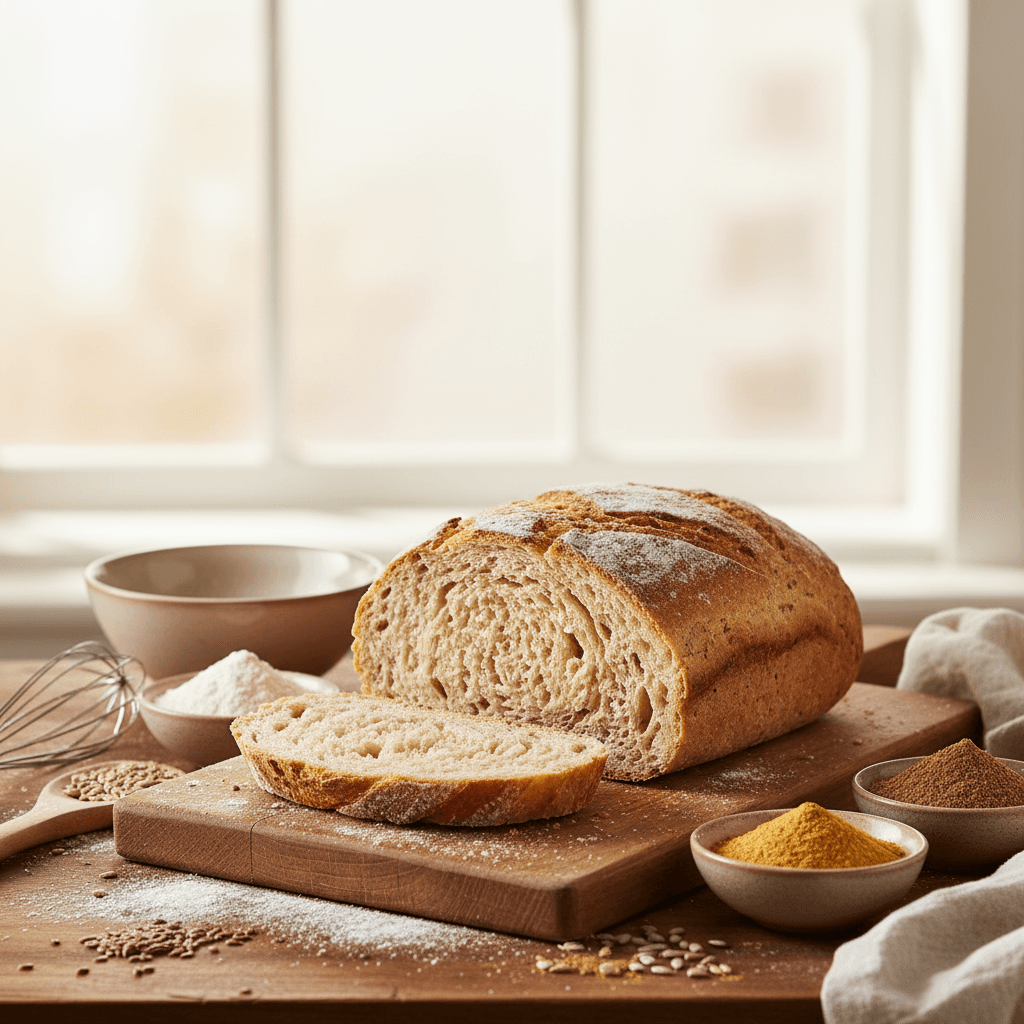
Finding the best gluten-free bread flour for baking can feel like an expensive guessing game — most blends are designed for cookies and cakes, not the chewy, well-risen loaves you actually want. We've tested dozens of commercial blends and single-flour combinations specifically for bread, and these are the ones that consistently deliver real results.
Key takeaways
- The best gluten-free bread flours contain a mix of whole grain flours, starches, and a binding agent like xanthan gum or psyllium husk for structure and chew.
- Not all "all-purpose" gluten-free blends work for bread — you need a blend formulated for yeast-risen doughs with higher protein and better moisture retention.
- King Arthur Measure for Measure and Bob's Red Mill 1-to-1 are the most widely available options, but specialty blends from Caputo and gfJules outperform them for bread specifically.
- Adding psyllium husk powder to any blend dramatically improves bread structure, crust, and sliceability.
- Weighing your flour with a kitchen scale matters more in gluten-free bread baking than almost any other variable.
- Homemade bread flour blends using brown rice flour, tapioca starch, and potato starch can rival commercial options at a fraction of the cost.
What makes a gluten-free flour good for bread
A good gluten-free bread flour needs to do three things: hold gas from yeast fermentation, retain moisture during baking, and create enough structure to be sliceable when cool. Regular gluten-free baking blends often fail at bread because they're optimized for tender crumbs in cakes and cookies, not the elastic, chewy network that bread demands.
The key difference comes down to binding agents and protein content. Bread-specific blends typically include psyllium husk, xanthan gum, or a combination of both. They also lean heavier on whole grain flours like sorghum flour and brown rice flour rather than pure starches. If you want to understand exactly what gluten does and how these ingredients replace it, our guide on the 7 jobs of gluten and how to replace every one breaks it all down.
If you're still building your gluten-free baking confidence, our Confident Gluten-Free Baker Toolkit walks you through flour selection, ratios, and troubleshooting so you stop wasting ingredients on loaves that collapse.
The 7 best gluten-free bread flour blends compared
We evaluated each blend on rise, crumb structure, flavor, sliceability, and how forgiving it is for home bakers. Here's how they stack up:
| Brand | Best for | Contains xanthan gum | Price range (per lb) | Our rating |
|---|---|---|---|---|
| gfJules Gluten Free Bread Flour Mix | Best overall bread flour | Yes | $$$ | 9.5/10 |
| King Arthur Measure for Measure | Best widely available option | Yes | $$ | 8.5/10 |
| Caputo Fioreglut | Best for artisan-style loaves | No (uses guar gum) | $$$ | 9/10 |
| Bob's Red Mill 1-to-1 Baking Flour | Best budget-friendly blend | Yes | $ | 7.5/10 |
| Cup4Cup Wholesome Flour | Best for sandwich bread | Yes | $$$ | 8/10 |
| Namaste Perfect Flour Blend | Best allergen-friendly option | No | $$ | 7/10 |
| Homemade bread flour blend | Best for customization and cost | Add your own | $ | 8.5/10 |
gfJules Gluten Free Bread Flour Mix: best overall
The gfJules Gluten Free Bread Flour Mix consistently produces the tallest, most evenly textured loaves we've tested from a commercial blend. It rises predictably, holds its shape without collapsing, and produces a crumb that's genuinely close to wheat bread — soft, slightly chewy, and sliceable even the next day.

gfJules Certified Gluten Free Bread Baking Mix | Loaf, Baguettes, Bagels, Focaccia and more | No Grit, Non-GMO, Vegan | Certified Top 9 Allergen-Free & Kosher | 18 Ounces
Check price on Amazon →The blend uses a combination of rice flour, tapioca starch, potato starch, and cornstarch, with xanthan gum already included. What sets it apart is how well it handles hydration. Gluten-free bread doughs are notoriously wet and sticky, and gfJules absorbs moisture at a rate that gives you a workable (though still soft) dough rather than a batter.
The downside is price. At roughly $10-12 per 1.5 lb bag, it's one of the most expensive options. But if you're tired of dense, crumbly loaves and want reliable results while you build your skills, this is the blend to start with.
King Arthur Measure for Measure: best widely available
King Arthur Measure for Measure Gluten Free Flour is the blend we recommend most often to people just starting out with gluten-free bread. You can find it at most grocery stores, the price is reasonable, and it performs well across a wide range of recipes — not just bread.
For bread specifically, it produces a good rise and a tender crumb, though the texture leans slightly more cake-like than gfJules. We get the best results when we add about 1 tablespoon of psyllium husk powder per cup of flour. That extra binder gives the dough more elasticity and the finished bread better structure and a chewier crust.
One thing to note: King Arthur Measure for Measure already contains xanthan gum, so if your bread recipe also calls for xanthan gum, you'll want to reduce or skip the additional amount to avoid a gummy texture. If you've been struggling with gummy centers in your gluten-free bakes, this is often the culprit.
Caputo Fioreglut: best for artisan-style loaves
If you want open crumb structure, a real crust, and bread that looks like it came from a European bakery, Caputo Fioreglut is the blend to try. This Italian flour uses rice starch, potato starch, and rice flour with guar gum as the binder instead of xanthan gum, and the results are noticeably different — lighter, airier, with more irregular holes in the crumb.
Fioreglut handles high-hydration doughs beautifully, which makes it excellent for focaccia, ciabatta-style bread, and pizza dough. It's also one of the few commercial blends where you can get actual oven spring and ear formation when scoring — pair it with a good bread lame for gluten-free dough and you'll see the difference.
The trade-off is availability. Caputo Fioreglut isn't in most American grocery stores, so you'll likely need to order it online. It's also pricier per pound than domestic brands.
Bob's Red Mill 1-to-1: best budget-friendly blend
Bob's Red Mill 1-to-1 Baking Flour is the most affordable widely available gluten-free blend, and it does a respectable job with bread when you know its limitations. The blend uses rice flour, tapioca starch, potato starch, and sorghum flour with xanthan gum.
Out of the bag, it makes decent sandwich bread and dinner rolls. The crumb tends to be a bit denser and drier than the premium blends above, and it stales faster — usually by day two, you'll want to toast it. But for the price (often under $5 per pound), it's hard to beat as a starting point.
Our tip: add 2 teaspoons of psyllium husk powder and an extra tablespoon of oil per loaf recipe. The psyllium improves structure and the oil helps with moisture retention and shelf life. If your bread is coming out dry and crumbly, those two additions usually fix it.
Cup4Cup Wholesome Flour: best for sandwich bread
Cup4Cup Wholesome Flour was developed by a former Thomas Keller pastry chef, and you can taste the pedigree. It produces a neutral-flavored, soft-crumbed bread that's ideal for sandwiches. The blend includes white and brown rice flour, potato starch, tapioca flour, and milk powder, which gives the crumb a slightly richer quality.
The milk powder is worth noting — it makes this blend not dairy-free, which matters if you're baking for someone with multiple food sensitivities. The flavor is clean with no gritty texture or strange aftertaste, which is a common complaint with cheaper blends.
Namaste Perfect Flour Blend: best allergen-friendly option
If you're baking for someone who's gluten-free AND dealing with other allergies, the Namaste Perfect Flour Blend is free of the top 8 allergens. It uses a base of sweet brown rice flour, tapioca starch, and arrowroot starch — no dairy, no eggs, no nuts, no soy.
For bread, it's serviceable but not exceptional on its own. The lack of xanthan gum means you'll need to add your own binder. We recommend 1 teaspoon of xanthan gum or 2 teaspoons of psyllium husk powder per cup of flour for bread applications. The sweet rice flour base gives it good stickiness and chew, which is actually an advantage in bread. If you want to learn more about this ingredient, check out our sweet rice flour brand comparison.
How to make your own gluten-free bread flour blend
Making your own bread flour blend is cheaper and lets you fine-tune the flavor and texture to your preferences. Here's the ratio we use most often for sandwich-style bread:
- 2 parts brown rice flour (structure and mild nutty flavor)
- 2/3 part tapioca starch (chew and elasticity)
- 1/3 part potato starch (moisture and softness)
- 1 teaspoon xanthan gum per cup of blend
- 1 tablespoon psyllium husk powder per cup of blend
This produces a bread with good rise, a tender but sliceable crumb, and flavor that's more interesting than most commercial blends. You can swap in sorghum flour for half the brown rice flour for a slightly sweeter, more wheat-like taste, or add millet flour for a lighter color and milder flavor.
We have a full guide on homemade gluten-free flour blend recipes with ratios that actually work if you want to explore different combinations for different baking applications.
Tips for getting better gluten-free bread no matter which flour you use
Even the best flour blend won't save a loaf if your technique is off. Here are the adjustments that make the biggest difference:
Weigh your flour
Gluten-free flours vary wildly in density. A cup of brown rice flour can weigh anywhere from 120g to 160g depending on how you scoop it. Use a kitchen scale like the OXO Good Grips 11lb and follow weight measurements whenever possible. This single change eliminates most consistency problems.
Don't skip the rest time
Many gluten-free bread recipes call for letting the dough rest for 20-30 minutes before baking. This isn't optional. Starches and psyllium need time to fully hydrate, and skipping this step leads to poor rise and a dense crumb.
Use slightly warmer water for yeast activation
Gluten-free doughs are denser and colder than wheat doughs. Using water at 105-110 degrees F (instead of the standard 95-100 for wheat bread) helps the yeast get active faster and stay active longer in the heavier dough.
Bake in a loaf pan with high sides
Free-form loaves are harder to pull off with gluten-free dough because there's no gluten network to hold the shape. A standard 9x5 loaf pan gives the dough walls to push against, which results in better rise and a more uniform shape.
Add vinegar to the dough
A tablespoon of apple cider vinegar strengthens the protein structure in gluten-free flours, improves rise, and extends shelf life. It sounds odd, but it's one of the most reliable tricks in gluten-free bread baking.
Frequently asked questions
Can you use regular gluten-free all-purpose flour for bread?
You can, but the results won't be as good as a bread-specific blend. All-purpose gluten-free flours are formulated for a wide range of baked goods and typically produce bread that's denser, crumblier, and stales faster. Adding psyllium husk powder (1-2 tablespoons per cup of flour) significantly improves bread performance with any all-purpose blend.
Why is my gluten-free bread gummy in the middle?
Gummy centers in gluten-free bread usually come from too much xanthan gum, underbaking, or too much moisture. If you're using a blend that already contains xanthan gum and your recipe adds more, reduce or eliminate the extra. Also, gluten-free bread often needs 5-10 minutes longer in the oven than wheat bread. Use an instant-read thermometer — the internal temperature should reach 205-210 degrees F. Our guide on fixing gummy centers covers this in detail.
What is the best gluten-free flour for bread machines?
King Arthur Measure for Measure and Bob's Red Mill 1-to-1 both work well in bread machines because they're designed as direct 1:1 swaps. Use your machine's gluten-free setting if it has one — this typically uses a single rise cycle instead of two, which works better for gluten-free doughs that lose structure with repeated kneading.
Do you need xanthan gum for gluten-free bread?
You need some kind of binder for gluten-free bread to hold together. Xanthan gum is the most common, but psyllium husk powder is increasingly preferred for bread because it creates a more elastic, bread-like texture. Many bakers use both. If your flour blend already includes xanthan gum, adding psyllium husk on top (rather than more xanthan) gives the best results.
How do you keep gluten-free bread from going stale so fast?
Gluten-free bread stales faster than wheat bread because it lacks the gluten network that traps moisture. To slow staling, add a tablespoon of oil or melted butter to the dough, include psyllium husk (which holds water), and store the cooled loaf tightly wrapped at room temperature for up to 2 days. For longer storage, slice and freeze immediately after cooling — frozen slices toast up beautifully. Our troubleshooting guide on quick staling in gluten-free bakes has more strategies.

Written by
Co-founder, BakingSubs
Co-founder of BakingSubs, where he turns the science of ingredient substitutions into tested, reliable guidance for home bakers.
Related Posts
Best Protein Bread Mix: 10 Powders Ranked for Baking (and 3 That Ruin Your Loaf)
Best Protein Powder for Baking (10 Brands Tested): Which Ones Don't Ruin Your Crumb
Best Unflavored Protein Powder for Baking (10 Brands Compared): Why Most Bakers Pick the Wrong One
Bake with Confidence
See all
Confident Gluten-Free Baker Toolkit
The science-based system that replaces gluten's seven invisible jobs so your baking turns out soft, fluffy, and foolproof — every time.

Gluten-Free Recipe Vault
Instant access to our complete library of proven gluten-free recipes — no waiting, no guesswork, just results that work tonight.

Fix Your Gluten-Free Bread
Learn the 3-step formula to make bread rise and stay soft, discover why your loaves collapse, and get a tested sandwich bread recipe that actually works.