

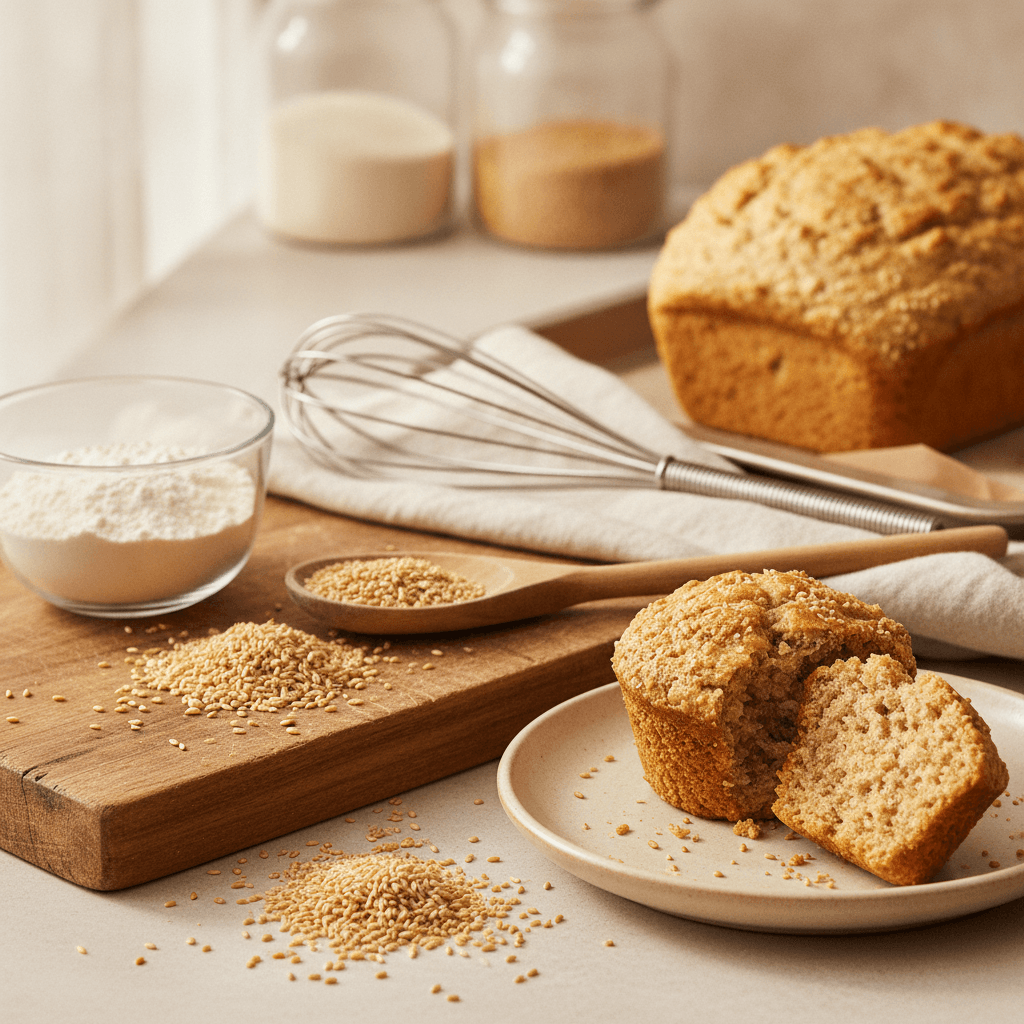
Wheat germ is one of the most nutrient-dense parts of the wheat kernel, and adding it to baked goods seems like an obvious nutritional upgrade. But it changes texture, moisture, and shelf life in ways that catch bakers off guard. Here's what actually happens when you use wheat germ as a flour supplement in baking — and how to get the benefits without wrecking your results.
Key takeaways
- Wheat germ works best as a partial flour supplement at roughly 10–15% of the total flour weight — go higher and texture suffers noticeably.
- The natural oils in wheat germ can cause baked goods to go rancid faster, cutting shelf life by several days compared to straight flour.
- Toasted wheat germ performs better than raw in most baking applications because toasting stabilizes the oils and mellows the flavor.
- Wheat germ absorbs more liquid than all-purpose flour, so batters and doughs may need a small increase in liquid to stay workable.
- It is not a full flour replacement — wheat germ can't build structure on its own the way flour does. And because it is part of the wheat kernel, it contains gluten: wheat germ is not safe for anyone with celiac disease or a wheat allergy.
What wheat germ actually is (and why it matters for baking)
A wheat kernel has three parts: the bran (outer layer), the endosperm (the starchy middle that becomes white flour), and the germ (the small, oil-rich embryo). When mills produce all-purpose flour, they strip out the bran and germ to extend shelf life and create a neutral-flavored, predictable product.
Wheat germ makes up only about 2–3% of the whole kernel by weight, but it concentrates a disproportionate share of the kernel's vitamins, minerals, and fat. That fat content — roughly 10–11% — is exactly what makes wheat germ nutritionally appealing and baking-tricky at the same time. Compare that to all-purpose flour at around 1% fat, and you can see why swapping in wheat germ changes the equation.
Whole wheat flour already contains the germ, which is one reason whole wheat flour substitutes behave differently from white flour. But adding wheat germ as a standalone supplement lets you control the amount more precisely — and use it with any base flour you want.
How much wheat germ to add as a flour supplement
The commonly recommended range is replacing 10–15% of the flour weight with wheat germ. That means for 300g of all-purpose flour, you'd use 255–270g of flour plus 30–45g of wheat germ.
Here's what happens at different substitution levels:
| Wheat germ (% of flour weight) | Texture impact | Flavor impact | Best for |
|---|---|---|---|
| 5–10% | Minimal — slightly more tender crumb | Mild nuttiness, barely noticeable | Cookies, pancakes, quick breads |
| 10–15% | Noticeable — softer, slightly denser | Distinct nutty, toasty flavor | Muffins, banana bread, yeast bread |
| 20–25% | Significant — crumbly, heavier | Strong, can taste bitter if raw | Not recommended for most applications |
| 30%+ | Structural problems — poor rise, dense | Overpowering | Generally not viable as a flour supplement |
The 10–15% range is where most bakers land because it adds nutritional value and flavor without undermining the structure that flour provides. Past 20%, the dilution of flour's gluten-forming proteins starts to show — breads won't rise properly, and cakes become dense and crumbly.
If you sell muffins, this matters in a practical way: somewhere around 12% wheat germ is a sensible target, because going above 15% can leave muffins crumbly enough to fall apart when customers eat them out of the wrapper.
Raw vs. toasted wheat germ: which works better
This is the single most important decision when using wheat germ in baking, and it's the one most people skip past.
Raw wheat germ has a slightly grassy, bitter edge and contains active lipase enzymes. Those enzymes break down fats, which accelerates rancidity in your finished baked goods. Raw wheat germ can also develop off-flavors during storage, even before you bake with it.
Toasted wheat germ — the kind most commonly sold in grocery stores (Bob's Red Mill and Kretschmer are two widely available brands) — has been heat-treated to deactivate those enzymes. It tastes nuttier, sweeter, and more mellow. It also lasts longer in the pantry, typically 6–9 months in the refrigerator versus a few weeks for raw.
For baking, toasted wheat germ is the safer choice in nearly every application. The one exception: if you're making a raw or no-bake preparation where you specifically want the grassy flavor of raw wheat germ, but that's uncommon in traditional baking.
How wheat germ changes texture and structure
Wheat germ affects baked goods in three main ways, and understanding these helps you compensate:
It absorbs more moisture than white flour
Wheat germ's fiber and protein content cause it to soak up more liquid than an equal weight of all-purpose flour. If you simply swap in wheat germ without adjusting, your dough or batter will be drier and stiffer than expected. A common adjustment is adding 1–2 tablespoons of extra liquid per 30g of wheat germ added, but the exact amount depends on the specific bake.
This moisture absorption issue is similar to what happens with other high-fiber flour alternatives — the fiber pulls water away from the starch and gluten network.
It weakens gluten development
Wheat germ is high in protein, but it adds little to the gluten network compared with the flour it replaces. (It still contains gluten, though. Bob's Red Mill notes its wheat germ should be avoided by anyone with celiac disease or gluten intolerance.) When you replace a portion of flour with wheat germ, you're diluting the gluten-forming capacity of your dough. This is why bread flour (with its higher protein content) is a better base flour to pair with wheat germ than cake flour — it gives you more gluten to work with before the wheat germ dilutes it.
The sharp-edged particles in wheat germ can also physically cut gluten strands as they develop, similar to how bran does in whole wheat flour. This is another reason to keep wheat germ below 15% in yeast breads.
It shortens shelf life
The oils in wheat germ oxidize over time, producing stale or rancid flavors. Baked goods made with wheat germ typically taste best within 2–3 days. After that, the flavor starts to turn. Storing finished items in the refrigerator or freezer extends this, but it's a real limitation if you're baking for sale or meal prepping for the week.
Best applications for wheat germ in baking
Wheat germ works best in baked goods that are already dense, moist, or forgiving in texture. It struggles in applications that depend on a light, airy crumb or precise structure.
Where it works well
- Muffins and quick breads — These are naturally dense and moist, so the extra weight and moisture absorption of wheat germ barely registers. The nutty flavor is a genuine upgrade.
- Pancakes and waffles — A tablespoon or two of wheat germ per batch adds nutrition without changing the texture in a way most people notice.
- Cookies — Particularly drop cookies and oatmeal-style cookies where a slightly denser, chewier texture is welcome. If you're already exploring sugar substitutes for cookies, wheat germ can complement those swaps by adding body.
- Yeast breads — At 10–15%, wheat germ adds a pleasant wheaty flavor to sandwich loaves and dinner rolls. Expect a slightly tighter crumb.
- Streusel toppings and crumble — Wheat germ adds a toasty crunch that works beautifully as part of a crumble topping.
Where it struggles
- Angel food cake — Any fat addition (even the small amount from wheat germ) deflates the egg white foam that gives angel food its structure.
- Delicate pastries and puff pastry — The germ particles interfere with the thin, flaky layers.
- Chiffon cake — Similar to angel food, the fat and heavy particles work against the light texture.
- Macarons — The precise protein-to-sugar ratio and smooth texture requirements make wheat germ a poor fit.
Wheat germ vs. other nutritional flour supplements
Wheat germ isn't the only way to boost the nutritional profile of baked goods. Here's how it compares to other common supplements bakers reach for:
| Supplement | Protein (approx.) | Fat (approx.) | Flavor | Max substitution |
|---|---|---|---|---|
| Wheat germ | 23–28% | 10–11% | Nutty, toasty | 10–15% of flour |
| Flax meal | 18–20% | 42% | Earthy, slightly bitter | 10–15% of flour |
| Oat bran | 15–17% | 7% | Mild, oaty | 15–25% of flour |
| Protein powder (whey) | 70–80% | 2–5% | Varies widely | 10–15% of flour (with adjustments) |
Wheat germ sits in a middle ground — more protein than oat bran, less fat than flax meal, and a milder flavor than most protein powders. If you've tried protein powder as a flour replacement and run into the common texture failures, wheat germ is a gentler option that's far more forgiving.
Flax meal can also serve double duty as an egg replacement when mixed with water, which wheat germ cannot do. Each supplement has its lane.
Storage matters more than most bakers realize
Here's the thing most articles gloss over: wheat germ goes rancid fast if stored improperly. Those same oils that make it nutritious also make it perishable.
Unopened toasted wheat germ keeps for several months in a cool pantry. Once opened, move it to the refrigerator in an airtight container, where it will last 6–9 months. The freezer extends that further — up to a year.
Raw wheat germ should go straight to the refrigerator or freezer after purchase. At room temperature, it can develop off-flavors within a couple of weeks.
Before adding wheat germ to any batter, smell it. Fresh wheat germ smells mildly nutty and pleasant. Rancid wheat germ smells sharp, bitter, or paint-like. Baking with rancid wheat germ will ruin the flavor of your finished product, and no amount of sugar or vanilla will cover it.
A contrarian take: wheat germ might not be worth the trouble for most bakers
Here's an opinion you won't see in most wheat germ articles: for the average home baker who bakes once or twice a week, wheat germ is often more hassle than it's worth.
The nutritional boost from replacing 10–15% of your flour with wheat germ is real but modest on a per-serving basis. A single muffin with 5–6g of wheat germ in it isn't dramatically more nutritious than one without. The benefits add up if you eat baked goods daily, but most people don't — and the trade-offs (shorter shelf life, storage requirements, potential rancidity) are real costs.
If your goal is higher fiber, high-fiber flour alternatives like oat flour or buckwheat flour may deliver more fiber per gram with fewer storage headaches. If your goal is higher protein, high-protein flour substitutes offer more concentrated options.
Where wheat germ genuinely shines is flavor. That toasty, nutty quality it adds to muffins and quick breads is distinctive and hard to replicate with other supplements. If you're adding it primarily for taste and the nutrition is a bonus, it's a great ingredient. If you're adding it purely for nutrition and don't love the flavor, there are easier paths.
Practical tips for adding wheat germ to any bake
- Start at 10%. Replace 10% of your flour weight with toasted wheat germ. Bake the recipe once at this ratio before going higher.
- Add a splash of extra liquid. Start with 1 tablespoon of additional milk or water per 30g of wheat germ. Adjust from there based on how the batter or dough looks.
- Use a stronger base flour. If you're making bread, start with bread flour rather than all-purpose. The extra gluten compensates for the dilution.
- Toast it yourself if buying raw. Spread raw wheat germ on a baking sheet and toast at 350°F (175°C) for 5–8 minutes, stirring once, until it smells nutty and turns golden. Cool completely before using or storing.
- Store properly from day one. Refrigerate after opening. Label the container with the date. Toss it if it smells off.
- Plan to eat or freeze baked goods quickly. Wheat germ baked goods taste best within 2–3 days. Freeze what you won't eat by then.
Frequently asked questions
Can you replace all the flour with wheat germ in baking?
No. Wheat germ cannot replace all the flour in a recipe because it can't build the gluten structure that flour provides. At substitution levels above 20–25%, baked goods become crumbly, dense, and often fail to hold together. Wheat germ works as a supplement, not a replacement — keep it at 10–15% of total flour weight for best results.
Does wheat germ make baked goods taste different?
Yes. Toasted wheat germ adds a mild, nutty, slightly sweet flavor that most people find pleasant in muffins, quick breads, and cookies. Raw wheat germ can taste grassy or bitter, which is why toasted is preferred for baking. The flavor is most noticeable in recipes with a mild base — it gets lost in heavily spiced or chocolate-heavy bakes.
Is wheat germ gluten-free?
No. Wheat germ comes from the wheat kernel and contains gluten. It is not safe for people with celiac disease or non-celiac gluten sensitivity. If you need a gluten-free nutritional supplement for baking, options like flax meal, almond flour, or buckwheat flour (which is naturally gluten-free despite the name) are better choices.
How long do baked goods with wheat germ stay fresh?
Baked goods made with wheat germ typically stay fresh for 2–3 days at room temperature, compared to 4–5 days for the same recipe made with only white flour. The oils in wheat germ oxidize faster than the starch in flour, leading to stale or off flavors sooner. Refrigerating extends freshness by a couple of days, and freezing preserves quality for 2–3 months.
Can you add wheat germ to gluten-free flour blends?
No, because wheat germ contains gluten. Adding it to a gluten-free flour blend would make the final product unsafe for anyone avoiding gluten. If you're looking to add nutrition to gluten-free baking, consider ground flaxseed, chia seeds, or sunflower seed flour as alternatives that provide similar nutritional benefits without introducing gluten.

Written by
Co-founder, BakingSubs
Co-founder of BakingSubs, where he turns the science of ingredient substitutions into tested, reliable guidance for home bakers.
Related Posts
7 Common Healthy Baking Mistakes That Ruin Texture (and How to Fix Each One)

7 Texture Changes With Health Swaps That Catch Bakers Off Guard (and How to Handle Each One)

Gluten-Free Flour Weight Chart: Grams per Cup for 9 Major Brands (and Why the Spread Is Over 20%)
Bake with Confidence
See all
Confident Gluten-Free Baker Toolkit
The science-based system that replaces gluten's seven invisible jobs so your baking turns out soft, fluffy, and foolproof — every time.

Gluten-Free Recipe Vault
Instant access to our complete library of proven gluten-free recipes — no waiting, no guesswork, just results that work tonight.

Fix Your Gluten-Free Bread
Learn the 3-step formula to make bread rise and stay soft, discover why your loaves collapse, and get a tested sandwich bread recipe that actually works.