
Cacao Nibs as Chocolate Chip Substitute in Baking: 5 Things That Change (and When It Actually Works)
Cacao nibs don't melt, taste intensely bitter, and change texture in every baked good. Here's when the swap works, when it fails, and the ratio that fixes it.

Malik
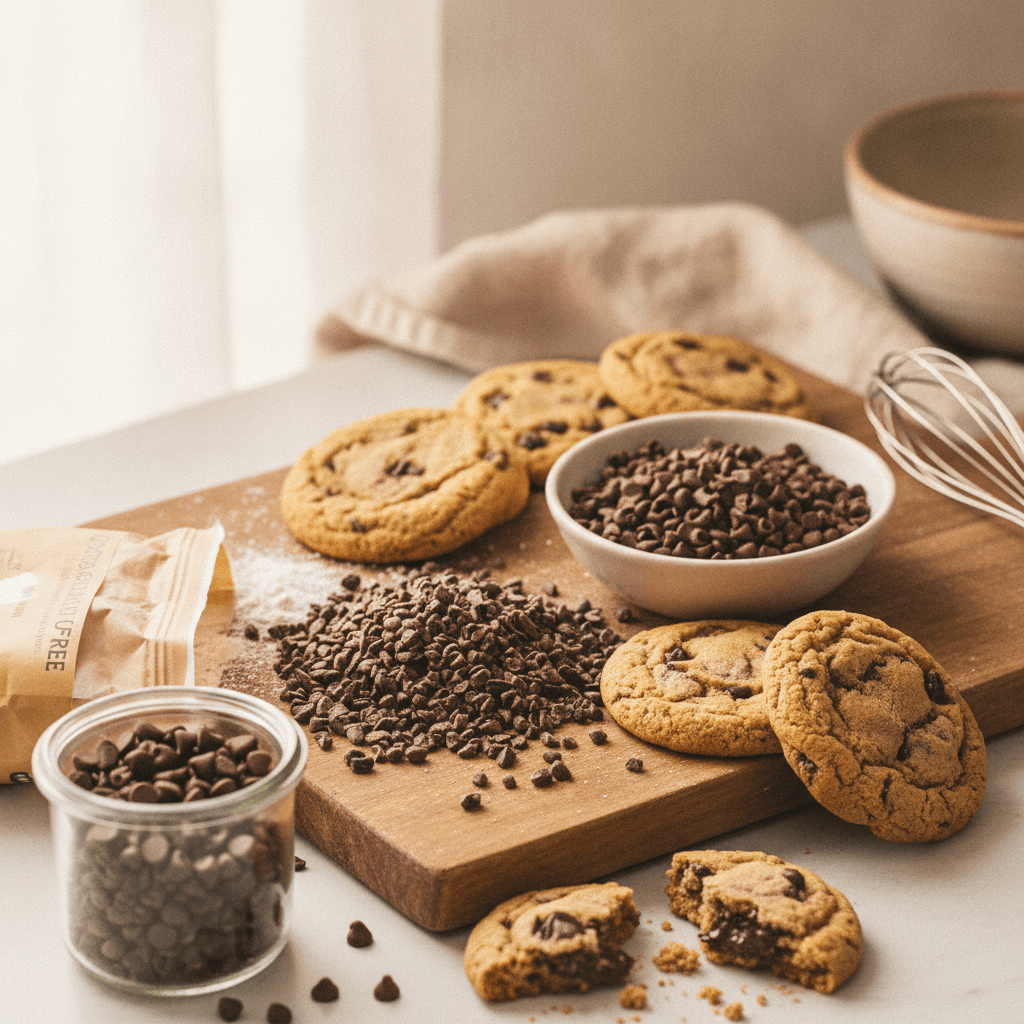
Cacao nibs look like chocolate chips, come from the same plant, and cost roughly the same per ounce — so swapping them seems obvious. But the two behave very differently in batter, and a straight 1:1 swap will disappoint most people who expect a classic chocolate chip cookie experience.
Here is exactly what changes, what stays the same, and which baked goods handle the swap best.
Key takeaways
Cacao nibs contain no added sugar, so they taste intensely bitter compared to chocolate chips — closer to unsweetened baking chocolate than a Toll House morsel.
They do not melt during baking. Nibs hold their shape and stay crunchy, which changes the texture of every baked good they go into.
A 50/50 blend of cacao nibs and chocolate chips is a more practical starting point than a full replacement for most cookie and muffin recipes.
Cacao nibs work best in recipes that already have strong competing flavors — espresso brownies, banana bread, dark chocolate bark — where bitterness reads as depth rather than a flaw.
Gram for gram, cacao nibs have significantly more fiber and less sugar than standard semisweet chocolate chips, but they also lack the cocoa butter content that makes chips melt into pockets of gooey chocolate.
What cacao nibs actually are (and why they are not just "healthier chocolate chips")
Cacao nibs are crushed, roasted cacao beans — the same raw material that eventually becomes chocolate. But chocolate chips go through additional processing: the cacao is ground into cocoa liquor, combined with sugar, cocoa butter, and sometimes milk solids, then tempered and formed into chip shapes. That processing is what gives chocolate chips their sweetness, smooth melt, and familiar flavor.
Cacao nibs skip all of that. They are essentially the bean itself, broken into small pieces. The flavor is deeply bitter with fruity, nutty, or earthy undertones depending on the bean origin. Think of the difference between a raw coffee bean and a mocha latte — same source ingredient, completely different experience.
This matters for baking because sugar does more than sweeten. In chocolate chips, sugar contributes to the melt behavior, the browning, and the way the chip interacts with surrounding dough. Remove it, and you get a fundamentally different inclusion.
How cacao nibs change texture in baked goods
The single biggest difference is melt behavior. Chocolate chips soften and become gooey during baking because of their cocoa butter and sugar content. Cacao nibs do not melt. They stay hard and crunchy throughout the baking process and after cooling.
In a cookie, this means you get a snap when you bite into a nib rather than a soft, melty chocolate pocket. Some people love this — it adds a texture similar to chopped toasted nuts. Others find it jarring when they are expecting the classic chocolate chip cookie experience.
In muffins and quick breads, nibs tend to integrate a bit better because the surrounding crumb is softer and moister. The crunch contrast works well in something like a banana-based batter where the sweetness of the banana offsets the bitterness of the nibs.
In brownies, the swap is trickier. Brownies rely heavily on melted chocolate or chocolate chips for their fudgy interior. Replacing chips with nibs in a brownie recipe that depends on melting chocolate for structure will produce a drier, less cohesive result. If the brownie recipe uses cocoa powder as its primary chocolate source and the chips are just mix-ins, the swap works better.
How cacao nibs change flavor
This is where most bakers hit a wall. Semisweet chocolate chips contain roughly 40–50% sugar by weight. Cacao nibs contain essentially zero added sugar. The bitterness is intense — comparable to 100% unsweetened baking chocolate.
As a rule of thumb, people who love dark chocolate — the 85% and above crowd — tend to enjoy nibs in cookies. Others may find the chocolate tastes burnt.
That perception of "burnt" or "off" flavor is common when nibs are used at full volume in a recipe that was designed around sweet chocolate chips. The rest of the recipe's sugar cannot compensate for the missing sweetness from the chips themselves.
Strategies to manage bitterness
Rather than dumping nibs into a recipe at a 1:1 ratio and hoping for the best, consider these approaches:
Blend 50/50 with chocolate chips. Use half nibs and half regular chocolate chips (or dark chocolate chips). This gives you the crunch and cocoa intensity of nibs while keeping some melt and sweetness.
Increase the recipe's sweetener slightly. Adding 1–2 tablespoons of maple syrup, honey, or brown sugar to the dough can help balance the bitterness. Just be aware that adding liquid sweeteners changes moisture and spread.
Pair with strong flavors. Espresso, vanilla, orange zest, cinnamon, and sea salt all help frame bitterness as complexity rather than a flaw. A pinch of flaky sea salt on top of a nib-studded cookie does more for perceived flavor balance than extra sugar in the dough.
Choose lighter-roast nibs. Roast level matters. Lighter-roasted nibs tend to have more fruity, acidic notes and less of the charred bitterness that puts people off. Brands like Navitas and Terrasoul offer nibs with noticeably different flavor profiles — read reviews before buying.
Which baked goods handle the swap best (and which do not)
Baked good | Swap viability | Notes |
|---|---|---|
Chocolate chip cookies | Partial (50/50 blend recommended) | Full swap loses the gooey pockets most people expect. Blend preserves some melt. |
Banana muffins / banana bread | Good | Natural sweetness of banana offsets bitterness. Crunch works well in soft crumb. |
Brownies (cocoa-based) | Moderate | Works if chips are just mix-ins, not structural. Reduce nib quantity by 25%. |
Brownies (melted chocolate-based) | Poor | Nibs cannot replace the melted chocolate that forms the brownie's body. |
Granola / granola bars | Excellent | Already a crunchy format. Bitterness pairs well with oats, honey, dried fruit. |
Pancakes / waffles | Good | Nibs add crunch. Maple syrup on top provides the missing sweetness. |
Scones | Good | Buttery dough and a glaze or jam provide sweetness contrast. |
Trail mix cookies | Good | Mixed inclusions (nuts, dried fruit) mask the bitterness and add variety. |
The pattern is clear: cacao nibs work best when the surrounding recipe is already sweet enough to compensate, or when the format is crunchy rather than soft and gooey.
The sugar and sweetness problem — and how to solve it
When you remove chocolate chips from a recipe, you are also removing a significant source of sugar. In a standard chocolate chip cookie recipe calling for 2 cups (about 340g) of semisweet chips, you are removing roughly 150–170g of sugar from the total recipe. That is not a trivial amount.
This missing sugar affects more than just sweetness. Sugar influences spread, browning, moisture retention, and crispness in cookies. A cookie made with nibs instead of chips may spread less, brown differently, and have a drier texture — not because the nibs caused those problems directly, but because the recipe lost a significant chunk of its total sugar.
If you are swapping nibs specifically to reduce sugar intake, that trade-off may be exactly what you want. But if you are swapping for flavor reasons and still want the cookie to behave normally, you will need to add some sweetness back. Options include:
Adding 2–3 tablespoons of brown sugar to the dough
Using a tablespoon of date paste for sweetness with some caramel depth
Drizzling finished cookies with melted dark chocolate (this also gives you back some of that gooey chocolate element)
If you are baking for a low-sugar or keto diet, cacao nibs are a strong option — but pair them with a keto-friendly sweetener in the dough to keep the overall flavor balanced.
Size and distribution: why nibs behave differently in dough
Standard chocolate chips are designed to be a uniform size — roughly 7–8mm in diameter — and they are smooth, so they fold into dough evenly. Cacao nibs are irregular. They range from tiny fragments to pieces the size of a small pebble, and their rough, angular texture means they do not distribute as evenly through batter.
This irregularity has a few practical consequences:
Uneven flavor hits. One bite might have three nibs clustered together (intensely bitter), while the next bite has none.
They sink in thin batters. In pancake or muffin batter, smaller nib fragments tend to settle toward the bottom. Tossing them in a small amount of flour or cocoa powder before folding them in can help.
They can tear delicate doughs. If you are making a soft, tender cookie dough (like a shortbread), the sharp edges of nibs can tear the dough during shaping. Chocolate chips, being smooth, do not cause this problem.
Buying cacao nibs: what to look for
Not all cacao nibs are the same. Origin, roast level, and processing vary between brands, and these differences affect baking results.
Roasted vs. raw. Roasted nibs have a deeper, more familiar chocolate flavor. Raw nibs taste grassier and more acidic. For baking, roasted nibs are generally a better match because the flavor is closer to what people associate with chocolate.
Origin matters for flavor. Nibs from different cacao-growing regions (Ecuador, Peru, Ghana, Madagascar) have distinct flavor profiles — fruity, earthy, nutty, or floral. This is similar to how single-origin coffee beans taste different from each other.
Check for added ingredients. Some brands sell "sweetened cacao nibs" that have been coated in a thin layer of sugar or coconut sugar. These are closer to chocolate chips in sweetness (though still not as sweet) and can be a useful middle ground.
A bag of Navitas Organics Cacao Nibs is widely available and reasonably priced for a first try. If you want to compare, Terrasoul Superfoods Raw Cacao Nibs tend to have a lighter, fruitier profile.
A contrarian take: most people should not do a full swap
Here is an opinion that goes against the grain of most "healthy baking" content: for the majority of home bakers, a full 1:1 swap of cacao nibs for chocolate chips is a bad idea. The flavor gap is too large, the texture difference is too noticeable, and the result disappoints anyone who was expecting something resembling a chocolate chip cookie.
The better approach is to treat cacao nibs as their own ingredient rather than a substitute. Use them where their bitterness and crunch are assets — in granola, bark, trail mix cookies, or as a topping on frosted cupcakes. When you frame them as "cacao nib cookies" rather than "chocolate chip cookies but healthier," the expectation shifts and the eating experience improves dramatically.
The 50/50 blend is the practical middle ground for anyone who genuinely wants to reduce sugar while keeping the chocolate chip cookie format recognizable. Below 50% nibs, you barely notice them. Above 50%, the bitterness dominates for most palates.
Frequently asked questions
Can you substitute cacao nibs for chocolate chips in cookies?
You can, but the result will be significantly different. Cacao nibs do not melt, so you lose the gooey chocolate pockets. They are also unsweetened, so the cookies will taste more bitter. A 50/50 blend of nibs and chocolate chips is a more practical approach for most bakers who want to maintain some of the classic cookie experience.
Do cacao nibs melt when baked?
No. Cacao nibs hold their shape and stay crunchy through the entire baking process. This is because they lack the added cocoa butter and sugar that allow chocolate chips to soften and melt. The crunch can be a positive in some applications (granola, scones) but a negative in others (brownies, soft cookies).
Are cacao nibs healthier than chocolate chips?
Cacao nibs contain no added sugar and are higher in fiber than standard chocolate chips. They also retain more of the naturally occurring compounds found in cacao beans. However, "healthier" depends on your specific dietary goals. If you are reducing sugar, nibs are a clear win. If you are watching total fat intake, the difference is smaller since both contain cocoa fat. As with any ingredient swap, the overall recipe matters more than any single ingredient.
How do you reduce the bitterness of cacao nibs in baking?
The most effective methods are blending nibs with regular chocolate chips (50/50), adding a small amount of extra sweetener to the dough, pairing nibs with bold flavors like espresso or cinnamon, and finishing baked goods with a sprinkle of flaky sea salt. Choosing roasted nibs over raw nibs also helps, as roasting develops deeper, less sharp flavors. For more on choosing sugar alternatives, see our guide.
What is the best ratio of cacao nibs to chocolate chips?
A 50/50 blend by weight is the most commonly recommended starting point. For a recipe calling for 2 cups of chocolate chips, use 1 cup of chips and 1 cup of nibs. From there, adjust based on your sweetness preference. Bakers who enjoy very dark chocolate (85%+) can push toward 75% nibs, while those with a sweeter palate may prefer 25% nibs and 75% chips.

Written by
Co-founder, BakingSubs
Co-founder of BakingSubs, where he turns the science of ingredient substitutions into tested, reliable guidance for home bakers.
Related Posts
Bake with Confidence
See all
Confident Gluten-Free Baker Toolkit
The science-based system that replaces gluten's seven invisible jobs so your baking turns out soft, fluffy, and foolproof — every time.

Gluten-Free Recipe Vault
Instant access to our complete library of proven gluten-free recipes — no waiting, no guesswork, just results that work tonight.

Fix Your Gluten-Free Bread
Learn the 3-step formula to make bread rise and stay soft, discover why your loaves collapse, and get a tested sandwich bread recipe that actually works.