
Best packaging supplies for home bakery cookies: 7 picks that protect your product and impress customers
Find the best packaging supplies for home bakery cookies. 7 top picks with prices, pros and cons, plus a $55 starter kit to get you selling professionally.

Malik
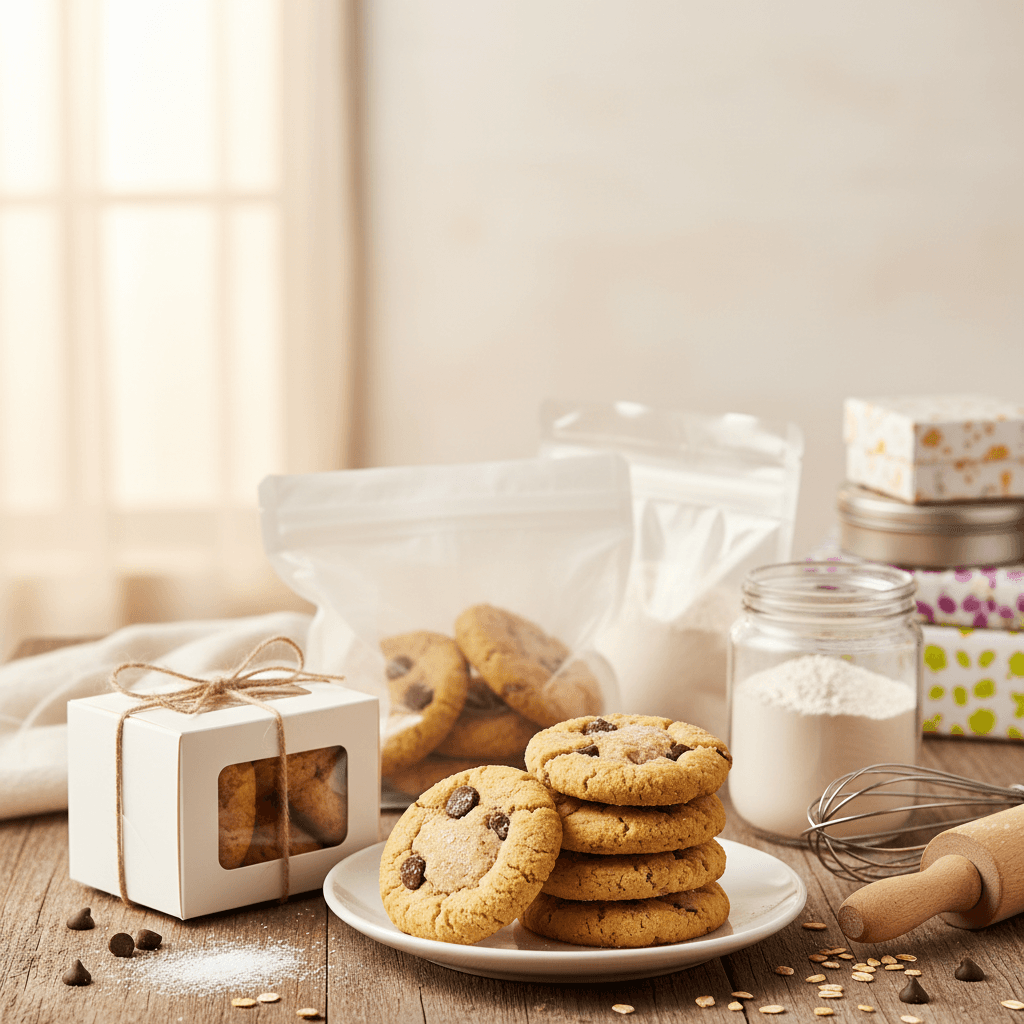
The right cookie packaging does three things: keeps your cookies fresh, protects them during transport, and makes customers feel like they got something special. We compared the most popular options so you can skip the trial-and-error phase and invest in supplies that actually work for a home bakery budget.
Key takeaways
- Best overall: Clear bakery boxes with window inserts give cookies a professional, gift-worthy look for around $0.50-0.70 per box.
- Best budget pick: Clear cellophane bags with twist ties cost as little as $0.05-0.08 each and work perfectly for farmers markets and casual orders.
- Packaging costs should stay under 5-8% of your retail price to protect your margins.
- Food-safe tissue paper and grease-resistant liners prevent oil stains and keep your packaging looking clean.
- Investing in custom stickers or labels turns generic packaging into branded packaging for just a few cents per unit.
- Always test your packaging with a real delivery run before committing to a bulk order.
How to choose cookie packaging for a home bakery
Before we get into specific products, here are the factors that matter most when choosing packaging for your cookie business. Your packaging needs to balance cost, presentation, and function, and the right choice depends on how you sell.
If you primarily sell at farmers markets, you need packaging that lets customers see the product and is easy to grab and go. If you take custom orders and deliver or ship, you need something sturdier that protects during transport. And if you are building a premium brand, like a gluten-free cookie business, your packaging needs to communicate that quality before anyone takes a bite.
Here is what to evaluate for every packaging option:
- Cost per unit at volume — buy in bulk to keep costs low, but start with smaller quantities to test
- Food safety — must be food-grade and grease-resistant
- Visibility — customers want to see the cookies before buying
- Protection — sturdy enough to prevent breakage during transport
- Branding potential — can you add labels, stickers, or custom printing?
The 7 best packaging supplies for home bakery cookies
We organized these from simplest and most affordable to more premium options. Every product below is food-safe and available in bulk.
1. Best budget pick: clear cellophane treat bags
Clear cellophane bags are the workhorse of home bakery cookie packaging. They cost almost nothing per unit, show off your cookies beautifully, and work for everything from chocolate chip cookies to decorated sugar cookies.
The Wilton Clear Treat Bags (100-pack) are a reliable choice at around $5-7 for 100 bags. That is roughly $0.05-0.07 per bag. Pair them with metallic twist ties or ribbon and they look surprisingly polished.
Pros:
- Extremely affordable at scale
- Cookies are fully visible
- Easy to customize with printed stickers or labels
- Great for farmers markets and casual sales
Cons:
- No structural protection — cookies can break if handled roughly
- Not ideal for shipping or delivery
- Can look too casual for premium orders
Best for: Farmers market sales, cookie platters, party favors, and any situation where you are handing cookies directly to customers.
2. Best overall: windowed bakery boxes
Windowed bakery boxes are the sweet spot between affordability and presentation. They make a half-dozen cookies look like a gift, and the window lets customers see exactly what they are getting. This is our top recommendation for most home bakers.
The RomanticBaking White Bakery Boxes with Window (25-pack) run about $15-18 for 25, which puts you at $0.60-0.72 per box. They typically come in 6x6x2.5 inch or 8x6x2.5 inch sizes, perfect for 4-8 cookies depending on size.
Pros:
- Professional, gift-worthy presentation
- Good structural protection for transport and delivery
- Window provides product visibility
- Easy to brand with stickers or custom labels
Cons:
- Higher per-unit cost than bags
- Takes up more storage space
- Need inserts or tissue paper to prevent cookies from sliding
Best for: Custom orders, delivery, holiday cookie boxes, and building a premium brand. If you are pricing your cookies at $3-5 each, this packaging communicates that value.
3. Best for decorated cookies: individual clear boxes
If you sell decorated sugar cookies or any cookie where visual presentation is the selling point, individual clear boxes protect the decoration and turn each cookie into a standalone product.
The BakeLuv Clear Single Cookie Boxes (50-pack) cost around $12-16 for 50 units, or about $0.24-0.32 per box. They come in sizes like 4x4x1 inch, perfect for a single large decorated cookie.
Pros:
- Maximum visibility and protection for decorated cookies
- Each cookie looks like a premium product
- Stackable for display
- Great for wedding favors and event orders
Cons:
- Only practical for single cookies, not bulk orders
- Higher cost per cookie than bags or shared boxes
- Plastic waste is a concern for eco-conscious customers
Best for: Decorated sugar cookies, wedding favors, corporate gifts, and any cookie where the decoration is part of the value.
4. Best eco-friendly option: kraft paper boxes
Kraft paper boxes have that artisanal, farm-to-table look that resonates with customers who care about sustainability. They are fully recyclable and compostable, and they pair beautifully with twine, dried flowers, or a simple branded sticker.
The ValBox Brown Kraft Bakery Boxes (25-pack) typically cost $12-15 for 25, or about $0.48-0.60 per box. They come in various sizes and some include window cutouts.
Pros:
- Eco-friendly and recyclable
- Rustic, artisanal aesthetic that customers love
- Sturdy and protective
- Easy to customize with stamps, stickers, or hand-written notes
Cons:
- No window on many styles means customers cannot see the cookies
- Grease can stain through without a liner
- Not as polished-looking as white windowed boxes
Best for: Farmers markets, subscription boxes, and any brand going for a natural or artisanal vibe. These pair perfectly with a gluten-free subscription box concept.
5. Best for freshness: resealable stand-up pouches
Stand-up pouches with zip closures keep cookies fresh longer than any other option on this list. They are especially good if customers are not eating the cookies right away or if you are shipping.
The Kraft Stand-Up Pouches with Window and Zip Seal (50-pack) run about $14-18 for 50, or $0.28-0.36 per pouch. The kraft exterior with clear window front gives them a premium look while the zip seal keeps cookies fresh for days.
Pros:
- Best freshness retention of any option
- Stands upright for display
- Window shows off the product
- Resealable for customers
Cons:
- Cookies can shift and break inside without padding
- Not as gift-worthy as a box
- Limited size options
Best for: Shipping cookies, retail display at coffee shops or stores, and any situation where freshness over multiple days matters.
6. Best for branding: custom printed stickers and labels
This is not packaging itself, but it transforms any generic bag or box into branded packaging. Custom stickers are the single highest-ROI packaging investment you can make as a home baker.
The Custom Round Logo Stickers (100-pack from a service like Sticker Mule or Amazon print shops) typically cost $15-30 for 100-200 stickers, depending on size and quantity. That is $0.08-0.30 per sticker. Even at the high end, adding a branded sticker to a $0.50 box only adds a fraction to your total packaging cost.
Pros:
- Turns generic packaging into branded packaging instantly
- Builds brand recognition and repeat business
- Can include your logo, business name, social media handle, and allergen info
- Very affordable per unit at scale
Cons:
- Requires upfront design work (Canva works great for this)
- Minimum order quantities can be high for custom printing
- Need to store multiple rolls or sheets
Best for: Every home baker. Seriously. Even if you start with plain cellophane bags, a branded sticker elevates the entire experience. This is especially important when you are working on getting customers and building word-of-mouth.
7. Best supporting supply: food-safe tissue paper and grease-resistant liners
Liners and tissue paper are the unsung heroes of cookie packaging. They prevent grease stains on your boxes, cushion cookies to prevent breakage, and add a layer of polish that makes unboxing feel special.
The Deli Squares Wax Paper Sheets (100-pack) cost around $7-10 for 100 sheets, or about $0.07-0.10 per sheet. Use them to line the bottom of boxes and layer between cookies.
Pros:
- Prevents grease stains and keeps packaging looking clean
- Cushions cookies during transport
- Adds a premium unboxing experience
- Very affordable
Cons:
- An additional supply to purchase and store
- Adds a small amount to your per-unit cost
Best for: Any box-based packaging. We consider this a must-have, not an optional extra.
Packaging cost comparison
Here is a side-by-side look at what each option costs and where it works best. When you are pricing your baked goods, knowing your exact packaging cost per unit is critical for protecting margins.
| Packaging type | Cost per unit | Best use case | Protection level | Branding potential |
|---|---|---|---|---|
| Clear cellophane bags | $0.05-0.08 | Farmers markets, casual sales | Low | Medium (with sticker) |
| Windowed bakery boxes | $0.60-0.72 | Custom orders, delivery | High | High |
| Individual clear boxes | $0.24-0.32 | Decorated cookies, events | High | Medium |
| Kraft paper boxes | $0.48-0.60 | Artisanal brand, subscriptions | High | High |
| Stand-up pouches | $0.28-0.36 | Shipping, retail display | Medium | Medium |
| Custom stickers | $0.08-0.30 | Every home baker | N/A | Very high |
| Tissue/wax paper liners | $0.07-0.10 | Inside any box packaging | Medium | Low |
How to keep packaging costs under control
Packaging is one of those costs that can quietly eat into your profits if you are not paying attention. Here is how to keep it in check while still looking professional.
Buy in bulk, but test first. Order a small pack of 25-50 to test with your actual cookies before committing to a case of 200. Check that the size fits, the cookies do not slide around, and the packaging survives a car ride.
Keep packaging costs under 5-8% of retail price. If you sell a box of six cookies for $18, your packaging should cost no more than $0.90-1.44 total. That includes the box, liner, sticker, and any ribbon or extras. If you need help with the math, our pricing guide for home bakers walks through all of your cost categories.
Use one or two packaging styles, not five. Standardizing your packaging reduces waste, simplifies ordering, and makes your brand more recognizable. Pick one option for everyday orders and one for premium or gift orders.
Add a handwritten note. This costs you nothing but a few seconds and makes a bigger impression than any fancy box. A simple "Thank you for your order! — [Your Name]" on a small card goes a long way.
What professional cookie packaging looks like with baked goods inside
Presentation matters, so here is what to aim for with each packaging style:
Cellophane bags with cookies: Stack 2-3 cookies facing the same direction so the tops are visible through the bag. Tie with a coordinated ribbon or twist tie and attach a branded sticker to the front. The cookies should fill the bag without too much empty space, so choose the right bag size for your cookie diameter.
Windowed bakery boxes with cookies: Line the bottom with wax paper or food-safe tissue. Arrange cookies in a single layer, slightly overlapping if needed, so the tops face the window. For mixed assortments, alternate colors and types for visual variety. Close the box and add a branded sticker as a seal on the front flap.
Kraft boxes with cookies: Use a parchment or tissue paper liner. Nestle cookies snugly so they do not shift. Tie the box with baker's twine and add a sprig of dried lavender or a small branded tag for that artisanal touch. This presentation style works especially well at farmers markets where customers are browsing and buying on impulse.
Stand-up pouches with cookies: Stack cookies inside with a small piece of parchment between layers to prevent sticking. The cookies should be visible through the window. Seal the zip closure and fold the top down for a clean look on a display table.
Your cookie packaging starter kit
If you are just starting your home bakery, here is exactly what to buy to cover your first 50-100 orders without overspending. This kit gives you options for both casual and premium sales.
| Item | Quantity | Estimated cost |
|---|---|---|
| Clear cellophane treat bags | 100 pack | $6 |
| White windowed bakery boxes (6x6 or 8x6) | 25 pack | $16 |
| Wax paper sheets / tissue liners | 100 pack | $8 |
| Custom branded stickers (2 inch round) | 100 pack | $20 |
| Metallic twist ties or ribbon | 1 roll / pack | $5 |
Total estimated starter kit cost: $55
That $55 covers packaging for roughly 100 bag orders and 25 box orders. At an average cookie order of $12-18, your packaging cost per order stays well under that 5-8% target. As your business grows and you dial in what sells best, you can buy in larger quantities and bring per-unit costs down even further.
The most important thing is to start. You do not need custom printed boxes on day one. A clean white box with a branded sticker and a tissue paper liner looks professional and costs less than a dollar per order. Nail the cookies first, and let the packaging grow with your business.
Frequently asked questions
How much should home bakers spend on cookie packaging?
Aim to keep total packaging costs between 5-8% of your retail price. For a $15 box of cookies, that means spending $0.75-1.20 on the box, liner, sticker, and any extras. Staying in this range protects your margins while still looking professional. Our home bakery pricing guide covers how to factor all supply costs into your prices.
What is the best packaging for shipping cookies from a home bakery?
Resealable stand-up pouches with zip closures are the best option for shipping individual portions, while windowed bakery boxes placed inside a padded shipping box work best for gift orders. Always wrap cookies individually or layer them with wax paper to prevent breakage, and use crumpled parchment or tissue paper to fill empty space in the shipping box.
Do I need food-safe packaging to sell cookies from home?
Yes. Any packaging that directly contacts your cookies must be food-grade. Most bakery boxes, cellophane bags, and stand-up pouches sold specifically for food use meet this requirement, but always check the product listing. Your state's cottage food laws may also have specific labeling requirements for your packaging.
Where can home bakers buy packaging supplies in bulk?
Amazon is the most convenient option for small to mid-size orders with fast shipping. For larger quantities at lower per-unit prices, WebstaurantStore, Nashville Wraps, and ClearBags are popular with home bakers. Start with Amazon to test products, then move to wholesale suppliers once you know exactly what sizes and styles work for your cookies.
Can I use custom printed boxes for a home bakery on a budget?
Custom printed boxes typically require minimum orders of 250-500 units and cost significantly more than generic boxes. A much more budget-friendly approach is to buy plain white or kraft boxes and add custom branded stickers. This gives you the same professional, branded look for a fraction of the cost and lets you change your branding without being stuck with hundreds of printed boxes.

Written by
Co-founder, BakingSubs
Co-founder of BakingSubs, where he turns the science of ingredient substitutions into tested, reliable guidance for home bakers.
Related Posts
Bake with Confidence
See all
Confident Gluten-Free Baker Toolkit
The science-based system that replaces gluten's seven invisible jobs so your baking turns out soft, fluffy, and foolproof — every time.

Gluten-Free Recipe Vault
Instant access to our complete library of proven gluten-free recipes — no waiting, no guesswork, just results that work tonight.

Fix Your Gluten-Free Bread
Learn the 3-step formula to make bread rise and stay soft, discover why your loaves collapse, and get a tested sandwich bread recipe that actually works.