

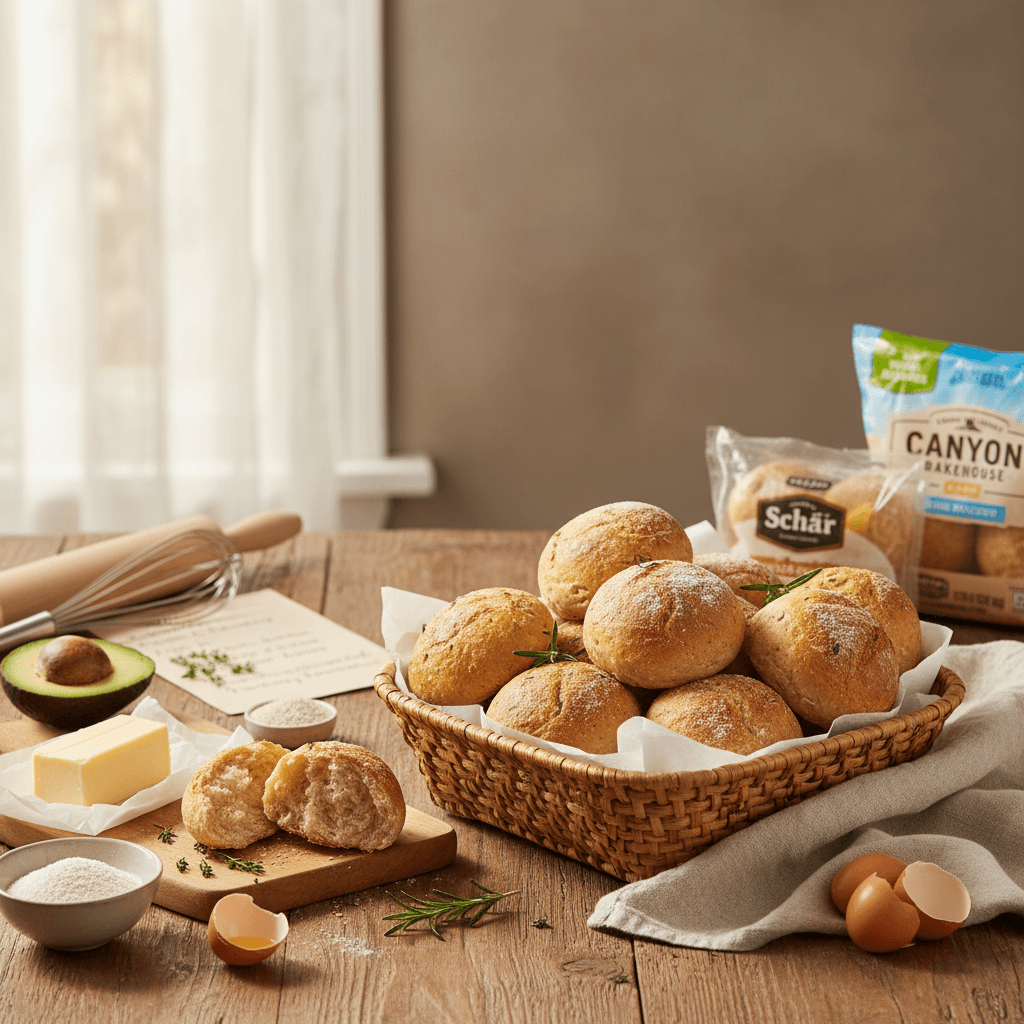
Thanksgiving without a warm dinner roll feels incomplete, and if you're gluten-free, you deserve one that's just as good as what everyone else is reaching for. This guide covers both homemade recipes and ready-to-buy options so you can enjoy soft, pillowy rolls at your holiday table no matter how much time you have.
Key takeaways
- The best gluten-free dinner rolls use a blend of starches and flours (like tapioca starch and brown rice flour) rather than a single flour for the softest texture.
- Store-bought options like Canyon Bakehouse, Schar, and Against The Grain deliver solid results if you don't want to bake from scratch.
- Adding xanthan gum or psyllium husk to homemade rolls mimics the structure that gluten normally provides.
- Gluten-free dinner rolls freeze beautifully for up to 3 months, so you can bake them weeks ahead of Thanksgiving.
- If you're adapting a traditional family roll recipe, you can swap all-purpose flour for a 1:1 gluten-free blend and add a binder for nearly identical results.
- Order store-bought rolls by mid-November to guarantee delivery before Thanksgiving Day.
Why gluten-free dinner rolls need a different approach
Gluten is the protein network that gives traditional rolls their stretch, chew, and rise. Without it, you need a combination of alternative flours, starches, and binders to recreate that structure. The good news is that dinner rolls are actually one of the more forgiving gluten-free breads to make because they're small, which means they bake evenly and stay moist more easily than a full loaf.
If your rolls have come out dry and crumbly or with a gritty texture in the past, it's almost always a flour blend or hydration issue, not a fundamental limitation of gluten-free baking. We'll walk through exactly how to avoid those problems below.
If you're working on building confidence with gluten-free baking beyond just the holidays, our Confident Gluten-Free Baker Toolkit walks you through the science and techniques that make every recipe work, not just dinner rolls.
Best homemade gluten-free dinner roll recipes
Homemade rolls give you the most control over flavor and texture, and they're easier than you might think. Here are three approaches depending on your skill level and the flavor profile you're after.
Classic soft gluten-free dinner rolls
For a traditional pull-apart dinner roll, you want a recipe built on a blend of brown rice flour, tapioca starch, and potato starch. This combination gives you a tender crumb without the grittiness that comes from using rice flour alone. The recipe from King Arthur Baking is one of the most reliable starting points, and it uses their measure-for-measure flour blend.
Key tips for success:
- Use active dry yeast or instant yeast, and make sure it's fresh. Expired yeast is the number one reason for poor rise in gluten-free bread.
- The dough will be wetter and stickier than wheat dough. That's normal. Don't add extra flour.
- Let the rolls proof in a warm spot until they're visibly puffy, usually 45 to 60 minutes.
Dairy-free and vegan dinner rolls
If you need rolls that are both gluten-free and dairy-free (or fully vegan), swap the butter for a vegan butter or avocado oil, and replace eggs with a flax egg or aquafaba. Our vegan egg substitutes guide breaks down which replacements work best in yeasted breads specifically. For the milk component, almond milk or oat milk both work well. Check out our guide to choosing milk alternatives for more detail.
Brazilian cheese bread rolls (pao de queijo)
If you want to go a completely different direction, pao de queijo are naturally gluten-free rolls made with cassava flour (or tapioca starch), eggs, cheese, and oil. They're chewy, savory, and incredibly easy. They won't taste like a traditional American dinner roll, but they're a crowd favorite that happens to be gluten-free without any special substitutions. The recipe from Simply Recipes is a great starting point.
How to adapt your family's dinner roll recipe to gluten-free
This is where things get personal. Maybe your grandmother's rolls are the centerpiece of your Thanksgiving, and buying a store-bought substitute just doesn't feel the same. The good news is that most traditional dinner roll recipes can be converted to gluten-free with a few strategic swaps.
Here's the basic formula:
- Replace the flour: Swap all-purpose flour with a 1:1 gluten-free flour blend (like Bob's Red Mill 1-to-1 or King Arthur Measure for Measure). These blends already contain xanthan gum, so you don't need to add more.
- Increase the liquid slightly: Gluten-free flours absorb more moisture. Add 2 to 4 tablespoons more milk or water than the original recipe calls for.
- Add a binder if your blend doesn't include one: If you're using a blend without xanthan gum, add 1 teaspoon per cup of flour. This replaces the structure that gluten would normally provide.
- Don't over-knead: There's no gluten to develop, so mixing just until combined is all you need. Over-mixing can make the rolls gummy.
- Expect a different proof time: Gluten-free doughs often rise faster. Watch the dough, not the clock.
If your original recipe uses buttermilk, brown sugar, or other specialty ingredients, check our ingredient substitution pages for gluten-free and allergen-friendly alternatives.
Best store-bought gluten-free dinner rolls
Sometimes you just want to open a package and heat them up. No judgment. Here are our picks for the best store-bought gluten-free dinner rolls, compared by style, certification, and dairy content.
| Brand | Style | Certified GF | Dairy-free | Best for |
|---|---|---|---|---|
| Canyon Bakehouse | Soft brioche-style rolls | Yes | Yes (contains eggs) | Closest to traditional dinner rolls |
| Schar | Ciabatta rolls | Yes | Yes | Crusty exterior, soft inside |
| Against The Grain | Original rolls | Yes | No | Chewy, cheesy flavor |
| Katz Gluten Free | Dinner rolls | Yes | Yes | Budget-friendly option |
| Three Bakers | Whole grain rolls | Yes | Yes | Heartier, whole-grain flavor |
We recommend the Canyon Bakehouse Hawaiian Sweet Rolls if you want something that tastes the most like a classic Thanksgiving dinner roll. They're soft, slightly sweet, and reheat beautifully.
For a crustier option, the Schar Ciabatta Rolls are excellent warmed in the oven for 5 minutes. They're also dairy-free, which is a plus for multi-allergen households.
If you're looking for something with more character, Against The Grain Original Rolls have a unique chewy texture from their tapioca-and-cheese base that pairs surprisingly well with turkey and gravy.
When to order store-bought rolls
If you're ordering online, place your order by the second week of November to be safe. Shipping delays around the holidays are real, and gluten-free products can sell out fast. Most of these brands are also available at Whole Foods, Sprouts, and many mainstream grocery stores if you prefer to buy in person. Call ahead to confirm stock, especially for less common brands like Three Bakers.
Make it easy: the no-bake Thanksgiving roll plan
If the idea of baking from scratch on top of everything else you're doing for Thanksgiving makes you want to hide under the table, here's a simple plan:
- Two weeks before: Order your preferred store-bought rolls online, or pick them up at the store and freeze them.
- Thanksgiving morning: Pull the rolls out of the freezer.
- 30 minutes before dinner: Wrap the rolls loosely in foil, place them in a 350 degree F oven for 10 to 12 minutes. Brush with melted butter (or a dairy-free alternative) when they come out.
- Serve warm in a bread basket lined with a cloth napkin to keep them soft.
That's it. Nobody at the table needs to know you didn't make them from scratch, and honestly, with the right brand, they won't be able to tell.
If you want a middle ground, consider buying a Bob's Red Mill Gluten-Free Homemade Wonderful Bread Mix. It's not a roll-specific mix, but the dough works well shaped into rolls, and it takes most of the guesswork out of measuring flours and starches.
Tips for the best gluten-free dinner rolls every time
Whether you're baking from scratch or doctoring up a mix, these tips make a real difference:
- Weigh your flour. Gluten-free flour blends vary dramatically by how you scoop them. A kitchen scale removes the guesswork entirely. The OXO Good Grips 11lb Food Scale is a reliable option.
- Use room-temperature ingredients. Cold eggs and milk slow down yeast activity and can lead to dense rolls.
- Don't skip the egg. Eggs provide structure, moisture, and richness that gluten-free rolls desperately need. If you must go egg-free, check our guide to choosing egg substitutes for the best options in yeasted breads.
- Brush with butter immediately after baking. This keeps the crust soft and adds flavor.
- Let them cool for at least 10 minutes. Gluten-free bread continues to set its structure as it cools. Cutting into them too early can result in gummy centers.
Freezing and make-ahead strategies
One of the best things about dinner rolls is that they freeze beautifully, which means you can bake them weeks before Thanksgiving and free up your oven on the big day.
To freeze baked rolls: Let them cool completely, wrap individually in plastic wrap, then place in a freezer-safe bag. They'll keep for up to 3 months. To reheat, wrap in foil and bake at 350 degrees F for 10 to 15 minutes.
To freeze unbaked rolls: Shape the dough into rolls, place them on a parchment-lined baking sheet, and freeze until solid (about 2 hours). Transfer to a freezer bag. When ready to bake, place frozen rolls on a baking sheet, cover loosely, and let them thaw and rise for 2 to 3 hours at room temperature before baking as directed.
If you experience quick staling with your gluten-free rolls, freezing immediately after cooling and reheating before serving is actually the best way to combat it. The rolls will taste just-baked.
Frequently asked questions
Can you make gluten-free dinner rolls ahead of time for Thanksgiving?
Yes, gluten-free dinner rolls freeze exceptionally well. Bake them up to 3 months in advance, wrap them tightly, and freeze. Reheat in a 350 degree F oven wrapped in foil for 10 to 15 minutes before serving. They'll taste freshly baked.
What is the best gluten-free flour for dinner rolls?
A 1:1 gluten-free flour blend that includes a mix of rice flour, tapioca starch, and potato starch works best. Brands like Bob's Red Mill 1-to-1 and King Arthur Measure for Measure are reliable choices. Using a single flour like almond flour alone won't give you the right texture for a traditional dinner roll.
Why are my gluten-free rolls dense and heavy?
Dense rolls are usually caused by too much flour (always weigh, don't scoop), expired yeast, or not enough proofing time. Gluten-free doughs need adequate hydration and a warm environment to rise properly. Check our guide on poor rise in gluten-free baking for a full troubleshooting walkthrough.
Are store-bought gluten-free dinner rolls any good?
The quality has improved dramatically in recent years. Canyon Bakehouse and Schar both make rolls that are soft, flavorful, and hold up well at a holiday table. They're not identical to homemade wheat rolls, but they're genuinely enjoyable, especially when warmed in the oven before serving.
How do I convert a regular dinner roll recipe to gluten-free?
Replace the all-purpose flour with a 1:1 gluten-free blend, add 2 to 4 tablespoons of extra liquid, and make sure your blend includes xanthan gum (or add 1 teaspoon per cup of flour). Don't over-mix the dough, and watch the rise visually rather than relying on timing from the original recipe.

Written by
Co-founder, BakingSubs
Co-founder of BakingSubs, where he turns the science of ingredient substitutions into tested, reliable guidance for home bakers.
Related Posts
Best Low Carb Bread Brands (2026): 8 Compared by Net Carbs, Ingredients, and Price
Best Keto Buns, Bagels, and English Muffins: 10 Products Compared by Net Carbs and Ingredients
Gluten-Free Flour Weight Chart: Grams per Cup for 9 Major Brands (and Why the Spread Is Over 20%)
Bake with Confidence
See all
Confident Gluten-Free Baker Toolkit
The science-based system that replaces gluten's seven invisible jobs so your baking turns out soft, fluffy, and foolproof — every time.

Gluten-Free Recipe Vault
Instant access to our complete library of proven gluten-free recipes — no waiting, no guesswork, just results that work tonight.

Fix Your Gluten-Free Bread
Learn the 3-step formula to make bread rise and stay soft, discover why your loaves collapse, and get a tested sandwich bread recipe that actually works.