

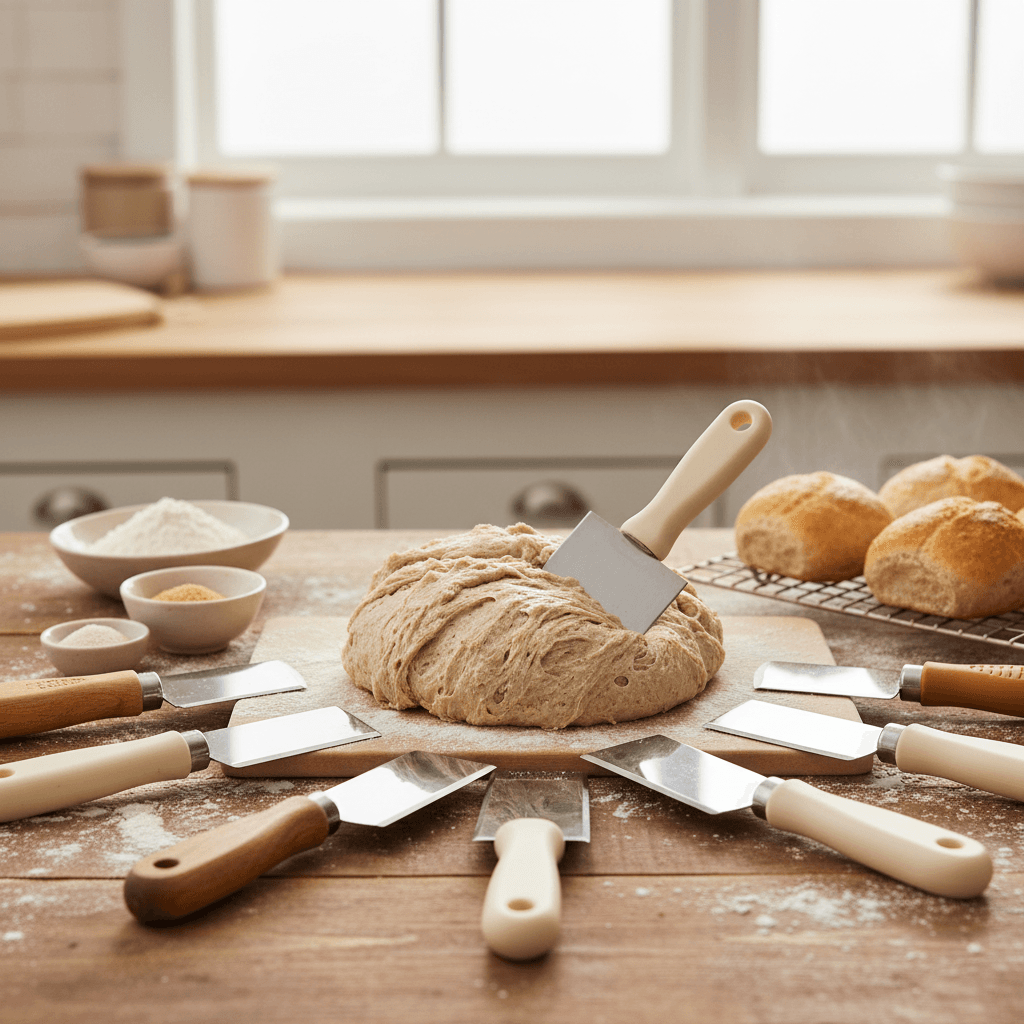
A good bench knife is one of the most underrated tools for gluten-free bread baking. Whether you're portioning sticky dough, cleaning your work surface, or transferring a shaped loaf, the right dough scraper makes every step faster and cleaner. Here are our top picks for handling sticky gluten-free bread doughs.
Key takeaways
- A stainless steel bench knife with a comfortable grip is the single best tool for dividing and handling sticky gluten-free dough.
- Flexible plastic scrapers are better for getting every last bit of batter out of bowls, but rigid metal bench knives win for portioning and transferring dough.
- Look for a blade at least 6 inches wide with a rolled or rubberized handle to prevent hand fatigue.
- Avoid serrated or overly thin bench knives — they drag through soft GF dough instead of cutting cleanly.
- Most quality bench knives cost between $8 and $20, making them one of the cheapest upgrades you can make.
- Having both a metal bench knife and a flexible bowl scraper covers every situation in gluten-free baking.
Why gluten-free bakers need a bench knife
Gluten-free bread dough is stickier and softer than conventional wheat dough, which means your hands alone often aren't enough to manage it. A bench knife lets you cut, lift, fold, and transfer dough without deflating it or leaving half of it stuck to your counter. If you've ever tried to move a shaped gluten-free boule to a Dutch oven with just your hands, you know exactly what we're talking about.
Beyond dough handling, a bench knife is the fastest way to scrape dried flour and dough bits off your work surface. When you're working with brown rice flour or cassava flour blends that tend to stick, a quick swipe of the bench knife cleans everything up in seconds.
If you're still building out your gluten-free baking setup, our Confident Gluten-Free Baker Toolkit walks you through every essential tool and technique so you're not guessing about what you actually need.
What to look for in a dough scraper bench knife
Not all bench knives are created equal, and the wrong one can make sticky GF dough even harder to work with. Here's what matters most:
Blade material and rigidity
Stainless steel is the standard for bench knives, and for good reason. It stays rigid enough to cut cleanly through dough and won't flex when you're applying pressure. For gluten-free bread specifically, you want a blade that's stiff — flexible scrapers have their place (more on that below), but your primary bench knife should hold its shape.
Handle comfort
You'll grip this tool repeatedly during a baking session, so the handle matters more than you'd think. Rolled stainless steel handles are durable but can dig into your palm. Rubberized or wood handles distribute pressure more evenly. If you have any hand or wrist issues, prioritize a wide, cushioned grip.
Blade width and height
A blade that's at least 6 inches wide gives you enough surface area to scoop and transfer dough portions. Height matters too — a taller blade (3 inches or more) acts as a better scooping surface and makes it easier to lift sticky dough off the counter in one motion.
Easy cleaning
One-piece stainless steel designs are the easiest to clean since there are no crevices where dough can hide. This is especially important if you're maintaining a dedicated gluten-free kitchen and need to avoid any cross-contamination risks.
The 6 best dough scraper bench knives for bread baking
We compared these based on blade quality, handle comfort, suitability for sticky gluten-free doughs, durability, and overall value. Here's how they stack up.
| Product | Blade size | Handle type | Best for | Price range |
|---|---|---|---|---|
| Dexter-Russell Sani-Safe 6" Dough Cutter | 6" x 3" | Polypropylene | Overall best pick | $10–$14 |
| OXO Good Grips Multi-Purpose Scraper | 6" x 3" | Soft-grip rubber | Comfort and ergonomics | $10–$13 |
| Ateco Stainless Steel Bench Scraper | 6" x 3" | Rolled stainless steel | Durability and precision | $8–$12 |
| Spring Chef Bench Scraper | 6" x 3.5" | Stainless with measurements | Portioning accuracy | $9–$12 |
| Fat Daddio's Stainless Steel Scraper | 6" x 4.25" | Rolled stainless steel | Extra-tall blade for scooping | $8–$11 |
| Mudder Flexible Bowl Scraper (set) | Flexible plastic | No handle (flat) | Bowl scraping companion tool | $6–$9 (set of 2–4) |
Our top pick: Dexter-Russell Sani-Safe 6" dough cutter
The Dexter-Russell Sani-Safe is our top pick. It's a workhorse used in professional bakeries, and it's well suited to gluten-free dough. The polypropylene handle is comfortable enough for extended use, the 6-by-3-inch stainless steel blade cuts cleanly, and the whole thing is dishwasher safe. At around $10 to $14, it's an absolute steal.

Dexter-Russell S196PCP Sani-Safe 19783 Dough Cutter/Scraper, 6" x 3" Stainless Steel Blade with Textured White Polypropylene Handle, NSF, Baking Tool and Bench Scraper, USA Made
Check price on Amazon →What we especially like for GF baking is the blade's slight flexibility — just enough to get under sticky dough without being so flexible that it bends when you're cutting through a batch of rolls. The Dexter-Russell Sani-Safe is built to hold up to daily use.
Pros: Professional-grade quality, comfortable grip, easy to clean, excellent price
Cons: Handle isn't as cushioned as the OXO; plastic handle won't win any beauty contests
Best for comfort: OXO Good Grips multi-purpose scraper
If hand comfort is your top priority, the OXO Good Grips Multi-Purpose Scraper is hard to beat. The soft, non-slip rubber handle is designed to be more comfortable than rolled-steel alternatives, especially during long baking sessions. The stainless steel blade is rigid and well-sized at 6 by 3 inches.
OXO also added measurement markings on the blade, which comes in handy when you're portioning dough into equal pieces for dinner rolls or sandwich buns.
Pros: Extremely comfortable handle, measurement markings, dishwasher safe
Cons: Slightly more expensive than basic models; rubber handle can stain over time
Best for durability: Ateco stainless steel bench scraper
The Ateco Stainless Steel Bench Scraper is a one-piece design with a rolled stainless steel handle. There's nothing to break, crack, or come loose. It's the kind of tool you buy once and use for decades. The blade is stiff and cuts through dough with zero flex.
The trade-off is comfort — the rolled steel handle can feel hard against your palm after repeated use. We recommend wrapping it with a silicone grip sleeve if you plan to use it heavily, or just alternating with a bowl scraper.
Pros: Indestructible one-piece construction, razor-straight edge, very affordable
Cons: Handle can be uncomfortable for extended use; no measurement markings
Best for portioning: Spring Chef bench scraper
The Spring Chef Bench Scraper stands out for its engraved measurement markings and slightly taller 3.5-inch blade. If you bake a lot of gluten-free rolls, buns, or portioned bread, having those markings right on the blade saves time and keeps your portions consistent.
The handle is a hybrid design — stainless steel with a slight contour that's more comfortable than a basic rolled edge but not as cushioned as the OXO. A solid middle-ground pick.
Pros: Clear measurement markings, taller blade for better scooping, good value
Cons: Handle comfort is average; markings can fade over many years of use
Best extra-tall blade: Fat Daddio's stainless steel scraper
At 4.25 inches tall, the Fat Daddio's scraper gives you significantly more blade surface than standard bench knives. This extra height is genuinely useful for scooping up large portions of sticky GF dough and transferring them to a loaf pan or proofing basket without losing half of it along the way.
It's a one-piece stainless design like the Ateco, so durability is excellent. The taller blade does make it slightly less nimble for fine work, but for bread bakers who handle large batches, it's a great choice.
Pros: Extra-tall blade for scooping, one-piece stainless construction, very affordable
Cons: Rolled handle can be uncomfortable; taller blade feels bulkier for small tasks
Best companion tool: Mudder flexible bowl scraper set
This isn't a bench knife in the traditional sense, but we're including it because every gluten-free bread baker should have a flexible bowl scraper alongside their metal bench knife. The Mudder Flexible Bowl Scraper set gives you multiple scrapers for just a few dollars, and they're perfect for getting every last bit of sticky GF batter out of your mixing bowl.
Gluten-free bread doughs — especially high-hydration ones — cling to bowls like nobody's business. A flexible scraper gets it all, which means less waste and more consistent loaves. Keep one handy when working with a stand mixer.
Pros: Extremely affordable, flexible enough for bowls and curved surfaces, comes in multi-packs
Cons: Not rigid enough for cutting or portioning; can stain with turmeric or beet-based doughs
Common mistakes when buying a bench knife
A few patterns tend to lead to disappointing purchases. Here's what to avoid:
- Buying a serrated bench knife. Some bench knives have a serrated or wavy edge. These are designed for scoring bread or cutting through very firm doughs. For gluten-free bread, which is soft and sticky, a serrated edge just drags and tears. Stick with a smooth, straight blade.
- Choosing a blade that's too small. Bench knives under 5 inches wide don't give you enough surface area to scoop and transfer dough effectively. Go 6 inches or wider.
- Ignoring the handle. A bench knife with no handle or a thin rolled edge will hurt your hand after a few uses. If you bake frequently, invest the extra few dollars in a comfortable grip.
- Skipping the flexible scraper entirely. A rigid bench knife and a flexible bowl scraper serve different purposes. You really want both in your baking equipment lineup.
How to use a bench knife with gluten-free bread dough
Using a bench knife with GF dough is slightly different from conventional baking because the dough is wetter and more delicate. Here are a few tips that make a real difference:
Lightly oil the blade. Instead of flouring your bench knife (which can alter your flour ratios), rub a thin layer of oil on the blade. This prevents sticking without adding extra dry ingredients. Use a neutral oil like canola oil or avocado oil.
Use swift, decisive cuts. Hesitating or sawing through sticky dough just makes a mess. Press down firmly and quickly to get a clean cut. If the dough is particularly sticky, check out our guide on fixing sticky gluten-free dough for hydration tips.
Scoop, don't drag. When transferring dough, slide the bench knife under the portion and lift it in one smooth motion. Dragging sticky GF dough across the counter just stretches and deflates it.
Clean as you go. Gluten-free flours dry into a cement-like crust if you let them sit. Scrape your counter with the bench knife between steps to keep your workspace clean and prevent dried bits from getting into your dough.
Frequently asked questions
What is the difference between a bench knife and a dough scraper?
A bench knife (also called a bench scraper) is a rigid metal blade with a handle, designed for cutting dough and scraping work surfaces. A dough scraper typically refers to a flexible plastic tool used for scraping bowls and folding soft doughs. For gluten-free bread baking, having both is ideal — the bench knife for cutting and transferring, and the flexible scraper for bowl work.
Can you use a bench knife with sticky gluten-free dough?
Yes, and it's actually one of the best tools for handling sticky GF dough. Lightly oil the blade instead of flouring it to prevent sticking. A rigid stainless steel bench knife cuts cleanly through high-hydration gluten-free doughs that would otherwise stick to your hands. If your dough is unmanageably sticky, our guide to making gluten-free bread less sticky can help.
Do I need a bench knife if I have a bread machine?
If you exclusively use a bread machine, you can get by without one since the machine handles mixing, shaping, and baking. However, a bench knife is still useful for cleaning up flour spills and handling dough if you ever bake free-form loaves, rolls, or flatbreads by hand.
What size bench knife is best for bread baking?
A 6-inch-wide blade is the standard and works well for most home bread baking. If you regularly work with large batches or need to transfer big portions of dough, consider a taller blade (4 inches or more) for better scooping ability. Anything smaller than 5 inches wide will feel limiting.
How do you clean a bench knife after using it with gluten-free dough?
Rinse it immediately after use before the dough dries. Most stainless steel bench knives are dishwasher safe, but a quick hand wash with warm soapy water works just as well. Avoid letting gluten-free dough dry on the blade — rice flour and starch blends harden quickly and become much harder to remove once set.

Written by
Co-founder, BakingSubs
Co-founder of BakingSubs, where he turns the science of ingredient substitutions into tested, reliable guidance for home bakers.
Related Posts
Bake with Confidence
See all
Confident Gluten-Free Baker Toolkit
The science-based system that replaces gluten's seven invisible jobs so your baking turns out soft, fluffy, and foolproof — every time.

Gluten-Free Recipe Vault
Instant access to our complete library of proven gluten-free recipes — no waiting, no guesswork, just results that work tonight.

Fix Your Gluten-Free Bread
Learn the 3-step formula to make bread rise and stay soft, discover why your loaves collapse, and get a tested sandwich bread recipe that actually works.