
Can You Bake With Protein Powder? 10 Brands Ranked for Muffins, Cookies, and Bread
We ranked 10 protein powders for baking by absorption, browning, max flour replacement, and sweetener heat stability. Unflavored whey isolate wins. Full comparison table inside.

Malik
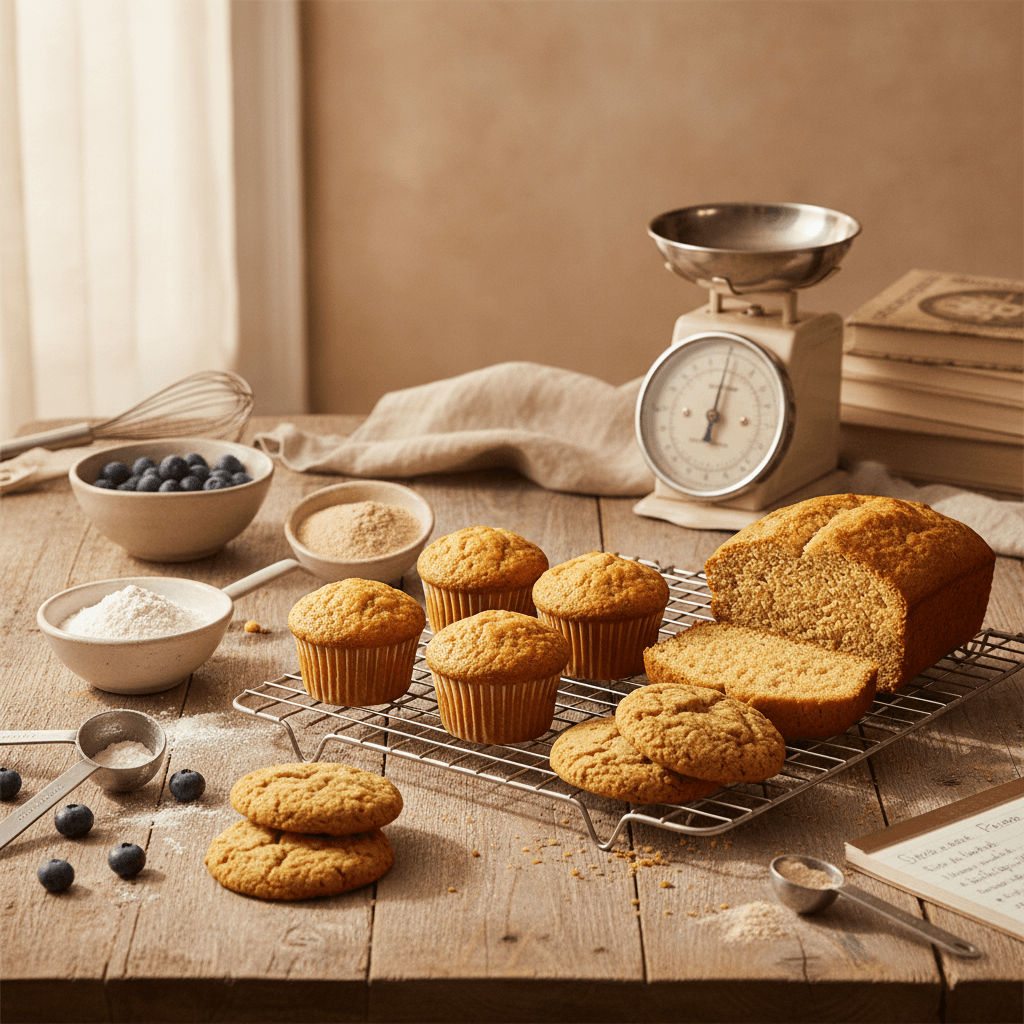
Yes, you can bake with protein powder, but the brand and type you pick matters more than the recipe you follow. I researched 10 popular powders across whey, casein, egg white, collagen, and plant blends and ranked them for baking based on protein type, liquid absorption, sweeteners, and heat behavior, not just macros on a label.
Below is the ranked verdict, a full comparison table, and a troubleshooting section for the three failures (dryness, rubberiness, cratering) that send most bakers to Google in frustration.
Key takeaways
Unflavored whey isolate (like Isopure Unflavored or Naked Whey) is the safest starting point for baking because it has no sweeteners that turn bitter at oven temperatures and absorbs roughly 1.5x the liquid of an equal weight of all-purpose flour.
Casein powder holds moisture far better than whey and produces softer crumb, but it caps out at about 20% flour replacement before texture turns gummy.
Collagen peptides add protein on paper but contribute almost zero structure. They cannot replace flour. Read our full breakdown in Collagen Powder in Baking as Flour Supplement.
Sucralose survives oven heat up to 450 F without bitterness. Stevia can turn metallic above 375 F in some formulations. Monk fruit is stable but adds a cooling aftertaste in high concentrations.
Never replace more than 25 to 30% of total flour weight with any protein powder. Past that threshold, every type tends to produce rubbery or cratered results.
Unflavored powders outsell vanilla for baking because vanilla-flavored versions contain sweeteners and flavorings that interact unpredictably with other recipe ingredients.
Ranked verdict: best protein powders for baking
Here is the short version. If you want one powder that works in muffins, cookies, pancakes, and quick breads without fighting you on texture or flavor, grab an unflavored whey isolate. If you want the softest crumb possible and are making cakes or banana bread, casein is worth the learning curve. Everything else has tradeoffs you need to plan around.
Rank 1: Isopure Unflavored Whey Isolate. 25g protein per scoop, zero sweeteners, clean flavor. This is the powder I recommend to anyone asking "can you bake with protein powder" for the first time.

Isopure Zero Carb 100% Pure Whey Isolate Protein Powder, Gluten Free, with Vitamins, Unflavored, 25g Protein Per Serving, 1 Lb, 16 Servings (Packaging May Vary)
Check price on Amazon →Rank 2: Naked Whey Unflavored. 25g protein per scoop, one ingredient (whey concentrate), slightly creamier flavor than Isopure because it is concentrate rather than isolate. It browns a touch faster due to the lactose content.
Rank 3: Anthony's Premium Whey Protein Isolate. 27g protein per scoop, unflavored, budget-friendly at roughly $0.65 per serving. Behaves much like Isopure, since both are unflavored whey isolates.
Rank 4: Bulk Supplements Casein Powder. 26g protein per scoop, unflavored. Produces the softest crumb of any powder on this list but needs 15 to 20% more liquid in the batter.
Rank 5: Orgain Organic Plant Protein (Unflavored). 21g protein per scoop, pea and brown rice blend. Slightly gritty if you exceed 15% flour replacement. Works well in dense bakes like brownies.
Full comparison table: 10 protein powders for baking
Brand / Flavor | Type | Protein per scoop | Liquid absorption vs flour | Max flour replacement | Browning behavior | Sweetener | Sweetener heat stability | Buy |
|---|---|---|---|---|---|---|---|---|
Whey isolate | 25g | ~1.5x | 25 to 30% | Moderate Maillard browning, golden crust | None | N/A | ||
Whey concentrate | 25g | ~1.6x | 25% | Faster browning (lactose), watch at 350 F+ | None | N/A | ||
Whey isolate | 27g | ~1.5x | 25 to 30% | Moderate, similar to Isopure | None | N/A | ||
Whey blend | 24g | ~1.4x | 20% | Moderate | Sucralose, acesulfame K | Stable to 450 F | ||
Casein | 26g | ~2.0x | 20% | Slow browning, pale crust unless you add sugar | None | N/A | ||
Whey blend | 25g | ~1.4x | 15 to 20% | Moderate | Sucralose | Stable to 450 F | ||
Whey blend | 25g | ~1.4x | 15% | Moderate | Sucralose | Stable to 450 F | ||
Whey isolate | 22g | ~1.5x | 25% | Moderate | None (unflavored) / Stevia (flavored) | Stevia: risk of metallic taste above 375 F | ||
Pea + brown rice | 21g | ~1.8x | 15% | Dark, fast browning (plant sugars) | None (unflavored) / Stevia (flavored) | Stevia: metallic risk above 375 F | ||
Collagen peptides | 20g | ~0.3x (dissolves, barely absorbs) | 0% (cannot replace flour) | Minimal browning contribution | None | N/A |
Why protein type matters more than brand
Protein powders are not interchangeable flour substitutes. Each protein type behaves differently under heat, and understanding why saves you from wasted batches.
Whey (isolate and concentrate)
Whey proteins denature and coagulate between 160 F and 180 F, which is right in the range where your muffins and cookies are setting structure. That coagulation creates a firm crumb, similar to how eggs set. This is why whey is the most forgiving type for baking. Whey concentrate contains lactose, which participates in Maillard browning and can cause your baked goods to brown 3 to 5 minutes faster than expected. Whey isolate has almost no lactose, so browning is more predictable. Both absorb roughly 1.5x the liquid of an equal weight of all-purpose flour, so you need to add extra liquid to compensate.
Casein
Casein forms a gel when hydrated, which is why it produces a softer, more cake-like crumb than whey. It absorbs about 2x the liquid of flour, which means you need to increase your wet ingredients by 15 to 20% when subbing casein for flour. The downside: casein's gel structure breaks down above about 20% flour replacement, and the result is a dense, gummy center. If you have ever pulled a protein muffin from the oven and found the inside wet and sticky even after 30 minutes of baking, casein overdose is likely the cause. For more on gummy centers in gluten-free and modified bakes, see our guide on gummy centers.
Egg white protein
Egg white powder is essentially dried albumin. It behaves almost identically to adding extra egg whites to your batter: it firms up the crumb, adds lift, and dries things out aggressively. Muffins made with 25% egg white protein can come out of the oven looking perfect and then turn into hockey pucks within 20 minutes as the proteins continue to set during cooling. If you use egg white protein, cap it at 15% of flour weight and add an extra tablespoon of oil or butter per 30g of powder. Our post on egg white substitutes for high-protein baking covers the mechanics in detail.
Collagen peptides
Collagen is the most misunderstood protein powder in baking. It dissolves completely in liquid and contributes almost zero structure. It will not set, it will not gel at baking temperatures (collagen gels below 95 F and melts above it), and it cannot replace flour at any percentage. What it can do is add protein grams to a nutrition label without changing texture, which is useful if your recipe already has enough structure from flour, eggs, and other proteins. We wrote an entire post on why collagen mostly fails as a flour supplement and the three narrow cases where it works.
Plant blends (pea, brown rice, hemp)
Plant protein powders absorb more liquid than whey (roughly 1.8x flour weight), brown faster due to residual plant sugars, and often have a gritty texture that becomes noticeable above 15% flour replacement. Pea protein in particular has a distinct earthy, slightly bitter flavor that chocolate and spice-heavy recipes can mask but vanilla recipes cannot. Hemp protein is the grittiest of the bunch and caps out at about 10% flour replacement before texture suffers. If you are baking plant-based and need higher protein, combining a plant blend at 10% with chickpea flour at 15 to 20% often produces better results than pushing either one alone.
Unflavored vs vanilla: which to buy for baking
Buy unflavored. This is not a close call.
Vanilla-flavored protein powders contain artificial or natural sweeteners (sucralose, stevia, monk fruit, or a combination) plus flavoring compounds that were designed for shaker bottles, not ovens. When you bake with them, you are adding sweetness you did not account for, and the interaction between those sweeteners and your recipe's sugar can produce unpredictable results.
Sucralose is the most heat-stable sweetener in flavored powders. It survives oven temperatures up to 450 F without breaking down or turning bitter. Optimum Nutrition Gold Standard, Ryse, and Ghost all use sucralose, and their flavored versions are usable in baking if you reduce other sweeteners in the recipe by about 1 tablespoon per scoop of powder.
Stevia is less reliable. Some stevia formulations develop a metallic or licorice-like aftertaste above 375 F, which is a common baking temperature for cookies and muffins. Legion's flavored versions use stevia, and Orgain's flavored line does too. If you must bake with a stevia-sweetened powder, keep your oven at 350 F and extend bake time by 3 to 5 minutes.
Monk fruit is heat-stable but can produce a cooling sensation on the tongue when concentrated. In a 12-muffin batch where you are using 1 scoop of monk-fruit-sweetened powder, you will not notice it. In a recipe that calls for 3 or 4 scoops, it becomes detectable. For a deeper look at how different sweeteners behave in the oven, check out our baking sweetener rankings.
The bottom line: unflavored powder lets you control sweetness and flavor independently. That is worth the $2 to $3 price difference.
How much protein powder can replace flour (and what happens when you use too much)
The single most important number in protein powder baking is the replacement percentage. Here are the working ranges by protein type:
Protein type | Safe replacement range | Texture at max | Texture past max |
|---|---|---|---|
Whey isolate | 20 to 30% of flour weight | Slightly firmer crumb, good rise | Rubbery, dense, cratering on top |
Whey concentrate | 20 to 25% | Slightly denser, faster browning | Tough, dry, dark crust |
Casein | 15 to 20% | Soft, moist, cake-like | Gummy, wet center, won't set |
10 to 15% | Firm, springy, good lift | Hockey puck after cooling | |
Plant blend | 10 to 15% | Dense, earthy, passable in chocolate | Gritty, crumbly, bitter |
Collagen | 0% (add-in only, not a replacement) | No structural change | N/A |
For a 240g flour recipe (about 2 cups of all-purpose), 25% replacement means swapping out 60g of flour for 60g of protein powder. Use a kitchen scale. Measuring protein powder by volume is unreliable because it packs differently than flour. A OXO Good Grips 11lb Food Scale takes the guesswork out of this entirely.
When you need to scale a recipe up or down while keeping your protein-to-flour ratio consistent, our recipe scaler tool handles the math.
Troubleshooting: dryness, rubberiness, and cratering
These are the three failures that drive the most search traffic around protein powder baking, and each one has a different root cause.
Dryness
Protein powder absorbs more liquid than flour. Whey isolate absorbs roughly 1.5x, casein about 2x, and plant blends about 1.8x. If you swap 60g of flour for 60g of whey isolate without adding extra liquid, your batter loses roughly 30ml of available moisture. The fix is simple: for every 30g of protein powder you add, increase your liquid (milk, water, yogurt) by 2 tablespoons (30ml). Greek yogurt works especially well because it adds moisture, fat, and acidity simultaneously.
Egg white protein is the worst offender for dryness. Protein brownies made with 40% egg white powder can turn out like cardboard. Dropping to 15% and adding an extra 2 tablespoons of avocado oil makes for a much fudgier, moister brownie.
Rubberiness
Rubberiness comes from too much protein coagulating at once. When whey proteins denature in the oven, they form a tight network, similar to overcooking scrambled eggs. The threshold is around 25 to 30% flour replacement for whey, lower for other types. If your muffins bounce back like a stress ball when you press the top, you have crossed the line.
Fixes: reduce the protein percentage, add 1 to 2 tablespoons of fat (oil or melted butter) per 30g of powder to interrupt the protein network, or switch from whey isolate to casein, which forms a softer gel. Mixing protein types (for example, 15% whey + 10% casein) can also split the difference between structure and softness. Our broader guide on how to add protein to baked goods without ruining texture covers seven methods beyond protein powder alone.
Cratering (sunken tops)
Cratering happens when the protein structure sets too fast on the outside while the inside is still liquid. The crust locks in place, the interior continues to rise from leavening gas, and then collapses when it cannot push through. This is most common with whey isolate at high replacement percentages (above 25%) baked at temperatures over 375 F.
The fix: lower your oven temperature by 25 F and extend bake time by 5 to 8 minutes. At 325 F, a protein muffin takes about 23 to 26 minutes instead of the usual 18 to 20. The slower heat gives the interior time to set before the crust locks. If you are baking gluten-free and dealing with cratering, our page on poor rise in gluten-free baking covers overlapping causes.
Equipment that makes protein powder baking easier
You do not need specialty equipment, but three tools eliminate the most common mistakes.
A kitchen scale is non-negotiable. Protein powder density varies wildly between brands. One "scoop" of Isopure weighs 29g. One scoop of Orgain weighs 46g. Measuring by scoops instead of grams throws off every ratio in this post.
A stand mixer helps because protein powder batters are thicker than standard batters and benefit from thorough mixing. Undermixed protein batter produces pockets of dry powder that bake into chalky spots.
A reliable instant-read thermometer lets you check internal temperature. Protein muffins and breads are done at 200 to 205 F internally. The visual cues you normally rely on (golden top, pulling away from the pan) are unreliable with protein powder because the browning chemistry changes.
Frequently asked questions
Can you bake with protein powder without it getting dry?
Yes, but you need to compensate for protein powder's higher liquid absorption. Add 2 tablespoons of extra liquid (milk, yogurt, or water) for every 30g of protein powder in the recipe. Fat also helps: 1 tablespoon of oil or melted butter per 30g of powder keeps the crumb moist. Casein powder produces the least dry results of any protein type because it forms a moisture-retaining gel.
What is the best protein powder for baking muffins and cookies?
Unflavored whey isolate, specifically Isopure Unflavored or Naked Whey. Both have 25g protein per scoop, no sweeteners, and predictable browning. Replace 20 to 25% of your flour by weight with the powder and add extra liquid to compensate for absorption. For cookies specifically, stay at 20% or below to avoid a cakey texture.
Does protein powder change how baked goods brown?
Yes. Whey concentrate browns faster than all-purpose flour because it contains lactose, which participates in Maillard reactions. Whey isolate browns at a moderate rate. Plant protein powders brown the fastest due to residual plant sugars and can produce a dark crust if baked above 350 F. Casein browns the slowest and often produces a pale top unless you add sugar or brush with an egg wash.
Why do my protein muffins sink in the middle?
Cratering happens when the outside sets before the inside. Protein powder accelerates crust formation because whey denatures at 160 to 180 F. The fix is to lower your oven temperature by 25 F (bake at 325 F instead of 350 F) and extend bake time by 5 to 8 minutes. Also check that you are not exceeding 25% flour replacement, which makes the interior too protein-dense to rise evenly.
Can you use collagen powder as a flour substitute in baking?
No. Collagen peptides dissolve in liquid and contribute zero structure. They cannot replace flour at any percentage. Collagen gels below 95 F and melts above it, so at oven temperatures it provides no binding or setting. You can stir collagen into a batter to boost the protein count on a nutrition label, but it will not change texture, rise, or crumb. See our full analysis in collagen powder in baking as flour supplement.

Written by
Co-founder, BakingSubs
Co-founder of BakingSubs, where he turns the science of ingredient substitutions into tested, reliable guidance for home bakers.
Related Posts
Bake with Confidence
See all
Confident Gluten-Free Baker Toolkit
The science-based system that replaces gluten's seven invisible jobs so your baking turns out soft, fluffy, and foolproof — every time.

Gluten-Free Recipe Vault
Instant access to our complete library of proven gluten-free recipes — no waiting, no guesswork, just results that work tonight.

Fix Your Gluten-Free Bread
Learn the 3-step formula to make bread rise and stay soft, discover why your loaves collapse, and get a tested sandwich bread recipe that actually works.