

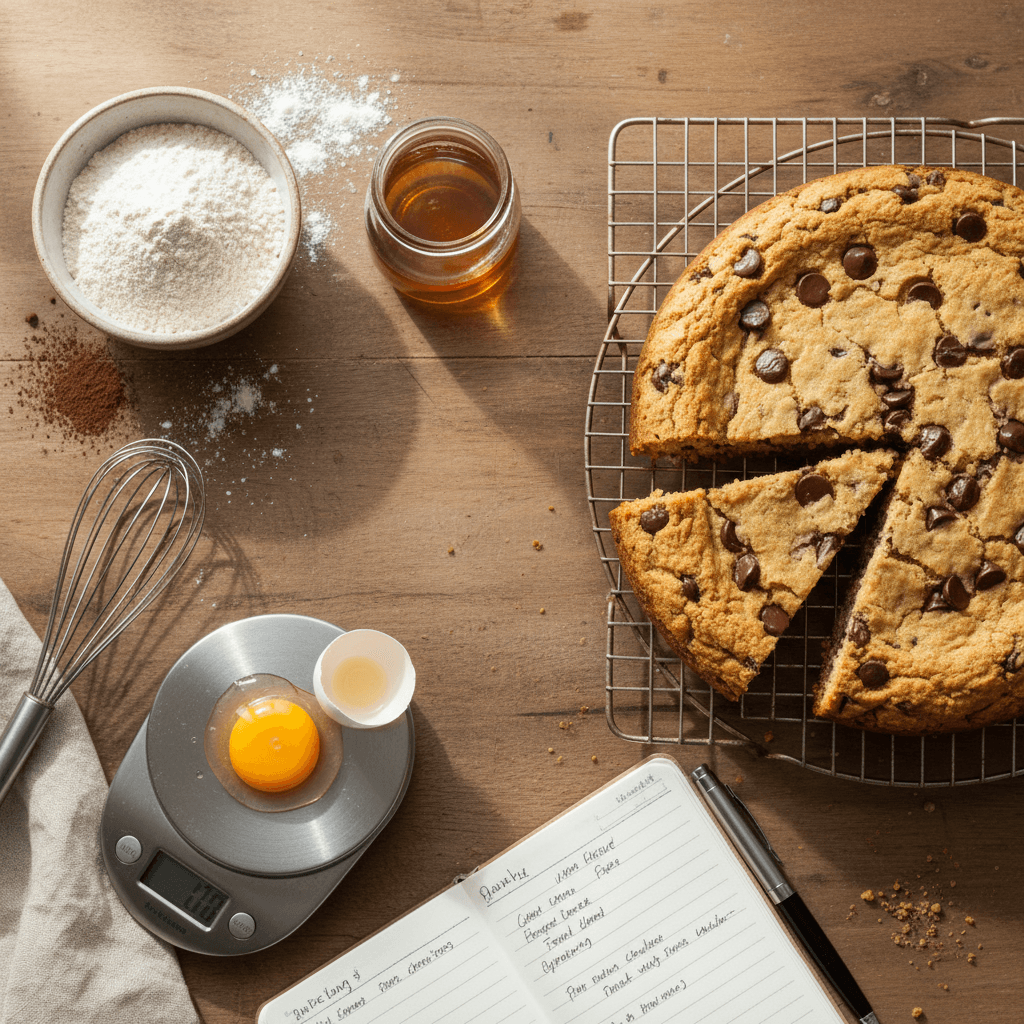
Nothing is more frustrating than nailing a recipe one day and getting a completely different result the next. If your bakes feel unpredictable — especially with gluten-free flours — the problem almost always comes down to process, not talent. Here are nine habits that will make your results repeatable every single time.
Key takeaways
- Weighing ingredients with a digital scale is the single most impactful change you can make for consistency.
- Ingredient temperature matters more than most bakers realize — cold eggs and room-temperature butter behave very differently from batch to batch.
- Oven thermometers reveal that most home ovens run 15-25 degrees off from the displayed temperature.
- Gluten-free flours absorb moisture at wildly different rates, so measuring by volume introduces huge variation.
- Writing down what you did (and what happened) turns every bake into usable data for the next one.
- Mixing technique and timing affect structure just as much as the ingredients themselves.
Why gluten-free baking is especially hard to keep consistent
Gluten-free baking has more variables than conventional baking, and each one amplifies inconsistency. Without gluten's forgiving protein network holding things together, small changes in hydration, mixing, or leavening have outsized effects on the final product. Understanding what gluten actually does in baking helps you see exactly where things can go sideways.
Different gluten-free flours — brown rice flour, cassava flour, almond flour — all absorb water differently. A cup of one flour can weigh anywhere from 120g to 160g depending on how you scoop it. That kind of variation is the enemy of consistency, and it's completely avoidable.
1. Weigh everything with a digital scale
Switching from cups to grams is the single biggest improvement you can make for repeatable results. A digital kitchen scale removes the guesswork from scooping, packing, and leveling — all of which introduce variation batch to batch.
This is especially critical for gluten-free flour blends. If you're making your own blend using a homemade gluten-free flour blend recipe, even a 10g difference in your starch-to-flour ratio will change the texture noticeably. Weigh the blend components, weigh the final amount you add to the recipe, and weigh your liquids too (yes, even water — it's faster than using measuring cups once you get used to it).
If you're baking the same recipe regularly — say, filling multiple orders of the same cookie — weighing also lets you portion dough balls identically so they bake at the same rate on the same sheet.
2. Control your ingredient temperatures
Ingredient temperature is one of the most overlooked sources of batch-to-batch variation. Butter straight from the fridge creams completely differently than butter that's sat on the counter for 45 minutes. Cold eggs don't emulsify as well into batters. Room-temperature milk activates leaveners differently than cold milk.
Here's a quick reference for the temperatures that matter most:
| Ingredient | Ideal temperature | Why it matters |
|---|---|---|
| Butter (for creaming) | 65-68 F / 18-20 C | Traps air properly for lift and structure |
| Eggs | Room temp (68-72 F) | Emulsifies smoothly into batters |
| Milk or buttermilk | Room temp or slightly warm | Activates leaveners evenly |
| Water (for yeast doughs) | 105-110 F / 40-43 C | Activates yeast without killing it |
A quick trick: put eggs in a bowl of warm (not hot) water for 10 minutes to bring them to room temperature safely. For butter, cut it into small cubes so it warms faster and more evenly. Understanding how eggs function in baking helps you see why this step matters so much.
If you're working to level up your gluten-free baking process overall, the Confident Gluten-Free Baker Toolkit walks you through building reliable systems like this from the ground up — it's designed for bakers who are tired of inconsistent results.
3. Verify your oven temperature with a thermometer
Most home ovens are off by 15-25 degrees Fahrenheit, and some are even worse. If your oven runs hot, your cakes dome and crack. If it runs cool, your cookies spread too much and your bread stays gummy in the center. An oven thermometer costs a few dollars and solves one of the most common sources of frustration in baking.
Place the thermometer in the center of the oven and preheat for at least 20 minutes before checking. If your oven runs 20 degrees hot, simply set it 20 degrees lower than the recipe calls for. Check it periodically — ovens drift over time, especially older ones.
Hot spots are another issue. If you notice uneven browning, rotate your pans 180 degrees halfway through baking. This is especially important for delicate gluten-free bakes that don't have gluten's structural buffer to compensate for uneven heat.
4. Use the same flour brands and blends
Not all rice flours are the same. Not all tapioca starches are the same. Different brands grind to different particle sizes, which affects absorption, texture, and rise. Once you find a flour or blend that works in your recipe, stick with it.
If you're using a commercial blend, something like King Arthur Gluten-Free Flour will behave differently from Bob's Red Mill 1-to-1 in the same recipe. Neither is wrong — they're just different. Switching brands mid-recipe-development is a recipe for confusion.
When you do need to swap, expect to adjust hydration. Heavier flours like buckwheat flour absorb more liquid than lighter starches like arrowroot powder. Keep notes on what you changed and what happened (more on that below).
5. Time your mixing and don't wing it
Over-mixing and under-mixing are both consistency killers, and they're easy to fall into when you're going by feel. Gluten-free batters are particularly sensitive because the binders — xanthan gum, guar gum, or psyllium husk — need a specific amount of mixing to hydrate and activate, but too much breaks down the structure you're building.
Set a timer for your mixing stages. If your recipe says cream butter and sugar for 3 minutes on medium speed, actually time it. If it says fold the dry ingredients in until just combined, count your strokes. This sounds obsessive, but it's the difference between "it worked once" and "it works every time."
6. Standardize your pan sizes and materials
Baking the same batter in a dark metal pan versus a light aluminum pan will give you noticeably different results. Dark pans absorb more heat and brown faster. Glass pans retain heat longer. Silicone molds conduct heat slowly. If you switch pans between batches, you're introducing a variable that changes bake time, browning, and crust texture.
Pick your pans and stick with them. If you're baking at volume, having multiples of the same pan means every batch behaves identically. This is one of those boring, unsexy habits that makes a huge practical difference.
7. Keep a baking log
This is the habit that separates bakers who improve steadily from bakers who stay stuck. Every time you bake, write down the key details: the flour blend you used, ingredient weights, oven temperature, bake time, ambient humidity if it's notably dry or humid, and the result. Did the cake dome? Was the crumb too dense? Did the cookies spread more than last time?
Your log doesn't need to be fancy. A notebook on the counter works. A spreadsheet works. A notes app on your phone works. The point is that when something goes wrong (or right), you can trace back to exactly what you did. Over time, this builds a personal knowledge base that's more valuable than any recipe book.
If you're baking the same recipes repeatedly — especially if you're filling orders or bringing bakes to events — a log also helps you catch drift before it becomes a problem. Maybe your flour bag is from a new batch and absorbs slightly differently. Maybe the weather changed. Your log will show the pattern.
8. Rest your batters and doughs when the recipe says to
Many gluten-free recipes call for a rest period before baking, and it's tempting to skip it when you're in a hurry. Don't. The rest lets binders hydrate fully, starches absorb liquid evenly, and air bubbles stabilize. Skipping the rest often leads to gummy centers or poor rise — two of the most common gluten-free baking complaints.
If a recipe says to rest the batter for 10-15 minutes, set a timer and use that time to prep your pans or clean up. The difference in the finished product is often dramatic, especially in bread and muffin recipes.
9. Bake one variable at a time when troubleshooting
When a bake doesn't turn out right, the instinct is to change multiple things at once. Resist that urge. If you change the flour blend, the oven temperature, and the mixing time all at once, you won't know which change fixed the problem — or which one made it worse.
Change one thing per batch. If you suspect your oven is the issue, adjust only the temperature and keep everything else identical. If you think the batter was too wet, reduce the liquid by a tablespoon and change nothing else. This methodical approach, combined with your baking log, will get you to consistent results much faster than shotgun troubleshooting.
If you're newer to gluten-free baking and still building your foundation, our complete beginner's guide to gluten-free baking covers the fundamentals that make all of these habits easier to implement.
Putting it all together
Consistency isn't about being a naturally gifted baker. It's about removing variables. Every habit on this list eliminates one source of randomness from your process. Weigh your ingredients, control your temperatures, know your oven, stick with the same materials, and write down what you do. Over time, your results will become so predictable that you'll wonder how you ever baked without these systems in place.
And here's the thing — once your bakes are consistent, everything else gets easier. You can scale recipes with confidence. You can bake for others without anxiety. You can experiment with new flavors knowing your base process is solid. That's the real payoff.
If you're baking regularly and want to turn that consistency into something more, check out this free Home Bakery Pro masterclass on getting consistent orders and building a sustainable home bakery. It's built for bakers who already have the skills and want a system for the business side too.
Frequently asked questions
Why do my gluten-free bakes turn out differently every time?
The most common reason is inconsistent measuring. Gluten-free flours vary widely in density, so scooping with cups introduces significant variation batch to batch. Switching to a digital scale and weighing in grams is the fastest fix. Oven temperature inaccuracy and ingredient temperature differences are the next most likely culprits.
Does humidity affect gluten-free baking consistency?
Yes, humidity has a noticeable impact on gluten-free baking. Flours and starches absorb moisture from the air, which changes the hydration of your batter without you adding any extra liquid. On very humid days, you may need to reduce liquid slightly or add a bit more flour. Keeping a baking log helps you spot these patterns over time.
How do I know if my oven temperature is accurate?
Place an oven thermometer in the center of your oven and preheat for at least 20 minutes. Compare the thermometer reading to the temperature you set. Most home ovens run 15-25 degrees off. If yours is consistently off, simply adjust your set temperature to compensate.
Can I use different gluten-free flour brands interchangeably?
Not without expecting some variation. Different brands grind their flours to different particle sizes and may include different starch ratios in their blends. If you switch brands, plan to do a test batch and adjust hydration as needed. Our homemade flour blend guide explains how ratios affect results.
What is the most important habit for consistent baking results?
Weighing your ingredients with a digital scale. It eliminates the biggest source of batch-to-batch variation in one step. Combined with an oven thermometer and a simple baking log, you'll see a dramatic improvement in consistency within just a few bakes.

Written by
Co-founder, BakingSubs
Co-founder of BakingSubs, where he turns the science of ingredient substitutions into tested, reliable guidance for home bakers.
Related Posts
Gluten-Free Flour Weight Chart: Grams per Cup for 9 Major Brands (and Why the Spread Is Over 20%)
Best Low Carb Tortillas (2026): 6 Brands Compared by Net Carbs
Best Sugar-Free Cake Mix and Brownie Mix (2026): 14 Options Ranked by Net Carbs, Sweetener, and Price
Bake with Confidence
See all
Confident Gluten-Free Baker Toolkit
The science-based system that replaces gluten's seven invisible jobs so your baking turns out soft, fluffy, and foolproof — every time.

Gluten-Free Recipe Vault
Instant access to our complete library of proven gluten-free recipes — no waiting, no guesswork, just results that work tonight.

Fix Your Gluten-Free Bread
Learn the 3-step formula to make bread rise and stay soft, discover why your loaves collapse, and get a tested sandwich bread recipe that actually works.