

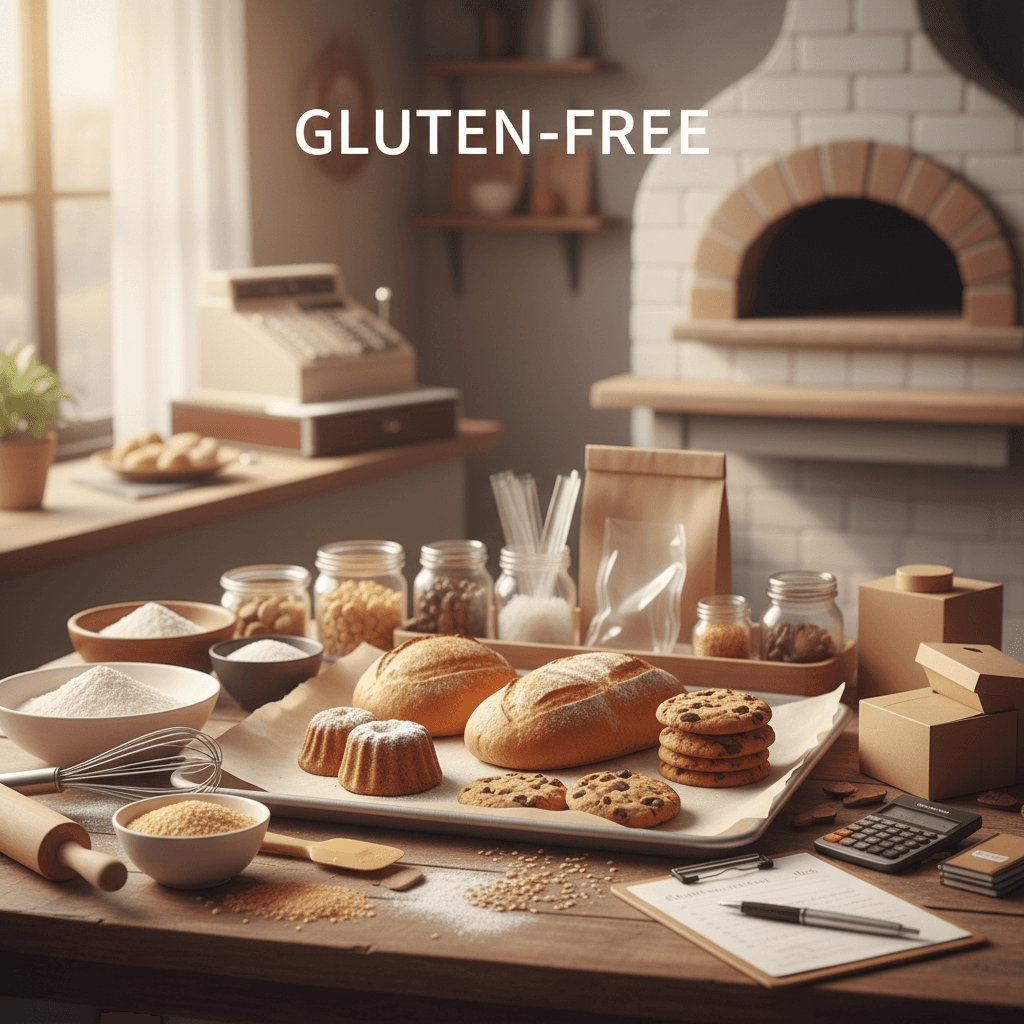
Starting a gluten-free home bakery is one of the most accessible food businesses you can launch, but vague advice like "it depends" doesn't help you plan. This post breaks down every real cost category so you can build a budget that actually works.
Key takeaways
- A gluten-free home bakery can realistically launch for $500 to $3,000 depending on your state's requirements and existing equipment.
- Licensing and permits typically cost $25 to $400, varying widely by state and county.
- Gluten-free flours and specialty ingredients cost 2 to 4 times more than conventional equivalents, which directly impacts your pricing strategy.
- Packaging and labeling are often the most overlooked startup expense, running $150 to $500 to get right.
- You do not need a commercial kitchen in most cottage food states, which eliminates the single biggest cost barrier.
- Building a dedicated gluten-free workspace at home can cost $200 to $800 for contamination prevention supplies.
Total gluten-free bakery startup costs at a glance
Before we dig into each category, here's the full picture. These ranges assume you're starting a cottage food or home bakery operation, not leasing a commercial space.
| Cost category | Low estimate | High estimate |
|---|---|---|
| Licensing and permits | $25 | $400 |
| Food safety certification | $15 | $175 |
| Equipment and tools | $0 (use existing) | $1,200 |
| Initial ingredient stock | $150 | $500 |
| Packaging and labels | $100 | $500 |
| Cross-contamination prevention | $50 | $300 |
| Marketing and branding | $0 | $500 |
| Insurance (optional but recommended) | $200/year | $500/year |
| Total | $540 | $3,575 |
Most bakers we talk to land somewhere around $1,000 to $1,500 for their initial outlay. Let's break each category down.
Licensing, permits, and legal costs for a home bakery
Your first real expense is getting legal. In most states, cottage food laws let you sell baked goods made in your home kitchen without a commercial license. The specific requirements and annual revenue caps vary dramatically.
Here's what to budget for:
- Cottage food permit or registration: $0 to $100. Some states like Utah and Ohio require no permit at all. Others, like California, charge a registration fee.
- Business license: $25 to $150 depending on your city or county.
- DBA ("doing business as") filing: $10 to $50 if you're operating under a business name.
- Food handler's certificate: $15 to $25 for online courses in most states. Some states require the more intensive ServSafe certification, which runs $100 to $175.
Check your specific state's cottage food laws carefully. Some states have annual revenue caps as low as $25,000, while others have no cap at all. A few states require you to include allergen labeling on every product, which is actually a good practice regardless.
For a gluten-free bakery specifically, some states may require additional labeling disclosures about your facility's allergen status. This doesn't usually cost extra, but you need to know the rules before you print labels.
Equipment and tools you actually need
This is where startup costs vary the most, because it depends on what you already own. If you've been baking gluten-free at home for a while, you probably have most of what you need.
If you're starting from scratch, here's a realistic equipment budget:
| Item | Budget option | Mid-range option |
|---|---|---|
| Stand mixer | $150 (Hamilton Beach) | $350 (KitchenAid Artisan) |
| Digital scale | $15 | $30 |
| Sheet pans (set of 4) | $25 | $50 |
| Mixing bowls | $15 | $30 |
| Cooling racks | $12 | $25 |
| Measuring cups and spoons | $10 | $20 |
| Silicone spatulas and whisks | $10 | $20 |
| Cake pans or specialty pans | $20 | $80 |
A digital scale is non-negotiable for gluten-free baking. Gluten-free flour blends behave differently by weight than by volume, and consistency is everything when you're selling to customers. We've covered the full rundown in our baking starter kit guide if you want the detailed list.
One important note: if you plan to market your bakery as a dedicated gluten-free facility, you'll want separate equipment that has never touched wheat flour. That means dedicated pans, bowls, wooden spoons, and sifters. Porous materials like wood and silicone can harbor gluten residue. Budget an extra $50 to $200 for duplicates of anything shared with a gluten-containing kitchen.
For a deeper look at where to save and where to invest on gear, our budget vs premium baking equipment comparison breaks it all down.
Ingredient costs: why gluten-free is different
This is the category that catches new gluten-free bakery owners off guard. Specialty flours and binders cost significantly more than conventional all-purpose flour, and that has to be reflected in your pricing.
Here's a realistic comparison:
| Ingredient | Conventional cost | Gluten-free cost |
|---|---|---|
| All-purpose flour (5 lb) | $3 to $5 | $8 to $14 (GF blend) |
| Xanthan gum (8 oz) | N/A | $8 to $12 |
| Almond flour (1 lb) | N/A | $7 to $12 |
| Tapioca starch (1 lb) | N/A | $3 to $6 |
| Psyllium husk powder (12 oz) | N/A | $8 to $14 |
| Certified GF oats (2 lb) | $3 to $5 (regular) | $6 to $10 |
For your initial pantry stock, budget $150 to $500 depending on how many products you plan to offer at launch. We recommend starting with 2 to 3 core items and expanding from there. Our guide on stocking a baking pantry on a budget has smart strategies for keeping these costs manageable.
Understanding how each ingredient functions matters just as much as buying it. If you're working with flour blends, our gluten-free baking guide covers the common texture issues (gritty results, gummy centers, poor rise) and how to troubleshoot them. Getting your recipes dialed in before you start selling saves you money on wasted ingredients and protects your reputation.
Buying in bulk from restaurant supply stores or online wholesale suppliers can cut your per-unit ingredient costs by 20 to 40 percent once you have consistent orders.
Want a proven system for getting consistent orders? Our free Home Bakery Pro masterclass covers the 3 biggest mistakes new home bakers make and how to actually get repeat customers, without relying on social media.
Packaging and labeling costs
Packaging is the expense most new bakery owners underestimate. Your packaging is your brand's first impression, and for a gluten-free bakery, clear allergen labeling isn't optional.
Here's what to budget:
- Boxes, bags, or containers: $50 to $200 for your first order. Clear cello bags with heat seals run about $0.05 to $0.15 each. Bakery boxes cost $0.50 to $2.00 each depending on size and quality.
- Labels: $50 to $150 for custom printed labels. You can start with a home printer and Avery labels for around $30, but professional labels make a big difference in perceived value.
- Stickers and tape: $20 to $50 for branded closure stickers and food-safe tape.
- Ingredient and allergen labels: Required in most states. Must list all ingredients and common allergens. Budget $0 if you print at home, or $50 to $100 for a professional batch.
A common mistake is ordering too much packaging upfront before you've settled on your product line. Start with smaller quantities even if the per-unit cost is higher. You can always reorder once you know what's selling.
Setting up a safe gluten-free workspace
If you're marketing your bakery as gluten-free (and you should, because that's your competitive advantage), you need to take cross-contamination seriously. This is both an ethical obligation to your customers and a business differentiator.
Here's what a dedicated gluten-free workspace setup typically costs:
- Dedicated storage containers: $30 to $80 for airtight bins to store gluten-free flours separately.
- Color-coded utensils: $20 to $40 for a set of clearly marked GF-only tools.
- Separate cutting boards and prep surfaces: $15 to $30.
- Deep cleaning supplies: $10 to $20 for your initial thorough kitchen clean before each baking session.
- Dedicated sifter and sieve: $10 to $15. Mesh sifters are nearly impossible to fully clean of gluten residue.
If your household also eats gluten-containing foods, you'll need a protocol for when and how you bake. Many home bakery owners designate specific baking days where no wheat products are allowed in the kitchen. Our resource on fixing gritty texture in gluten-free baking touches on how contamination from shared equipment can affect your results.
Marketing and branding on a startup budget
You don't need to spend thousands on marketing to launch. In fact, most successful home bakeries start with nearly zero marketing budget and grow through word of mouth and local community presence.
Here's a realistic breakdown:
- Logo design: $0 (Canva free tier) to $200 (Fiverr or 99designs).
- Business cards: $15 to $30 for 250 cards from Vistaprint or Moo.
- Simple website or landing page: $0 (free options like Carrd or a Facebook business page) to $200/year for a basic Squarespace or Wix site.
- Food photography: $0 if you use your phone with natural light. Invest in a $10 foam board for a clean white backdrop.
- Farmers market booth fee: $25 to $75 per market day, if applicable.
The gluten-free niche is actually an advantage here. There's less competition than conventional bakeries, and your target customers are actively searching for safe options. A clear message that you're a dedicated gluten-free bakery is often more powerful than any paid advertising.
Insurance: optional but worth considering
Home bakery insurance isn't required in most cottage food states, but it's a smart investment once you're selling regularly. A general liability policy for a home-based food business typically costs $200 to $500 per year.
This covers you if a customer has an allergic reaction, claims they got sick, or if something goes wrong at a farmers market or delivery. For a gluten-free bakery where your customers often have celiac disease or serious intolerances, the peace of mind is worth the cost.
Companies like Flipper, NEXT Insurance, and the Cottage Food Insurance Program offer policies specifically designed for home bakers.
How to keep startup costs under $1,000
If you're working with a tight budget, here's a lean launch plan:
- Start with what you have. Use your existing kitchen equipment and only buy what's missing. A scale and a few dedicated GF pans may be all you need.
- Launch with 2 to 3 products. Don't try to offer a full menu. Pick your best-sellers and perfect them. Our guide to cheap baking substitutes can help you find affordable ingredient swaps without sacrificing quality.
- Print labels at home. Use Avery labels and a basic inkjet printer until you're generating consistent revenue.
- Skip the website initially. A Facebook page or Instagram profile with clear photos and ordering info is enough to start.
- Buy ingredients in small quantities first. Only scale up to bulk buying once you know your sales volume.
- Reinvest profits. Use your first month's earnings to upgrade packaging, buy bulk ingredients, or invest in better equipment.
When to invest more: scaling beyond the basics
Once you're consistently getting orders and hitting your cottage food revenue cap, it's time to think about scaling. That might mean:
- Upgrading to a professional-grade stand mixer or oven ($300 to $800).
- Renting a shared commercial kitchen ($15 to $30 per hour) to exceed cottage food limits.
- Getting certified gluten-free through organizations like GFCO ($500+ annually), which lets you use the certified GF label.
- Investing in premium ingredients that elevate your products and justify higher prices.
The key is to grow into these expenses as your revenue supports them, not before.
Frequently asked questions
How much does it cost to start a gluten-free bakery from home?
Most home-based gluten-free bakeries launch for $500 to $1,500 under cottage food laws. The biggest variables are whether you need new equipment and your state's licensing fees. If you already bake gluten-free at home, your startup costs could be under $500.
Do I need a commercial kitchen to sell gluten-free baked goods?
In most states, no. Cottage food laws allow you to bake and sell from your home kitchen, though there are usually annual revenue caps ranging from $25,000 to $75,000 or more. Some states have no cap at all. Always check your specific state's cottage food regulations before launching.
Why are gluten-free bakery ingredient costs higher than regular bakeries?
Gluten-free flours and binders like almond flour, tapioca starch, and xanthan gum cost 2 to 4 times more than conventional wheat flour. This means your cost of goods sold is higher, and your pricing needs to reflect that. Most successful gluten-free bakeries price 30 to 50 percent above conventional bakery prices.
What insurance do I need for a home bakery business?
While not legally required in most cottage food states, general liability insurance ($200 to $500 per year) is strongly recommended. It covers you against customer illness claims and product liability. For a gluten-free bakery serving customers with celiac disease, this protection is especially important.
How do I price gluten-free baked goods to cover higher ingredient costs?
Calculate your cost of goods sold for each item, then multiply by 3 to 4 for your retail price. A cookie that costs $0.75 in ingredients should sell for $2.25 to $3.00. Factor in packaging, your time, and overhead. Don't underprice because you feel guilty about charging more than conventional bakeries. Your customers understand and expect to pay more for safe, quality gluten-free products.
Ready to turn your baking into a real business?
Knowing your startup costs is the first step. The next step is building a system that actually brings in consistent orders and repeat customers.
Join the free Home Bakery Pro masterclass to learn the 3 biggest mistakes new home bakers make and how to get repeat customers without relying on social media. It's the roadmap we wish we'd had when starting out.

Written by
Co-founder, BakingSubs
Co-founder of BakingSubs, where he turns the science of ingredient substitutions into tested, reliable guidance for home bakers.
Related Posts
Gluten-Free Flour Weight Chart: Grams per Cup for 9 Major Brands (and Why the Spread Is Over 20%)
Best Low Carb Tortillas (2026): 6 Brands Compared by Net Carbs
Best Sugar-Free Cake Mix and Brownie Mix (2026): 14 Options Ranked by Net Carbs, Sweetener, and Price
Bake with Confidence
See all
Confident Gluten-Free Baker Toolkit
The science-based system that replaces gluten's seven invisible jobs so your baking turns out soft, fluffy, and foolproof — every time.

Gluten-Free Recipe Vault
Instant access to our complete library of proven gluten-free recipes — no waiting, no guesswork, just results that work tonight.

Fix Your Gluten-Free Bread
Learn the 3-step formula to make bread rise and stay soft, discover why your loaves collapse, and get a tested sandwich bread recipe that actually works.