
Georgia Cottage Food Law 2026: No Sales Cap, No License, Labels, and Where You Can Sell
Georgia's cottage food law (HB 398) has no sales cap, no license, and no fee. See allowed foods, the required label statement, online and mail-order rules, and store sales in 2026.

Malik
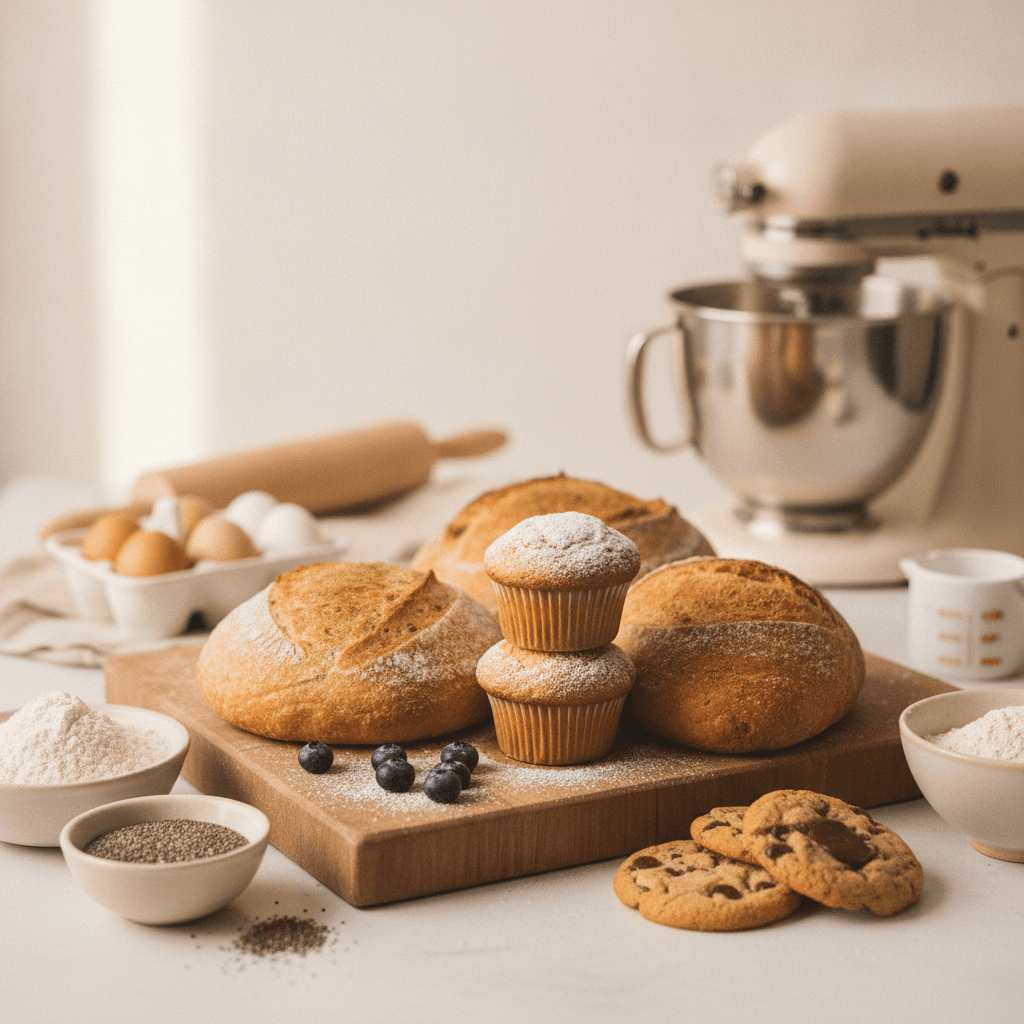
Georgia's cottage food law lets home bakers sell non-potentially-hazardous foods to consumers, and since July 1, 2025 to grocery stores and restaurants, with no license, no state fee, no pre-licensing kitchen inspection, and no sales cap. The law is administered by the Georgia Department of Agriculture (GDA) under O.C.G.A. § 26-2-470 et seq., enacted by House Bill 398, with GDA's older cottage food rules (Chapter 40-7-19) still on the books while the department rewrites them.
Last verified: September 2026
Disclaimer: This post is for informational purposes only and is not legal advice. Confirm current rules on the Georgia Department of Agriculture cottage food page before you start selling.
Key takeaways
- Georgia has no annual sales cap. GDA states it "does not have any limits on gross sales or the number of units that can be produced."
- Since July 1, 2025 (HB 398), no state license, permit, or fee is required, and GDA no longer does pre-licensing home inspections. GDA's cottage food page still calls for an ANSI-accredited food safety course (food handler level is acceptable).
- You can sell direct to consumers at your home, farmers markets, events, online, and by mail order within Georgia. Interstate shipping is not covered and can trigger FDA rules.
- Only non-potentially-hazardous (non-TCS) foods qualify — cookies, breads, and cakes are in; cakes with fillings that need refrigeration, cheesecakes, and cream-filled pastries are out.
- The statutory label statement, in at least 10-point type, is: "This product was produced at a residential property that is exempt from state inspection. This product may contain allergens." along with your business name, address (or a GDA identification number), and telephone number.
- Sales to grocery stores, convenience stores, and restaurants are now allowed, unless your city or county passes an ordinance opting out.
What Georgia's cottage food exemption covers
Georgia's cottage food law, codified in O.C.G.A. § 26-2-470 through 26-2-478 (Article 19 of the food chapter, added by HB 398 and effective July 1, 2025), exempts cottage food operators from the food sales establishment licensing that applies to bakeries and food manufacturers. The Georgia Department of Agriculture administers the program, but there is no license, application, or fee. You follow the product, disclosure, and labeling rules and start selling.
Before HB 398, Georgia required a $100 annual cottage food license, a pre-licensing kitchen inspection, and direct-to-consumer sales only. GDA has said it will amend its old rules (Chapter 40-7-19) to match the new law and, in the meantime, will "use its enforcement discretion" where an old requirement such as licensing is no longer supported by HB 398. That means some older GDA documents still reference a license; the statute controls.
There is no sales cap, and there never was a $150,000 figure in Georgia law. Gross revenue does not push you out of the program; only your products (non-potentially-hazardous only) and where you make them (your home kitchen) do.
Permit, registration, and training requirements
Georgia requires no permit, no license, and no fee for cottage food operators. The one item GDA still lists is training: its cottage food page states that "Cottage Food Operators must complete an American National Standards Institute (ANSI) accredited food safety training program," and that a food handler course (typically $15–$35 online) satisfies it. Because GDA is rewriting its rules after HB 398, confirm the current training expectation with GDA before you launch, but plan on taking the course either way.
Two optional pieces of paperwork exist. If you would rather not print your home address on labels, you can request a free Identification Number from GDA using the form on its cottage food page and use that in place of the address. And your city or county may still require a general business license or zoning approval; HB 398 does not override those.
GDA no longer inspects kitchens before you start. It can inspect your residence to investigate a consumer complaint, a foodborne illness report, or a public health emergency, limited to the areas you use for the business, and (except in emergencies) it must schedule the visit in advance.
Which foods you can and cannot sell
Georgia's cottage food exemption applies only to non-potentially-hazardous foods — items that do not require time or temperature control for safety (non-TCS). The statute gives a non-exhaustive list, and GDA's cottage food page adds a few categories.
Allowed foods
- Pastries, cookies, brownies, and bars
- Loaf breads, rolls, biscuits, and muffins (no fillings that require refrigeration)
- Cakes, "except those whose fillings require refrigeration or have high moisture content" — a butter-and-powdered-sugar buttercream is generally treated as shelf-stable, but ask GDA before selling it
- Fruit pies (not custard, cream, or meringue-topped pies that require refrigeration)
- Candies, confections, fudge, toffee, and brittles
- Dry herbs, seasonings, mixtures, dry soup mixes, and dry pasta
- Jams, jellies, and preserves (fruit butters are excluded when reduced sugar or pectin affects shelf stability)
- Coated and uncoated nuts
- Cereals, trail mixes, granola, popcorn, popcorn balls, and cotton candy
- Dried fruits, uncut fruits and vegetables, dill pickles, vinegars and flavored vinegars, and roasted coffee beans
If you bake gluten-free products, the same rules apply — no TCS items. Gluten-free breads and cookies made with almond flour or brown rice flour are fine as long as they are shelf-stable.
Prohibited foods
- Cream-filled or custard-filled pastries
- Cheesecakes
- Pies with meringue, cream, or custard
- Any baked good requiring refrigeration
- Meat, poultry, fish, or dehydrated meat products
- Dairy products (fresh cheese, yogurt) and raw milk
- Canned low-acid foods, cooked vegetables, salsas, and tomato sauces
- Honey and syrup (GDA says these "are not considered cottage foods" and fall under separate rules), beverages, and apple cider
- Pet treats (a feed license is required instead)
- Alcoholic beverages and anything containing cannabis
The dividing line is simple: if it needs a refrigerator to stay safe, it is not a cottage food in Georgia. GDA's cottage food email (cottagefoodinfo@agr.georgia.gov) is the place to ask about a borderline product.
Where you can sell (and where you cannot)
HB 398 says cottage food operations "may only sell, or offer to sell, food items directly to a person, including online and by mail order, or to retail food sales establishments, including grocery stores and restaurants." Here is what that looks like in practice:
| Sales channel | Allowed? | Notes |
|---|---|---|
| From your home | Yes | Customer picks up at your door or you deliver locally |
| Farmers markets | Yes | Market may have its own vendor rules or insurance requirements |
| Fairs and festivals | Yes | Check event organizer requirements |
| Roadside stands | Yes | Direct to consumer |
| Online orders | Yes | Named in the statute; the required disclosure must appear on the web page where the item is sold |
| Shipping within Georgia | Yes | "Mail order" is named in the statute, and local governments may not block commercial delivery companies from delivering cottage food |
| Interstate shipping | Not covered | The law does not exempt you from federal law or other states' laws; GDA warns interstate sales may trigger FDA oversight, and it cannot license a home kitchen for that |
| Grocery stores, convenience stores, restaurants | Yes, with conditions | Allowed since July 1, 2025; the store must display cottage items separately with signage, and a city or county may opt out by ordinance |
Taking orders through Instagram or Facebook and delivering them yourself is squarely allowed. So is shipping a box within Georgia through UPS or the postal service. What the law does not do is authorize sales to customers in other states; that puts you into federal territory and possibly the other state's cottage food rules.
Consider a Savannah baker who takes about 15 custom cake orders per month through Instagram DMs and delivers within a 20-mile radius, grossing around $38,000 a year. Under Georgia's current law that requires no license and no cap tracking, though a separate liability policy of roughly $350 per year is a sensible addition.
Georgia cottage food law at a glance
| Requirement | Details |
|---|---|
| Governing agency | Georgia Department of Agriculture (GDA) |
| Statute | O.C.G.A. § 26-2-470 et seq. (HB 398, effective July 1, 2025); GDA Rule 40-7-19 under revision |
| Annual sales cap | None |
| Permit or license | None required |
| Registration | None required (optional GDA identification number to replace your address on labels) |
| Fee | $0 |
| Food safety training | ANSI-accredited food safety course per GDA (food handler level acceptable); confirm with GDA |
| Kitchen inspection | No pre-licensing inspection; GDA may inspect to investigate complaints or illness |
| Kitchen | Home kitchen at your residence |
| Allowed venues | Home, farmers markets, fairs, roadside stands, delivery, online, mail order within Georgia, grocery stores and restaurants |
| Online sales | Yes |
| Shipping | Within Georgia — yes. Interstate — not covered; federal rules apply |
| Sales to stores/restaurants | Yes, unless your city or county opts out by ordinance |
| Penalty | Written warning, then civil penalty up to $75 per violation |
Label requirements for Georgia cottage food products
HB 398 requires every cottage food operator or seller to give consumers the following, on a label affixed to the package (or to the bulk container, on a placard at the point of sale for unpackaged items, or on the web page for online sales):
- Business name, address, and telephone number of the cottage food operator. You may substitute a GDA-issued identification number for the address; the name and phone number still have to appear.
- The required statement, in at least 10-point type: "This product was produced at a residential property that is exempt from state inspection. This product may contain allergens."
GDA's labeling guidance for cottage foods also calls for the product name, an ingredient list in descending order by weight, an allergen declaration (wheat, milk, eggs, peanuts, tree nuts, soy, fish, shellfish, sesame), and the net weight or volume. GDA's pre-HB 398 rule used a different statement ("MADE IN A COTTAGE FOOD OPERATION THAT IS NOT SUBJECT TO STATE FOOD SAFETY INSPECTIONS"); the department is revising that rule, so use the statutory wording above and confirm the current label template on GDA's cottage food page before printing a large run. For telephone or custom orders you may skip the printed label if you tell the customer the product was made at a residential property exempt from state inspection and may contain allergens, and keep the full information available on request.
That disclosure is not optional. It must accompany every sale. Many bakers print labels using a standard label printer — a DYMO LabelWriter 450 Turbo or similar thermal printer works well and costs about $80–$120.
If you sell gluten-free items, you should also include a gluten-free claim only if you can genuinely ensure your kitchen avoids cross-contamination. The FDA's rule is below 20 ppm of gluten. If you are baking both regular and gluten-free products in the same kitchen, think hard before making that claim. Our guide on gluten-free baking covers cross-contamination risks in detail.
How to price your cottage food products
With no sales cap, Georgia gives you unlimited room to grow, but pricing too low is the most common mistake home bakers make. Your price needs to cover ingredients, packaging, labels, your time, and overhead like electricity and equipment wear.
A basic formula that works for most cottage food bakers:
(Ingredient cost + Packaging cost) x 3 = Minimum retail price
For example, if a batch of 24 cookies costs you $8.40 in ingredients and $2.10 in packaging, your total cost is $10.50. Multiply by 3 and your minimum price is $31.50 for 24 cookies, or about $1.31 per cookie. Many Georgia cottage food bakers charge $2.00–$3.50 per cookie depending on size and specialty (gluten-free, decorated, etc.).
If you are using specialty ingredients like almond flour (roughly $8–$12 per pound) or sugar substitutes like allulose or monk fruit, your ingredient costs will be higher and your prices need to reflect that. A dozen gluten-free almond flour cookies might cost $6.50–$9.00 in ingredients alone, pushing your minimum retail price to $19.50–$27.00 per dozen.
Insurance and business structure considerations
Georgia does not require cottage food operators to carry liability insurance, but it is strongly recommended. A single foodborne illness complaint — even an unfounded one — can result in legal costs that wipe out years of baking income.
NEXT Insurance
Product liability for a home food business, quoted online in about 15 minutes with monthly billing. The certificate it generates is what a farmers market asks to see.
Get a quote →Affiliate link. We may earn a commission at no cost to you.Product liability insurance for home bakers typically runs $250–$500 per year. Providers that write home-baker policies include the Food Liability Insurance Program (FLIP) and general small-business insurers; get a direct quote, since rates depend on coverage level.
On business structure: you are not required to form an LLC to operate as a cottage food baker in Georgia. Many bakers operate as sole proprietors. However, an LLC separates your personal assets from your business liabilities. Filing an LLC in Georgia costs $100 with the Secretary of State, and the annual registration fee is $50.
Common mistakes Georgia cottage food bakers make
Based on GDA guidance and the text of HB 398, these are the errors most likely to draw a warning:
- Selling TCS items without realizing it. Cream cheese frosting is the biggest offender. Many bakers assume all frostings are fine, but a filling or frosting that requires refrigeration takes the cake outside the statute's definition of a cottage food.
- Missing the disclosure on labels. The exact wording matters. "Homemade" or "made at home" is not a substitute for the required statement, and the statement must be at least 10-point type.
- Relying on outdated guides. Any source that still cites a $100 license, a kitchen inspection, a sales cap, or "direct sales only" is describing the pre-July 2025 rules.
- Shipping out of state. Online orders and in-state mail order are fine. Sending product to another state is not covered by Georgia's exemption and may violate that state's rules.
- Selling to a store in a county that opted out. Ask the store, or your county, whether a local ordinance prohibits third-party cottage food sales before you take a wholesale order.
- Not declaring allergens. This is both a legal requirement and a safety issue. If your cookies contain tree nuts, it must be on the label — period.
Where to verify Georgia's current cottage food rules
Rules can change between legislative sessions, and GDA is actively rewriting its cottage food regulations to match HB 398. The official source is the Georgia Department of Agriculture cottage food page, which hosts the HB 398 FAQ, the identification number form, and labeling guidance. You can also reach the cottage food team at cottagefoodinfo@agr.georgia.gov or (404) 656-3627.
The full text of the statute is available through the Georgia General Assembly's website under O.C.G.A. § 26-2-470 et seq. (search for House Bill 398 of the 2025 session). If you are unsure whether a specific product qualifies, contact GDA before you start selling.
Getting started: your first steps
- Decide what you will sell. Stick to non-TCS items. Start with 2–3 products you can make consistently.
- Price your products properly. Use the 3x cost formula as a floor, not a ceiling.
- Take an ANSI-accredited food handler course and design your labels. Include every required element, especially the 10-point residential-property statement and your name and phone number.
- Choose your sales channels. Farmers markets are a great starting point — the Peachtree Road Farmers Market in Atlanta, the Forsyth Farmers Market in Savannah, and the Marietta Square Farmers Market all welcome cottage food vendors, though each has its own vendor application process and booth fees (typically $25–$75 per market day).
- Track your revenue from day one. There is no cap to police, but you still owe sales tax and income tax. Record every sale with date, product, quantity, and amount.
- Consider insurance. It is not required, but $300 per year is cheap protection against a lawsuit.
If you are baking with specialty ingredients — gluten-free flours, allulose, monk fruit sweeteners — factor those higher costs into your pricing from the start. Underpricing specialty baked goods is a fast path to burnout.
Frequently asked questions
Do I need a permit to sell baked goods from home in Georgia?
No. Since July 1, 2025, Georgia's cottage food law (O.C.G.A. § 26-2-470 et seq., HB 398) requires no permit, license, registration, fee, or pre-licensing kitchen inspection. GDA's guidance does call for an ANSI-accredited food safety course, and your city or county may still require a general business license. Otherwise you can start selling as soon as you comply with the product and labeling requirements.
What is the cottage food sales limit in Georgia for 2026?
There is none. GDA states that it "does not have any limits on gross sales or the number of units that can be produced." You only need a food sales establishment license and a commercial kitchen if you want to make potentially hazardous foods or produce outside your home kitchen.
Can I sell cottage food online in Georgia?
Yes. HB 398 expressly allows sales "directly to a person, including online and by mail order," so you can sell through a website, Instagram, or Facebook and ship within Georgia by mail or a carrier like UPS or FedEx. The required disclosure must appear on the web page where the product is sold. Interstate sales are not covered by the exemption and may bring FDA requirements and the other state's rules into play.
Can I sell gluten-free baked goods under Georgia's cottage food law?
Yes, as long as your gluten-free products are non-potentially-hazardous (shelf-stable, no refrigeration needed). Gluten-free cookies, breads, and muffins made with almond flour, cassava flour, or rice flour blends all qualify. If you label a product "gluten-free," you must ensure it meets the FDA standard of less than 20 ppm gluten.
What happens if I sell a prohibited food under Georgia's cottage food exemption?
Selling TCS foods (cream-filled pastries, cheesecakes, etc.) without a food sales establishment license puts you in violation of Georgia food safety law. Under HB 398, a willful violation draws a written warning first and a civil penalty of up to $75 per violation for repeat offenses, and GDA can inspect your residence to investigate a complaint or illness report. If someone gets sick from a TCS product sold from an uninspected kitchen, you also face significant civil liability. When in doubt, contact GDA's cottage food team before adding a new product to your lineup.

Written by
Co-founder, BakingSubs
Co-founder of BakingSubs, where he turns the science of ingredient substitutions into tested, reliable guidance for home bakers.
Related Posts
Bake with Confidence
See all
Confident Gluten-Free Baker Toolkit
The science-based system that replaces gluten's seven invisible jobs so your baking turns out soft, fluffy, and foolproof — every time.

Gluten-Free Recipe Vault
Instant access to our complete library of proven gluten-free recipes — no waiting, no guesswork, just results that work tonight.

Fix Your Gluten-Free Bread
Learn the 3-step formula to make bread rise and stay soft, discover why your loaves collapse, and get a tested sandwich bread recipe that actually works.