

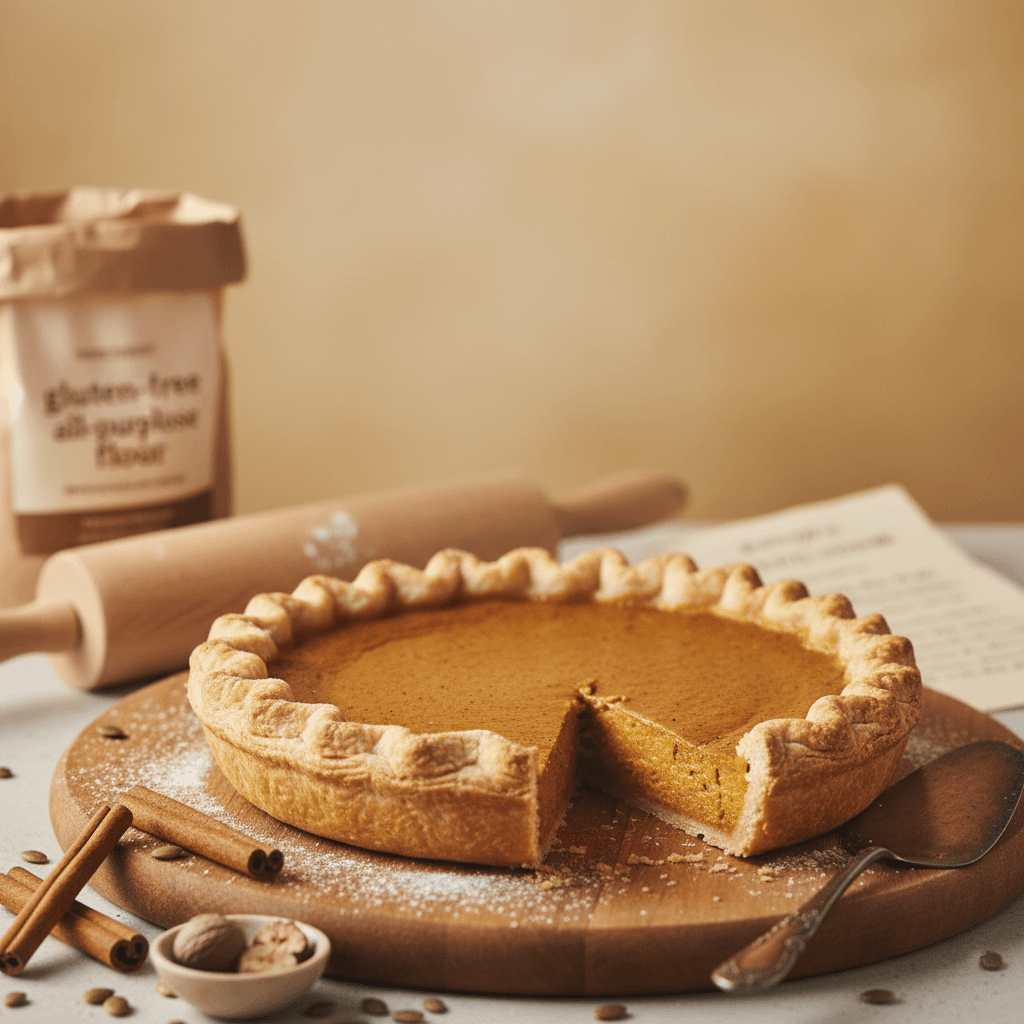
Pumpkin pie should be on every table during the holidays, and going gluten-free shouldn't change that. Whether you want to bake a showstopper from scratch, adapt Grandma's recipe, or just grab a ready-made crust and call it done, we've got you covered with the best options for every approach.
Key takeaways
- The best gluten-free pumpkin pie crust uses a blend of almond flour and a starch like tapioca for a tender, flaky texture that rivals wheat-based crusts.
- You can adapt almost any traditional pumpkin pie recipe to gluten-free by swapping the crust — the filling is usually naturally gluten-free already.
- Store-bought gluten-free pie crusts from brands like Mi-Del and Wholly Wholesome save hours and produce great results.
- Pumpkin pie filling relies on eggs, sugar, and evaporated milk for structure — all naturally gluten-free, so the crust is the only thing you need to change.
- Order store-bought crusts and specialty flours by early November to have everything in time for Thanksgiving without paying rush shipping.
Why pumpkin pie is actually one of the easiest holiday desserts to make gluten-free
Here's the good news most people don't realize: traditional pumpkin pie filling contains zero gluten. It's just pumpkin puree, eggs, sugar, spices, and evaporated milk. The only part that needs a substitution is the crust. That means if you've been baking your family's pumpkin pie recipe for years, you're already 90% of the way there.
The challenge is getting a crust that's flaky, holds together when sliced, and doesn't taste gritty or fall apart. The methods below are the most reliable ways to get there.
If you're newer to gluten-free baking and want a deeper foundation on how flour swaps work and why some blends perform better than others, the Confident Gluten-Free Baker Toolkit walks you through the science and ratios so you can adapt any recipe with confidence — not just pie.
Best homemade gluten-free pumpkin pie crust recipe
A blend of almond flour and tapioca starch creates the closest texture to a traditional butter pie crust — tender, slightly flaky, and strong enough to hold a custard filling without getting soggy. Here's our go-to approach:
Ingredients for the crust
- 1 1/4 cups almond flour (blanched, finely ground)
- 3/4 cup tapioca starch
- 1/4 cup brown rice flour
- 1 tablespoon granulated sugar
- 1/2 teaspoon salt
- 1/2 cup cold unsalted butter, cubed (or coconut oil for dairy-free)
- 1 large egg
- 1 tablespoon ice water, as needed
How to make the crust
- Whisk together the almond flour, tapioca starch, brown rice flour, sugar, and salt in a large bowl.
- Cut in the cold butter using a pastry cutter or your fingertips until the mixture resembles coarse crumbs with some pea-sized pieces remaining.
- Add the egg and mix until the dough just comes together. Add ice water one teaspoon at a time if it's too dry.
- Press the dough into a disc, wrap in plastic, and refrigerate for at least 30 minutes. Gluten-free dough is easier to work with when it's cold.
- Roll the dough between two sheets of parchment paper to about 1/8-inch thickness. Transfer to a 9-inch pie dish and press gently into the edges. Trim and crimp.
- Freeze the crust for 15 minutes before blind baking at 350 degrees F for 12-15 minutes, or until lightly golden.
One tip that makes a real difference: if your finished pie crust tastes gritty, check out our guide on fixing gritty texture in gluten-free baking. It's almost always a flour grind issue, and it's easy to solve once you know what to look for.
Classic gluten-free pumpkin pie filling
The filling is the same one you'd find in any traditional recipe — no modifications needed. This version is based on the classic Libby's-style recipe that most of us grew up with.
Ingredients for the filling
- 1 can (15 oz) pure pumpkin puree (not pumpkin pie mix)
- 3/4 cup granulated sugar (or see our guide to choosing sugar alternatives if you want to reduce refined sugar)
- 1 teaspoon ground cinnamon
- 1/2 teaspoon ground ginger
- 1/4 teaspoon ground cloves
- 1/2 teaspoon salt
- 2 large eggs
- 1 can (12 oz) evaporated milk
How to make the filling
- Preheat your oven to 425 degrees F.
- Mix the pumpkin, sugar, cinnamon, ginger, cloves, and salt in a large bowl.
- Beat in the eggs, then gradually stir in the evaporated milk until smooth.
- Pour into your pre-baked gluten-free crust.
- Bake at 425 degrees F for 15 minutes, then reduce the temperature to 350 degrees F and bake for another 40-50 minutes, until the center is set but still slightly jiggly.
- Cool completely on a wire rack before slicing — at least 2 hours, ideally overnight in the fridge.
If you need to make this dairy-free as well, swap the evaporated milk for full-fat coconut milk. The result is rich and creamy with just a hint of coconut. Check our guide to choosing milk alternatives for more options.
How to adapt your family's pumpkin pie recipe to gluten-free
You don't have to abandon the recipe your family has been making for decades — you just need to swap the crust. Here's the step-by-step approach:
- Check the filling first. Most traditional pumpkin pie fillings are naturally gluten-free. Look for any wheat flour used as a thickener (some older recipes call for a tablespoon or two). If yours does, replace it with an equal amount of arrowroot powder or tapioca starch.
- Swap the crust. Use the homemade crust recipe above, or grab a store-bought gluten-free crust (options below).
- Check your spices. Most ground spices are gluten-free, but some store brands may be processed on shared equipment. Look for brands that label as gluten-free if cross-contamination is a concern.
- Check the evaporated milk. Standard evaporated milk (like Carnation) is gluten-free. Just double-check if you're using a store brand.
That's it. The emotional weight of the holidays is heavy enough when you're navigating dietary restrictions — being able to keep your family's recipe mostly intact means a lot.
Best store-bought gluten-free pie crusts
Not everyone wants to make crust from scratch, and that's completely fine. These store-bought options range from frozen ready-to-fill shells to refrigerated dough you can roll yourself.
| Brand | Type | Best for | Notes |
|---|---|---|---|
| Mi-Del Gluten Free Pie Crust | Graham-style crumb crust | Quick no-bake or baked pumpkin pie | Sweet, cookie-like texture; ready to fill |
| Wholly Wholesome Gluten Free Pie Shell | Frozen traditional-style shell | Classic flaky pumpkin pie | Closest to a wheat crust; needs to thaw before filling |
| Schar Gluten Free Pie Crusts | Frozen shell (2-pack) | Batch baking or making two pies | Good value; slightly denser texture |
| Bob's Red Mill GF Pie Crust Mix | Dry mix (you add butter and water) | People who want semi-homemade control | Tastes more homemade; requires some assembly |
| Kinnikinnick Pie Crusts | Frozen shell | Allergen-friendly households | Free from top 8 allergens; mild flavor |
We recommend the Wholly Wholesome Gluten Free Pie Shell for the most traditional result, and the Mi-Del Gluten Free Pie Crust if you want zero effort. The Bob's Red Mill GF Pie Crust Mix is a great middle ground — you get the satisfaction of making it yourself with a lot less guesswork.
Timing note: If you're ordering online, place your order by early November to guarantee delivery before Thanksgiving. Gluten-free products sell out fast once October hits, and shipping delays are common during the holiday rush.
Make it easy: the no-bake-from-scratch approach
If the idea of making crust from scratch feels like too much this year, here's the simplest path to a great gluten-free pumpkin pie:
- Buy a Wholly Wholesome frozen gluten-free pie shell or a Mi-Del crumb crust.
- Use a can of Libby's pure pumpkin puree (naturally gluten-free) and follow the recipe on the back of the can for the filling.
- Pour, bake, and done.
Total hands-on time: about 10 minutes. The filling recipe on the Libby's can is essentially the classic recipe we all know, and it works perfectly with any of the store-bought crusts listed above. Nobody at the table will know it wasn't made entirely from scratch — and honestly, it doesn't matter if they do. A pie made with love is a pie made with love.
Recommended tools for the best results
You don't need anything fancy, but a few tools make gluten-free pie baking noticeably easier:
- Pie weights or dried beans: Essential for blind baking gluten-free crust without it puffing up or shrinking. We like ceramic pie weights because they distribute heat evenly.
- A 9-inch glass pie dish: Glass lets you see the bottom of the crust so you know when it's actually golden, not just on top. The affordable baking tools guide has more picks if you're building out your kitchen.
- Parchment paper: Rolling gluten-free dough between parchment prevents sticking without adding extra flour that changes the ratio.
Tips for preventing common gluten-free pumpkin pie problems
Even with a great recipe, gluten-free pie crust can be finicky. Here are the most common issues and how to avoid them:
Crust crumbles when slicing
This usually means not enough fat or not enough binding. Make sure you're using a full egg in the crust dough, and don't skip the refrigeration step — cold dough holds together better during and after baking.
Soggy bottom crust
Always blind bake your gluten-free crust before adding the filling. Gluten-free flours absorb moisture differently, and without the protein network that gluten provides, the crust can't resist a wet custard filling on its own. Brushing the pre-baked crust with a thin layer of beaten egg white creates a moisture barrier.
Filling cracks on top
This happens when the pie is overbaked or cooled too quickly. Pull the pie when the center still has a slight jiggle in an area about the size of a quarter. Let it cool gradually in the turned-off oven with the door cracked for 15 minutes before moving to a wire rack.
Dry, crumbly texture throughout
If your whole pie — crust and all — feels dry, our troubleshooting guide for dry and crumbly gluten-free baking covers the most common causes and fixes. It's usually related to flour blend ratios or overbaking.
Frequently asked questions
Is pumpkin pie filling gluten-free?
Yes, traditional pumpkin pie filling is naturally gluten-free. It's made from pumpkin puree, eggs, sugar, spices, and evaporated milk — none of which contain gluten. The only part of a pumpkin pie that typically contains gluten is the crust, which is easy to swap using a gluten-free flour blend or a store-bought gluten-free pie shell.
What is the best flour for gluten-free pie crust?
A blend of almond flour, tapioca starch, and brown rice flour produces the most tender, flaky gluten-free pie crust. The almond flour provides fat and flavor, the tapioca adds stretch and chew, and the brown rice flour gives structure. Pre-made blends like Bob's Red Mill 1-to-1 also work well if you prefer simplicity.
Can I use a store-bought gluten-free pie crust for pumpkin pie?
Absolutely. Store-bought gluten-free pie crusts like Wholly Wholesome and Kinnikinnick work great with pumpkin pie filling. Just follow the baking instructions on the package for blind baking if required, then add your filling and bake as directed.
How do I keep my gluten-free pie crust from falling apart?
The key is using enough fat (butter or coconut oil), including a whole egg as a binder, and chilling the dough thoroughly before rolling. Pressing the dough into the pie dish rather than rolling it can also help if you find it too fragile. Blind baking sets the structure before the wet filling goes in, which prevents collapse during slicing.
Can I make gluten-free pumpkin pie ahead of time?
Yes, pumpkin pie actually improves after resting overnight in the refrigerator. The flavors meld and the filling sets more firmly, making cleaner slices. Bake your pie 1-2 days before serving, cover it loosely with plastic wrap, and store it in the fridge. Bring it to room temperature for about 30 minutes before serving for the best flavor.

Written by
Co-founder, BakingSubs
Co-founder of BakingSubs, where he turns the science of ingredient substitutions into tested, reliable guidance for home bakers.
Related Posts
Bake with Confidence
See all
Confident Gluten-Free Baker Toolkit
The science-based system that replaces gluten's seven invisible jobs so your baking turns out soft, fluffy, and foolproof — every time.

Gluten-Free Recipe Vault
Instant access to our complete library of proven gluten-free recipes — no waiting, no guesswork, just results that work tonight.

Fix Your Gluten-Free Bread
Learn the 3-step formula to make bread rise and stay soft, discover why your loaves collapse, and get a tested sandwich bread recipe that actually works.