

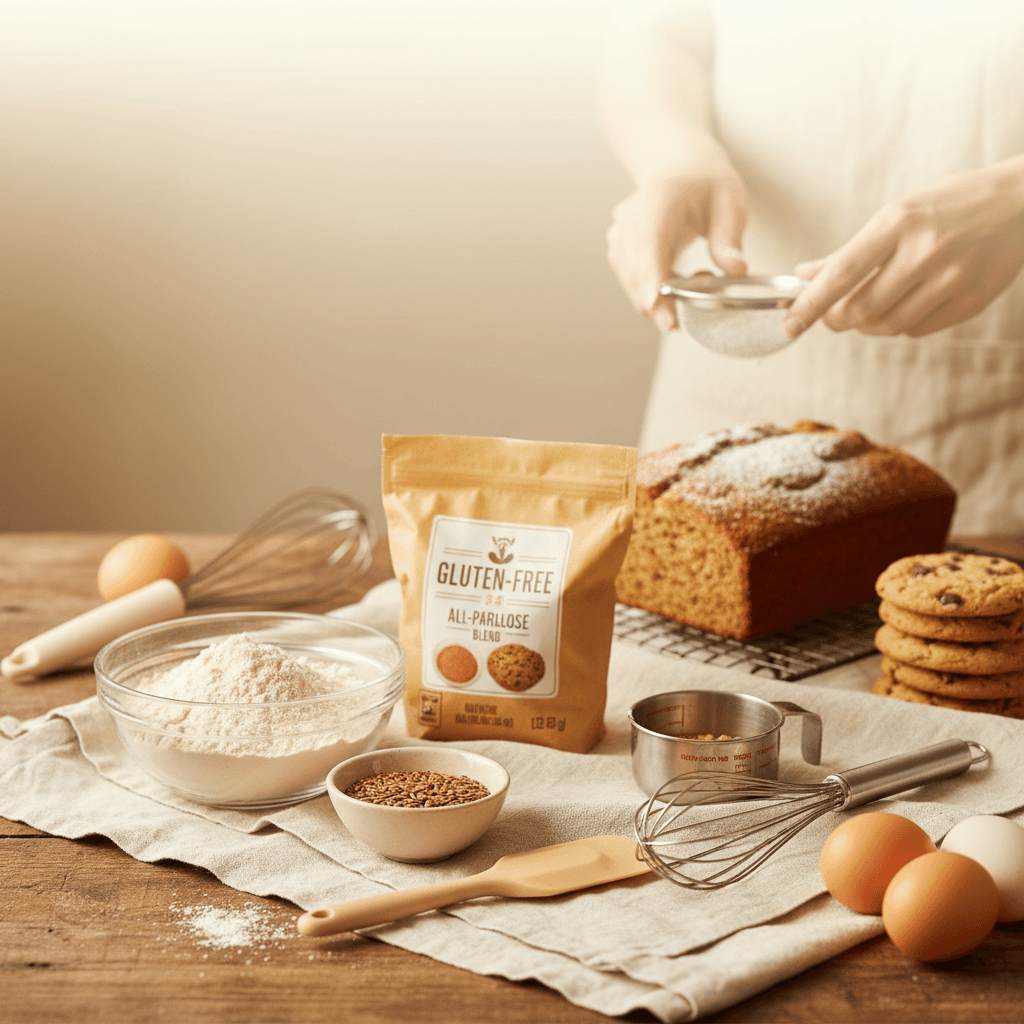
Selling gluten-free baked goods from home is one of the most accessible ways to turn your baking skills into real income — and demand is growing fast. This guide walks you through everything from legal requirements to pricing, sourcing ingredients, and getting your first paying customers.
Key takeaways
- Most U.S. states allow selling baked goods from home under cottage food laws, with annual revenue caps typically ranging from $25,000 to $75,000.
- Startup costs for a home-based gluten-free bakery can be as low as $200-$500 if you already have basic equipment.
- Preventing cross-contamination is non-negotiable — your kitchen needs a dedicated gluten-free workflow to protect customers and your reputation.
- Pricing gluten-free baked goods higher than conventional products is expected and justified by ingredient costs that run 2-4x more than wheat-based equivalents.
- Consistent quality comes from mastering your flour blends and recipes before selling, not after you have paying customers.
- Repeat customers, not social media followers, are what build a sustainable home bakery business.
Why gluten-free baked goods are a smart home bakery niche
The gluten-free market is projected to exceed $10 billion in the U.S. by 2026, and baked goods are one of the fastest-growing segments. People with celiac disease, gluten sensitivity, and wheat allergies are actively looking for local bakers they can trust — because most grocery store options are mediocre at best.
Here's what makes this niche especially strong for home bakers: your customers are loyal. When someone with celiac disease finds a baker who makes safe, delicious gluten-free bread or cookies, they don't shop around. They come back every week. That kind of built-in repeat business is rare in cottage food.
The premium pricing also works in your favor. While a conventional home baker might charge $15 for a dozen cookies, gluten-free cookies routinely sell for $20-$28 per dozen — and customers expect that. Your ingredient costs are genuinely higher, and buyers understand that.
Understanding cottage food laws for gluten-free bakers
Cottage food laws are state-level regulations that allow you to sell certain homemade foods directly to consumers without a commercial kitchen license. Almost every U.S. state has some version of these laws, but the specifics vary widely.
Here's what you need to check for your state:
- Annual revenue cap: Most states set limits between $25,000 and $75,000. Some states like California allow up to $75,000 with a Class B permit, while others cap at $25,000.
- Allowed products: Baked goods are permitted in nearly every state. Bread, cookies, brownies, muffins, and cakes are almost universally allowed. Cream-filled or custard items are often restricted.
- Labeling requirements: Most states require your name, address, a "made in a home kitchen" disclaimer, ingredient list, and allergen information. For gluten-free products, accurate allergen labeling is especially critical.
- Sales channels: Some states restrict you to in-person sales only (farmers markets, direct delivery). Others allow online ordering with local pickup or delivery.
- Permits and fees: Registration fees typically range from $0 to $75. Some states require a food handler's certificate ($10-$15 online).
Search for "[your state] cottage food law" on your state's department of agriculture website for the most current rules. Laws change frequently — several states expanded their cottage food programs in 2023 and 2024.
A note on "gluten-free" claims
If you label your products as "gluten-free," the FDA standard applies: the product must contain fewer than 20 parts per million (ppm) of gluten. This is a federal regulation that applies regardless of your state's cottage food rules. Taking this seriously protects your customers and shields you from liability.
Setting up your kitchen for safe gluten-free production
Cross-contamination is the single biggest risk in a home-based gluten-free bakery. If you're baking gluten-free products in a kitchen that also handles wheat flour, you need strict protocols — or better yet, go fully gluten-free in your home kitchen.
Many successful home bakers eliminate wheat flour from their kitchens entirely. It's simpler, safer, and gives you a powerful marketing message: "100% dedicated gluten-free kitchen."
If that's not possible, follow these minimum steps:
- Use completely separate equipment — mixing bowls, wooden spoons, rolling pins, baking sheets, sifters, and cutting boards
- Store gluten-free flours in sealed containers on separate shelves, above any wheat products (so nothing falls down into them)
- Clean all surfaces thoroughly between gluten and gluten-free baking sessions
- Never bake gluten-free and wheat products at the same time — airborne flour particles are a real contamination risk
- Use a dedicated toaster, colander, and any porous items that can trap gluten
If you're new to gluten-free baking, spend time understanding the common pitfalls — from gritty textures to dry, crumbly results — before you start selling. Your paying customers shouldn't be your test subjects.
Essential equipment and startup costs
One of the best things about a home baking business is the low barrier to entry. If you already bake regularly, you probably have most of what you need.
| Item | Already own? | Estimated cost if buying |
|---|---|---|
| Stand mixer | Likely | $200-$350 |
| Digital kitchen scale | Maybe | $15-$30 |
| Quality baking sheets (3-4) | Likely | $30-$60 |
| Mixing bowls, spatulas, measuring cups | Likely | $20-$40 |
| Packaging supplies (boxes, bags, labels) | No | $50-$100 |
| Initial ingredient stock | Partial | $75-$150 |
| Food handler's certificate | No | $10-$15 |
| Cottage food permit/registration | No | $0-$75 |
If you're starting from scratch, budget $400-$800. If you already have a decent baking setup, you might only need $100-$200 for packaging, permits, and extra ingredients.
A digital scale is non-negotiable for gluten-free baking. Gluten-free flour blends behave differently by weight than by volume, and consistency is everything when customers are paying for your products. Weigh your ingredients every single time.
Want to build a solid foundation before you start selling? The Confident Gluten-Free Baker Toolkit covers the flour blends, techniques, and troubleshooting that make the difference between "pretty good" and "customers can't tell it's gluten-free."
Choosing your gluten-free product lineup
Start with 3-5 products maximum. This keeps your ingredient costs manageable, lets you perfect each recipe, and simplifies your production workflow.
The best-selling gluten-free home bakery products tend to be:
- Cookies: Low risk, easy to package, great for farmers markets. Chocolate chip, snickerdoodle, and decorated sugar cookies are consistent sellers.
- Quick breads and muffins: Banana bread, pumpkin bread, and blueberry muffins sell well year-round.
- Sandwich bread: Huge demand, but harder to master. If you can make a gluten-free loaf that's soft and doesn't crumble, you'll have a waiting list.
- Brownies and bars: High margin, easy to batch produce, and naturally close to gluten-free since they rely more on chocolate and eggs than flour structure.
- Specialty cakes: Higher price point ($35-$75+), but require more skill and custom orders take more time.
Consider offering items that also accommodate other dietary needs — gluten-free vegan products or gluten-free dairy-free options open you up to an even wider customer base.
Developing recipes that are sell-ready
Before you sell a single item, each recipe should pass these tests:
- Consistency: Can you make it five times in a row and get the same result? If not, keep refining.
- Taste test: Have people who eat conventional baked goods try it without telling them it's gluten-free. If they can't tell, you're ready.
- Shelf life: Know exactly how long each product stays fresh. Gluten-free baked goods often stale faster than wheat-based ones, so you need to be honest with customers about storage and timing.
- Scaling: Can you double or triple the batch without issues? Production baking is different from making one batch for your family.
Pricing your gluten-free baked goods for profit
Underpricing is the number one mistake new home bakers make. Your gluten-free ingredients cost significantly more than conventional ones, and your time has value.
Here's a simple pricing formula that works:
(Ingredient cost x 3) + packaging + time = minimum price
Let's say a batch of 24 gluten-free chocolate chip cookies costs you $8 in ingredients and $2 in packaging. At 3x ingredients plus packaging, that's $26 for 24 cookies, or roughly $13 per dozen. But factor in your time — mixing, baking, cooling, packaging — and you should be charging $18-$24 per dozen minimum.
Here are some real-world price ranges for gluten-free home bakery products:
| Product | Typical price range |
|---|---|
| Cookies (1 dozen) | $18-$28 |
| Brownies (9-piece pan) | $15-$25 |
| Banana/pumpkin bread (loaf) | $12-$18 |
| Sandwich bread (loaf) | $10-$15 |
| Muffins (6-pack) | $12-$20 |
| Custom cake (8-inch round) | $45-$85 |
Don't apologize for your prices. Customers who need gluten-free products understand the cost difference. If someone balks at $22 for a dozen cookies, they're not your customer — and that's fine.
Getting your first customers
You don't need thousands of social media followers to build a profitable home bakery. In fact, most successful cottage food bakers get the majority of their orders through these channels:
- Word of mouth: Start with friends, family, coworkers, and your kids' school community. Give out samples. One great cookie can generate five orders.
- Farmers markets: A booth at a local farmers market ($20-$50/week in most areas) puts you directly in front of people who value local, handmade food. Bring samples and business cards.
- Local celiac and gluten-free support groups: These communities are goldmines. Many have Facebook groups or in-person meetups. Introduce yourself as a dedicated gluten-free home baker and you'll get immediate interest.
- Nextdoor and local Facebook groups: Post about your products (check group rules first). Local food groups are especially responsive.
- Church, school, and community events: Offer to bring gluten-free options to bake sales or potlucks. It's marketing that doesn't feel like marketing.
Building repeat business
Getting a first order is good. Getting a weekly standing order is what pays the bills. Here's how to turn one-time buyers into regulars:
- Follow up after every order — a simple text asking how they liked everything goes a long way
- Offer a weekly or biweekly subscription option ("fresh gluten-free bread delivered every Tuesday")
- Keep a simple order form — make it easy for people to reorder
- Be consistent. Same quality, same taste, every single time. This matters even more in gluten-free baking where customers have been burned by inconsistent products before.
Managing allergen safety and building trust
When you sell gluten-free products, your customers are trusting you with their health. Some of them get seriously ill from even trace amounts of gluten. This responsibility is what separates a real gluten-free bakery from someone who just skips the wheat flour.
Build trust by being transparent:
- List every ingredient on your labels — no shortcuts
- Clearly state whether your kitchen is dedicated gluten-free or shared
- Know your flour sources. Some rice flours and buckwheat flours can be processed on shared equipment with wheat. Buy certified gluten-free ingredients and be ready to tell customers which brands you use.
- If a customer asks about your process, welcome the question. Detailed answers build confidence.
This level of care is also your competitive advantage. Big bakeries can't offer the personal attention and transparency that you can.
Scaling up when demand grows
Once you're consistently filling orders and hitting your state's cottage food revenue cap, you have options:
- Rent commercial kitchen time: Many cities have shared commercial kitchens available for $15-$30/hour. This lets you produce larger batches and may remove your revenue cap.
- Get a food business license: Moving beyond cottage food means health department inspections and more regulation, but also removes sales limits and opens wholesale opportunities.
- Wholesale to local shops: Coffee shops, health food stores, and cafes often want local gluten-free products. Start with one account and grow from there.
- Online sales: Some states allow shipping cottage food products. Others require a commercial license for shipped goods. Check your state's rules.
Don't rush to scale. Many home bakers earn $1,000-$3,000 per month working part-time under cottage food laws, which is a meaningful income without the overhead of a commercial operation.
Frequently asked questions
Do I need a license to sell gluten-free baked goods from home?
In most U.S. states, you can sell baked goods from home under cottage food laws with minimal licensing — often just a simple registration and a food handler's certificate. Requirements and fees vary by state, so check your state's department of agriculture website for current rules. Some states require no permit at all.
How much can you make selling gluten-free baked goods from home?
Most home bakers earning consistently report $500-$3,000 per month depending on their product lineup, pricing, and how many hours they dedicate. Cottage food revenue caps in most states range from $25,000 to $75,000 annually, which is the legal ceiling. Your actual income depends on building repeat customers and pricing correctly.
What gluten-free baked goods sell best at farmers markets?
Cookies, brownies, and quick breads (banana bread, pumpkin bread) are the most consistent sellers at farmers markets because they're easy to sample, affordable to try, and travel well. Sandwich bread also sells extremely well if you can produce it consistently — many gluten-free customers struggle to find good local bread.
How do I price gluten-free baked goods higher than regular baked goods?
You don't need to justify higher prices — gluten-free customers already expect them. Gluten-free ingredients cost 2-4x more than conventional equivalents, and your customers know this. Use a minimum 3x ingredient cost multiplier, add packaging costs, and factor in your time. Most gluten-free cookies sell for $18-$28 per dozen, and customers pay happily for quality.
Can I claim my products are gluten-free without testing?
You can label products as gluten-free without third-party testing, but you must meet the FDA standard of under 20 ppm gluten. The practical way to ensure this is to use certified gluten-free ingredients, prevent cross-contamination in your kitchen, and keep detailed records of your ingredient sources. Third-party testing is optional but adds credibility if you want to pursue wholesale accounts later.
Ready to turn your baking into a real business?
You've got the knowledge to get started — but knowledge alone doesn't build a sustainable home bakery. The bakers who succeed long-term have a system for getting consistent orders and turning first-time buyers into regulars.

Written by
Co-founder, BakingSubs
Co-founder of BakingSubs, where he turns the science of ingredient substitutions into tested, reliable guidance for home bakers.
Related Posts
Gluten-Free Flour Weight Chart: Grams per Cup for 9 Major Brands (and Why the Spread Is Over 20%)
Best Low Carb Tortillas (2026): 6 Brands Compared by Net Carbs
Best Sugar-Free Cake Mix and Brownie Mix (2026): 14 Options Ranked by Net Carbs, Sweetener, and Price
Bake with Confidence
See all
Confident Gluten-Free Baker Toolkit
The science-based system that replaces gluten's seven invisible jobs so your baking turns out soft, fluffy, and foolproof — every time.

Gluten-Free Recipe Vault
Instant access to our complete library of proven gluten-free recipes — no waiting, no guesswork, just results that work tonight.

Fix Your Gluten-Free Bread
Learn the 3-step formula to make bread rise and stay soft, discover why your loaves collapse, and get a tested sandwich bread recipe that actually works.