

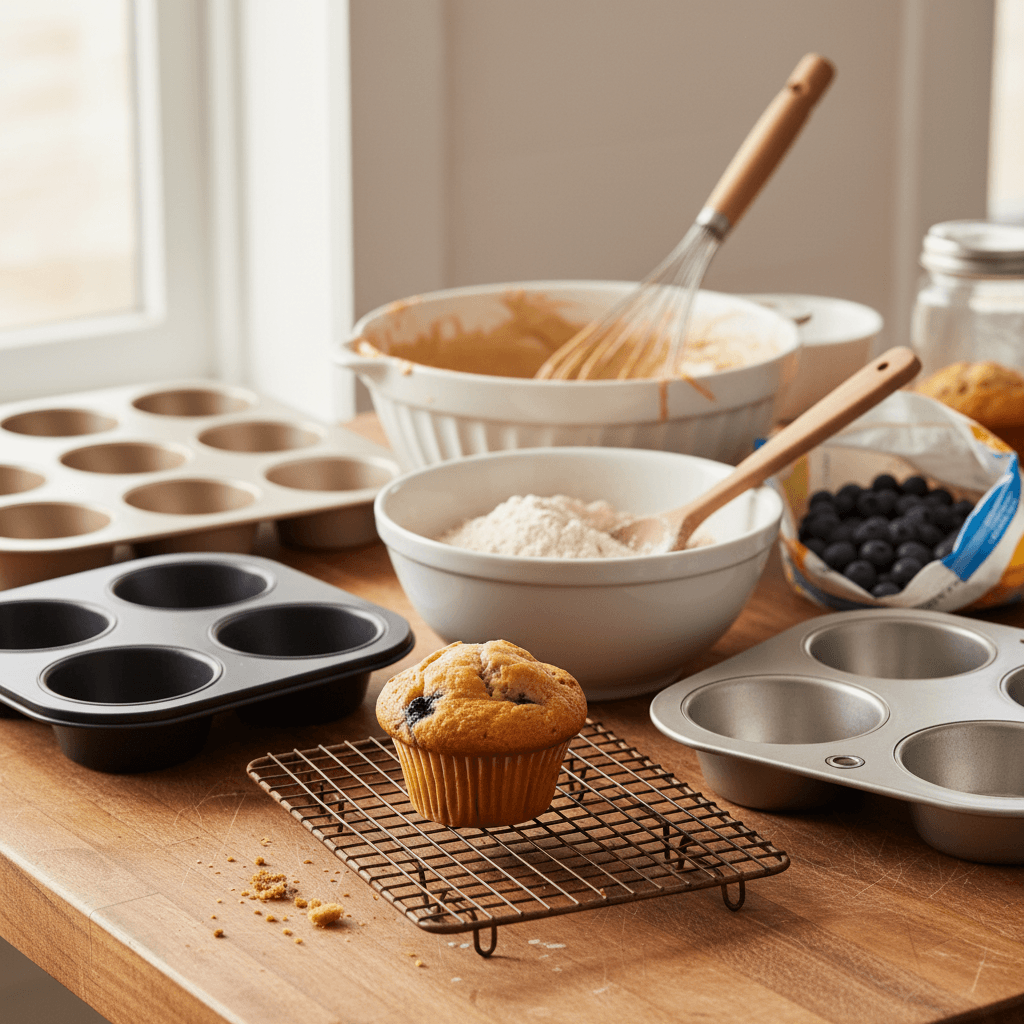
Gluten-free muffin batter behaves differently than conventional batter, and the wrong pan can mean stuck, crumbled muffins every single time. Here are the best muffin tins we recommend for gluten-free baking, from budget-friendly to premium, so you get clean release and even baking no matter what flour blend you use.
Key takeaways
- Gluten-free batters are stickier and more fragile than wheat-based batters, making nonstick quality the single most important feature in a muffin tin.
- Dark-colored pans absorb more heat and can over-brown gluten-free muffins, which already tend to dry out faster. Light to medium gold finishes are ideal.
- Silicone muffin pans offer the easiest release for delicate GF muffins, but they need a rigid baking sheet underneath for stability.
- Aluminized steel with a ceramic or silicone-based nonstick coating outperforms cheap Teflon for longevity and release.
- If you sell muffins from a gluten-free home bakery, investing in commercial-grade pans pays for itself in reduced waste and faster turnaround.
- Always grease even nonstick pans when baking gluten-free. The extra insurance is worth it.
Why gluten-free muffins need a different pan
Without gluten's elastic network holding everything together, gluten-free muffins are structurally weaker. They tear more easily when you try to pop them out of a pan, and the starches in most GF flour blends create a stickier surface than wheat flour does. A pan that works fine for regular muffins can leave you with half a muffin stuck to the cup and the other half crumbled on your cooling rack.
The other issue is moisture management. Gluten-free batters often contain more liquid (from extra eggs, applesauce, or yogurt used as binders), and they're prone to gummy centers if the pan doesn't conduct heat evenly. Thin, flimsy pans create hot spots that burn the edges while leaving the center underdone. Heavier-gauge pans distribute heat more evenly, which is exactly what GF batters need.
If you're working through common gluten-free texture problems, our Confident Gluten-Free Baker Toolkit walks you through the science behind flour blends, binders, and moisture balance so you can troubleshoot any recipe.
What to look for in a muffin tin for gluten-free baking
Before we get to specific picks, here are the features that matter most when you're baking without gluten.
Nonstick coating quality
This is non-negotiable. Look for multi-layer nonstick coatings, ceramic coatings, or silicone. Single-layer cheap nonstick wears off fast and will start sticking within months. For gluten-free baking, a high-quality nonstick surface is the difference between intact muffins and a pan full of crumbs.
Pan color and material
Light gold or medium-toned aluminized steel is the sweet spot. Dark pans absorb too much heat and can over-brown GF muffins, which already tend toward dry and crumbly textures. Pure aluminum is lightweight and conducts heat well but can warp. Aluminized steel gives you the best of both worlds.
Gauge and weight
Heavier pans (thicker gauge) mean more even heat distribution. If a muffin tin feels flimsy when you pick it up, skip it. You want something with enough heft to prevent warping and hot spots.
Cup shape and size
Standard 12-cup pans with slightly wider cups give GF muffins a bit more room to rise and spread. Narrow, deep cups can trap steam and contribute to gummy centers. A gentle taper at the bottom also helps with release.
7 best muffin tins for gluten-free muffins
We've organized these from budget to premium so you can find the right fit for your baking volume and budget.
| Pan | Material | Best for | Price range |
|---|---|---|---|
| Wilton Recipe Right | Steel, nonstick | Budget pick, beginners | $8-12 |
| Chicago Metallic Commercial II | Aluminized steel, nonstick | Best value for everyday baking | $12-18 |
| Rachael Ray Cucina | Carbon steel, nonstick | Even browning, home bakers | $15-20 |
| OXO Good Grips Non-Stick Pro | Aluminized steel, ceramic nonstick | Best overall for GF baking | $20-28 |
| Muffin Top Pan by Chicago Metallic | Aluminized steel, nonstick | Flat-top muffins, specialty shapes | $12-16 |
| Silicone Muffin Pan (Pantry Elements) | Food-grade silicone | Easiest release, zero sticking | $10-15 |
| USA Pan Bakeware 12-Cup | Aluminized steel, Americoat | Premium pick, home bakery production | $25-35 |
1. Wilton Recipe Right 12-cup muffin pan (budget pick)
The Wilton Recipe Right is the most affordable option that still performs decently for gluten-free muffins. The nonstick coating is adequate for the price, and the steel construction is sturdy enough to resist warping at standard muffin temperatures (350-375F).
Pros: Very affordable, widely available, decent nonstick for the price, dishwasher safe.
Cons: Nonstick coating wears out faster than premium options. Darker finish can over-brown GF muffins if your oven runs hot. We recommend greasing with cooking spray even with the nonstick.
Best for: Beginners testing gluten-free muffin recipes or anyone on a tight budget.
2. Chicago Metallic Commercial II 12-cup (best value)
The Chicago Metallic Commercial II is a noticeable step up from budget pans. The aluminized steel construction distributes heat more evenly, which helps gluten-free muffins bake through without burning the edges. The nonstick coating is more durable than what you'll find on cheaper pans.
Pros: Even heat distribution, durable nonstick, medium-tone finish that doesn't over-brown. Great price-to-performance ratio.
Cons: Hand wash recommended for coating longevity. Slightly heavier than budget options.
Best for: Regular gluten-free bakers who want reliability without spending $30.
3. Rachael Ray Cucina 12-cup muffin pan
The Rachael Ray Cucina features a latte brown color that's lighter than many nonstick pans, which is a real advantage for GF muffins. The carbon steel is heavy-gauge and resists warping well.
Pros: Lighter color prevents over-browning, heavy-gauge steel, comfortable wide handles for easy gripping, attractive design.
Cons: The handles add width, so check your oven dimensions. Not as widely available as Wilton or Chicago Metallic.
Best for: Home bakers who struggle with over-browned GF muffins and want a mid-range pan with great heat control.
4. OXO Good Grips Non-Stick Pro 12-cup (best overall)
This is our top recommendation for most gluten-free bakers. The OXO Good Grips Non-Stick Pro uses a ceramic-reinforced nonstick coating on aluminized steel, and the micro-textured surface actually improves airflow for more even baking. The release on this pan is outstanding, even with the stickiest rice flour-based batters.
Pros: Exceptional nonstick release, even heat distribution, light gold color prevents over-browning, micro-textured surface improves airflow. The coating holds up extremely well over time.
Cons: More expensive than budget options. Hand wash only.
Best for: Serious gluten-free bakers who want the best release and most even baking. If you only buy one muffin tin, make it this one.
5. Chicago Metallic muffin top pan
This is a specialty pick, but it's worth mentioning. The Chicago Metallic Muffin Top Pan bakes flat, wide muffin tops rather than traditional muffin shapes. For gluten-free baking, this is interesting because the shallow cups mean less risk of gummy centers, and the increased surface area gives you more crispy edges.
Pros: Eliminates gummy center problems, fun shape, great for GF muffins that struggle to rise tall. Also works for egg muffins and breakfast sandwiches.
Cons: Not a traditional muffin shape, so it's a supplemental pan rather than a replacement. Makes 6 at a time, not 12.
Best for: Bakers who love crispy muffin tops or who consistently get gummy centers in standard muffin tins.
6. Pantry Elements silicone muffin pan (easiest release)
If sticking is your biggest frustration, a silicone muffin pan solves the problem entirely. Gluten-free muffins pop out of silicone like magic, with zero greasing required. The flexible material lets you push from the bottom to release each muffin without any tearing.
Pros: Absolutely no sticking, no greasing needed, dishwasher safe, lightweight, stores flat. Perfect release every single time.
Cons: Silicone is floppy and must be placed on a rigid baking sheet for stability. Doesn't brown as well as metal pans. Can feel less "professional." Baking time may need to increase by 2-3 minutes.
Best for: Anyone tired of stuck muffins, bakers with mobility issues who struggle with greasing pans, and anyone baking with delicate almond flour or cassava flour batters that tear easily.
7. USA Pan Bakeware 12-cup muffin pan (premium pick)
The USA Pan Bakeware 12-Cup is the gold standard for serious and professional bakers. Made in the USA with heavy-gauge aluminized steel and coated with Americoat, a silicone-based nonstick that's PTFE- and BPA-free. The corrugated surface design improves airflow and creates an incredibly even bake.
Pros: Commercial-grade durability, outstanding nonstick that lasts for years, corrugated design for superior airflow, even baking, made in the USA. This is the pan professional bakeries use.
Cons: The most expensive option on this list. The corrugated surface leaves subtle ridges on your muffins (some people love this, others don't). Hand wash only.
Best for: Home bakery owners baking gluten-free muffins in volume. If you're selling at farmers markets or filling regular orders, this pan will outlast everything else on this list. Check out our home bakery equipment list for more production-ready gear recommendations.
Tips for getting the best release from any muffin tin
Even with the best pan, gluten-free batters benefit from a few extra precautions.
- Always grease, even nonstick. A light spray of cooking oil or a thin layer of butter adds insurance. GF batters with high sugar content are especially prone to sticking.
- Let muffins cool for 5-10 minutes in the pan. GF muffins are more fragile when hot. Give them time to set before removing.
- Use paper liners for the easiest option. Parchment-lined cupcake liners work better than standard paper liners for GF muffins because they peel away cleaner.
- Don't overfill cups. GF batters that overflow create a lip that locks the muffin into the cup. Fill to about two-thirds full.
- Use a food scale to portion batter evenly. Consistent portions mean consistent baking times, which means no under- or over-baked muffins.
Which muffin tin should you buy?
For most gluten-free home bakers, the OXO Good Grips Non-Stick Pro is the best all-around choice. It combines excellent nonstick performance, even heat distribution, and a light color that won't over-brown your muffins.
If you're on a tight budget, the Chicago Metallic Commercial II gives you 90% of the performance at about half the price.
If you're running a home bakery and baking muffins for sale, go straight to the USA Pan Bakeware. The durability alone makes it worth the investment. When you're baking multiple batches a day, you need a pan that won't quit on you after a few months. If you're considering turning your muffin baking into a business, our guide on selling gluten-free baked goods from home covers everything from licensing to pricing.
And if sticking is your absolute nemesis, the Pantry Elements silicone pan eliminates the problem entirely for under $15.
Frequently asked questions
Do I need to grease a nonstick muffin tin for gluten-free muffins?
Yes, we always recommend lightly greasing even nonstick pans when baking gluten-free. GF batters contain more starches and sugars that bond to pan surfaces more aggressively than wheat-based batters. A quick spray of cooking oil takes two seconds and prevents heartbreak.
Are silicone muffin pans better than metal for gluten-free baking?
Silicone pans offer the easiest release, which is a huge advantage for fragile gluten-free muffins. However, metal pans produce better browning and crispier edges. If clean release is your top priority, go silicone. If you want a golden, crispy muffin top, stick with a quality metal pan like the OXO or USA Pan.
Why do my gluten-free muffins stick to the pan even with nonstick coating?
The most common reasons are worn-out nonstick coating, high sugar content in the batter, or removing muffins too soon while they're still hot and fragile. Let GF muffins cool in the pan for at least 5 minutes before attempting to remove them. If your pan is more than a year old and you bake frequently, the coating may need replacing. Learn more about common texture issues in our gluten-free baking guide.
What size muffin tin is best for gluten-free muffins?
Standard 12-cup muffin tins work best for most gluten-free recipes. Avoid mini muffin tins for GF baking unless you're experienced, because the small cups make it harder to get the center fully baked without drying out the edges. Jumbo muffin tins can work but may need longer bake times, which increases the risk of dry, crumbly results.
Can I use dark muffin tins for gluten-free muffins?
You can, but you'll likely need to reduce your oven temperature by 25F to prevent over-browning. Dark pans absorb more radiant heat, and since gluten-free muffins already tend to brown quickly due to higher sugar and starch content, a light or medium-colored pan gives you more control without the temperature adjustment.

Written by
Co-founder, BakingSubs
Co-founder of BakingSubs, where he turns the science of ingredient substitutions into tested, reliable guidance for home bakers.
Related Posts
Bake with Confidence
See all
Confident Gluten-Free Baker Toolkit
The science-based system that replaces gluten's seven invisible jobs so your baking turns out soft, fluffy, and foolproof — every time.

Gluten-Free Recipe Vault
Instant access to our complete library of proven gluten-free recipes — no waiting, no guesswork, just results that work tonight.

Fix Your Gluten-Free Bread
Learn the 3-step formula to make bread rise and stay soft, discover why your loaves collapse, and get a tested sandwich bread recipe that actually works.