

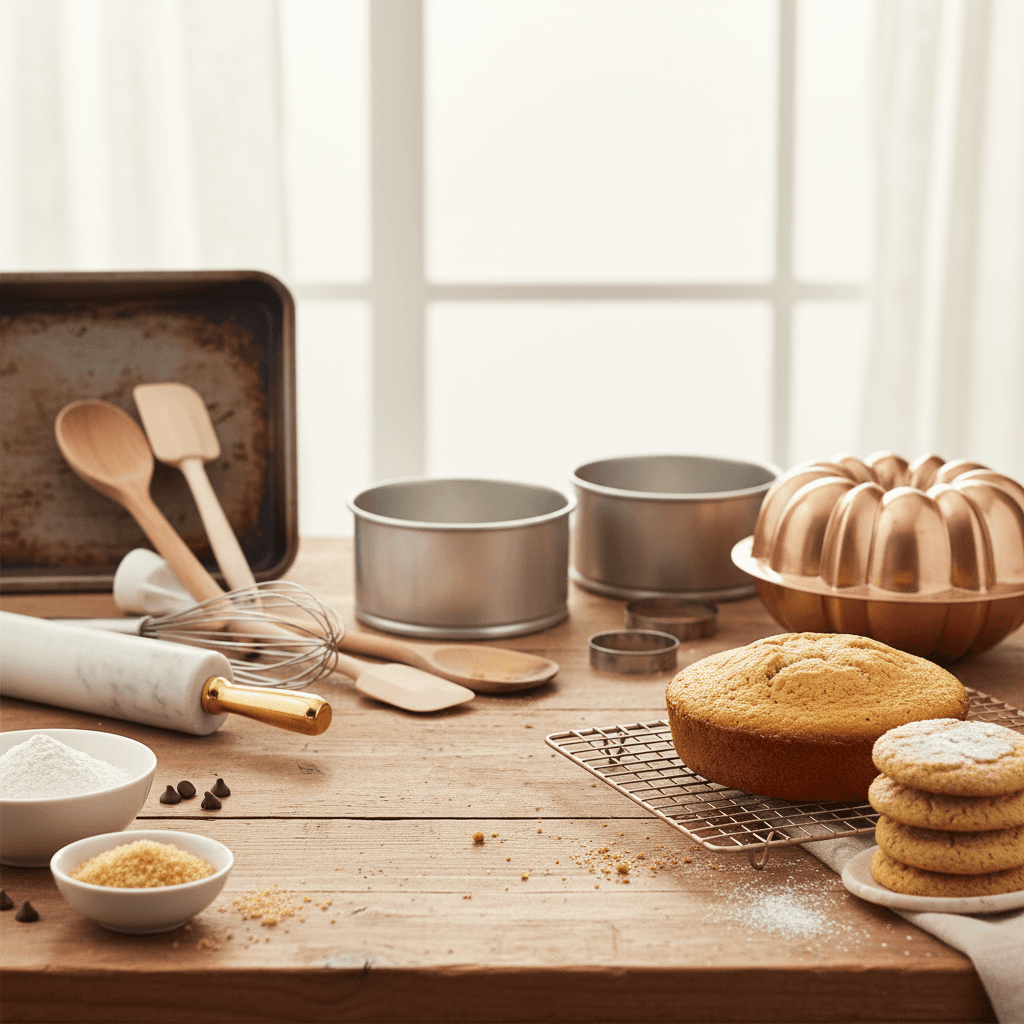
Choosing the right baking pans and tools can make or break your results, especially in gluten-free baking where even heat distribution and proper release matter more than ever. Here's our deep-dive comparison across budget, mid-range, and premium tiers so you can spend wisely and bake better.
Key takeaways
- Budget baking pans ($5-$15) work fine for casual bakers, but thin metal leads to hot spots that can burn delicate gluten-free batters faster than wheat-based ones.
- Mid-range pans ($15-$35) from brands like USA Pan and Nordic Ware offer the best value for most home bakers, with heavy-gauge construction and reliable nonstick.
- Premium pans ($35-$80+) from brands like Emile Henry and Le Creuset deliver superior heat retention and lifetime durability, but the performance gap over mid-range is smaller than you might expect.
- A good digital scale matters more than an expensive pan set. It's the single best investment for consistent gluten-free baking.
- Silicone bakeware is not a universal upgrade. It excels for muffins and flexible molds but underperforms for items that need crisp edges like cookies and pizza.
- For most home bakers, spending on one or two mid-range pans plus a quality scale and thermometer beats buying a full premium set.
Why baking pan quality matters more for gluten-free baking
Gluten-free batters behave differently than conventional ones. Without gluten's structural network, your baked goods are more vulnerable to uneven heat, sticking, and overbrowning. A thin, warped sheet pan that works "fine" for wheat chocolate chip cookies can leave gluten-free cookies dry and crumbly around the edges while still underdone in the center.
That doesn't mean you need to spend a fortune. It means you need to understand what you're actually paying for at each price point so you can put your money where it makes the biggest difference.
How we compared each tier
We looked at five factors that matter most in real baking scenarios: heat distribution (does it bake evenly?), durability (will it warp or scratch?), nonstick performance (especially important for sticky gluten-free batters), weight and handling, and value over time. We weighed each pan against the demands of gluten-free bread, cakes, cookies, and pizza dough, the batters that need the most help.
If you're still building your gluten-free baking foundation, our Confident Gluten-Free Baker Toolkit walks you through the essential equipment and techniques so you're not guessing about what you actually need.
Budget baking pans and tools ($5-$15)
Budget pans are everywhere, from dollar stores to Amazon basics lines. They get the job done for occasional bakers, but they come with real trade-offs you should know about.
Best budget sheet pan: Wilton Recipe Right 15x10 cookie sheet
At around $7-$9, the Wilton Recipe Right Cookie Sheet is the most widely available budget option. It's medium-gauge steel with a basic nonstick coating. Thinner pans like this tend to brown cookies unevenly, especially in ovens with hot spots. For gluten-free cookie mixes, this means you'll want to rotate the pan halfway through baking. The nonstick coating works well for the first year or so, then starts to degrade. It will warp at temperatures above 425°F.
Verdict: Perfectly acceptable if you bake once or twice a month and don't mind rotating pans. Replace it annually.
Best budget loaf pan: Mainstays 9x5 steel loaf pan
Walmart's house brand loaf pan runs about $5 and is surprisingly decent for gluten-free bread mixes. The thin walls mean faster heat transfer, which can actually help gluten-free bread develop a crust before the interior collapses. The downside is that the nonstick coating is minimal. You'll need to grease and flour (or line with parchment) every single time.
Best budget round cake pan: Wilton Perfect Results 9-inch
At about $6-$8, this pan is light and thin but has decent nonstick. Gluten-free cakes should release cleanly as long as you grease the pan first. The thin metal tends to produce slightly domed cakes because the edges set faster than the center. If you're making layer cakes, you'll want to level them.
Best budget digital scale: Etekcity 0.1oz kitchen scale
Around $10-$12, this is the single best budget purchase you can make. Weighing your flour instead of scooping it with cups eliminates the biggest source of inconsistency in gluten-free baking. It's accurate to 0.1 oz, has a tare function, and runs on AAA batteries. The platform is a bit small for large bowls, but you can work around that.
Best budget silicone spatula: Di Oro seamless spatula
At $8-$10, this heat-resistant spatula has a one-piece design that won't harbor bacteria or break at the head-handle joint. It's genuinely excellent for scraping every last bit of expensive gluten-free batter from a bowl. This is one category where the budget option is genuinely good enough.
When budget is good enough
If you bake a few times a month, mostly use mixes, and don't mind replacing pans every year or two, budget tools will serve you fine. The exception is the digital scale, which we recommend for everyone regardless of budget.
Mid-range baking pans and tools ($15-$35)
This is the sweet spot for most home bakers. You get dramatically better heat distribution, real durability, and nonstick coatings that last years instead of months.
Best mid-range sheet pan: USA Pan half sheet pan
At about $18-$22, the USA Pan Half Sheet Pan is our best overall value pick for the entire guide. It's heavy-gauge aluminized steel with a corrugated surface and Americoat nonstick (silicone-based, PTFE and BFE free). Its heavy gauge and corrugated surface make it one of the most even-browning pans under $40, which helps gluten-free pizza dough crisp on the bottom without burning and cookies bake uniformly edge to edge. It resists warping up to 450°F and comes with a limited lifetime warranty.
It works for everything from gluten-free pizza to sheet pan brownies, and the heavy-gauge build is made to hold up to years of heavy use.
Best mid-range loaf pan: USA Pan 1-pound loaf pan
Around $15-$18, this is the loaf pan version of the same great construction. The corrugated surface creates tiny air channels that promote even browning and easy release. Gluten-free bread, which is notoriously sticky, slides right out. If you're serious about baking gluten-free bread from scratch, this pan pays for itself in saved frustration.
Best mid-range round cake pan: Nordic Ware naturals 9-inch round
At $15-$20, the Nordic Ware Naturals Round Cake Pan is pure aluminum with no nonstick coating. That might sound like a downside, but aluminum conducts heat more evenly than coated steel, and you should be greasing and lining cake pans with parchment anyway. Gluten-free cakes tend to bake flatter and more evenly in a pan like this than in thin budget pans. The pan is also dishwasher safe and essentially indestructible.
Best mid-range digital scale: OXO Good Grips 11lb food scale
At $28-$35, the OXO Good Grips 11lb Food Scale is a meaningful upgrade over budget scales. The pull-out display means you can actually read the weight when a large bowl is on top. It's accurate to 1 gram, has a generous 11-pound capacity, and the interface is intuitive.
Best mid-range oven thermometer: ThermoWorks ThermoPop
At about $20, this instant-read thermometer isn't technically an oven thermometer, but it's invaluable for checking internal temperatures of gluten-free bread (which should hit 205-210°F). Gluten-free loaves often look done on the outside while still gummy in the center, and an instant-read thermometer eliminates the guesswork entirely.
What you gain by stepping up to mid-range
The biggest improvement is consistency. Mid-range pans eliminate hot spots, resist warping, and release baked goods reliably. Over a two to three year period, you'll actually spend less than replacing budget pans, and your baking results will be noticeably better.
Premium baking pans and tools ($35-$80+)
Premium pans are built to last decades. They offer the best heat performance and often come with lifetime warranties. But the honest truth is that the performance gap between mid-range and premium is much smaller than the gap between budget and mid-range.
Best premium sheet pan: Nordic Ware Prism half sheet
At $35-$40, the Nordic Ware Prism Half Sheet Pan is textured aluminum with a nonstick coating that's a step above their naturals line. It's heavier, more rigid, and distributes heat almost perfectly. Compared with the USA Pan, though, the practical difference for cookies and pizza is marginal. Where the Prism shines is in longevity. The thicker gauge and reinforced rim mean this pan will outlast you.
Best premium loaf pan: Emile Henry ceramic loaf pan
At $40-$50, this French-made ceramic pan is a different animal entirely. Ceramic heats slowly and retains heat longer, which produces an exceptionally thick, crispy crust on gluten-free bread. Gluten-free bread flour blends can develop better oven spring in this pan than in metal alternatives. The trade-off is weight (it's heavy) and the fact that ceramic can crack if subjected to thermal shock. Don't put it under the broiler cold.
Best premium round cake pan: Fat Daddio's anodized aluminum 9-inch round
At $15-$20 per pan (premium in construction, mid-range in price), Fat Daddio's pans are the industry standard in professional bakeries. They're anodized aluminum with straight sides and sharp edges, which means perfectly shaped layers with no taper. For gluten-free cakes, the even heat distribution produces remarkably level layers. These pans have no nonstick coating, so parchment rounds are essential.
Best premium stand mixer: KitchenAid Artisan 5-quart
At $350-$400, this is the biggest investment on our list, but it's transformative for gluten-free baking. Gluten-free bread doughs are often too wet and sticky to knead by hand, and the paddle attachment handles them beautifully. The planetary mixing action ensures hydrocolloids like xanthan gum and guar gum are evenly distributed, which is critical for structure. If you bake bread or cakes weekly, this is worth saving for.
Best premium baking stone: FibraMent-D 3/4-inch baking stone
At $55-$75 depending on size, FibraMent-D stones are used in professional deck ovens. They're 3/4 inch thick, which means they hold an enormous amount of heat and deliver it evenly to whatever you're baking. Gluten-free pizza gets a crackly, blistered bottom that thin metal pans simply cannot produce. The stone also stabilizes your oven temperature, reducing the hot-cold cycling that causes uneven bakes.
When premium is worth the investment
If you bake three or more times a week, if you sell baked goods, or if you're deeply invested in perfecting gluten-free bread and pizza, premium tools will reward you. For everyone else, mid-range delivers 90% of the performance at half the cost.
Budget vs mid-range vs premium: side-by-side comparison
| Feature | Budget ($5-$15) | Mid-range ($15-$35) | Premium ($35-$80+) |
|---|---|---|---|
| Heat distribution | Uneven, hot spots common | Good to excellent | Excellent to near-perfect |
| Warping resistance | Warps above 400-425°F | Resists warping to 450°F+ | Virtually warp-proof |
| Nonstick durability | 6-12 months | 2-4 years | 5+ years or none needed |
| Gluten-free bread release | Requires heavy greasing | Reliable with light greasing | Excellent with parchment |
| Cookie browning evenness | Rotate pan required | Minimal rotation needed | No rotation needed |
| Expected lifespan | 1-2 years | 5-10 years | 10-30+ years |
| Cost over 10 years (sheet pan) | $35-$90 (replacing) | $18-$22 (one purchase) | $35-$40 (one purchase) |
Our best overall value picks
After comparing all three tiers, here are the items we'd buy if we were starting from scratch with a reasonable but not unlimited budget:
- Best overall value sheet pan: USA Pan half sheet pan ($18-$22). Professional performance at a mid-range price.
- Best overall value loaf pan: USA Pan 1-pound loaf pan ($15-$18). The corrugated surface is a game-changer for gluten-free bread.
- Best overall value cake pan: Fat Daddio's anodized aluminum 9-inch round ($15-$20). Professional quality at a surprisingly accessible price.
- Best overall value tool: OXO Good Grips 11lb food scale ($28-$35). The single most impactful tool upgrade for any baker.
- Best budget buy: Di Oro seamless silicone spatula ($8-$10). Budget price, genuinely premium performance.
How to build your baking toolkit on any budget
If you're just getting started with gluten-free baking, don't buy everything at once. Here's the order we'd recommend:
- First purchase: A digital scale and one good sheet pan. These two items improve every single thing you bake.
- Second purchase: A loaf pan and round cake pans (buy two for layer cakes). This covers bread and cakes.
- Third purchase: An instant-read thermometer. This eliminates the biggest source of gluten-free bread failures.
- Fourth purchase: Specialty items based on what you bake most, whether that's a baking stone for pizza, a stand mixer for bread, or a proofing box for yeast doughs.
If you're also shopping for gluten-free baking ingredients and mixes, our guide to the best gluten-free baking products on Amazon covers everything you need to stock your pantry alongside your new tools.
Frequently asked questions
Do I need special baking pans for gluten-free baking?
You don't need pans specifically labeled "gluten-free," but you do need pans with good heat distribution and reliable nonstick or easy-release properties. Gluten-free batters are more sensitive to hot spots and more prone to sticking than wheat-based batters. Mid-range pans like the USA Pan line handle these challenges well without requiring a premium price.
Is it worth buying a stand mixer for gluten-free baking?
If you bake gluten-free bread regularly, yes. Gluten-free bread doughs are typically very wet and sticky, making hand kneading impractical. A stand mixer also ensures that binders like arrowroot powder and xanthan gum are evenly distributed throughout the batter. For cookies and quick breads, a hand mixer works fine.
Why do my gluten-free baked goods stick to the pan even with nonstick coating?
Gluten-free batters often contain more sugar and moisture than conventional batters, both of which promote sticking. Even with nonstick pans, we recommend lightly greasing and using parchment paper for cakes and bread. Over time, nonstick coatings degrade, especially on budget pans, so if sticking has become a new problem, it may be time to replace the pan.
What is the single most important baking tool to invest in?
A digital kitchen scale. Measuring gluten-free flours by weight instead of volume eliminates the most common cause of failed recipes: too much or too little flour. A difference of even 15-20 grams can turn a tender gluten-free cake into a dry, crumbly mess. Budget scales work, but a mid-range scale like the OXO Good Grips is easier to use and lasts much longer.
Can I use dark-colored baking pans for gluten-free recipes?
Dark pans absorb more heat and can cause overbrowning, which is already a risk with many gluten-free recipes that contain more sugar. If you use dark pans, reduce your oven temperature by 25°F. Light-colored aluminum pans like Nordic Ware Naturals or USA Pan give you the most predictable results and are what we recommend for gluten-free baking.

Written by
Co-founder, BakingSubs
Co-founder of BakingSubs, where he turns the science of ingredient substitutions into tested, reliable guidance for home bakers.
Related Posts
Bake with Confidence
See all
Confident Gluten-Free Baker Toolkit
The science-based system that replaces gluten's seven invisible jobs so your baking turns out soft, fluffy, and foolproof — every time.

Gluten-Free Recipe Vault
Instant access to our complete library of proven gluten-free recipes — no waiting, no guesswork, just results that work tonight.

Fix Your Gluten-Free Bread
Learn the 3-step formula to make bread rise and stay soft, discover why your loaves collapse, and get a tested sandwich bread recipe that actually works.