
Almond Flour as Breadcrumb Substitute in Low Carb Baking: 5 Things That Change (and How to Handle Each One)
Almond flour works as a low carb breadcrumb substitute, but browning, texture, and moisture all change. Here are 5 differences and how to handle each one.

Malik
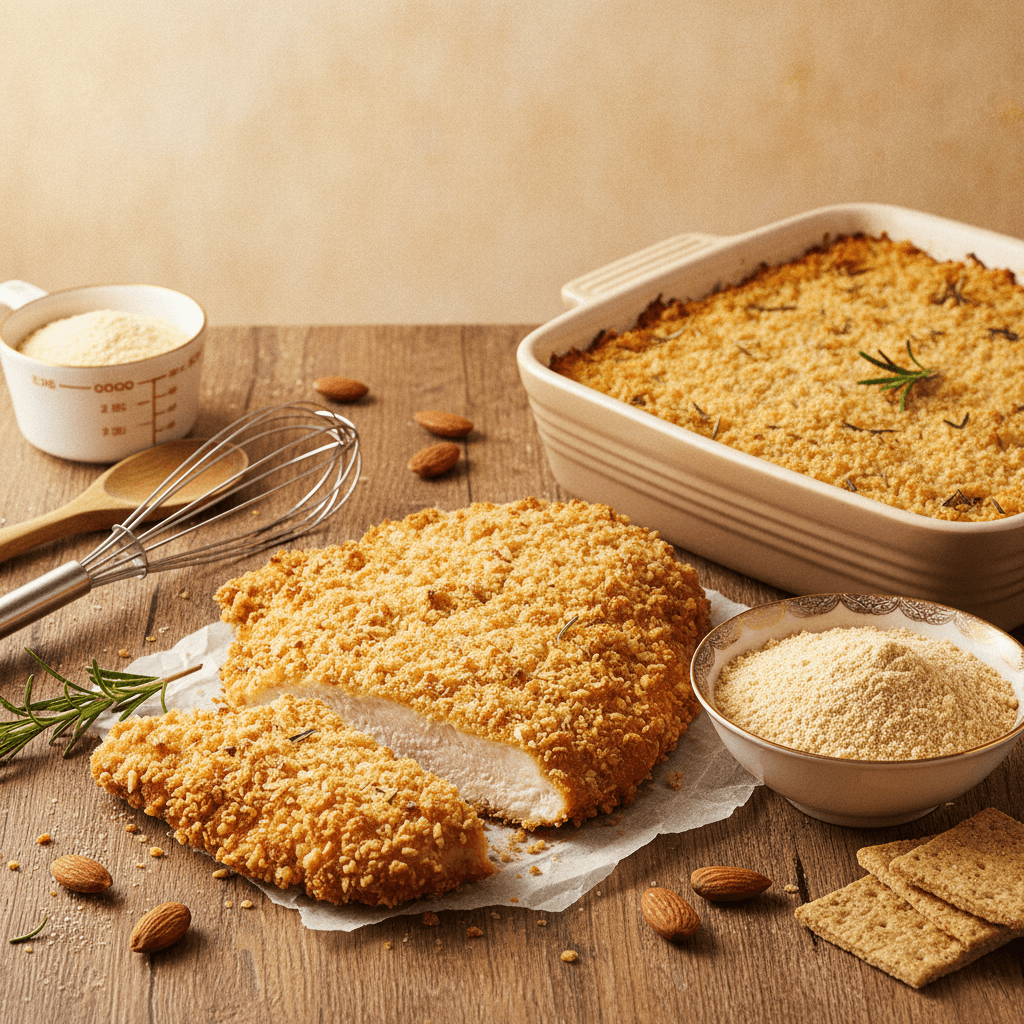
Standard breadcrumbs add 20g+ of carbs per quarter cup, which can wreck a low carb recipe in a single coating. Almond flour is the most common swap, but it behaves differently from wheat breadcrumbs in almost every way that matters — browning, texture, binding, and moisture absorption. Here's what actually changes and how to work with it.
Key takeaways
- Almond flour can replace breadcrumbs in many low carb applications, but it browns faster and absorbs less moisture than wheat-based crumbs.
- A coarser grind (almond meal) works better as a coating than finely ground blanched almond flour, which can turn pasty.
- Mixing almond flour with grated Parmesan or crushed pork rinds addresses the texture gap without adding significant carbs.
- Almond flour coatings need lower oven temperatures — typically 25°F lower than what a recipe calls for with regular breadcrumbs — to avoid burning before the interior cooks through.
- For meatball and meatloaf binders, almond flour works but you may need slightly more than a 1:1 swap because it absorbs less liquid than wheat breadcrumbs.
- Tree nut allergies make this swap a non-starter; crushed pork rinds or coconut flour are common alternatives for those who can't use almonds.
Why standard breadcrumbs don't work in low carb baking
Traditional breadcrumbs are made from wheat bread — dried, toasted, and ground. A quarter cup of plain breadcrumbs typically contains around 19–22g of net carbs, depending on the brand. Panko runs even higher per volume because the flakes are lighter and you tend to use more. For anyone following a keto or low carb approach, that's often half a day's carb budget in a single coating layer.
Breadcrumbs serve three functions in cooking and baking: they create a crispy exterior when used as a coating, they bind moisture in meatballs and meatloaf, and they add bulk to casserole toppings. Almond flour can handle all three of these roles, but not without adjustments. Treating it as a direct 1:1 swap without changes leads to burnt coatings, soggy textures, or fillings that fall apart.
How almond flour actually differs from breadcrumbs
Understanding the differences up front saves a lot of frustration. Here's a side-by-side look at the properties that matter most:
| Property | Wheat breadcrumbs | Almond flour (blanched, fine) | Almond meal (unblanched, coarse) |
|---|---|---|---|
| Net carbs per 1/4 cup | ~19–22g | ~2–3g | ~2–3g |
| Fat content | Low | High (mostly monounsaturated) | High |
| Moisture absorption | High — swells and holds liquid | Low — repels more than it absorbs | Low to moderate |
| Browning speed | Moderate, predictable | Fast — burns easily at high heat | Fast |
| Texture when baked | Crispy, crunchy shell | Can turn soft or pasty if too fine | More crumb-like, closer to breadcrumb texture |
| Gluten content | Contains gluten | Naturally gluten-free | Naturally gluten-free |
The fat content is the biggest difference. Breadcrumbs are essentially dried starch — they absorb oil and liquid readily, then crisp up. Almond flour already contains its own fat, so it doesn't absorb the same way. This is why almond flour coatings can feel greasy if you use too much oil, and why they burn before wheat breadcrumbs would.
For a deeper look at how almond flour compares to other low carb flours, our guide on almond flour vs coconut flour for keto baking covers the absorption and texture differences in detail.
5 things that change when you use almond flour as breadcrumbs
1. Browning happens faster and less evenly
Almond flour contains natural sugars and fats that brown at lower temperatures than wheat starch. A chicken cutlet coated in regular breadcrumbs might bake at 425°F without issue. The same cutlet coated in almond flour at 425°F will likely have dark brown or burnt patches within 15 minutes while the inside is still undercooked.
The fix is straightforward: reduce oven temperature by about 25°F and extend baking time slightly. For pan-frying, use medium heat instead of medium-high, and watch the coating closely. The color you're looking for is golden, not deep brown — almond flour goes from golden to burnt in a narrow window.
2. The texture depends entirely on grind size
This is where a lot of people go wrong. Finely ground blanched almond flour — the kind sold by brands like Bob's Red Mill or Anthony's — produces a smooth, almost pasty coating. It lacks the irregular crumb structure that makes breadcrumbs crunchy.
Almond meal, which is coarser and often made from unblanched almonds with the skins on, gets closer to the texture of traditional breadcrumbs. If you can only find fine almond flour, pulse it briefly in a food processor with a pinch of salt — the goal is to break up any clumps without making it finer. Some bakers spread almond flour on a sheet pan and toast it at 300°F for 8–10 minutes, stirring once, to dry it out and create a crunchier base before using it as a coating.
Our almond flour ingredient page covers the differences between blanched almond flour and almond meal in more detail.
3. Moisture absorption is lower
Wheat breadcrumbs in a meatball recipe act like tiny sponges — they soak up milk, egg, or broth and hold it inside the meat mixture, keeping things tender. This is the panade technique, and it's the reason meatballs stay moist.
Almond flour doesn't absorb liquid the same way. If a meatball recipe calls for 1/3 cup of breadcrumbs, using 1/3 cup of almond flour will leave the mixture wetter and looser. You have two options: use slightly more almond flour (start with an extra tablespoon or two and adjust), or reduce the liquid in the recipe slightly. Either approach works, but the key is that you can't just swap the measurement and expect identical results.
For casserole toppings, the lower absorption is actually an advantage. Almond flour stays crunchier on top of a casserole because it doesn't soak up the sauce underneath as quickly as breadcrumbs would.
4. Flavor shifts toward nutty and rich
Wheat breadcrumbs are essentially neutral — they taste like dried bread, which is to say, not much. Almond flour adds a distinct nutty flavor that works well with chicken, fish, pork, and vegetable gratins, but can clash with more delicate flavors.
If the nutty flavor is too prominent for your dish, mixing almond flour 50/50 with finely grated Parmesan creates a coating that tastes more savory than nutty. The Parmesan also helps with browning and crunch. Another option is adding dried herbs and spices — Italian seasoning, garlic powder, paprika — which shift the flavor profile away from pure almond.
5. Shelf life and storage change
Wheat breadcrumbs sit in a pantry for months without issue. Almond flour, because of its high fat content, goes rancid faster — especially after the bag is opened. Rancid almond flour has a bitter, off taste that will ruin any dish it touches. Store opened almond flour in an airtight container in the refrigerator, where it keeps for several months, or in the freezer for longer storage. If your almond flour smells like paint or tastes bitter, it's gone off.
When almond flour works well as a breadcrumb substitute
Not every breadcrumb application translates equally. Here's where almond flour performs best:
- Coatings for baked chicken, fish, or pork chops — Especially when mixed with Parmesan, herbs, or spices. The coating won't be identical to panko, but it crisps up nicely at lower temperatures.
- Casserole and gratin toppings — Almond flour toasted with butter or oil makes a crunchy topping that holds up well. It doesn't absorb the sauce underneath, which keeps it crunchier longer.
- Meatball and meatloaf binder — Works with adjustments to quantity. Expect to use a bit more than the recipe's breadcrumb amount.
- Stuffed mushrooms and similar appetizers — The nutty flavor complements mushrooms, cheese, and garlic well.
When almond flour falls short
There are situations where almond flour isn't the best choice, even in a low carb context:
- Deep frying — Almond flour coatings can burn quickly in hot oil (350°F+). If you deep fry often, crushed pork rinds or a pork rind/almond flour blend tends to hold up better at frying temperatures.
- Recipes that depend on breadcrumbs absorbing a lot of liquid — A traditional bread pudding or a stuffing recipe that relies on breadcrumbs soaking up cups of broth won't work with almond flour. The physics are just different.
- Nut-free households — This is obvious but worth stating. Almond flour is a tree nut product. For nut-free alternatives, sunflower seed flour or crushed pork rinds are common low carb options.
If you're exploring other low carb flour alternatives, keep in mind that each one has a different absorption rate and flavor profile. Coconut flour, for instance, absorbs far more liquid than almond flour — roughly three to four times as much — so using it as a breadcrumb substitute requires very different ratios.
Blending almond flour with other low carb ingredients for better results
Pure almond flour works, but blending it with other ingredients often produces a result closer to traditional breadcrumbs. Here are the most common combinations:
| Blend | Best for | Why it works |
|---|---|---|
| Almond flour + grated Parmesan (50/50) | Chicken cutlets, fish, vegetable gratins | Parmesan adds umami, helps browning, and reduces nuttiness |
| Almond flour + crushed pork rinds (50/50) | Deep frying, heavy coatings | Pork rinds add crunch and withstand higher heat better |
| Almond flour + flaxseed meal (3:1) | Meatballs, meatloaf | Flaxseed absorbs more moisture, improving binding |
| Almond flour + coconut flour (4:1) | Light coatings, casserole toppings | Small amount of coconut flour absorbs excess moisture without making things dense |
| Almond flour + sesame seeds (2:1) | Asian-style coatings, crust on tuna or salmon | Sesame adds crunch and complementary flavor |
The flaxseed blend is worth noting for anyone who also uses flaxseed as an egg replacement — flax's gel-forming ability helps bind meatball mixtures in a way that almond flour alone can't match.
For the coconut flour blend, remember that coconut flour is extremely absorbent. A little goes a long way. Using too much will dry out your coating or filling. Our comparison of almond flour vs coconut flour explains the absorption differences that matter here.
Tips for getting the crunchiest almond flour coating
A few techniques make a noticeable difference:
- Toast the almond flour first. Spread it on a sheet pan and bake at 300°F for 8–10 minutes, stirring halfway through. This drives off moisture and gives you a drier, crunchier starting material. Let it cool completely before using it as a coating.
- Use a proper breading station. Dip your protein in beaten egg (or an egg wash with a splash of heavy cream), then press it into the almond flour mixture. The egg layer acts as glue. Without it, almond flour tends to fall off during cooking.
- Don't overcrowd the pan. Whether you're baking or pan-frying, leaving space between pieces allows moisture to escape. Crowding traps steam, which turns your coating soggy.
- Let coated items rest for 5–10 minutes before cooking. This gives the egg wash time to set and helps the almond flour adhere better during cooking.
- Use a wire rack over a sheet pan for baking. Elevating the food allows air to circulate underneath, crisping the bottom instead of steaming it against the pan.
A note on nutrition and carb counts
Almond flour is significantly lower in carbohydrates than wheat breadcrumbs, but it's not zero carb. A quarter cup of almond flour typically contains around 2–3g of net carbs, compared to 19–22g for the same amount of regular breadcrumbs. However, almond flour is calorie-dense due to its fat content — roughly 160 calories per quarter cup. For anyone tracking macros closely, the calorie difference matters even if the carb count is favorable.
People following keto or low carb diets sometimes pair almond flour coatings with keto-friendly sweeteners in dessert applications — think almond flour crumb toppings on low carb fruit crisps. That's a valid use, but keep in mind that the total calorie load adds up quickly when you combine nut flour with added fats.
If you're working on high fiber flour alternatives more broadly, almond flour does contribute some fiber (about 1.5–2g per quarter cup), though it's not a standout in that category compared to options like flaxseed meal or coconut flour.
Frequently asked questions
Can you use almond flour as a 1:1 substitute for breadcrumbs?
In coatings and toppings, a 1:1 volume swap generally works, though you'll need to lower your oven temperature by about 25°F to prevent burning. For binding applications like meatballs, you may need slightly more almond flour than the recipe's breadcrumb amount because almond flour absorbs less liquid. Start with an extra tablespoon and adjust based on the texture of your mixture.
Does almond flour get crispy like breadcrumbs?
It can, but the crunch is different — more delicate and less shatteringly crispy than panko. Using coarser almond meal, toasting the flour before coating, and mixing in grated Parmesan or crushed pork rinds all help close the texture gap. Fine blanched almond flour on its own tends to produce a softer coating.
Is almond flour or coconut flour better as a breadcrumb replacement?
Almond flour is generally easier to work with as a breadcrumb substitute because its texture is closer to the original. Coconut flour absorbs too much moisture for most coating applications and can create a dense, dry layer. However, adding a small amount of coconut flour (about a 4:1 ratio of almond to coconut) can help absorb excess moisture in binding applications. See our almond flour vs coconut flour comparison for more on when each one works.
What can you use instead of almond flour for a nut-free low carb breadcrumb substitute?
Crushed pork rinds are the most popular nut-free, low carb breadcrumb alternative. They contain zero carbs and crisp up well in both baking and frying. Sunflower seed flour is another option, though it can turn green in baked goods due to a reaction with baking soda (the flavor is unaffected). Grated Parmesan cheese on its own also works as a coating in some applications.
Why does my almond flour coating burn before the food is cooked through?
Almond flour contains natural sugars and fats that brown at lower temperatures than wheat starch. The solution is to reduce your oven temperature by about 25°F below what the original recipe calls for and extend the cooking time. For pan-frying, use medium heat instead of medium-high. If the coating is still browning too fast, cover the dish loosely with foil for part of the cooking time.

Written by
Co-founder, BakingSubs
Co-founder of BakingSubs, where he turns the science of ingredient substitutions into tested, reliable guidance for home bakers.
Related Posts

Bake with Confidence
See all
Confident Gluten-Free Baker Toolkit
The science-based system that replaces gluten's seven invisible jobs so your baking turns out soft, fluffy, and foolproof — every time.

Gluten-Free Recipe Vault
Instant access to our complete library of proven gluten-free recipes — no waiting, no guesswork, just results that work tonight.

Fix Your Gluten-Free Bread
Learn the 3-step formula to make bread rise and stay soft, discover why your loaves collapse, and get a tested sandwich bread recipe that actually works.