
Kefir as Buttermilk Substitute in Baking: Why It Works Better Than You'd Expect (and 3 Cases Where It Doesn't)
Kefir replaces buttermilk 1:1 in most baking — but not always. Learn the ratio, flavor differences, leavening adjustments, and 3 cases where kefir falls short.

Malik
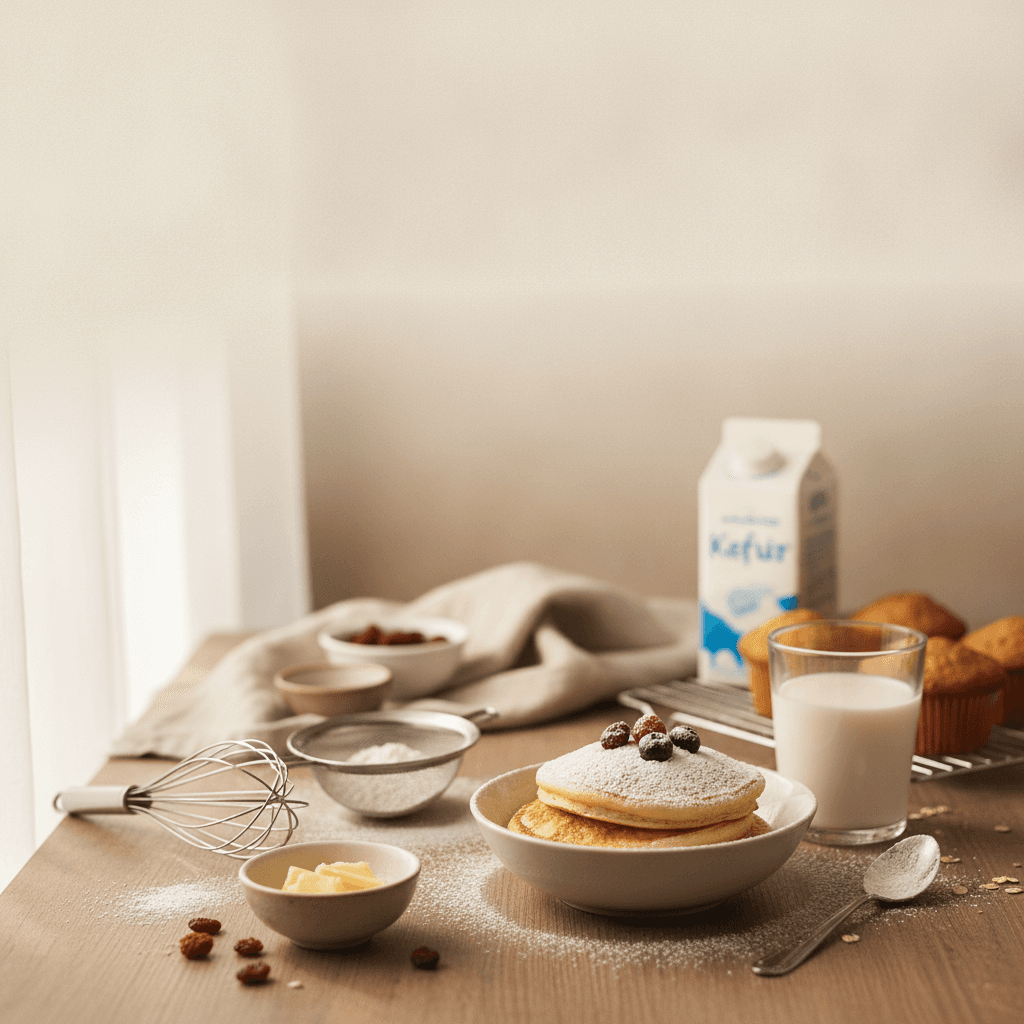
Kefir and buttermilk are closer in acidity, consistency, and protein content than almost any other dairy swap in baking. That makes kefir one of the most reliable buttermilk substitutes available — but it's not a perfect 1:1 in every situation.
Here's exactly when kefir works, when it falls short, and how to adjust for the differences that matter.
Key takeaways
- Kefir can replace buttermilk at a 1:1 ratio in most baking applications, including pancakes, muffins, quick breads, and cakes.
- Both kefir and buttermilk have a pH in the range of roughly 4.0–4.6, which means they activate baking soda similarly.
- Kefir is often slightly thinner than traditional buttermilk, which can affect batter consistency in thick batters like biscuits.
- The tangy flavor of kefir is comparable to buttermilk but can carry additional fermented notes that come through in delicate, lightly flavored baked goods.
- Kefir contains live cultures that are destroyed during baking, so any probiotic benefit is lost in the oven.
Why kefir and buttermilk are so interchangeable
The reason kefir works as a buttermilk substitute comes down to three things: acidity, fat content, and protein structure. Buttermilk is the liquid left after churning butter, though most commercial buttermilk today is cultured — meaning milk is inoculated with lactic acid bacteria that ferment it, lowering the pH and thickening the texture. Kefir goes through a similar fermentation process, but uses a broader range of bacteria and yeasts via kefir grains rather than a single bacterial culture.
The result is two products that share a lot of common ground:
| Property | Traditional buttermilk | Plain kefir |
|---|---|---|
| Typical pH range | 4.4–4.6 | 4.0–4.5 |
| Fat content (full-fat versions) | ~2% | ~2–3.5% |
| Consistency | Thick, slightly viscous | Pourable, slightly thinner |
| Primary acid | Lactic acid | Lactic acid |
| Flavor | Tangy, mild | Tangy, slightly yeasty |
Because both products rely on lactic acid fermentation, they react with baking soda in essentially the same way. That's the most important functional overlap. When a recipe calls for buttermilk, it's almost always relying on that acidity to react with baking soda, tenderize gluten, and create a specific crumb texture.
How to substitute kefir for buttermilk (ratio and adjustments)
Use a straight 1:1 swap by volume. If a recipe calls for 1 cup of buttermilk, use 1 cup of plain kefir. No additional acid is needed — kefir is already acidic enough to activate baking soda on its own.
There are a few adjustments worth considering depending on what you're making:
Thickness differences
Kefir is often noticeably thinner than commercial cultured buttermilk. In pourable batters like pancakes and waffles, this rarely matters. In thicker batters and doughs — biscuits, scones, dense coffee cakes — the slightly thinner consistency can make the dough wetter than expected. If you notice this, reduce the kefir by about 1–2 tablespoons per cup, or let the batter rest for 5 minutes so the flour can hydrate fully before judging whether it needs more liquid.
Flavor considerations
Kefir has a tangier, sometimes slightly yeasty flavor compared to buttermilk's milder tang. In heavily spiced or chocolate-based baked goods, this difference disappears entirely. In a simple buttermilk biscuit or a vanilla pound cake, some bakers notice the extra fermented note. It's not unpleasant — it's just different. If you're concerned about it, choose a mild, plain kefir without added flavors or sweeteners.
Fat content
Full-fat kefir and standard cultured buttermilk are close enough in fat content that this rarely causes issues. Low-fat or non-fat kefir will behave more like skim buttermilk — slightly less tender crumb, slightly less richness. For best results, match the fat level: if the recipe was developed with full-fat buttermilk, use full-fat kefir.
Where kefir works best as a buttermilk substitute
Kefir performs well in the baked goods where buttermilk is used primarily for its acid content and moisture. That covers a wide range of everyday baking:
- Pancakes and waffles — The acidity tenderizes the batter and creates a light, fluffy texture. Kefir works beautifully here, and the slightly thinner consistency actually makes for easier pouring.
- Muffins and quick breads — These rely on the acid-baking soda reaction for rise. Kefir delivers that reliably.
- Chocolate cake — The cocoa and sugar in chocolate cake recipes mask any flavor difference between kefir and buttermilk completely.
- Cornbread — Kefir's tang actually complements the corn flavor well.
- Marinades and brines — Not baking, strictly speaking, but worth noting: kefir works identically to buttermilk for tenderizing proteins in marinades.
If you're working with gluten-free flours, kefir's acidity can be especially helpful. Acidic liquids help hydrate starches and can improve the crumb structure in gluten-free batters, which often struggle with dry, crumbly textures.
3 cases where kefir doesn't work as well
Kefir isn't a perfect buttermilk substitute in every scenario. Here are three situations where you'll notice the difference:
1. Buttermilk biscuits and scones that depend on thick buttermilk
Classic buttermilk biscuit recipes often rely on the thickness of cultured buttermilk to create a cohesive dough that holds together when cut. Kefir's thinner consistency can make the dough too wet, leading to biscuits that spread more during baking and don't hold their shape as cleanly. If you're making a recipe that specifically calls for thick, cultured buttermilk and the dough consistency matters (like laminated biscuits), you may need to reduce the kefir quantity or add a tablespoon of flour to compensate.
2. Recipes where buttermilk flavor is the star
In a simple buttermilk panna cotta, buttermilk pie, or a plain buttermilk doughnut where the mild tang of buttermilk is the defining flavor, kefir's more complex fermented taste can shift the final product noticeably. This isn't a structural problem — the baked good will still work — but the flavor profile will be different. Some people prefer it; others don't.
3. Recipes with very precise liquid ratios
High-hydration bread doughs and certain cake recipes where the liquid ratio is calibrated to the gram can be thrown off by kefir's slightly different viscosity and protein content. In these cases, weighing the kefir rather than measuring by volume helps, and you may need to hold back 10–15g of liquid and add it only if the dough or batter looks too dry.
Kefir vs. other common buttermilk substitutes
Kefir isn't the only option when you're out of buttermilk. Here's how it stacks up against the most common alternatives:
| Substitute | Ratio | Acidity match | Texture match | Flavor match | Best for |
|---|---|---|---|---|---|
| Kefir | 1:1 | Excellent | Good (slightly thinner) | Good (slightly tangier) | Most baked goods |
| Milk + vinegar or lemon juice | 1 cup milk + 1 tbsp acid | Adequate | Poor (thin, no body) | Poor (sharp, not tangy) | Quick substitution in a pinch |
| Plain yogurt thinned with milk | 3/4 cup yogurt + 1/4 cup milk | Good | Good | Good | Thick batters, cakes |
| Sour cream thinned with milk | 3/4 cup sour cream + 1/4 cup milk | Good | Good (can be thick) | Good | Dense, rich cakes |
| Buttermilk powder + water | Per package directions | Good | Fair | Good | Pantry convenience |
The milk-plus-vinegar trick is the most commonly recommended buttermilk substitute online, but it's actually the weakest option from a baking perspective. It provides acidity but none of the body, protein, or cultured flavor that buttermilk contributes. Kefir is a much closer match on all three counts. For more on how buttermilk functions in baking and what its substitutes need to replicate, our ingredient page breaks down the details.
If you're exploring apple cider vinegar as the acid component in a milk-based substitute, that page covers how it behaves differently from white vinegar and lemon juice.
Does kefir type matter? Plain vs. flavored, dairy vs. non-dairy
Yes, the type of kefir you use matters more than most people realize.
Always use plain, unsweetened kefir
Flavored kefirs contain added sugars, fruit purees, and sometimes stabilizers that will change the moisture content, sweetness, and behavior of your batter. A vanilla-flavored kefir might add 12–15g of sugar per cup that your recipe doesn't account for, which affects browning, spread, and moisture balance. Stick with plain.
Non-dairy kefir is a different product
Coconut milk kefir, oat milk kefir, and other non-dairy kefir alternatives vary widely in acidity, fat content, and protein content. Some are acidic enough to activate baking soda; others aren't. If you're using non-dairy kefir, check the ingredient list for live cultures and consider adding a small amount of acid (half a teaspoon of apple cider vinegar per cup) as insurance. The protein content of non-dairy kefir is also typically much lower, which means less browning and a different crumb structure.
For dairy-free baking in general, understanding how to choose milk alternatives helps you pick the right base liquid for your needs.
The contrarian take: kefir might actually be better than buttermilk in some recipes
Here's something that goes against the usual advice: in certain recipes, kefir may actually produce a better result than buttermilk. Kefir's slightly lower pH (meaning it's a touch more acidic) can produce a marginally more tender crumb in quick breads and muffins, because the extra acid breaks down gluten proteins a bit more aggressively. For bakers who struggle with tough muffins or dense quick breads, switching from buttermilk to kefir is worth trying.
Additionally, kefir's broader microbial profile produces a more complex flavor during fermentation than buttermilk's single-culture process. In sourdough-adjacent recipes — things like overnight yeasted pancakes or fermented cornbread — kefir adds depth that buttermilk can't quite match.
This doesn't mean kefir is universally superior. But the common framing of kefir as a "backup" option when you're out of buttermilk undersells what it brings to the table.
What about the probiotics?
Kefir is often marketed for its probiotic content, and some bakers wonder whether those benefits survive the oven. They don't. The live cultures in kefir are killed at temperatures well below typical baking temperatures. Most beneficial bacteria die above 115-120 degrees Fahrenheit, and your oven is running at 325-425 degrees Fahrenheit for most baked goods.
The fermentation byproducts — lactic acid, certain enzymes, and flavor compounds — do survive baking and contribute to the final product. But if you're choosing kefir for gut health reasons, you'll want to consume it uncooked rather than baked into muffins.
Storing and using kefir for baking
A few practical notes that affect your results:
- Temperature matters. Cold kefir straight from the refrigerator can shock baking soda into reacting too slowly if you're making something that needs immediate lift (like drop biscuits). Letting kefir sit at room temperature for 15–20 minutes before mixing gives you more consistent results.
- Separation is normal. Kefir sometimes separates in the container, with a watery layer (whey) sitting on top. Give it a good shake or stir before measuring. That whey is acidic and useful — don't pour it off.
- Kefir thickens as it ages. A container of kefir that's been open for 5–6 days will be thicker and tangier than a freshly opened one. Both work fine for baking, but the older kefir will be closer to buttermilk's consistency.
- You can freeze kefir for baking. Frozen and thawed kefir separates and looks unappetizing, but it works perfectly fine in baked goods. The texture change doesn't matter once it's mixed into batter. Freeze in 1-cup portions for convenience.
Adjusting leavening when swapping kefir for buttermilk
Because kefir and buttermilk are so close in acidity, you generally don't need to adjust the baking soda or baking powder amounts in a recipe. The standard ratio of 1/2 teaspoon of baking soda per cup of acidic liquid applies equally to both.
The one exception: if you're using a particularly old or very actively fermented kefir that's noticeably more sour than typical buttermilk, you might get a slightly faster or more vigorous reaction with baking soda. In practice, this means getting your batter into the oven promptly rather than letting it sit on the counter. The difference is subtle, but for delicate cakes where timing matters, it's worth being aware of.
If your recipe uses both baking soda and baking powder (which many buttermilk recipes do), keep both amounts the same when substituting kefir. The dual-leavening system is designed to provide both acid-activated rise (baking soda) and heat-activated rise (the second reaction in double-acting baking powder), and kefir doesn't change that balance.
Frequently asked questions
Can I use kefir instead of buttermilk in a 1:1 ratio?
Yes. Use the same volume of plain kefir as the recipe calls for in buttermilk. The acidity, fat content, and protein levels are close enough that no other adjustments are typically needed. In very thick doughs like biscuits, you may want to reduce the kefir by 1–2 tablespoons per cup since kefir tends to be slightly thinner than cultured buttermilk.
Does kefir activate baking soda the same way buttermilk does?
Yes. Both kefir and buttermilk contain lactic acid with a similar pH range (roughly 4.0–4.6). This means they react with baking soda in essentially the same way, producing carbon dioxide gas that helps baked goods rise. You don't need to add extra acid or adjust the baking soda amount.
Can I use flavored kefir as a buttermilk substitute?
It's not recommended. Flavored kefirs contain added sugars and sometimes fruit purees or stabilizers that change the moisture content, sweetness, and overall chemistry of your batter. Stick with plain, unsweetened kefir for baking substitutions.
Is non-dairy kefir a good buttermilk substitute?
It can work, but with caveats. Non-dairy kefirs (coconut, oat, almond) vary widely in acidity, protein, and fat content. Some may not be acidic enough to fully activate baking soda. Check for live cultures on the label, and consider adding half a teaspoon of vinegar per cup as a safeguard. The lower protein content in most non-dairy kefirs also means less browning and a different crumb texture. For more guidance, see our page on choosing milk alternatives for baking.
Do the probiotics in kefir survive baking?
No. The live bacterial cultures in kefir are killed at temperatures above approximately 115–120 degrees Fahrenheit, which is far below standard baking temperatures. The lactic acid and flavor compounds produced during fermentation do remain in the finished product, but the probiotic organisms themselves do not survive the oven.

Written by
Co-founder, BakingSubs
Co-founder of BakingSubs, where he turns the science of ingredient substitutions into tested, reliable guidance for home bakers.
Related Posts
Bake with Confidence
See all
Confident Gluten-Free Baker Toolkit
The science-based system that replaces gluten's seven invisible jobs so your baking turns out soft, fluffy, and foolproof — every time.

Gluten-Free Recipe Vault
Instant access to our complete library of proven gluten-free recipes — no waiting, no guesswork, just results that work tonight.

Fix Your Gluten-Free Bread
Learn the 3-step formula to make bread rise and stay soft, discover why your loaves collapse, and get a tested sandwich bread recipe that actually works.