

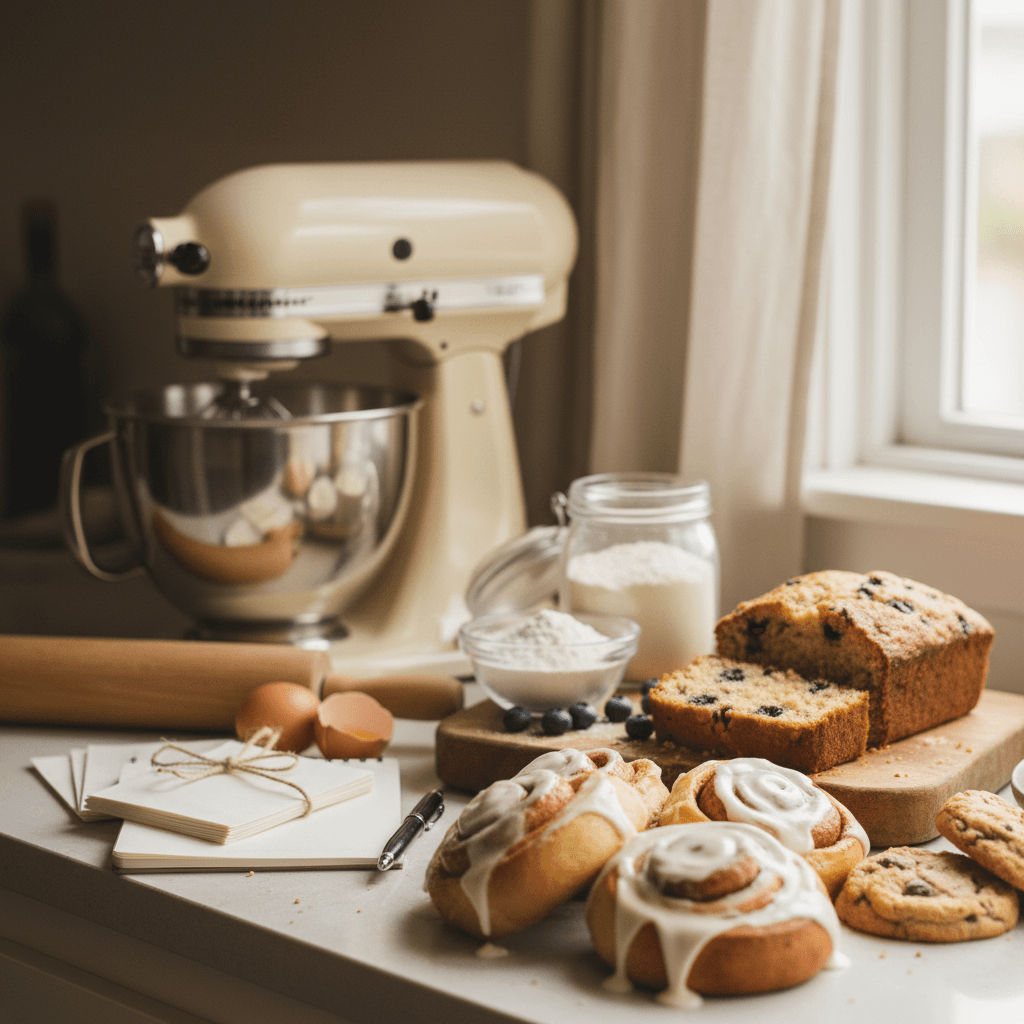
You've been the person everyone asks for birthday cakes and holiday cookies. Now you're wondering if this could actually pay you. The answer is yes, but only if you stop treating your baking like a hobby with a tip jar and start treating it like a business.
Key takeaways
- Baking for friends and baking for profit require completely different mindsets around pricing, time, and boundaries.
- Most home bakers undercharge by 40-60% when they first start selling because they price based on ingredients alone.
- Your cottage food law dictates what you can sell, where, and how much — know it before you take a single order.
- Consistent orders come from systems, not just talent. Repeatable recipes, order forms, and a marketing plan matter more than a perfect buttercream swirl.
- The transition doesn't have to happen overnight. You can phase in business practices while still baking for the people you love.
Why baking for friends is nothing like running a home bakery
When you bake for friends, you absorb every cost — your time, your ingredients, your energy — because the reward is their reaction. That's generous and wonderful, but it's also the exact habit that will bankrupt a baking business before it starts.
The shift from hobby to profit isn't really about baking better. It's about thinking differently about what your baking is worth. Friends don't pay for your recipe development time. They don't factor in the three grocery runs you made. They don't see the two hours of cleanup. A paying customer's order needs to cover all of that, plus leave you with actual profit.
Here's the uncomfortable truth: if you can't charge someone full price without feeling guilty, you're not ready to sell. And that's okay — but it's the first thing you need to work on.
Step 1: figure out your legal requirements
Before you price a single cookie, you need to know what your state or county allows. Cottage food laws vary wildly. Some states let you sell up to $75,000 annually from home with minimal regulation. Others cap you at $25,000 or restrict you to direct sales only — no shipping, no wholesale.
Check your state's cottage food law for these specifics:
- Annual sales cap — the maximum revenue you're allowed to earn
- Allowed products — most states allow shelf-stable baked goods but restrict items that need refrigeration
- Labeling requirements — many states require ingredient lists and allergen disclosures
- Where you can sell — farmers markets, online, from home, or some combination
- Permits and registrations — some states require a food handler's card or business license
We have a detailed walkthrough of everything you need to get set up legally in our home bakery business checklist. Don't skip this step. Getting shut down because you didn't file the right paperwork is a real thing that happens to real bakers.
Step 2: price your baked goods like a business
This is where most home bakers get stuck, and it's the single biggest reason people burn out. You cannot price based on what you'd pay for a cookie at a grocery store. You are not a grocery store. You're a small-batch, made-to-order, specialty baker, and your prices need to reflect that.
At minimum, your price should cover:
| Cost category | What to include |
|---|---|
| Ingredients | Every ingredient at current retail price, measured precisely |
| Packaging | Boxes, bags, labels, ribbon, stickers |
| Labor | Your time at a fair hourly rate ($20-30/hr minimum) |
| Overhead | Utilities, equipment wear, insurance if applicable |
| Profit margin | 15-25% on top of all costs |
A common formula is: (Ingredient cost + packaging) x 3 = minimum retail price. But that's a starting point, not a ceiling. If your area supports higher prices, charge higher prices.
We built a full guide on how to set up a home bakery recipe costing spreadsheet that walks you through calculating your true cost per item. If you're guessing at your prices right now, that post will change how you think about every order.
If you're ready to stop guessing and start building a home bakery that actually pays you, check out the free Home Bakery Pro masterclass. It's a free masterclass on getting consistent orders and building a sustainable home bakery — no fluff, just the systems that work.
Step 3: narrow your menu to what sells and scales
When you bake for friends, you make whatever they ask for. When you bake for profit, you need a focused menu that lets you batch efficiently and buy ingredients in bulk.
Start with 3-5 items you can make exceptionally well and that people already request from you. These become your core menu. Everything else is a custom order at a premium price.
Good core menu items share these traits:
- Shelf-stable — easier to sell under cottage food laws and simpler to manage
- Batchable — you can make 4x the recipe without quality loss
- Distinctive — something people can't easily get from a grocery store
- Profitable — high perceived value relative to your ingredient cost
If you specialize in gluten-free baking, this is actually a massive advantage. The market for good gluten-free baked goods is underserved almost everywhere. People with celiac disease or gluten sensitivity are actively looking for a baker they can trust. If you need to sharpen your gluten-free skills before selling, our complete guide to gluten-free baking covers the fundamentals you'll want to have down cold.
Step 4: create systems for taking and managing orders
The fastest way to feel overwhelmed is to take orders through text messages, DMs, and phone calls simultaneously with no central system. You'll double-book weekends, forget details, and undercharge because you didn't have your pricing in front of you when someone asked.
You need:
- An order form — Google Forms works fine to start. Capture the item, quantity, date needed, flavor choices, and any dietary restrictions.
- A production calendar — know your capacity. If you can only bake 6 dozen cookies on a Saturday, don't accept orders for 10 dozen.
- Clear policies — deposit requirements, cancellation deadlines, pickup instructions. Write them down and share them with every customer.
For custom cake orders specifically, we have a detailed system in our guide on how to take custom cake orders from home that covers everything from consultation to delivery.
Step 5: build a customer base beyond your friends
Your friends got you started, but they won't sustain a business. You need to reach people who don't already know you. Here's what actually works for home bakers:
Social media that sells
Post your baked goods consistently — at least 3 times a week. Show the process, not just the finished product. People connect with the story of their food being made. And take good photos. You don't need a professional camera, but you do need decent lighting and a clean background. Our home bakery food photography guide breaks down exactly how to take scroll-stopping photos with your phone.
Farmers markets and pop-ups
In-person events let people taste your work, which is the most powerful marketing tool you have. Selling baked goods at craft fairs and running pop-up shops are both excellent ways to get in front of new customers and build a local following fast.
Word of mouth with intention
Don't just hope people recommend you. Ask them to. Include a card with every order that says something like: "Know someone who'd love these? Send them my way." Offer a small incentive — a free cookie with their next order for every referral that converts. Our guide on building repeat customers and loyalty has 12 specific strategies for keeping orders coming back.
Step 6: track your money from day one
This is the part nobody wants to do, but it separates bakers who last from bakers who quit after six months feeling exhausted and broke. Track every dollar in and every dollar out. Keep receipts. Separate your business and personal spending.
You don't need fancy software to start — a simple spreadsheet works. But you do need to do it consistently. Our home bakery taxes and bookkeeping guide explains exactly what to track and how to stay legal when tax season arrives.
The timeline: what a realistic transition looks like
Going from baking for friends to baking for profit doesn't happen in a week. Here's a realistic timeline for most home bakers:
| Phase | Timeframe | Focus |
|---|---|---|
| Research and setup | Weeks 1-2 | Check cottage food laws, get permits, set up bookkeeping |
| Menu and pricing | Weeks 2-3 | Cost your recipes, set prices, create an order form |
| Soft launch | Weeks 3-6 | Take 3-5 paid orders from your existing network at full price |
| Marketing push | Weeks 6-12 | Start posting on social media, do your first market or pop-up |
| Refine and grow | Months 3-6 | Adjust menu based on what sells, build repeat customer systems |
The soft launch phase is critical. Taking real paid orders — even just a few — forces you to confront your pricing, your time management, and your production process in a way that planning on paper never will.
Frequently asked questions
How much money can you make baking from home?
Most home bakers earn between $500 and $2,000 per month working part-time, though some reach $4,000 or more with a strong customer base and efficient systems. Your income depends on your state's cottage food sales cap, your pricing, and how many orders you can realistically fulfill each week. The key is pricing correctly from the start — most bakers who feel like they're not making money are actually undercharging.
Do I need a business license to sell baked goods from home?
It depends on your state and county. Many states allow cottage food sales with just a registration or food handler's permit, while others require a business license. Some require both. Check your local cottage food law and your county clerk's office. Our home bakery business checklist walks through every requirement step by step.
How do I tell friends I'm going to start charging for my baking?
Be direct and brief. Something like: "I'm turning my baking into a small business, so I'll be charging for orders going forward. I'd love to keep baking for you — here's my menu and pricing." Most friends will be supportive. The ones who expect you to keep working for free were never going to be good customers anyway.
What baked goods are most profitable to sell from home?
Cookies, brownies, and quick breads tend to have the best profit margins because they're shelf-stable, batchable, and have relatively low ingredient costs compared to their perceived value. Custom decorated cakes and cupcakes command higher per-order revenue but take significantly more time. The most profitable item is the one you can make efficiently at a price your market will pay.
How do I get my first paying customers?
Start with your existing network but at full price. Post on your personal social media that you're now taking orders, share your menu, and ask friends and family to spread the word. Then expand to local community groups, farmers markets, and pop-up events. Getting in front of people who can taste your food in person is the fastest path to building a real customer base.

Written by
Co-founder, BakingSubs
Co-founder of BakingSubs, where he turns the science of ingredient substitutions into tested, reliable guidance for home bakers.
Related Posts
Bakery Recipe Cost Sheet: How to Cost a Recipe in 6 Steps (With a Table You Can Copy)
Home Bakery Order Form Template: A Copy-Paste Layout That Cuts Mistakes by Half
Cottage Food Label Requirements and Template: What Every State Demands (With a Copy-Paste Layout)
Bake with Confidence
See all
Confident Gluten-Free Baker Toolkit
The science-based system that replaces gluten's seven invisible jobs so your baking turns out soft, fluffy, and foolproof — every time.

Gluten-Free Recipe Vault
Instant access to our complete library of proven gluten-free recipes — no waiting, no guesswork, just results that work tonight.

Fix Your Gluten-Free Bread
Learn the 3-step formula to make bread rise and stay soft, discover why your loaves collapse, and get a tested sandwich bread recipe that actually works.