
Thanksgiving Pre-Order Menu for Home Bakers: Pricing, Deadlines, and a Week-by-Week Calendar You Can Copy
Build your Thanksgiving pre-order menu with real pricing ($28–$45/pie), a 7-week countdown calendar, and a copy-paste order form template for home bakers.

Malik
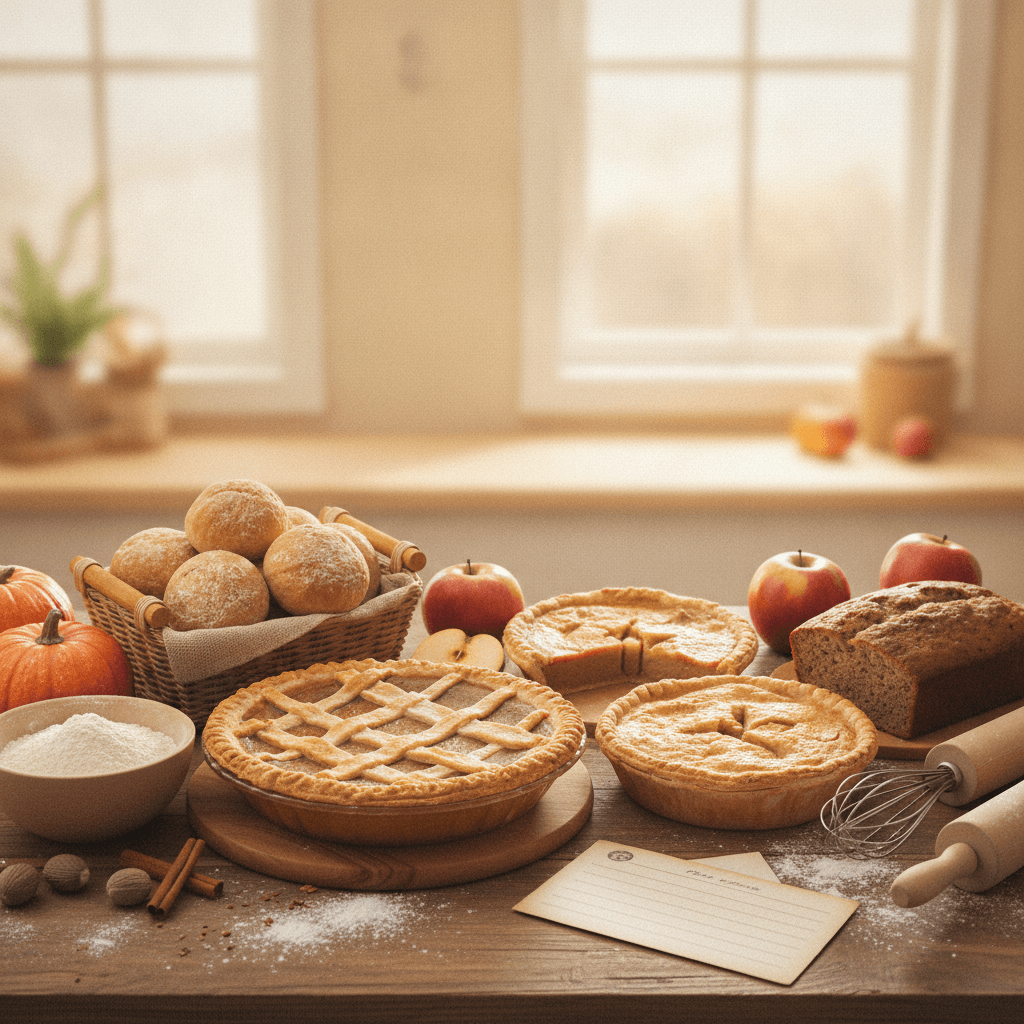
A strong Thanksgiving pre-order menu needs three things: a short list of items you can batch efficiently, prices that cover your real costs plus profit, and a timeline that counts backward from pickup day so nothing gets rushed. Below is the complete framework — menu options, dollar-range pricing, and a week-by-week calendar counting back from Thanksgiving (November 26, 2026) — that you can copy and adapt for your home bakery.
Key takeaways
- Limit your Thanksgiving menu to 4–6 items you can batch-produce. More than that and your kitchen bottleneck kills quality.
- Price full-size pies between $28 and $45 depending on filling cost, and dinner rolls at $18–$24 per dozen — never less.
- Open pre-orders 5 weeks before Thanksgiving (around October 22, 2026) and set a hard cutoff about 10 days out (Sunday, November 15, 2026).
- Require a 50% non-refundable deposit at order time. This filters out no-shows and funds your ingredient purchases.
- Build in two full bake days (Monday and Tuesday before Thanksgiving) and offer a single pickup window on Wednesday, November 25.
- Post your menu and order form on social media at least 3 times — the first post rarely converts; the third one does.
Why a short, focused menu earns more than a long one
Home bakers who list 12+ items for Thanksgiving almost always end up losing money on at least three of them. The reason is simple: small batches of many different recipes mean constant oven changeovers, more unique ingredients to buy, and higher waste. Picture a baker who runs 11 items one Thanksgiving season and clears $6.40/hour after costs; cutting to 5 items the next year could raise that effective hourly rate substantially.
Pick items that share oven temperatures, use overlapping ingredients, and hold well overnight. A menu built around pies, quick breads, and rolls checks all three boxes.
Thanksgiving pre-order menu with pricing ranges
The prices below reflect ingredient costs, packaging, and labor for a home baker producing 20–40 units of each item. Adjust up for premium or specialty ingredients like almond flour or maple syrup-sweetened fillings.
| Menu item | Suggested price range | Approx. ingredient cost per unit | Notes |
|---|---|---|---|
| Classic pumpkin pie (9") | $28–$35 | $6–$8 | High margin; batch the filling in one large pot |
| Pecan pie (9") | $38–$45 | $11–$14 | Pecans are expensive — price accordingly |
| Apple crumble pie (9") | $30–$38 | $7–$9 | Crumble top is faster than lattice |
| Dinner rolls (dozen) | $18–$24 | $3.50–$5 | Best margin on the menu; offer in batches of 12 only |
| Cranberry orange quick bread (loaf) | $16–$22 | $4–$6 | Holds well; can bake 2 days ahead |
| Pumpkin spice muffins (half dozen) | $14–$18 | $3–$4.50 | Good add-on item; uses leftover pumpkin puree |
If you offer gluten-free versions, add $5–$8 per item to cover the higher flour costs and the extra steps needed to prevent cross-contamination. That is not a markup — it is the actual cost difference. A 9" gluten-free pumpkin pie using a rice flour and tapioca starch crust costs roughly $10–$13 in ingredients versus $6–$8 for wheat.
How to price Thanksgiving baked goods without losing money
The formula that works for most home bakers: (ingredient cost x 3) + packaging + $2–$4 delivery surcharge if applicable. That 3x multiplier covers your labor, overhead (electricity, water, wear on equipment), and a margin. If your ingredient cost for a pecan pie is $12, your minimum price is $36 before packaging.
Do not round down to look competitive. A customer choosing a home-baked pecan pie over a $14 grocery store pie is already paying for quality. They will not balk at $42 versus $38.
One mistake that costs real money: forgetting to price your packaging. Pie boxes with windows run $1.50–$2.50 each. Stickers, ribbon, and tissue add another $0.50–$1.00. On 30 pies, that is $60–$105 in packaging alone. Build it into the price, not out of your margin.
Should you charge for delivery?
Yes. Charge a flat $8–$15 depending on distance, or skip delivery entirely and offer pickup only. Delivery on the day before Thanksgiving is stressful and eats hours you need for baking. Most successful home bakers set a single pickup window (see the calendar below) and stick to it.
Week-by-week pre-order calendar (Thanksgiving, November 26, 2026)
This calendar counts backward from Thanksgiving Day. Copy it, adjust the dates if your Thanksgiving falls on a different day, and share the customer-facing deadlines on your order page.
| Week | Dates | What happens |
|---|---|---|
| Week 7 (T-7) | Oct 5–11 | Finalize your menu. Test any new recipes. Calculate ingredient costs and set prices. Photograph each item for your order page. |
| Week 6 (T-6) | Oct 12–18 | Build your order form (Google Form, Square, or a simple table — see below). Write your social media announcement post. Set up your payment method for deposits. |
| Week 5 (T-5) | Oct 19–25 | Pre-orders open (Oct 22). Post your menu and order link. Share in local Facebook groups, Nextdoor, and your email list. Require 50% deposit at order time. |
| Week 4 (T-4) | Oct 26–Nov 1 | Second social media push. Remind followers that quantities are limited (they should be — cap at what you can realistically bake). Track orders in a spreadsheet. |
| Week 3 (T-3) | Nov 2–8 | Third and final social media push. This is when most orders come in. Deposit deadline: Nov 8. Any order without a deposit by this date gets dropped. |
| Week 2 (T-2) | Nov 9–15 | Tally final orders. Build your ingredient shopping list. Place bulk orders for anything you source online (pecans, specialty flours, packaging). Order cutoff: Nov 15 (Sunday). |
| Week 1 (T-1) | Nov 16–22 | Shop for perishables (butter, eggs, cream). Prep pie doughs and freeze them (most doughs hold 5 days frozen without quality loss). Make cranberry fillings and crumble toppings. |
| Bake days | Nov 23–24 (Mon–Tue) | Monday: Bake all pies and quick breads. Tuesday: Bake rolls and muffins (they need to be fresh). Cool, package, and label everything Tuesday evening. |
| Pickup day | Nov 25 (Wed) | Pickup window: 10 AM–2 PM. Collect remaining balances. Have a checklist with each customer's name and order. Do not offer a second pickup window — it fragments your day. |
Print this calendar and tape it to your fridge. Missed deadlines almost always happen because the timeline lived only in someone's head.
Order form template you can copy
You can recreate this in Google Forms, a Square online store, or even a shared Google Sheet. The key fields are below.
| Field | Example entry | Why you need it |
|---|---|---|
| Customer name | Maria Chen | Labeling and communication |
| Phone number | 555-012-3456 | Text reminders are faster than email |
| maria@email.com | Send deposit confirmation and pickup details | |
| Item ordered | Pumpkin pie (9") x2 | Track quantities for ingredient shopping |
| Quantity | 2 | Separate from item name for easy tallying |
| Allergen notes | Nut-free household | Critical for liability — document it |
| Pickup or delivery | Pickup | Plan your Wednesday schedule |
| Deposit paid (Y/N) | Y — $35 via Venmo 10/24 | No deposit = no guaranteed order |
| Balance due | $35 | Collect at pickup |
Tip: Cap each item. If you can bake 20 pumpkin pies max, say so on the form. Scarcity is real, not a marketing trick — your oven has a finite number of hours.
Recipe cost sheet layout
Before you set a single price, fill out a cost sheet for every item on your menu. Here is the column structure. The package prices shown are typical U.S. grocery ranges, not fixed figures — replace them with what you actually pay.
| Ingredient | Amount used | Package size | Package price | Cost per unit |
|---|---|---|---|---|
| All-purpose flour | 280g | 2.27 kg (5 lb) | $3.50–$5.50 (typical) | (280/2270) x package price ≈ $0.43–$0.68 |
| Butter, unsalted | 227g (1 cup) | 454g (1 lb) | $4.00–$6.00 (typical) | (227/454) x package price ≈ $2.00–$3.00 |
| Granulated sugar | 150g | 1.81 kg (4 lb) | $3.50–$4.50 (typical) | (150/1810) x package price ≈ $0.29–$0.37 |
| Eggs | 3 large | 12 ct | $3.00–$5.00 (typical) | (3/12) x package price ≈ $0.75–$1.25 |
| Canned pumpkin | 425g (15 oz) | 425g can | $2.00–$3.00 (typical) | Full can price: $2.00–$3.00 |
Add a row at the bottom for total ingredient cost, then multiply by 3 for your minimum selling price. If you use brown sugar, buttermilk, or other specialty ingredients, add those rows too. Fill in actual prices from your grocery store — do not guess.
Run this calculation for every item on your menu and compare the total ingredient cost to your planned selling price. If the multiplier falls below 2.5x, raise the price or find a cheaper source for the ingredient driving the cost.
Legality: check your state's cottage food law first
Every state has a cottage food law that governs what you can sell from a home kitchen, how much you can earn annually, and where you can sell. Some states cap annual sales (often in the $25,000–$50,000 range); others set caps of $150,000 or more, and some (Ohio, Missouri) have no cap at all. New Jersey, the last state to allow cottage food sales, opened permits in 2021 and caps sales at $50,000. Before you take a single pre-order, confirm that pies, rolls, and quick breads are on your state's approved list, and check whether you need a food handler's permit, a business license, or specific labeling.
We have a detailed breakdown of cottage food rules and home bakery business planning in our home bakery guides. Labeling requirements vary — most states require your name and address (or a state-issued ID number), an ingredient list, allergen information, and a home-kitchen disclaimer whose exact wording is set by the state. Get this right before your first sale, not after.
Packaging and presentation that justifies your price
Customers paying $35+ for a pie expect it to arrive looking like a $35 pie. Use sturdy pie boxes — the thin ones from dollar stores collapse and smash your meringue. A windowed pie box from a bakery supply site runs about $1.80–$2.50 each when bought in packs of 25. Add a branded sticker (about $0.15 each from Avery or a local print shop) and a small card with reheating instructions.
For rolls and muffins, clear cellophane bags tied with twine look polished and cost under $0.30 per bag. Avoid plastic containers that trap moisture and make crusts soggy overnight.
Quick breads ship well in kraft loaf boxes (about $1.20 each). Line with parchment before placing the loaf inside.
Three places to announce your pre-order menu
You do not need a website or Instagram following to fill your Thanksgiving orders. Here are the three highest-converting channels for home bakers:
- Local Facebook groups. Search for "(your city) buy/sell" and "(your city) foodies." Post your menu with one good photo, your price list, and a link to your order form. Many home bakers fill 60–80% of their orders from a single Facebook post.
- Nextdoor. Neighbors trust neighbors. A Nextdoor post with a photo of your pumpkin pie and a clear price list converts well because the audience is hyperlocal.
- Text/email your existing customers. If you have sold anything before — birthday cakes, cookies, farmers market items — text those people first. Repeat customers order faster and rarely haggle on price.
Common mistakes that cost home bakers money at Thanksgiving
Not requiring a deposit
Say a baker takes 38 pie orders with no deposit and eleven people never pick up. That is roughly $385 in ingredients and 9 hours of labor she cannot recover. A 50% non-refundable deposit solves this. If someone does not want to put $17.50 down on a $35 pie, they were never going to pick it up anyway.
Saying yes to custom requests
"Can you make a sugar-free pecan pie with a gluten-free crust and no corn syrup?" Maybe — but not during Thanksgiving week when you are already baking 30 other items. Custom requests during peak season break your batching flow. If you want to offer a sugar-free option, put it on the menu from the start so you can batch it. Otherwise, politely say no.
Underestimating bake time
A 9" pecan pie takes 50–60 minutes in the oven. If your oven fits two pies at a time, baking 16 pecan pies takes 7–8 hours of oven time alone — not counting cooling, prep, or cleanup. Map out your oven schedule before you accept orders. If the math does not work, lower your caps.
Bonus: Christmas pre-order calendar (December 25, 2026)
The same framework applies. Here are the adjusted dates.
| Week | Dates | What happens |
|---|---|---|
| Week 7 (T-7) | Nov 2–8 | Finalize Christmas menu. Photograph items. Set prices. |
| Week 6 (T-6) | Nov 9–15 | Build order form. Write announcement post. |
| Week 5 (T-5) | Nov 16–22 | Pre-orders open (Nov 19). First social media post. |
| Week 4 (T-4) | Nov 23–29 | Second social push. (Post the day after Thanksgiving — people are already thinking about Christmas baking.) |
| Week 3 (T-3) | Nov 30–Dec 6 | Third social push. Deposit deadline: Dec 6. |
| Week 2 (T-2) | Dec 7–13 | Tally orders. Shop for non-perishables. Order cutoff: Dec 13 (Sunday). |
| Week 1 (T-1) | Dec 14–21 | Shop for perishables. Prep doughs, fillings, and toppings. |
| Bake days | Dec 22–23 (Tue–Wed) | Bake, cool, package, label. |
| Pickup day | Dec 24 (Thu) | Pickup window: 9 AM–1 PM. Earlier window because people have Christmas Eve plans. |
Notice the overlap: your Thanksgiving pickup is November 25, and your Christmas pre-orders open November 19. That means you need your Christmas menu finalized before Thanksgiving week. Plan both seasons together in early October.
What to do after Thanksgiving
Send every customer a thank-you text within 48 hours. Ask if you can add them to your list for Christmas orders. Texting Thanksgiving customers on Black Friday is one of the cheapest ways to grow a Christmas list. No discount, no gimmick — just "Thanks for your order. I am taking Christmas pre-orders starting next week. Want me to save you a spot?"
Track what sold and what did not. If you made 8 cranberry orange loaves and only sold 5, drop it next year or cut production. If your pumpkin pies sold out in 3 days, raise the cap or the price — or both.
Frequently asked questions
How far in advance should I open Thanksgiving pre-orders for my home bakery?
Open pre-orders 5 weeks before Thanksgiving — around October 22 for a November 26 holiday. This gives customers enough time to plan but is close enough that they feel urgency. Set a hard order cutoff about 10 days before Thanksgiving (Sunday, November 15) so you have time to shop and prep.
How much should I charge for a homemade pie for Thanksgiving?
Charge $28–$45 for a 9" pie depending on the filling. Pumpkin pies with lower ingredient costs ($6–$8) can start at $28. Pecan pies with $11–$14 in ingredients should be priced at $38–$45. Use the formula: ingredient cost x 3, plus packaging. Never price below 2.5x your ingredient cost.
Should I require a deposit for Thanksgiving pre-orders?
Yes — require a 50% non-refundable deposit when the order is placed. Without deposits, no-show rates of 20–30% are common. The deposit covers your ingredient costs and filters out people who are not serious. Collect the remaining balance at pickup.
How many items should I put on my Thanksgiving pre-order menu?
Stick to 4–6 items. A short menu lets you batch ingredients, share oven temperatures across items, and maintain quality. Home bakers who list 10+ items typically see lower profit per item because of inefficient production and higher ingredient waste.
Can I sell Thanksgiving pies from my home kitchen legally?
In most states, yes — under cottage food laws. However, rules vary significantly. Some states cap annual revenue (as low as $25,000), require specific labeling, or limit where you can sell. Check your state's cottage food statute before taking orders, and confirm that pies and baked goods are on the approved product list.

Written by
Co-founder, BakingSubs
Co-founder of BakingSubs, where he turns the science of ingredient substitutions into tested, reliable guidance for home bakers.
Related Posts
Bake with Confidence
See all
Confident Gluten-Free Baker Toolkit
The science-based system that replaces gluten's seven invisible jobs so your baking turns out soft, fluffy, and foolproof — every time.

Gluten-Free Recipe Vault
Instant access to our complete library of proven gluten-free recipes — no waiting, no guesswork, just results that work tonight.

Fix Your Gluten-Free Bread
Learn the 3-step formula to make bread rise and stay soft, discover why your loaves collapse, and get a tested sandwich bread recipe that actually works.