
New York Home Processor Rules for Home Bakers (2026): Fees, Caps, and What You Can Actually Sell
New York's home processor exemption has no sales cap and a free registration. Learn the approved foods, label rules, in-state sales and shipping venues, and what's banned for home bakers in 2026.

Malik
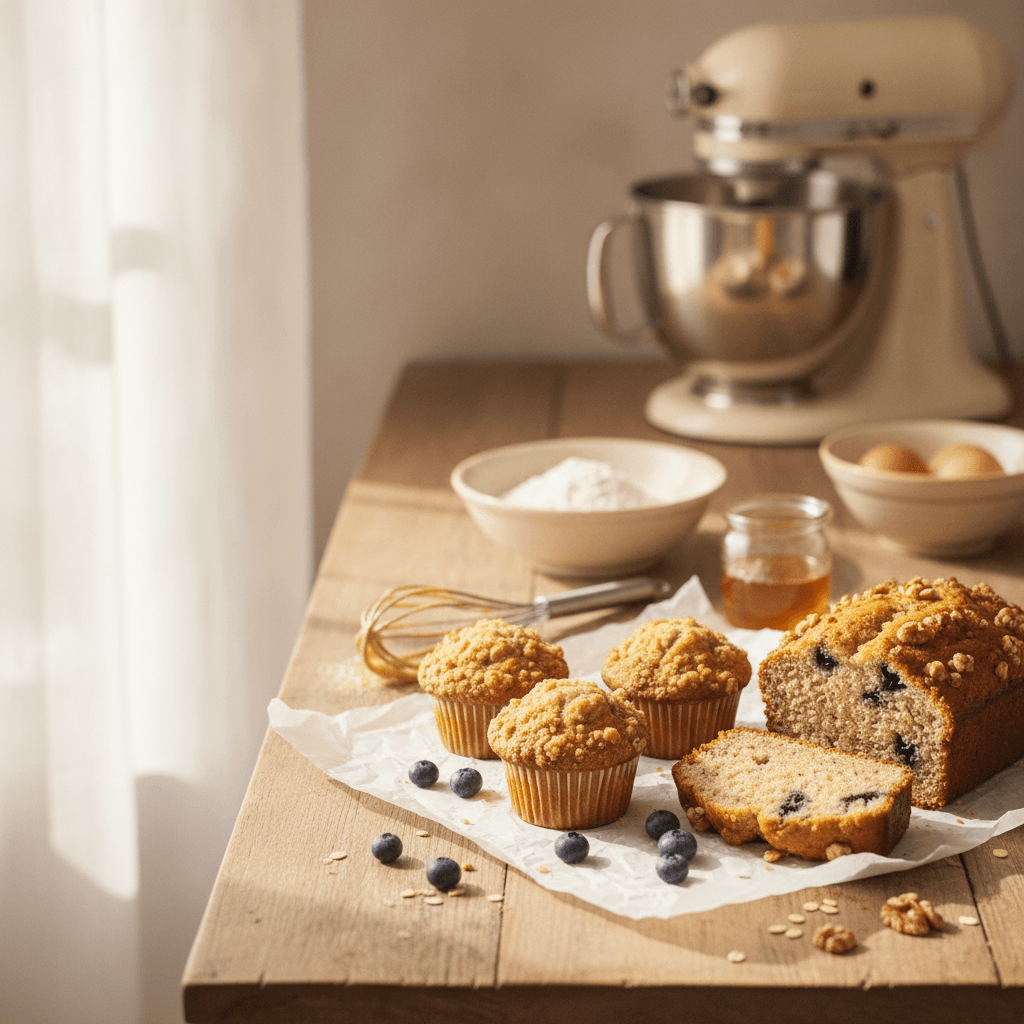
New York home bakers sell under the Home Processor Exemption, administered by the New York State Department of Agriculture and Markets (AGM) as an exemption from Article 20-C food processing licensing, with the details set out in AGM regulation 1 NYCRR 276.4. There is no annual sales cap and no fee, but you must register with AGM before selling, and the rules on allowed foods, labeling, and sales venues are strict and specific.
Last verified: September 2026. Rules can change mid-year. Always confirm current requirements on the NYS Agriculture and Markets Home Processing page.
This post is for informational purposes only and does not constitute legal advice. Consult the governing agency or an attorney for guidance specific to your situation.
Key takeaways
- New York has no annual sales cap for home processors — one of only a handful of states with no dollar limit.
- No license or permit is required, but you must register with AGM using the Home Processor Registration Request form. Registration is free, currently has no expiration date, and is tied to your address. No food-safety course is mandated by the state, though individual farmers markets may have their own requirements.
- Your kitchen is reviewed on a complaint basis only. If you are on a private well, you must submit a certified-lab potability test (total coliform and E. coli) with your registration.
- You may only sell foods on AGM's approved list, all non-potentially-hazardous. Cheesecakes, cream-filled pastries, homemade buttercream or cream cheese frosting, and anything needing refrigeration are prohibited.
- Sales are allowed at wholesale and retail within New York State: from home, at farmers markets, craft fairs, and flea markets, by home delivery, over the internet, and to stores and restaurants. Interstate sales are not allowed.
- Every package must carry a label with the product name, ingredients in descending order, net quantity, your name and full address, allergens, and a phrase such as "Made in a Home Kitchen" or "Made at Home by [name]" in type at least 1/16 inch tall.
What is New York's home processor exemption?
New York's home processor program lets individuals prepare and sell certain low-risk foods from a home kitchen without an Article 20-C food processing license or an Article 28 retail food store license. The legal basis is the exemption from Article 20-C of the Agriculture and Markets Law, implemented through 1 NYCRR 276.4. AGM administers the program and publishes the list of registered home processors on its website.
Unlike many states that cap home bakers at $25,000 or $50,000 per year, New York sets no revenue ceiling. That makes it one of the more permissive programs in the country — at least on paper. The trade-off is a narrow, item-by-item list of allowed products and a firm ban on selling outside New York State.
Picture a home baker in Rochester grossing over $38,000 a year selling decorated sugar cookies and banana bread at three weekly farmers markets. Under this exemption that is legal with a free registration, no license, and a modest investment of about $120 in a reliable digital food scale and printed labels to stay compliant.
Do you need a permit, registration, or food-safety course?
You need a registration, but not a permit or course. Before selling, you submit AGM's Home Processor Registration Request form (by email or mail) listing the products you plan to make. AGM states that "currently there is no fee" and that the registration "does not currently have an expiration date." It is location-specific, so if you move you must reapply, and to add products later you resubmit the form marked as a supplemental registration. The registration becomes null and void if you make or sell foods that are not allowed, or if you open a licensed food business.
Kitchens are not inspected up front; AGM says they "are reviewed on a complaint basis only." If your home is on a private well, you must include a potability test from a certified lab showing negative results for total coliform and E. coli, and AGM expects that test annually.
New York does not require a food-safety training course. That said, some farmers market managers independently require vendors to show proof of a food handler's certificate or general liability insurance before renting a booth. Those are market-level rules, not state law. If you plan to sell at markets, ask the manager directly what they need — requirements vary even between markets in the same county.
Which foods are allowed (and which are banned)?
The dividing line is time/temperature control for safety (TCS), but New York goes further than most states: AGM publishes a specific list of approved and prohibited items, and you may only make what is on the approved list. If a food needs refrigeration to stay safe, or is not on the list, you cannot sell it under this exemption.
Allowed foods
- Breads, rolls, cinnamon rolls, biscuits, bagels, and quick breads such as banana bread (but not breads containing vegetables, so zucchini bread is out)
- Cookies, brownies, biscotti, baklava, and scones
- Cakes and cupcakes — but no homemade buttercream or cream cheese frosting. AGM allows only frostings that "do not contain butter, eggs, cream, or cream cheese" (for example, shortening, sugar, and commercially produced meringue powder) or commercially purchased frostings
- Muffins and doughnuts (no cream fillings)
- Double-crust fruit pies only. Single-crust, custard, nut, meat, and refrigerated pies are prohibited
- Fudge, peanut brittle (with commercially roasted nuts), toffee or caramel apples, sugar confections, and Rice Krispies treats, popcorn, and caramel corn without chocolate toppings
- Jams, jellies, and marmalades made with high-acid fruits on AGM's list (apple, blueberry, cherry, grape, peach, raspberry, strawberry, and others)
- Granola, granola bars, trail mix, crackers, pretzels, waffle cones, pizzelle, and vegetable chips
- Repackaged or blended commercially dried spices, seasoning salts, dried fruit, dried vegetables, dried soup mixes, and baking mixes
Prohibited foods
- Cheesecake, cream-filled pastries, cream pies, and meringue pies
- Homemade buttercream or cream cheese frosting, and anything with whipped-cream filling
- Tempered chocolate, candy melts, or almond bark used for dipping, coating, or drizzling (chocolate chips baked into cookies are fine)
- No-bake products, raw nuts, nut butters, cheese, yogurt, and other dairy
- Pickles, relishes, sauerkraut, sauces, salsas, mustards, ketchups, vinegars, pepper and wine jellies, chutneys, and fruit syrups
- Cooked or canned fruits and vegetables, oils, salad dressings, beverages, coffee roasting, freeze-dried foods, and products containing alcohol
- Meat, poultry, or fish products
- Anything requiring refrigeration (TCS foods)
If you bake gluten-free items, you can sell them under this exemption as long as they are non-TCS. Gluten-free banana bread made with almond flour or brown rice flour qualifies. Just be accurate on your ingredient label — misstating "gluten-free" when your kitchen also processes wheat flour could create liability issues even if the state does not routinely inspect your kitchen.
One gray area: sugar-free or low-sugar baked goods. If you use a sugar substitute that lowers the water activity of your product less than regular sugar does, the item might technically become a TCS food. AGM's guidance does not spell this out in detail. If you are unsure whether a specific recipe qualifies, contact AGM's Division of Food Safety and Inspection directly rather than guessing.
Where can you sell?
AGM states that approved items may be marketed "at wholesale and/or retail, including agricultural venues such as farms, farm stands, farmers markets, green markets, craft fairs and flea markets, via home delivery, or via the internet," and that "all home processed foods must be sold within New York State." Here is how that breaks down in practice:
| Sales channel | Allowed? | Notes |
|---|---|---|
| From your home | Yes | Customers pick up at your door |
| Farmers markets | Yes | Market may require its own vendor permit or insurance |
| Craft fairs / flea markets / community events | Yes | Named in AGM's guidance |
| Online orders and home delivery | Yes | Internet sales and home delivery are expressly allowed |
| Shipping within New York | Yes | Covered by the in-state internet and delivery language; labels required |
| Shipping across state lines | No | AGM: interstate sales are not allowed; all sales must be within New York State |
| Wholesale to stores/restaurants | Yes, within NY | AGM added retail store sales in 2018 and describes marketing "at wholesale and/or retail" |
The one hard line is geography. A customer in New Jersey or Pennsylvania cannot buy from you under this exemption, even online.
If your business plan depends on shipping nationwide, or on any product not on AGM's approved list, you will need to move into a licensed commercial kitchen. That typically means renting shared kitchen time at $15–$30 per hour in the Hudson Valley or $25–$50 per hour in New York City, plus an Article 20-C food processing establishment license, whose fee is set by AGM (confirm the current amount with the agency).
Label requirements for New York home-processed foods
Every item you sell must have a label. AGM requires the following on each package:
- The common or usual name of the product (e.g., "Chocolate Chip Cookies")
- Ingredients listed in descending order by weight
- Net quantity of contents — this must be accurate, which is why a good scale matters
- Your name and full address — AGM says the place of business "shall include the street address or PO Box, city, state, and ZIP code," so a P.O. box is acceptable
- All allergens clearly identified — eggs, milk, fish, shellfish, soybeans, peanuts, tree nuts, wheat, and sesame
- A home-kitchen phrase such as "Made at Home by [name]," "Made in the Home Kitchen of [name]," or "Made in a Home Kitchen," in type 1/16 inch or larger
Note that the phrase is short and flexible; New York does not prescribe the long "not inspected by the Department" sentence some other states use. Allergen labeling is a state requirement here, and it is also required under federal law (FALCPA and the FASTER Act) for the nine major allergens. Skipping it on a product you sell to the public is a liability risk regardless of which rule you cite.
A roll of 250 custom-printed labels from an online printer typically costs $30–$60 depending on size and finish. Some bakers use a home inkjet printer with waterproof label sheets — about $18 for a pack of 100 sheets.
Summary table: New York home processor rules at a glance
| Requirement | Details |
|---|---|
| Governing agency | New York State Dept. of Agriculture and Markets (AGM) |
| Legal authority | Exemption from Article 20-C, Agriculture and Markets Law; 1 NYCRR 276.4 |
| Annual sales cap | No cap |
| Permit or license required | No |
| Registration required | Yes — Home Processor Registration Request form; no expiration; reapply if you move |
| Fee | $0 |
| Inspection | Complaint basis only; well water potability test required for private wells |
| Food safety course required | No (state level; individual markets may require one) |
| Allowed foods | Only items on AGM's approved list: non-TCS baked goods, double-crust fruit pies, high-acid fruit jams and jellies, fudge and sugar confections, granola, dry mixes, repackaged dried spices |
| Prohibited foods | Cheesecakes, cream pies, homemade buttercream or cream cheese frosting, chocolate dipping or coating, pickles and sauces, dairy, nut butters, meat, anything needing refrigeration |
| Sales venues | Home, farmers markets, craft fairs, flea markets, home delivery, internet, stores and restaurants — all within New York State |
| Shipping allowed | Within New York — yes. Interstate — no |
| Wholesale allowed | Yes, within New York State |
| Label requirements | Product name, ingredients, net quantity, name and full address (P.O. box OK), allergens, "Made in a Home Kitchen" phrase at 1/16 inch or larger |
How to price your home-baked goods in New York
Because New York has no sales cap, your pricing strategy matters more than in states where you hit a ceiling at $25,000 or $50,000. You can scale as high as your home kitchen allows.
Start by calculating your true cost per item. A batch of 24 decorated sugar cookies might cost $8.40 in ingredients (flour, butter, sugar, royal icing supplies) plus $1.20 in packaging and labels, plus your time. If the batch takes 3.5 hours including decorating and cleanup, and you value your time at $20/hour, that is $70 in labor alone — bringing your total cost to about $79.60, or $3.32 per cookie. Selling a dozen for $36 ($3.00 each) means you are losing money. Selling a dozen for $48 ($4.00 each) gives you a slim 17% margin after costs.
A Rochester baker charging $5.50 per decorated sugar cookie ($66/dozen) and $12 per banana bread loaf would find the cookies are the higher-margin item, because customers perceive the decorating as high-value work.
If you are building out a pricing spreadsheet, think about your overhead too: packaging, labels, market booth fees ($20–$75 per market day in most New York regions), and fuel. These costs are easy to overlook but they commonly add up to 10–18% of revenue for a small home bakery.
Insurance and business structure considerations
New York does not require home processors to carry liability insurance, but many farmers markets do — typically $1 million in general liability coverage. A home-based food business policy commonly runs a few hundred dollars per year from providers such as the Food Liability Insurance Program (FLIP) or NEXT Insurance; rates vary by insurer and coverage level, so get a direct quote.
Forming an LLC is not required either, but it separates your personal assets from business liability. Filing an LLC in New York costs $200 for the Articles of Organization plus a mandatory publication requirement that can run $300–$1,500+ depending on which county you are in (New York County is the most expensive). Some bakers skip the LLC and operate as sole proprietors to avoid that publication cost, accepting the personal liability trade-off.
Sales tax is its own question. New York exempts many unheated grocery-type foods sold for off-premises consumption but taxes certain prepared and heated foods, and the line is not always intuitive for baked goods. Check with the New York Department of Taxation and Finance or a local accountant to determine which of your products are taxable and whether you need a Certificate of Authority.
Common mistakes New York home bakers make
Based on AGM's published rules, a few recurring errors stand out:
- Selling items that are not on the approved list. A cake with homemade buttercream or cream-cheese frosting is out. So is a single-crust or custard pie, a chocolate-dipped pretzel, or zucchini bread. New York's test is not just "does it need refrigeration" but "is it on AGM's list."
- Skipping registration. The exemption is not automatic. You must file the registration request and list your products before you sell, and file again to add products or after a move.
- Omitting the home-kitchen phrase or allergens from labels. "Made in a Home Kitchen" (or "Made at Home by [name]") at 1/16 inch or larger, plus a clear allergen statement, belongs on every package.
- Selling to out-of-state customers. Online ordering, home delivery, and shipping within New York are fine. Sending product across state lines is not covered by the home processor exemption.
- Underpricing because there is no sales cap. The lack of a cap feels freeing, but it also means you can scale into unprofitable territory fast if your per-unit margins are thin. Track every cost.
What if you want to grow beyond the home processor exemption?
If you want to sell outside New York, make products that are not on the approved list, or make TCS foods, you need to step up to a food processing establishment license under Article 20-C (the commercial version, not the home exemption). That involves:
- A licensed, inspected commercial kitchen (your own or a shared/commissary kitchen)
- An application to AGM, with a process authority letter for certain products such as acidified foods
- A license fee set by AGM (confirm the current amount and term with the agency)
- Compliance with the full New York food processing regulations, including HACCP-style plans for some products
Many home bakers rent time in a shared commercial kitchen as a stepping stone. In upstate New York, shared kitchen rates run $15–$30/hour. In the five boroughs, expect $25–$50/hour. Some incubator kitchens offer monthly memberships at $500–$1,200/month for a set number of hours.
Contrarian take: no cap is not always an advantage
Most home-baking guides celebrate New York's lack of a sales cap as a huge benefit. We disagree — partially. The absence of a cap means there is no natural trigger point that forces you to evaluate whether your business should move to a commercial kitchen. In states with a $50,000 cap, hitting that number is a clear signal to professionalize. In New York, bakers can grind away at $60,000 or $70,000 in revenue from a home kitchen with razor-thin margins, no insurance, and no business structure — and never pause to ask whether the math actually works.
If your home baking revenue passes $30,000, treat that as your own internal checkpoint. Review your hourly earnings after all costs. If you are making less than $15/hour, it may be time to either raise prices significantly or invest in a commercial kitchen where you can unlock out-of-state shipping and a wider product list.
Frequently asked questions
Do I need a license to sell baked goods from home in New York?
No license, but yes to registration. New York's home processor exemption requires you to file a free Home Processor Registration Request with AGM listing your products before you sell. There is no fee, no expiration date, and no routine inspection. Check the NYS Agriculture and Markets Home Processing page for the form and the current approved-foods list.
Is there a sales cap for home bakers in New York?
No. New York is one of the few states with no annual revenue limit for home processors. You can sell as much as your home kitchen can produce, as long as you stick to AGM's approved foods and sell only within New York State.
Can I ship baked goods from my home kitchen in New York?
Within New York, yes. AGM expressly allows sales via the internet and home delivery, and labels are required on shipped products. Shipping across state lines is not allowed; AGM states that all home processed foods must be sold within New York State, and interstate commerce would also bring federal FDA requirements.
What foods can I not sell as a New York home processor?
Anything not on AGM's approved list. Specifically prohibited items include cheesecakes, cream pies, custard and single-crust pies, cream-filled pastries, cakes with homemade buttercream or cream-cheese frosting, chocolate used for dipping or coating, no-bake items, pickles, sauces, nut butters, dairy, and meat products, plus anything that requires refrigeration. If you want to sell those items, you need a commercial food processing license.
Do I need to label my home-baked products in New York?
Yes. Every package must include the product name, a full ingredient list in descending order by weight, the net quantity, your name and full address (street address or P.O. box, city, state, ZIP), all allergens present, and a phrase such as "Made in a Home Kitchen" or "Made at Home by [your name]" in type at least 1/16 inch tall. Federal allergen labeling rules also apply — list any of the nine major allergens present in your product.

Written by
Co-founder, BakingSubs
Co-founder of BakingSubs, where he turns the science of ingredient substitutions into tested, reliable guidance for home bakers.
Related Posts
Bake with Confidence
See all
Confident Gluten-Free Baker Toolkit
The science-based system that replaces gluten's seven invisible jobs so your baking turns out soft, fluffy, and foolproof — every time.

Gluten-Free Recipe Vault
Instant access to our complete library of proven gluten-free recipes — no waiting, no guesswork, just results that work tonight.

Fix Your Gluten-Free Bread
Learn the 3-step formula to make bread rise and stay soft, discover why your loaves collapse, and get a tested sandwich bread recipe that actually works.