
California Cottage Food Law: Class A vs Class B Permits (and Which One You Actually Need)
California cottage food law has two permit classes. Class A: direct sales statewide (farmers' markets included) up to $88,878 in 2026; Class B adds retail and restaurant sales up to $177,756. Full breakdown.

Malik
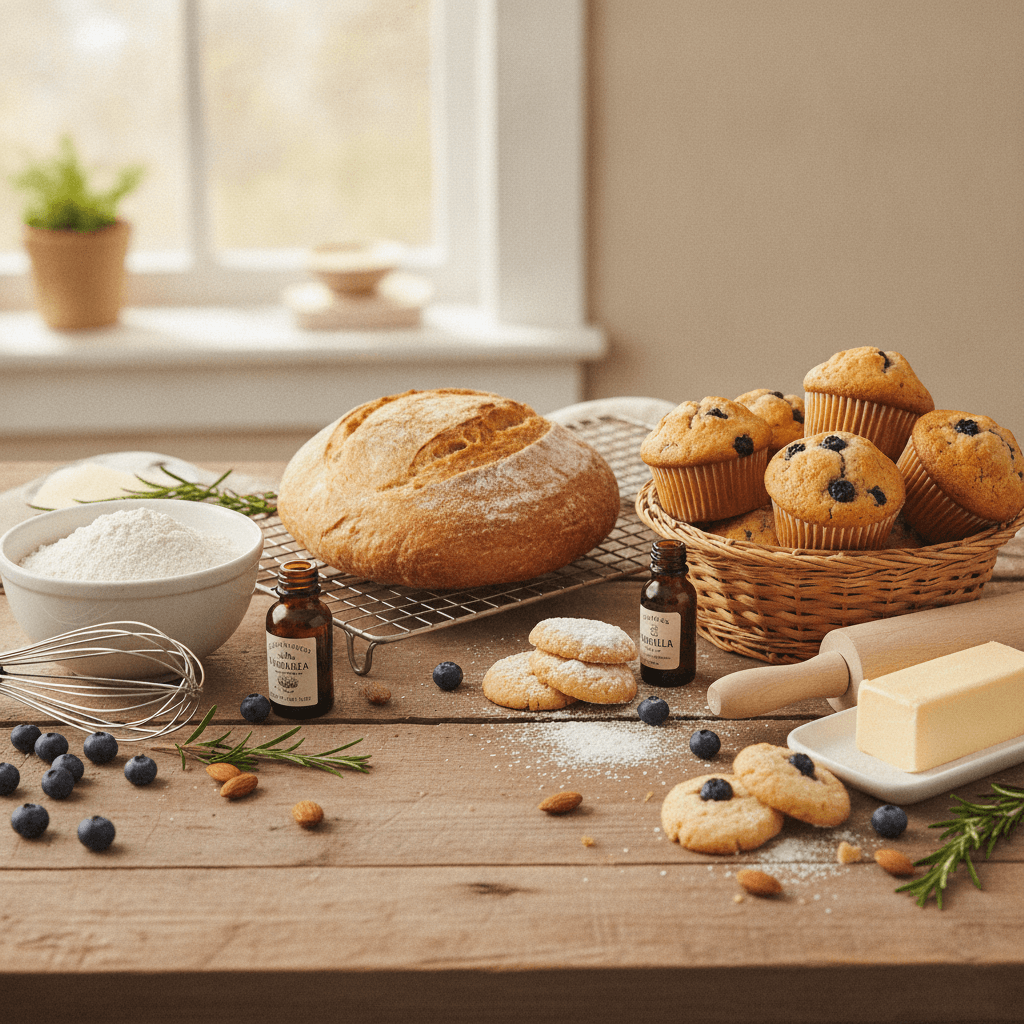
California's cottage food law splits home bakers into two permit classes: Class A lets you sell directly to customers anywhere in the state — from home, at farmers' markets, online, even by mail — with a 2026 cap of $88,878 in gross annual sales, while Class B adds indirect sales through retail shops and restaurants with a 2026 cap of $177,756. The program is created by the California Homemade Food Act (AB 1616, substantially amended by AB 1144 effective January 1, 2022), codified in Health and Safety Code sections 113758 and 114365 through 114365.6. The California Department of Public Health (CDPH) maintains the approved foods list, but your county environmental health department handles registration, permits, fees, and inspections.
Last verified: September 2026
Disclaimer: This is general information, not legal advice. Verify all requirements with your county environmental health department and the California Department of Public Health cottage food page before you start selling.
Key takeaways
- Class A registration — direct sales only, but direct sales are broad: your home, farmers' markets, bake sales, temporary events, and phone or online orders delivered in person, by mail, or by a third-party delivery service anywhere in California. Base cap $75,000, adjusted for inflation each January — $88,878 for 2026. Registration plus a self-certification checklist with your county; no routine inspection; fee set by the county.
- Class B permit — everything Class A can do plus indirect sales through permitted retailers (shops, cafés, restaurants). Base cap $150,000 — $177,756 for 2026. Requires a county permit and an initial kitchen inspection.
- Both classes require a CDPH-approved food processor course (an ANSI-accredited food handler course) within three months of registering or permitting, renewed every three years.
- Both classes restrict you to the CDPH Approved Cottage Food List — non-potentially-hazardous foods only. Cream-filled pastries, cheesecakes, and anything with fresh dairy or meat are prohibited.
- Shipping within California is allowed for both classes (since AB 1144). Sales must be transactions within the state; you cannot sell or ship to out-of-state customers.
- Labels must include "Made in a Home Kitchen" in 12-point type, the product name, your operation's name and location, your registration or permit number and county, an ingredients list, net quantity, and allergen declarations.
What is the California Homemade Food Act?
The California Homemade Food Act (AB 1616, signed in 2012) created a legal pathway for home bakers and food makers to sell certain shelf-stable products without a commercial kitchen, and it established the Class A/Class B distinction from the start. The most significant amendment was AB 1144, effective January 1, 2022, which raised the revenue caps to $75,000 and $150,000, tied them to the California Consumer Price Index, and allowed direct sales to be fulfilled by mail or third-party delivery anywhere in the state. A separate 2018 law, AB 626, established the Microenterprise Home Kitchen Operation (MEHKO) program for cooked meals — a different permit entirely, not covered here.
The governing agency at the state level is the California Department of Public Health (CDPH), which maintains the approved foods list, but registration, permitting, and enforcement happen at the county level through your local environmental health department (the "local enforcement agency"). This matters because fees, inspection scheduling, and processing times vary by county.
Class A vs Class B: the real differences
The distinction boils down to who you can sell to and how much you can earn. Here is the side-by-side breakdown:
| Feature | Class A | Class B |
|---|---|---|
| Annual gross sales cap (base / 2026 adjusted) | $75,000 / $88,878 | $150,000 / $177,756 |
| Permit type | Registration + self-certification checklist with county | County permit |
| Typical fee | Set by each county — confirm with yours | Set by each county — confirm with yours |
| Direct sales (home, events, online orders with delivery or in-state shipping) | Yes, statewide | Yes, statewide |
| Certified farmers' markets, farm stands, bake sales | Yes (direct sales) | Yes |
| Retail stores, cafés, and restaurants (indirect sales) | No | Yes, statewide |
| Shipping within California | Yes | Yes |
| Shipping out of state | No | No |
| Kitchen inspection required | No routine inspection (county may inspect on a complaint) | Yes — initial inspection, then no more than one per year |
| Food safety training | Required — CDPH-approved food processor course | Required — CDPH-approved food processor course |
A note on fees: the state does not set them. Each county environmental health department charges its own registration, permit, and inspection fees, and they change. Call your county environmental health office before budgeting.
When Class A is enough
If you are selling cookies, bread, granola, or other shelf-stable baked goods directly to customers — word-of-mouth orders, a website with local delivery or in-state shipping, a farmers' market booth, or sales from your front door — Class A covers you. Many home bakers in California start here. The 2026 cap of $88,878 is generous; that is roughly $1,700 per week in gross sales, which is more than most single-person operations produce.
Consider a home baker in Sacramento selling sourdough loaves at $12 each and gluten-free banana bread at $8 per loaf. Grossing $38,000 in a first year — a strong result for a solo operation — would leave her well under the Class A cap, with farmers' market access already included.
When you need Class B
Class B opens indirect sales channels. If a local coffee shop wants to stock your scones, or a specialty grocer wants your granola on the shelf, you need Class B. The tradeoff: your county will inspect your home kitchen before issuing the permit, and can inspect up to once a year afterward. The training requirement is the same as Class A — a CDPH-approved course, which CDPH satisfies with any ANSI-accredited food handler course.
The 2026 Class B cap of $177,756 sounds high, but if you are supplying three or four retail accounts plus doing farmers' markets, it is reachable within two to three years. At that point, you would need to transition to a licensed commercial kitchen or a licensed food facility.
Which foods are allowed under California cottage food law?
Both Class A and Class B operations are restricted to the CDPH Approved Cottage Food List of non-potentially-hazardous foods — products that do not require refrigeration to stay safe. Here are the categories most relevant to bakers:
Allowed foods
- Breads, rolls, biscuits, and sweet breads (no cream or custard fillings)
- Cookies, brownies, and bars
- Cakes and cupcakes with non-perishable frosting only (buttercream made with butter and sugar is allowed; cream cheese frosting is not)
- Pastries without cream, custard, or meat fillings
- Granola, trail mix, and dry cereal mixes
- Candy, toffee, and nut brittles
- Fruit pies (with sufficient sugar content to be shelf-stable)
- Jams, jellies, and preserves that comply with federal standards of identity
- Dried fruit and herb blends
- Roasted coffee and dried tea blends
- Honey and flavored honeys
- Nut butters and dried pasta
Prohibited foods
- Any product requiring refrigeration (cheesecake, cream pies, custard-filled anything)
- Products containing meat, poultry, or fish
- Raw seed sprouts
- Dairy products beyond what is used as an ingredient in a shelf-stable finished product
- Canned low-acid foods (these fall under separate FDA regulations)
- Alcohol-infused products (separate ABC licensing required)
CDPH can add foods to the list (there is a public request form and comment process), so check the current list before assuming a product is out. If you are a gluten-free baker, your products are allowed under cottage food law as long as they meet the non-TCS requirement and fit a listed category. Gluten-free breads, cookies, and cakes made with almond flour, brown rice flour, or other alternative flours are fine. Just be aware that your labeling must include accurate allergen declarations — tree nuts, soy, eggs, wheat (if any cross-contact risk exists), and so on.
Where you can (and cannot) sell
This is where California gets specific and where most confusion lives.
Class A sales venues (direct sales)
- Your home — customers come to you
- Certified farmers' markets, farm stands, and community-supported agriculture subscriptions
- Holiday bazaars, bake sales, food swaps, and other temporary events
- Phone, website, or social media orders — fulfilled in person, by mail, or by any third-party delivery service, to customers anywhere in California
Class B sales venues
- Everything in Class A, plus:
- Retail shops that hold a valid permit and resell your products to their customers
- Restaurants, cafés, delis, and other retail food facilities where food may be eaten on the premises
What neither class allows
- Out-of-state sales — both direct and indirect sales are defined as transactions within California. Crossing state lines puts you under FDA jurisdiction and requires a registered food facility.
- Wholesale to distributors — the statute defines an indirect sale as a sale through a permitted retailer who sells to the consumer. Selling to a distributor who then sells to stores is not covered.
- More than one full-time-equivalent employee — family and household members and delivery drivers do not count toward the limit.
If shipping nationally is part of your business plan, you will need a commercial kitchen and a Processed Food Registration from CDPH, which is a different (and more expensive) path.
How to register: step by step
Class A registration
- Contact your county environmental health department. CDPH publishes a directory of local environmental health departments, or search "[your county] environmental health cottage food."
- Complete the self-certification checklist. This is a form where you attest that your kitchen meets the operational requirements — no other domestic activities during production, no infants, small children, or pets in the kitchen, sanitized food-contact surfaces, vermin-free storage, no smoking.
- Pay the registration fee your county charges.
- Receive your registration number. This goes on every label.
- Complete a CDPH-approved food processor course within three months of registering (and again every three years).
- Start selling.
Class B permit
- Submit your Class B application to your county environmental health department.
- Schedule and pass a home kitchen inspection. The inspector checks for the same operational requirements — handwashing and sanitizing, food storage, pest control, and separation of household and production activities.
- Pay the permit fee your county charges.
- Receive your permit number.
- Complete a CDPH-approved food processor course within three months of permitting (and again every three years).
- Start selling at all approved venues.
The timeline varies. Some counties process Class A registrations in a few days. Class B can take two to six weeks because of the inspection scheduling. Plan accordingly if you are trying to launch before a holiday season.
Label requirements for California cottage food
California's labeling rules are specific and non-negotiable. Missing even one element can result in your county pulling your registration. Every product you sell must have a label that includes:
- The words "Made in a Home Kitchen" — in at least 12-point type on the principal display panel ("Repackaged in a Home Kitchen" if you repackage purchased ready-to-eat products)
- The common or descriptive name of the product
- The name of the cottage food operation
- Your city and ZIP code — CDPH guidance says to add your street address if your operation is not listed in a current telephone directory, so in practice most operators include a full address
- Your registration or permit number and the name of the county that issued it
- Ingredients list — in descending order by weight, if the product has two or more ingredients
- Net quantity — count, weight, or volume, stated in both U.S. and metric units
- Allergen declarations — "Contains: wheat, eggs, tree nuts (almonds)" etc., per federal allergen labeling requirements
No production or best-by date is required by the cottage food law. You also do not need a nutrition facts panel, but if you make any nutrient content claim ("low fat," "sugar-free") or health claim, a full Nutrition Facts panel becomes mandatory. Your advertisements — including online listings — must also display the county, your permit or registration number, and the "Made in a Home Kitchen" statement.
If you are selling sugar-free or reduced-sugar baked goods, be careful with health claims on your label. Statements like "sugar-free" or "low carb" are regulated by the FDA, and using them on a cottage food label triggers the Nutrition Facts requirement. Stick to listing your ingredients accurately and let customers draw their own conclusions.
Costs to budget for a California cottage food operation
Beyond the permit fee, here is what a realistic first-year budget looks like for a Class B operation (Class A is cheaper since you skip the inspection):
| Expense | Estimated cost |
|---|---|
| County registration/permit fee | Set by county — confirm before budgeting |
| Food processor course (ANSI-accredited food handler course) | Minimal — CDPH describes the online courses as low-cost |
| Labels (thermal printer + label stock for ~2,000 labels) | $150–$250 |
| Packaging (boxes, bags, tissue — varies by product) | $300–$800/year |
| Ingredients (first 3 months of production) | $500–$2,000 |
| Farmers' market booth fees | $25–$75 per market day |
| Business license (city level — many California cities require this separately) | $50–$300/year |
| Liability insurance (optional but strongly recommended) | $250–$500/year |
That liability insurance line deserves emphasis. California does not require cottage food operators to carry product liability insurance, but many farmers' markets do, and it protects you if a customer has an allergic reaction or claims your product made them sick. Policies specifically for cottage food operations start around $250/year from providers like FLIP (the Food Liability Insurance Program).
NEXT Insurance
Product liability for a home food business, quoted online in about 15 minutes with monthly billing. The certificate it generates is what a farmers market asks to see.
Get a quote →Affiliate link. We may earn a commission at no cost to you.Common mistakes California cottage food operators make
These are the issues that get home bakers in trouble or slow them down:
1. Selling TCS foods without realizing it
Cream cheese frosting is the most common offender. Carrot cake with cream cheese frosting is not a cottage food product. Neither is pumpkin pie (custard-based filling). If you are unsure whether your recipe qualifies, ask your county environmental health department before you sell it. They would rather answer a question than issue a violation.
2. Ignoring the revenue cap
The Class A and Class B caps are on gross sales, not profit. Every dollar a customer pays you counts. If you are selling $10 cookies and doing 160 orders a week, you will hit the 2026 Class A cap in about 56 weeks. Track your revenue monthly — a simple spreadsheet works — and check CDPH's adjusted limit each January.
3. Selling to a café or shop with a Class A registration
Farmers' markets are fine for Class A — they are direct sales. Letting a coffee shop resell your scones is not; that is an indirect sale and requires a Class B permit. Retailers increasingly ask to see permit types before stocking cottage food.
4. Skipping the city business license
Many California cities require a separate business license or home-based business tax certificate even for cottage food operations. Fees vary by city. Not having one can result in fines that dwarf the cost of the license itself.
5. Incomplete labels
Forgetting the "Made in a Home Kitchen" statement or omitting allergen declarations are the two most frequent labeling failures. Print a checklist of the eight required label elements and check every batch before it goes out the door.
Growing beyond cottage food
If you hit the Class B cap or want to ship out of state, you have outgrown the cottage food framework. Your next steps typically involve:
- Renting a commercial kitchen — shared commercial kitchens in California run about $15–$30 per hour. In the Bay Area, expect $25–$35/hour.
- Obtaining a Processed Food Registration from CDPH — this lets you sell without venue restrictions and ship within and outside California.
- Forming a business entity — many bakers at this stage set up an LLC for liability protection.
- Getting a seller's permit from the California Department of Tax and Fee Administration (CDTFA) if any of your sales are taxable — cold baked goods sold to go are often exempt, but hot food and food sold for on-site consumption are not. Check with CDTFA.
This transition is a significant step up in cost and complexity, but it is also where real scaling happens. Some bakers use the cottage food period as a low-risk way to test products, build a customer base, and save money for the commercial kitchen deposit.
Tips for gluten-free cottage food bakers in California
If your niche is gluten-free baking, cottage food law works in your favor — there is strong demand and relatively few competitors at farmers' markets. A few specific considerations:
- Cross-contamination claims matter. If you label a product "gluten-free," the FDA standard is less than 20 ppm of gluten. If you also bake with wheat flour in the same kitchen, you cannot credibly make this claim unless you have rigorous separation protocols. Some bakers dedicate their entire cottage food operation to gluten-free products to avoid the issue entirely.
- Gluten-free flours are expensive. A 3-pound bag of almond flour runs $10–$14 retail, compared to $3–$5 for the same weight of all-purpose wheat flour. Price your products accordingly — a common mistake is pricing gluten-free goods the same as conventional ones and then wondering why margins are thin.
- Xanthan gum and psyllium husk are your friends. Most gluten-free baked goods need a binder. Budget about $8–$12 for a bag of xanthan gum that will last through dozens of batches, or explore psyllium husk as an alternative — it works especially well in bread.
If you are still developing your gluten-free recipes and running into texture problems, our guide to fixing dry, crumbly gluten-free bakes covers the most common issues and how to solve them.
Frequently asked questions
Can I sell baked goods from home in California without a permit?
No. California requires at minimum a Class A cottage food registration with your county environmental health department. Selling without registration is a violation of the California Health and Safety Code and can result in fines. The Class A registration process is simple — a self-certification checklist and whatever fee your county charges — but you must complete it before your first sale, and you must finish the food processor course within three months.
How much can I earn selling cottage food in California?
The base caps are $75,000 for Class A and $150,000 for Class B, adjusted each January for inflation. For 2026, CDPH's adjusted limits are $88,878 (Class A) and $177,756 (Class B). These are hard caps on gross sales (total revenue), not net profit — exceeding them means you must stop selling or upgrade to a commercial food facility license.
Can I sell cottage food online and ship it in California?
Yes. Since AB 1144 took effect in 2022, both Class A and Class B operations can take orders by phone or online and fulfill them in person, by mail, or through any third-party delivery service — as long as the customer is in California. Shipping to customers outside the state is not allowed; if that is essential to your business model, you need a Processed Food Registration and a commercial kitchen.
Do I need a kitchen inspection for a Class A cottage food permit in California?
No. Class A operates on a self-certification basis — you fill out a checklist attesting that your kitchen meets the operational requirements. Class B requires an initial inspection by your county environmental health department, and no more than one inspection per year after that. However, your county can inspect a Class A kitchen if it receives a consumer complaint suggesting unsafe food, so you should still meet all the standards even without a scheduled inspection.
What happens if I sell a prohibited food under California cottage food law?
Your county environmental health department can revoke your registration or permit, issue fines, and require you to stop all sales immediately. If a customer gets sick from a TCS food (like a cream-filled pastry that was not refrigerated), you could also face civil liability. When in doubt about whether a specific recipe qualifies, contact your county before selling it. The CDPH also maintains an FAQ page on cottage food operations that addresses common questions about allowed products.

Written by
Co-founder, BakingSubs
Co-founder of BakingSubs, where he turns the science of ingredient substitutions into tested, reliable guidance for home bakers.
Related Posts
Bake with Confidence
See all
Confident Gluten-Free Baker Toolkit
The science-based system that replaces gluten's seven invisible jobs so your baking turns out soft, fluffy, and foolproof — every time.

Gluten-Free Recipe Vault
Instant access to our complete library of proven gluten-free recipes — no waiting, no guesswork, just results that work tonight.

Fix Your Gluten-Free Bread
Learn the 3-step formula to make bread rise and stay soft, discover why your loaves collapse, and get a tested sandwich bread recipe that actually works.