

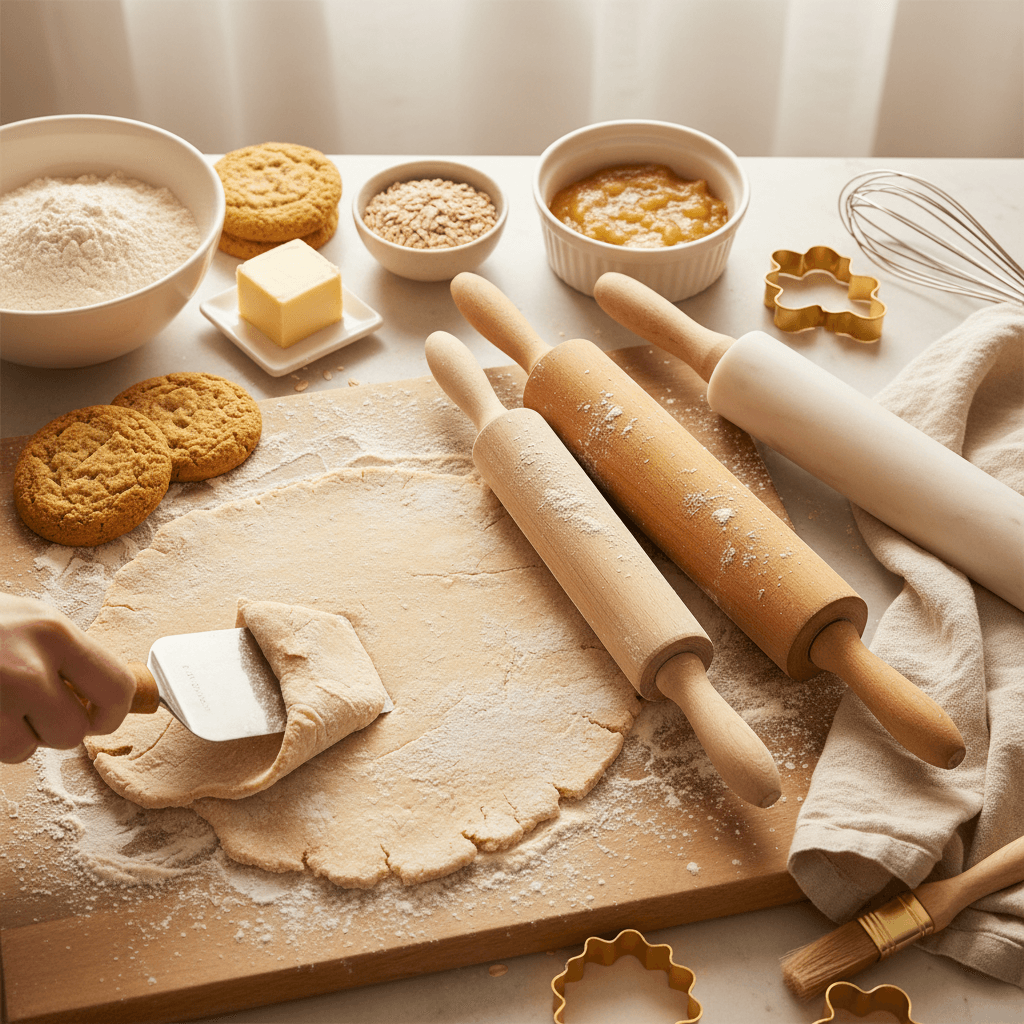
Gluten-free dough is stickier, softer, and more fragile than wheat dough — and the wrong rolling pin can turn a simple pie crust into a torn, stuck-on mess. Here are the best rolling pins for gluten-free baking, why they matter, and which one fits your budget and baking style.
Key takeaways
- Gluten-free dough lacks the elasticity of wheat dough, so a rolling pin that minimizes sticking and requires less pressure is essential.
- Non-stick surfaces (silicone, stainless steel, marble) outperform bare wood for most gluten-free applications.
- French-style tapered pins give you more control over delicate dough that tears easily.
- A heavier rolling pin does more of the work for you, which means less handling and less crumbling.
- Adjustable thickness rings eliminate guesswork and help you roll gluten-free dough to a consistent thickness every time.
- Budget picks start around $10-15, while premium options top out around $50-60.
Why gluten-free dough needs a different rolling pin
When you remove gluten from dough, you lose the stretchy protein network that holds everything together. That means your pie crust, cookie dough, or pasta dough is more prone to cracking, sticking, and tearing. If you've ever tried to roll out a gluten-free pie crust only to have it shatter into pieces, your rolling pin might be part of the problem.
A standard wooden rolling pin absorbs moisture and creates friction — two things that make gluten-free dough cling and rip. Pins with smoother, non-porous surfaces release dough more cleanly. Heavier pins also help because they let gravity and weight do the flattening, so you're not pressing down hard and overworking a dough that doesn't have gluten's structure to bounce back.
If you're newer to gluten-free baking, our Confident Gluten-Free Baker Toolkit walks you through the techniques and ratios that make working with these doughs far less frustrating — rolling pin choice included.
What to look for in a rolling pin for gluten-free baking
Before we get to specific picks, here are the features that matter most when you're working with gluten-free dough.
Surface material
Non-porous materials like stainless steel, marble, and silicone release sticky dough much better than raw wood. If you love the feel of wood, look for a pin with a very smooth, sealed finish — or plan to use parchment paper between the pin and the dough every time.
Weight
A heavier pin (marble or steel) rolls dough thinner with less effort. This is especially helpful for gluten-free pie crusts that crack under too much manual pressure.
Thickness guides
Adjustable rings or rubber bands that snap onto the ends of the pin let you roll to a precise, even thickness. Gluten-free dough that's rolled unevenly bakes unevenly — thin spots burn while thick spots stay gummy in the center.
Shape
French-style (tapered, no handles) pins give you more tactile control and let you feel the dough through the pin. American-style (handled) pins are easier for beginners and require less technique. Both work — it comes down to comfort.
7 best rolling pins for gluten-free dough
We've organized these from budget-friendly to premium so you can jump to your price range. Every one of these works well with gluten-free dough — the differences come down to material preference, weight, and features.
| Rolling pin | Material | Best for | Price range | Tier |
|---|---|---|---|---|
| AmazonBasics Stainless Steel Rolling Pin | Stainless steel | All-around GF baking on a budget | $10-15 | Budget |
| Joseph Joseph Adjustable Rolling Pin | Plastic with removable rings | Even thickness every time | $15-20 | Budget |
| J.K. Adams Maple French Rolling Pin | Smooth maple wood | Bakers who prefer wood and use parchment | $18-25 | Mid-range |
| OXO Good Grips Non-Stick Rolling Pin | Nylon with stainless steel core | Sticky doughs, easy cleanup | $20-28 | Mid-range |
| Totitom Silicone Rolling Pin | Silicone-coated with thickness rings | Maximum non-stick with guides | $12-18 | Mid-range |
| Fox Run Marble Rolling Pin | Polished marble | Cold pie and pastry dough | $25-35 | Premium |
| Matfer Bourgeat Polyethylene French Rolling Pin | Food-grade polyethylene | Professional-level control | $35-55 | Premium |
1. AmazonBasics stainless steel rolling pin (budget)
This is the best value rolling pin for gluten-free baking, period. The AmazonBasics Stainless Steel Rolling Pin has a completely non-porous surface that releases even the stickiest dough. The steel adds decent weight so you don't have to muscle through fragile dough.
Pros: Very affordable, non-stick surface, easy to clean, can be chilled in the freezer for cold pastry work.
Cons: No thickness guides, handles can feel slippery if your hands are wet or oily.
Price range: $10-15
2. Joseph Joseph adjustable rolling pin (budget)
If uneven thickness is your biggest frustration, the Joseph Joseph Adjustable Rolling Pin solves it instantly. It comes with removable discs that set your dough to 1/16", 1/8", 1/4", or 3/8" — perfect for everything from gluten-free crackers to thick cookie dough.
Pros: Four thickness settings, very beginner-friendly, dishwasher safe.
Cons: Lightweight plastic body means you'll need to apply more pressure, which isn't ideal for very crumbly doughs.
Price range: $15-20
3. J.K. Adams maple French rolling pin (mid-range)
For bakers who love the feel of a classic French pin, the J.K. Adams Maple French Rolling Pin is beautifully made and gives you excellent control. The tapered ends let you adjust pressure across the dough — handy when you're working with a gluten-free pie crust that's thicker in the center.
Pros: Gorgeous craftsmanship, great tactile control, tapered shape ideal for delicate dough.
Cons: Wood is porous, so you'll want to roll between sheets of parchment or plastic wrap to prevent sticking. Not dishwasher safe.
Price range: $18-25
Rolling between parchment paper is one of the most useful techniques in gluten-free baking. If you haven't tried it yet, our beginner's guide to gluten-free baking covers this and other essential tips.
4. OXO Good Grips non-stick rolling pin (mid-range)
The OXO Good Grips Non-Stick Rolling Pin has a nylon barrel over a stainless steel core, giving you a smooth non-stick surface with satisfying weight. The soft, comfortable handles make long rolling sessions easier on your hands.
Pros: Excellent non-stick surface, good weight, comfortable ergonomic handles, dishwasher safe.
Cons: No thickness guides included (you can buy rubber bands separately). The dark surface makes it harder to see if dough is sticking.
Price range: $20-28
5. Totitom silicone rolling pin with thickness rings (mid-range)
The Totitom Silicone Rolling Pin combines a silicone-coated barrel with included thickness guide rings. Silicone is one of the best surfaces for gluten-free dough — nothing sticks to it, and it's incredibly easy to clean.
Pros: Silicone surface is extremely non-stick, comes with thickness rings, very affordable for what you get.
Cons: Lighter weight means more manual pressure needed. Silicone can pick up odors over time if not cleaned well.
Price range: $12-18
6. Fox Run marble rolling pin (premium)
Marble is the gold standard for cold pastry work, and the Fox Run Marble Rolling Pin is a reliable, well-priced entry into marble pins. Pop it in the fridge for 20 minutes before rolling and your gluten-free pie dough stays cold and workable much longer — critical since gluten-free butter crusts soften fast and turn into a sticky mess.
Pros: Heavy weight does the work for you, stays cold, polished surface releases dough cleanly, beautiful on the counter.
Cons: Heavy (can be tiring for extended use), can chip or crack if dropped, must be hand-washed.
Price range: $25-35
7. Matfer Bourgeat polyethylene French rolling pin (premium)
This is the rolling pin professional pastry chefs reach for. The Matfer Bourgeat Polyethylene French Rolling Pin has a food-grade plastic surface that's non-porous, non-stick, and practically indestructible. The 20-inch length gives you coverage over wide sheets of dough.
Pros: Professional quality, non-stick surface, lightweight yet effective, virtually indestructible, easy to sanitize.
Cons: Lighter weight requires more technique, plain appearance, higher price point.
Price range: $35-55
Tips for rolling gluten-free dough without tearing
Even with the perfect rolling pin, technique matters. Here are the tricks that make the biggest difference:
- Roll between parchment paper or plastic wrap. This is the single most effective way to prevent sticking with any rolling pin. Place your dough between two sheets and roll away.
- Chill your dough. Gluten-free dough with butter or fat handles much better when cold. Pop it in the fridge for 20-30 minutes before rolling.
- Don't overwork it. Without gluten, there's no elastic network to recover from heavy handling. Roll in one direction, rotate the dough, and roll again — don't go back and forth aggressively.
- Use the right flour blend. A well-balanced gluten-free flour blend with starch makes dough more pliable and easier to roll. If your dough is crumbling apart, the issue might be your recipe, not your pin.
- Dust with tapioca starch. If you're rolling without parchment, arrowroot powder or tapioca starch works better than rice flour for preventing sticking without adding grittiness.
Which rolling pin should you buy?
Here's our quick recommendation based on what you bake most:
- Mostly pie crusts and pastry: Go with the Fox Run Marble Rolling Pin. The weight and cold surface are game-changers for gluten-free pastry.
- A little bit of everything: The OXO Good Grips Non-Stick Rolling Pin is the best all-rounder. Non-stick, good weight, comfortable handles.
- On a tight budget: The AmazonBasics Stainless Steel Rolling Pin punches way above its price. You genuinely don't need to spend more unless you want specific features.
- Want foolproof even thickness: The Joseph Joseph Adjustable Rolling Pin takes the guesswork out completely.
If you're also converting wheat recipes to gluten-free, having the right tools alongside the right techniques makes all the difference. A good rolling pin won't fix a bad recipe — but a bad rolling pin can absolutely ruin a good one.
Frequently asked questions
What type of rolling pin is best for gluten-free pie crust?
A marble or stainless steel rolling pin works best for gluten-free pie crust. The weight helps flatten delicate dough without excessive pressure, and the non-porous surface prevents sticking. Chilling a marble pin before use keeps butter-based gluten-free dough cold and workable longer.
Do I need a special rolling pin for gluten-free baking?
You don't strictly need a special rolling pin, but a non-stick or non-porous surface makes a huge difference. Gluten-free dough is stickier and more fragile than wheat dough because it lacks gluten's elastic structure. A smooth steel, marble, or silicone pin releases dough more cleanly and requires less flour dusting.
How do I keep gluten-free dough from sticking to my rolling pin?
The most reliable method is rolling your dough between two sheets of parchment paper or plastic wrap. You can also chill your rolling pin, dust with tapioca starch instead of rice flour, and make sure your dough is cold before rolling. Using a non-porous rolling pin material also helps significantly.
Is a French rolling pin or American rolling pin better for gluten-free dough?
French tapered rolling pins give you more tactile control, which helps when working with delicate gluten-free dough that tears easily. American handled pins are easier for beginners and require less technique. Both styles work well — choose based on your comfort level and experience.
Can I use a wooden rolling pin for gluten-free baking?
Yes, but wood is porous and tends to grip sticky gluten-free dough more than steel or marble. If you prefer wood, always roll between parchment paper and avoid dusting the pin with flour, which can build up in the grain. A sealed, smooth-finished hardwood pin like maple performs better than rough or unfinished wood.

Written by
Co-founder, BakingSubs
Co-founder of BakingSubs, where he turns the science of ingredient substitutions into tested, reliable guidance for home bakers.
Related Posts
Bake with Confidence
See all
Confident Gluten-Free Baker Toolkit
The science-based system that replaces gluten's seven invisible jobs so your baking turns out soft, fluffy, and foolproof — every time.

Gluten-Free Recipe Vault
Instant access to our complete library of proven gluten-free recipes — no waiting, no guesswork, just results that work tonight.

Fix Your Gluten-Free Bread
Learn the 3-step formula to make bread rise and stay soft, discover why your loaves collapse, and get a tested sandwich bread recipe that actually works.