

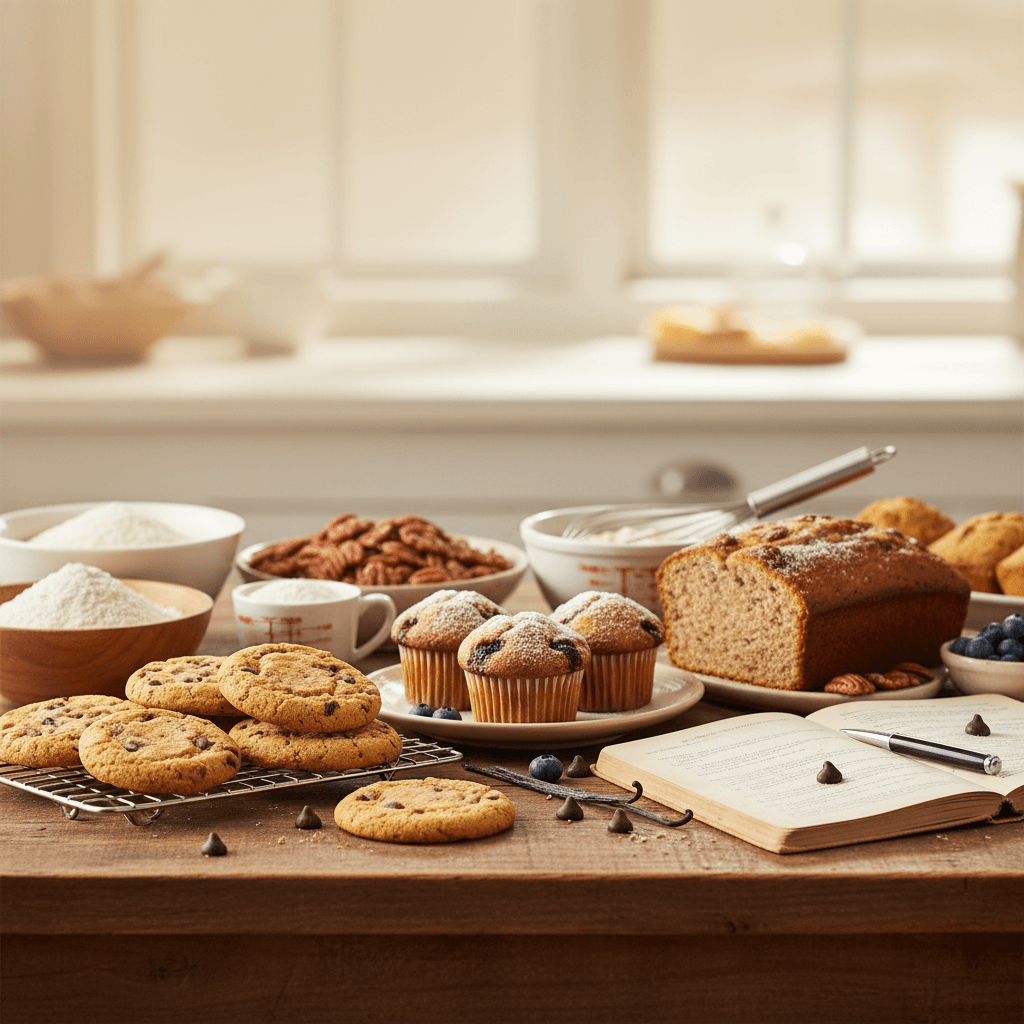
You want to know which baked goods will actually make you money from a home kitchen — not just look pretty on Instagram. We broke down the real margins, realistic income ranges, and the specific products that give home bakers the best return on their time and ingredients.
Key takeaways
- The most profitable baked goods to sell from home are those with low ingredient costs, high perceived value, and strong repeat-order potential — think decorated cookies, specialty breads, and cinnamon rolls.
- Realistic income ranges: $500-$2,000/month as a side hustle, $3,000-$6,000/month for full-time replacement income.
- Gluten-free and allergy-friendly baked goods command a 30-60% pricing premium, and those customers are fiercely loyal once they trust you.
- Profit margin matters more than price — a $4 cookie with 75% margin beats a $25 cake with 30% margin when you factor in labor.
- The baked goods that sell consistently are not always the most exciting ones. Bread, cookies, and cinnamon rolls outsell elaborate cakes week after week.
- Your biggest expense is not ingredients — it is your time. Products you can batch efficiently are the real money makers.
What makes a baked good profitable for home bakers
Profitability comes down to three things: ingredient cost as a percentage of selling price, how much labor each item requires, and how consistently people reorder. The best home bakery products score high on all three.
A lot of new home bakers make the mistake of chasing elaborate, high-ticket items like custom wedding cakes. Those can be profitable, but they are time-intensive, stressful, and inconsistent. You might land two orders one month and zero the next. The bakers who build stable income focus on repeatable products with strong margins that people want every single week.
Here is how to think about it: if you can make 48 cookies in the same time it takes to make one custom cake, and the cookies have a higher margin per hour of labor, the cookies win every time.
The most profitable baked goods to sell from home ranked by margin
We ranked the most common home bakery products by their realistic profit margins, factoring in both ingredients and labor time. These numbers assume you are pricing properly — not undercharging, which is the number one mistake home bakers make.
| Product | Typical selling price | Ingredient cost | Gross margin | Labor per batch | Reorder frequency |
|---|---|---|---|---|---|
| Decorated sugar cookies (dozen) | $36-$60 | $4-$7 | 75-85% | 2-3 hours | Monthly (holidays/events) |
| Cinnamon rolls (half dozen) | $18-$28 | $3-$5 | 70-80% | 1.5-2 hours | Weekly |
| Artisan bread (loaf) | $8-$14 | $1.50-$3 | 70-80% | 30-45 min active | Weekly |
| Brownies/bars (dozen) | $18-$30 | $3-$6 | 70-80% | 45 min-1 hour | Biweekly |
| Banana/quick breads (loaf) | $10-$16 | $2-$4 | 65-75% | 30 min active | Weekly |
| Muffins (dozen) | $15-$24 | $3-$5 | 65-75% | 45 min | Weekly |
| Cupcakes (dozen, decorated) | $30-$48 | $6-$10 | 65-75% | 1.5-2 hours | Monthly |
| Pies | $20-$35 | $6-$10 | 55-70% | 1.5-2 hours | Seasonal |
| Custom cakes | $50-$150+ | $12-$30 | 50-70% | 3-8 hours | Occasional |
Notice a pattern? The simplest products often have the best margins. Decorated sugar cookies top the list because the ingredients are dirt cheap — flour, butter, sugar, eggs — and customers willingly pay a premium for the artistry and customization.
Why bread is a sleeper hit for home bakeries
Artisan bread has some of the lowest ingredient costs of any baked good, and it generates the most consistent weekly orders. A loaf of sourdough costs roughly $1.50-$2.50 in ingredients and sells for $8-$14, giving you margins around 75-80%.
The real advantage of bread is the reorder cycle. People eat bread every week. Once a customer finds a home baker whose bread they love, they come back like clockwork. We have seen home bakers build $2,000+/month businesses on bread alone, simply by locking in 30-40 weekly subscribers.
Bread also scales well. Once your dough is mixed, you can shape multiple loaves with minimal additional effort. Four loaves take barely more active time than one. If you are interested in stocking your kitchen efficiently for bread baking, our guide to stocking a baking pantry on a budget covers the essentials without overspending.
The downside? Bread has a learning curve. Inconsistent results will kill your reputation fast. You need to nail your recipes before you start selling.
The gluten-free pricing premium is real
If you have experience with gluten-free baking, you are sitting on a significant competitive advantage. Gluten-free customers routinely pay 30-60% more than standard pricing, and they do so willingly because their options are so limited.
Think about it from their perspective. Store-bought gluten-free bread is often dry, crumbly, and costs $7-$9 for a tiny loaf. Gluten-free birthday cakes from mainstream bakeries are an afterthought. When these customers find a home baker who makes gluten-free products that actually taste good, they become your most loyal customers — period.
Here is what the numbers look like with a gluten-free premium:
| Product | Standard price | Gluten-free price | GF ingredient cost | GF gross margin |
|---|---|---|---|---|
| Decorated cookies (dozen) | $36-$60 | $48-$78 | $7-$12 | 75-85% |
| Artisan bread (loaf) | $8-$14 | $12-$18 | $3-$5 | 65-75% |
| Cinnamon rolls (half dozen) | $18-$28 | $24-$38 | $5-$8 | 70-80% |
| Brownies (dozen) | $18-$30 | $24-$40 | $5-$9 | 70-78% |
Yes, gluten-free ingredients cost more — almond flour, brown rice flour, and specialty starches like arrowroot add up. But the higher selling prices more than compensate. Your margins stay strong, and your customer retention is dramatically better than conventional baking.
The challenge with gluten-free home baking is consistency. Issues like gritty texture, dry crumbly results, or gummy centers will drive customers away fast. You need to have your recipes dialed in before you start taking orders.
If you are serious about building a gluten-free home bakery, our gluten-free baking essentials guide walks through everything you need at every budget level. Having the right ingredients and tools from the start saves you from expensive trial-and-error.
Realistic income expectations for a home bakery
Let us be honest about what you can actually expect to earn, because the internet is full of people claiming they made $10,000 their first month. That is not the norm.
Side hustle income: $500-$2,000 per month
Most home bakers start here, baking on weekends and evenings while keeping their day job. At this level, you are typically filling 5-15 orders per week. This is achievable within the first 2-4 months if you are consistent about getting your name out there and delivering great products.
A realistic breakdown: 10 orders per week averaging $30 each = $1,200/month in revenue. After ingredient costs (roughly 20-30% of revenue), you are netting $840-$960/month. That is real money, but it is also 15-20 hours per week of baking, packaging, and delivery.
Full-time replacement income: $3,000-$6,000 per month
Getting here usually takes 6-12 months of steady growth. At this level, you are filling 20-40+ orders per week, and you have likely narrowed your menu to the 3-5 items that sell best and are most efficient for you to produce.
The bakers who reach this level fastest share a few traits: they pick a niche (gluten-free, sourdough, decorated cookies), they build a repeat customer base instead of chasing one-off orders, and they price their products correctly from day one.
What most people do not tell you
Building a home bakery is genuinely hard work. You will have weeks where orders are slow. You will underprice things at first and feel resentful about the hours you are putting in. Your kitchen will be a disaster zone on baking days. Holidays will be your busiest and most stressful times.
The bakers who succeed are not necessarily the most talented — they are the most consistent and the most willing to treat this like a real business, not just a hobby that occasionally makes money.
The simplest way to start treating it like one is a short bakery business plan: your menu, your prices, your costs, and the number of orders a week you need to hit your income goal.
How to maximize your profit per hour
The single most important metric for a home baker is not revenue or even margin — it is profit per hour of labor. Here is how to optimize it.
Batch everything
Never make one recipe at a time. If you are making cookie dough, make a triple or quadruple batch. Your prep time barely increases, but your output multiplies. The same goes for bread — shape four loaves instead of one. Cinnamon rolls? Make 48 instead of 12.
Limit your menu
New home bakers often offer 15-20 items. This is a trap. Every additional product means more ingredient inventory, more recipe switching, and more inefficiency. The most profitable home bakers we know offer 3-6 items maximum. Some offer just one or two.
Price for profit, not for comfort
If you feel comfortable with your prices, you are probably undercharging. Calculate your true cost per item (ingredients + packaging + your time at a reasonable hourly rate + delivery costs), then add your profit margin on top. If the number feels high, that is probably the right price. Customers who balk at fair pricing are not your customers.
Invest in the right equipment
You do not need a commercial kitchen, but having reliable equipment saves enormous amounts of time. A good stand mixer, accurate scale, and quality baking pans pay for themselves within weeks. Our guide to affordable baking tools for beginners covers what you actually need without overspending on things that do not matter.
The best product strategy for new home bakers
If you are just starting out and want to maximize your chances of building profitable income, here is the strategy we recommend:
- Start with one signature product. Pick something from the top half of the margin table above — decorated cookies, cinnamon rolls, artisan bread, or brownies. Master it completely before adding anything else.
- Add a weekly staple. Once your signature product is solid, add one item that generates weekly repeat orders. Bread and cinnamon rolls are ideal for this because people buy them on a recurring schedule.
- Layer in a seasonal or premium item. This is your higher-ticket product for holidays and special occasions — decorated cookie sets, pies, or specialty cakes. These boost your monthly revenue during peak periods.
- Consider a niche. Gluten-free, vegan, keto, or allergy-friendly baking lets you charge premium prices and builds intense customer loyalty. If you already have experience in one of these areas, lean into it hard.
This three-tier approach (signature + weekly staple + seasonal premium) gives you consistent baseline income with spikes during holidays and events. It is the model that most successful home bakers use, whether they realize it or not.
Frequently asked questions
How much money can you realistically make selling baked goods from home?
Most home bakers earn $500-$2,000 per month as a side hustle, working 15-20 hours per week. Full-time home bakers who have built a loyal customer base typically earn $3,000-$6,000 per month. Reaching the higher end usually takes 6-12 months of consistent effort and proper pricing.
What baked goods have the highest profit margin?
Decorated sugar cookies, cinnamon rolls, and artisan bread consistently have the highest profit margins for home bakers, ranging from 70-85%. These products have low ingredient costs relative to their selling price and can be produced efficiently in batches.
Is gluten-free baking more profitable than regular baking?
Yes, gluten-free baked goods typically sell for 30-60% more than their conventional counterparts. While gluten-free ingredients cost more, the pricing premium more than compensates. Gluten-free customers are also exceptionally loyal — once they find a baker they trust, they rarely switch.
Do you need a license to sell baked goods from home?
Most US states have cottage food laws that allow you to sell certain baked goods from your home kitchen without a commercial license. The specifics — including which products are allowed, annual revenue caps, and labeling requirements — vary significantly by state. Check your state's cottage food regulations before you start selling. Insurance is a separate question: it's rarely required by law for sales from home, but many farmers markets and venues ask for proof of coverage, so read our guide to home bakery insurance before your first market.
What is the best baked good to sell for beginners?
Artisan bread or brownies and bars are the best starting points for beginners. Both have simple ingredient lists, high margins, and strong repeat-order potential. Bread in particular builds weekly subscribers, which gives you predictable income. Decorated cookies are extremely profitable but require more skill development upfront.
Ready to build a home bakery that actually pays you?
If you have read this far, you are not just casually curious — you are seriously considering this. Good. The baked goods business is real, the margins are strong, and the demand (especially for gluten-free and specialty products) is not going away.
But knowing which products are profitable is only the first step. You also need to know how to get those first orders, build a customer base that reorders without you chasing them, and price everything so you are actually making money — not just staying busy.
Want to see the exact path from first order to stable income? This free Home Bakery Pro masterclass is taught by a home baker who built a full-time income in 3 months — and shows you how to get consistent repeat customers without relying on social media.

Written by
Co-founder, BakingSubs
Co-founder of BakingSubs, where he turns the science of ingredient substitutions into tested, reliable guidance for home bakers.
Related Posts
Gluten-Free Flour Weight Chart: Grams per Cup for 9 Major Brands (and Why the Spread Is Over 20%)
Best Low Carb Tortillas (2026): 6 Brands Compared by Net Carbs
Best Sugar-Free Cake Mix and Brownie Mix (2026): 14 Options Ranked by Net Carbs, Sweetener, and Price
Bake with Confidence
See all
Confident Gluten-Free Baker Toolkit
The science-based system that replaces gluten's seven invisible jobs so your baking turns out soft, fluffy, and foolproof — every time.

Gluten-Free Recipe Vault
Instant access to our complete library of proven gluten-free recipes — no waiting, no guesswork, just results that work tonight.

Fix Your Gluten-Free Bread
Learn the 3-step formula to make bread rise and stay soft, discover why your loaves collapse, and get a tested sandwich bread recipe that actually works.