

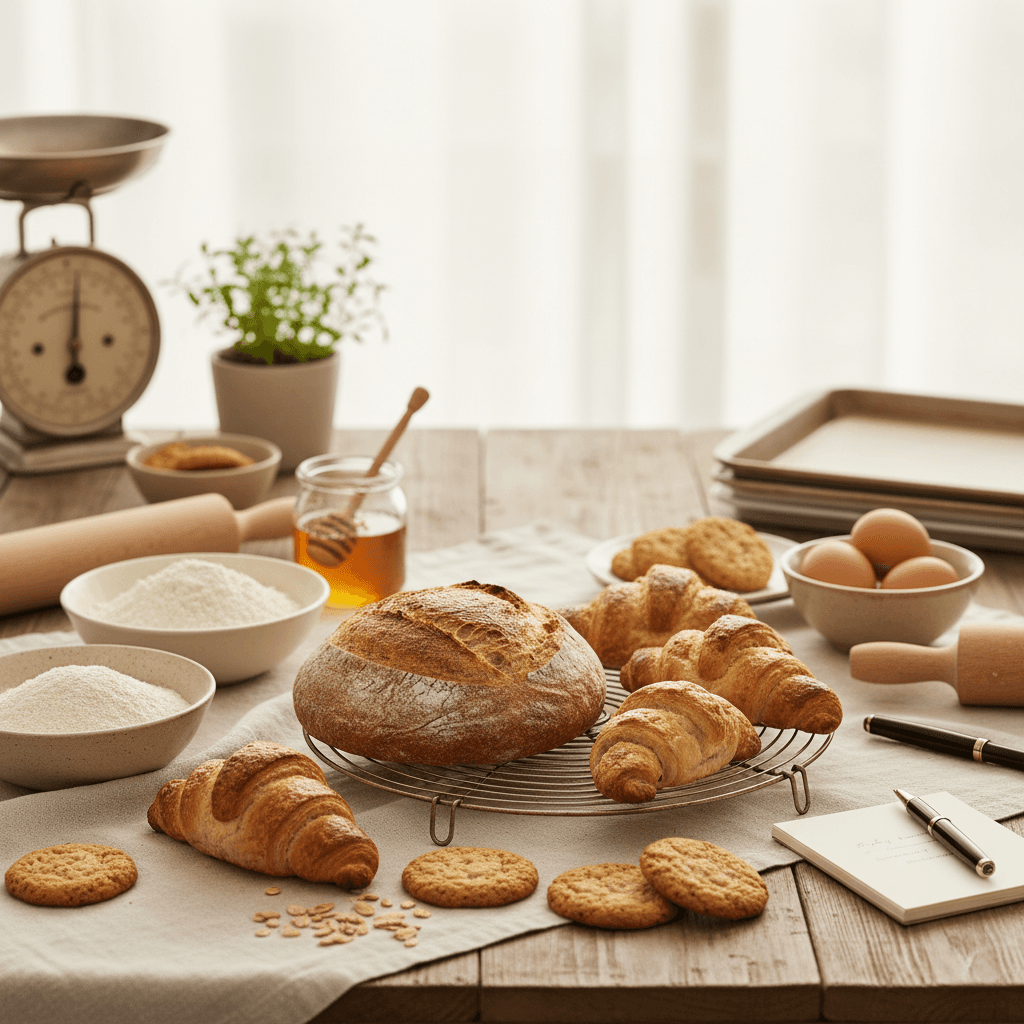
Starting a gluten-free home bakery is one of the smartest moves you can make in the cottage food space right now, but you need a real plan to make it work. This guide walks you through every section of a gluten-free bakery business plan, with actual numbers, real examples, and the strategic thinking that separates profitable bakeries from expensive hobbies.
Key takeaways
- A gluten-free bakery business plan doesn't need to be 50 pages — it needs to be specific, realistic, and focused on your local market opportunity.
- The gluten-free market is projected to exceed $10 billion by 2028, and most local markets are severely underserved, giving home bakers a real competitive advantage.
- Your startup costs for a home-based gluten-free bakery typically range from $500 to $3,000 depending on what equipment you already own.
- Pricing strategy matters more than anything — gluten-free customers expect to pay premium prices and are loyal once they find a baker they trust.
- Your business plan should include seven core sections: executive summary, market analysis, products and menu, operations plan, marketing strategy, financial projections, and legal compliance.
- A dedicated gluten-free kitchen (or dedicated production times with strict protocols) is your biggest selling point and should be front and center in your plan.
Why a gluten-free bakery has a built-in market advantage
Gluten-free baked goods are one of the most underserved categories in local food markets. Most people with celiac disease or gluten sensitivity have exactly zero local bakeries they trust. That's your opening.
Unlike general home bakeries competing against every grocery store and coffee shop in town, a gluten-free bakery faces dramatically less competition. In most mid-size cities, there might be one or two dedicated gluten-free bakeries — if any. Meanwhile, roughly 1 in 100 people has celiac disease, and an estimated 6% of the population reports non-celiac gluten sensitivity. That's a lot of people desperate for safe, delicious baked goods.
The loyalty factor is enormous. When someone with celiac disease finds a baker who takes cross-contamination seriously and makes things that actually taste good, they don't shop around. They tell every person in their local celiac support group, they order every week, and they become your best marketing channel. This built-in word-of-mouth engine should be a cornerstone of your business plan.
If you're still building your gluten-free baking skills, our gluten-free baking guide covers the fundamentals you'll need to master before selling.
Section 1: Executive summary
The executive summary is a one-page overview of your entire business plan. Write it last, even though it goes first. It should answer these questions clearly:
- What are you selling? Be specific. "Gluten-free baked goods" is too vague. "Dedicated gluten-free artisan bread, celebration cakes, and cookie boxes for the [your city] area" tells the reader exactly what you do.
- Who are you selling to? Celiac patients, gluten-sensitive individuals, families with dietary restrictions, health-conscious consumers willing to pay for quality.
- What makes you different? Dedicated gluten-free kitchen, locally sourced ingredients, specific flavor profiles, delivery radius, allergen transparency.
- What are your financial goals? Include a realistic revenue target for year one. For most cottage food home bakeries, $500 to $2,000 per month in the first year is achievable.
Keep this section to one page. If someone reads only this section, they should understand your entire business.
Section 2: Market analysis
This is where you prove there's real demand for what you're planning to sell. A strong market analysis has three parts.
Local market research
Search for gluten-free bakeries within a 30-mile radius of your location. Check Google Maps, Yelp, Facebook Marketplace, and local farmers market vendor lists. Document what you find:
| Competitor type | What to look for | Why it matters |
|---|---|---|
| Dedicated GF bakeries | Menu, pricing, reviews, delivery area | Direct competition — study their gaps |
| Bakeries with GF options | How many GF items, cross-contamination policies | Often not trusted by celiac customers |
| Grocery store GF sections | Brands available, pricing, freshness | Your baseline — you need to beat this |
| Other cottage food bakers | Social media presence, pricing, product range | Indirect competition worth monitoring |
If you find very few dedicated gluten-free options (which is the case in most markets), that's the strongest possible validation for your business plan.
Target customer profiles
Define two to three specific customer profiles. For example:
- The celiac parent: Needs safe birthday cakes, school-safe treats, and weekly bread. Willing to pay premium prices for guaranteed safety. Orders regularly.
- The health-conscious professional: Avoids gluten by choice, wants artisan quality, shops at farmers markets, values local and organic ingredients.
- The event planner: Needs gluten-free options for weddings, corporate events, and parties. Orders in bulk, plans ahead, higher per-order value.
Pricing research
Document what competitors and grocery stores charge. Gluten-free products typically command a 30-60% premium over conventional equivalents. A standard loaf of gluten-free bread at the grocery store runs $6-8. A fresh, locally baked artisan loaf can easily sell for $10-14. Custom celebration cakes often start at $50-75 for a simple design.
If you want to understand the ingredient cost differences that justify these prices, our guide on premium baking ingredients that make a real difference breaks down where to invest and where to save.
Building your skills and confidence in gluten-free baking is just as important as the business side. Our Confident Gluten-Free Baker Toolkit gives you the foundational knowledge to produce consistent, professional-quality results — the kind your customers will come back for week after week.
Section 3: Products and menu planning
Your business plan needs a specific menu, not just a vague list of categories. Start narrow and expand later. Here's a framework for choosing your launch menu:
How to choose your starting products
Pick three to five items maximum for launch. Each item should meet these criteria:
- You can make it consistently excellent. Not "pretty good sometimes" — excellent every single time.
- It has a reasonable shelf life. Cottage food laws in most states require shelf-stable products, so items that stay fresh for 3-5 days are ideal.
- The margins are strong. Your ingredient cost should be no more than 25-30% of your selling price.
- It fills a local gap. If nobody nearby makes good gluten-free sourdough, that's your opportunity.
Popular high-margin gluten-free products for home bakeries include artisan bread loaves, decorated sugar cookies, brownies and blondies, muffins, and custom celebration cakes (where your state allows them).
Recipe development and testing
Every recipe you plan to sell needs to be tested at least 10 times before it goes on your menu. Document everything: exact measurements by weight, oven temperatures, timing, and any variables that affect the outcome. Gluten-free baking is less forgiving than conventional baking, so consistency is everything.
Common issues like gritty texture or dry, crumbly results will lose customers fast. Solve these problems in development, not after you've started selling.
Allergen management beyond gluten
Many gluten-free customers also deal with additional allergies — dairy, eggs, soy, and nuts are the most common. Your business plan should address how you'll handle this. At minimum, every product needs a complete ingredient list and allergen statement. If you can offer some items that are also dairy-free or nut-free, you expand your market significantly.
Our gluten-free and nut-free baking substitutes guide can help you develop recipes that cover multiple allergen needs without sacrificing quality.
Section 4: Operations plan
This section covers the day-to-day reality of running your bakery. It's where many business plans fall short because people skip the boring logistics — and then get overwhelmed once orders start coming in.
Kitchen setup and cross-contamination prevention
If you're running a dedicated gluten-free kitchen, say so prominently. This is your single biggest competitive advantage. If you share a kitchen with gluten-containing products, you need a detailed protocol for preventing cross-contamination: dedicated equipment, thorough cleaning procedures, and separate storage.
At minimum, you'll want dedicated baking sheets, mixing bowls, wooden utensils (which absorb gluten and can't be fully cleaned), and a separate flour storage area. A OXO Good Grips 11lb Food Scale is essential for consistent recipes, and you'll want one that stays in your gluten-free workspace.
Equipment needs and startup costs
Here's a realistic equipment budget for a home-based gluten-free bakery:
| Equipment | Budget option | Mid-range option | Professional option |
|---|---|---|---|
| Stand mixer | Hamilton Beach ($60-80) | KitchenAid Artisan ($300-350) | KitchenAid Professional ($400-500) |
| Digital scale | Amazon Basics ($12) | OXO Good Grips ($30) | My Weigh KD-8000 ($45) |
| Sheet pans (set of 4) | Generic aluminum ($20) | Nordic Ware ($35-45) | USA Pan ($50-60) |
| Cooling racks | Basic wire ($10-15) | Checkered Chef ($20-25) | Stainless steel commercial ($35-40) |
| Loaf pans (set of 2) | Generic ($10-15) | USA Pan ($25-30) | Pullman pan ($35-45) |
| Packaging supplies (starter) | $50-75 | $100-150 | $200-300 |
| Ingredient starter stock | $100-150 | $200-300 | $400-500 |
Total startup range: $260 to $1,500+ depending on what you already own. If you need a comprehensive look at equipment options, our complete baking equipment buying guide covers every price tier.
Production schedule
Map out a realistic weekly production schedule. Most successful home bakers designate two to three baking days per week and batch similar products together. Your plan should include:
- Ingredient ordering and prep (typically 1-2 days before baking)
- Baking days with specific products assigned to each day
- Packaging and labeling time (often underestimated — budget 15-20 minutes per order)
- Delivery or pickup windows
Packaging and labeling
Your packaging needs to look professional and include all required information. Most cottage food laws require: your business name, ingredient list, allergen statement, net weight, and a cottage food disclaimer. Check your specific state requirements.
For packaging supplies, kraft bakery boxes with windows give a professional look for $0.50-1.00 per box when bought in bulk. Clear cellophane bags with twist ties work well for cookies and brownies at about $0.10 each. Custom sticker labels from Avery or a local print shop run $0.15-0.30 per label.
Section 5: Marketing strategy
Your marketing plan doesn't need to be complicated, but it does need to be specific about how you'll find and keep customers.
Your first 50 customers
The hardest part of any home bakery is getting those first consistent orders. Here's where most gluten-free bakers find their initial customers:
- Local celiac and gluten-free support groups: These exist in almost every metro area, often on Facebook. Introduce yourself, offer samples, and be genuine. These communities are tight-knit and protective — once you earn their trust, referrals flow naturally.
- Farmers markets: A booth at a weekly farmers market gives you face-to-face interaction and immediate feedback. Budget $25-75 per market day for booth fees.
- Word of mouth from friends and family: Start with people you know, ask for honest feedback, and encourage them to share with anyone who eats gluten-free.
- Local health food stores and co-ops: Some will carry local products on consignment or let you place business cards.
Online presence basics
You need a Google Business Profile (free), a simple website or landing page, and one social media account you'll actually maintain. Don't try to be on every platform. Pick one — Instagram and Facebook work best for home bakeries — and post consistently.
Pricing strategy that builds a real business
Price for profit, not for volume. Here's a simple pricing formula:
(Ingredient cost + packaging cost) x 3 to 4 = minimum retail price
If a loaf of gluten-free bread costs you $3.50 in ingredients and $0.75 in packaging, your minimum price should be $12.75 to $17.00. Most successful gluten-free home bakers land at the higher end of that range and find their customers don't blink. Remember: your competition is $7 grocery store bread that tastes like cardboard. Fresh, artisan quality at $14 is a bargain to someone who hasn't had good bread in years.
Section 6: Financial projections
Your business plan needs realistic financial projections for at least the first 12 months. Here's a framework:
Monthly revenue targets
| Month | Conservative estimate | Moderate estimate | Aggressive estimate |
|---|---|---|---|
| Months 1-3 | $200-400/mo | $400-800/mo | $800-1,200/mo |
| Months 4-6 | $400-700/mo | $800-1,500/mo | $1,500-2,500/mo |
| Months 7-12 | $700-1,200/mo | $1,500-2,500/mo | $2,500-4,000/mo |
These numbers assume a cottage food home bakery. Your state's cottage food sales cap may limit your maximum revenue — check your state's laws and factor that ceiling into your projections.
Cost tracking
Track every expense from day one. Your major cost categories will be:
- Ingredients: Should stay at 25-30% of revenue. Gluten-free flours and starches cost more than conventional, so this is critical to monitor. If you need help stocking your pantry on a budget, we have a guide for that.
- Packaging: Target 5-10% of revenue.
- Marketing: Farmers market fees, business cards, website hosting. Budget $50-150/month initially.
- Equipment maintenance and replacement: Budget $25-50/month as a reserve.
Break-even analysis
Calculate your fixed monthly costs (everything you pay whether you sell anything or not) and your variable costs per unit. Divide your fixed costs by your profit per unit to find your break-even point. Most home bakeries break even within two to four months if they price correctly and control ingredient costs.
Section 7: Legal compliance and food safety
This section is non-negotiable. Skipping it can shut down your business or worse — make someone sick.
Cottage food laws
Every state has different cottage food regulations. Your business plan should document:
- Your state's annual sales cap (ranges from $25,000 to unlimited depending on the state)
- Allowed products (some states restrict what you can sell)
- Labeling requirements
- Whether you need a food handler's permit or kitchen inspection
- Allowed sales channels (some states restrict online sales or delivery)
Gluten-free labeling regulations
The FDA defines "gluten-free" as containing less than 20 parts per million (ppm) of gluten. If you label your products as gluten-free, you're making a legal claim that your products meet this standard. Your business plan should outline how you'll ensure compliance: dedicated equipment, ingredient sourcing from certified gluten-free suppliers, and your testing or verification procedures.
Insurance
Product liability insurance for a home bakery typically costs $300-500 per year. It's not always legally required for cottage food operations, but it protects you if someone has a reaction. Many farmers markets require proof of insurance, so factor this into your budget.
Putting your business plan together
You don't need a fancy template or business plan software. A clear Google Doc or Word document with these seven sections is enough. The point isn't to impress investors — it's to force yourself to think through every aspect of your business before you start spending money and taking orders.
Review and update your plan quarterly. Your first version will be wrong about some things, and that's fine. The bakers who succeed are the ones who plan, execute, measure, and adjust.
If you're still deciding on your core flour blends and ingredient lineup, our gluten-free baking essentials guide covers everything from starter pantry to premium upgrades.
Frequently asked questions
How much does it cost to start a gluten-free home bakery?
Most gluten-free home bakeries can launch for $500 to $3,000, depending on what equipment you already own. The biggest expenses are a quality stand mixer ($60-500), initial ingredient stock ($100-500), and packaging supplies ($50-300). If you already bake regularly, you may only need to invest in dedicated gluten-free equipment and packaging.
Do I need a separate kitchen to sell gluten-free baked goods?
A separate kitchen isn't legally required in most states under cottage food laws, but it's a massive selling point. If you share a kitchen, you'll need strict cross-contamination protocols — dedicated equipment, thorough cleaning between uses, and separate ingredient storage. A dedicated space lets you honestly market your products as made in a gluten-free kitchen, which builds trust with celiac customers faster than anything else. Our gluten-free baking guide covers the fundamentals of safe gluten-free production.
How should I price gluten-free baked goods for a home bakery?
Use the formula: (ingredient cost + packaging cost) multiplied by 3 to 4. Gluten-free ingredients cost more than conventional ones, and your customers know that. A gluten-free artisan bread loaf typically sells for $10-14, cookies for $3-5 each or $18-30 per dozen, and custom cakes start at $50-75. Don't underprice — gluten-free customers are willing to pay premium prices for quality and safety.
What are the best gluten-free products to sell from a home bakery?
The highest-margin, most in-demand products are artisan bread loaves, decorated sugar cookies, brownies, muffins, and celebration cakes. Start with three to five items you can make consistently excellent. Bread is especially profitable because gluten-free bread from grocery stores is notoriously disappointing — a fresh, well-made loaf practically sells itself.
Do I need a business plan to start a cottage food bakery?
You don't need a formal business plan to legally start selling under cottage food laws, but you absolutely should write one. Even a simple plan forces you to research your local market, set realistic prices, calculate your costs, and think through operations before you're overwhelmed with orders. The bakers who skip this step are the ones who underprice, burn out, or quit within six months.
Your next step: get consistent orders without relying on social media
You've got the business plan framework. Now comes the part that actually determines whether your bakery succeeds: getting customers who order again and again.
Getting your first customers is the hardest part. This free masterclass from a baker who replaced her full-time salary with home bakery income shows you exactly how to get consistent repeat orders — without relying on social media.

Written by
Co-founder, BakingSubs
Co-founder of BakingSubs, where he turns the science of ingredient substitutions into tested, reliable guidance for home bakers.
Related Posts
Gluten-Free Flour Weight Chart: Grams per Cup for 9 Major Brands (and Why the Spread Is Over 20%)
Best Low Carb Tortillas (2026): 6 Brands Compared by Net Carbs
Best Sugar-Free Cake Mix and Brownie Mix (2026): 14 Options Ranked by Net Carbs, Sweetener, and Price
Bake with Confidence
See all
Confident Gluten-Free Baker Toolkit
The science-based system that replaces gluten's seven invisible jobs so your baking turns out soft, fluffy, and foolproof — every time.

Gluten-Free Recipe Vault
Instant access to our complete library of proven gluten-free recipes — no waiting, no guesswork, just results that work tonight.

Fix Your Gluten-Free Bread
Learn the 3-step formula to make bread rise and stay soft, discover why your loaves collapse, and get a tested sandwich bread recipe that actually works.