
Best Monk Fruit Sweetener Without Erythritol (2026): 5 Options Compared on Labels, Not Taste Tests
Compare 5 monk fruit sweeteners without erythritol ranked by label nutrition, ingredients, format, and price. Find the best allulose-based blend for baking.

Malik
The best monk fruit sweetener without erythritol is Lakanto Classic Monk Fruit Sweetener with Allulose — it delivers 0 calories, 0g net carbs, and 0g sugar alcohols per serving while using allulose as its bulking agent instead of erythritol. Below, we compare five erythritol-free monk fruit products on the only things you can verify from a label: ingredients, nutrition, format, certifications, and price tier.
Key takeaways
- Most monk fruit sweeteners use erythritol as a bulking agent because pure monk fruit extract is reported to be 100–250x sweeter than sugar, according to the FDA — a tiny amount goes a long way, so brands add bulk to make it measure like sugar.
- Erythritol-free options typically bulk with allulose, inulin (chicory root fiber), or soluble tapioca fiber instead. Each bulking agent behaves differently in baking: allulose browns and stays soft, inulin adds fiber but can cause digestive discomfort in larger amounts, and tapioca fiber adds body but little sweetness.
- Pure liquid monk fruit drops contain no bulking agent at all — they work for beverages and glazes but cannot replace sugar's volume in cakes or cookies.
- If you bake keto or sugar-free recipes regularly, a granulated monk fruit + allulose blend gives you the closest 1:1 sugar swap without the cooling aftertaste or recrystallization issues erythritol can cause.
- According to the FDA, monk fruit extract is Generally Recognized as Safe (GRAS), and allulose is excluded from total and added sugars on U.S. nutrition labels under FDA guidance finalized in 2020.
Comparison table: 5 monk fruit sweeteners without erythritol
| Brand & product | Bulking agent | Calories per tsp | Net carbs per tsp | Sugar alcohols | Format | Certifications | Price tier |
|---|---|---|---|---|---|---|---|
| Lakanto Classic Monk Fruit with Allulose | Allulose | 0 | 0g | 0g | Granulated, 16 oz bag | Non-GMO Project Verified, Vegan | Mid-range |
| Besti Monk Fruit Allulose Blend | Allulose | 0 | 0g | 0g | Granulated, 12 oz or 1 lb bag | Non-GMO Project Verified | Mid-range |
| It's Just Monk Fruit Extract (liquid) | None (monk fruit extract only) | 0 | 0g | 0g | Liquid drops, 1.5 fl oz | Non-GMO | Premium (per oz) |
| Smart Monk Pure Monk Fruit Extract (powder) | None | 0 | 0g | 0g | Pure powder, 30g or 3 oz | Non-GMO | Premium |
| Monk Fruit In The Raw (Classic with Allulose) | Allulose | 0 | 0g | 0g | Granulated, 16 oz bag | Keto Certified, Non-GMO | Not verified |
Nutrition data sourced from manufacturer-published labels. Price tiers: budget = under $0.50/oz, mid-range = $0.50–$1.00/oz, premium = over $1.00/oz. Exact retail prices fluctuate by retailer and are not stated as fixed figures.
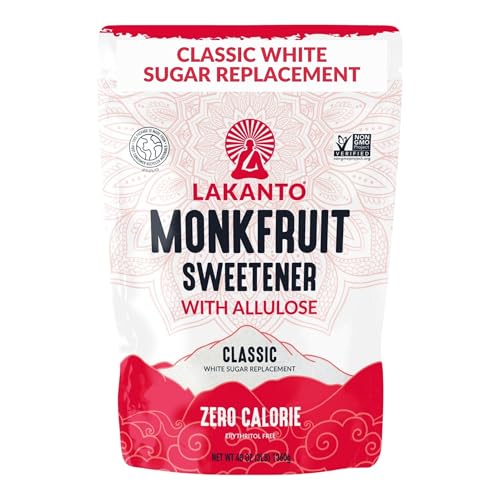
Lakanto Classic Monk Fruit Sweetener with Allulose, Classic White, 3 LB
Check price on Amazon →How we ranked these
We ranked these five products on five verifiable criteria, weighted in this order:
- Sugar alcohols per serving — must be 0g to qualify. Any product listing erythritol, xylitol, or sorbitol in the ingredient list was excluded.
- Net carbs per serving — lower is better. We calculated net carbs as total carbohydrates minus fiber minus allulose (per FDA guidance, allulose is excluded from added sugars).
- Ingredient simplicity — fewer ingredients ranked higher. Products with dextrose, maltodextrin, or other fillers were noted.
- Baking format — granulated products that measure 1:1 with sugar scored higher than liquids or pure concentrates, because volume replacement matters in baking.
- Certifications and price tier — Non-GMO Project Verified, USDA Organic, and similar third-party certifications added value. Within a tie, the lower price tier won.
We did not taste, bake with, or otherwise test any of these products. Rankings reflect label data and published specifications only.
Why skip erythritol in the first place?
Erythritol is the most common bulking agent in monk fruit sweeteners, and for many bakers it works fine. But there are three chemistry-based reasons some people avoid it.
First, erythritol recrystallizes as it cools. This is a well-documented physical property — erythritol's solubility falls as it cools, which means frostings, glazes, and chilled desserts can develop a gritty or sandy texture overnight. If you have ever had a texture change after a health swap that you could not explain, recrystallization is a likely culprit.
Second, erythritol produces a noticeable cooling sensation on the tongue. This is an endothermic dissolving reaction — the same chemistry behind sugar-free mints. In cookies or brownies, that cooling effect can clash with warm, rich flavors like chocolate or caramel.
Third, a 2023 study published in Nature Medicine (Witkowski et al.) found an association between high blood levels of erythritol and cardiovascular events. The study does not prove causation, but it prompted some consumers to seek alternatives. If you want to understand the broader landscape of choosing sugar alternatives, that guide covers the trade-offs across the full category.
Brand-by-brand breakdown
Lakanto Classic Monk Fruit with Allulose
Ingredients: Allulose, monk fruit extract.
Nutrition: 0 calories, 0g net carbs, 0g sugar alcohols per serving.
Lakanto is probably the most recognized monk fruit brand in the U.S. Their allulose-based line uses just two ingredients. Because allulose is roughly 70% as sweet as sugar, the added monk fruit extract (mogroside V) bridges the sweetness gap to reach a 1:1 sugar replacement ratio. Allulose's chemistry predicts good browning via Maillard reaction — it is a rare sugar that caramelizes, unlike erythritol — so baked goods should develop color similar to sugar-sweetened versions. The product is Non-GMO Project Verified and labeled vegan. Sold in 8 oz, 1 lb, 3 lb and 5 lb bags, it is our pick for regular bakers.
Besti Monk Fruit Allulose Blend
Ingredients: Allulose, monk fruit extract.
Nutrition: 0 calories, 0g net carbs, 0g sugar alcohols per serving.
Besti is a keto-focused brand from Wholesome Yum. Their granulated blend is nearly identical to Lakanto's on the label: the same two ingredients. It is Non-GMO Project Verified, and Wholesome Yum also sells powdered and brown versions. Available in 12 oz and 1 lb bags at a mid-range price tier.
It's Just Monk Fruit Extract (liquid)
Ingredients: Monk fruit extract.
Nutrition per serving (6 drops): 0 calories, 0g carbs, 0g sugar alcohols.
This is a concentrated liquid with no bulking agent whatsoever. Six drops reportedly equal the sweetness of about 1 teaspoon of sugar, according to the manufacturer. The single-ingredient label is as simple as it gets. The catch: liquid drops cannot replace sugar's volume, moisture-binding, or browning functions in baked goods. They work well in whipped cream, coffee, or a glaze drizzled over a finished cake, but they will not substitute cup-for-cup in a muffin recipe. At 1.5 fl oz per bottle, the per-ounce cost is premium, though you use so little per serving that a bottle lasts months.
Smart Monk Pure Monk Fruit Extract (powder)
Ingredients: Monk fruit extract.
Nutrition per 1/32 tsp: 0 calories, 0g carbs, 0g sugar alcohols.
This is pure, concentrated monk fruit extract powder with no bulking agent. Smart Monk markets it as 250x sweeter than sugar and non-GMO, and sells it in 30g and 3 oz sizes. The tiny 1/32 teaspoon serving size tells you how potent it is. This format is useful if you want to build your own custom blend alongside a bulking agent you choose yourself. It is the most expensive per ounce, but you use very little per serving.
Monk Fruit In The Raw (Classic with Allulose)
Ingredients: Monk fruit extract and non-GMO allulose, per the manufacturer.
Nutrition: 0 calories, 0g net carbs per serving.
This product is sold in mainstream grocery stores, which is its main advantage. It is keto certified and non-GMO, and comes in a 16 oz bag that In The Raw says replaces sugar 1:1. Don't confuse it with In The Raw's Monk Fruit with Dextrose packets, which bulk with dextrose (a simple sugar derived from corn) instead of allulose.
Who should buy a monk fruit + allulose blend (and who should skip it)
Who should buy
- Bakers who want a 1:1 granulated sugar replacement without the cooling aftertaste or recrystallization of erythritol
- Anyone following a keto or low-carb plan — allulose does not raise blood glucose in most people, per a 2008 study in the Journal of Nutritional Science and Vitaminology (Iida et al.)
- Bakers making recipes where browning matters (cookies, caramel, banana bread) — allulose participates in the Maillard reaction
- Home bakers selling sugar-free goods who need consistent, label-friendly ingredients for cottage food labels
Who should skip
- Anyone sensitive to allulose's digestive effects — allulose can cause bloating or GI discomfort in some people at doses above roughly 0.4g per kg of body weight, per a 2018 study in Nutrients (Han et al.). For a 150 lb person, that is about 27g, or roughly 7 teaspoons.
- Bakers who need a bulking agent that also adds dietary fiber — allulose contributes 0g fiber. If fiber is your goal, an inulin-based monk fruit blend or a separate fiber supplement is a better fit.
- Anyone on a tight budget who bakes in high volume — erythritol-based monk fruit blends are often cheaper per ounce than allulose-based ones, so the cost difference adds up over dozens of batches.
Comparison: Lakanto Allulose Blend vs its closest competitor
| Criteria | Lakanto Monk Fruit with Allulose | Besti Monk Fruit Allulose Blend |
|---|---|---|
| Ingredients | Allulose, monk fruit extract | Allulose, monk fruit extract |
| Net carbs per serving | 0g | 0g |
| Calories per serving | 0 | 0 |
| Sugar alcohols | 0g | 0g |
| Bag sizes | 8 oz, 1 lb, 3 lb, 5 lb | 12 oz, 1 lb |
| Certifications | Non-GMO Project Verified, Vegan | Non-GMO Project Verified |
| Other formats | Golden (with allulose) | Powdered, Brown |
| Buy | Check price → | Check price → |
On paper, these two products are nearly identical. The decision comes down to availability, bag size and price. Lakanto sells a wider range of bag sizes, which helps if you bake in volume.
How to use monk fruit + allulose blends in baking
These granulated blends are designed to measure 1:1 with sugar, so you can swap them directly in most recipes. But allulose behaves differently from sugar in a few important ways that affect your results.
Browning happens faster. Allulose browns more readily than sucrose, so baked goods can darken before they are cooked through. A commonly recommended adjustment is to lower the oven temperature by about 25 °F (about 15 °C) and start checking doneness early. This is one of the most common healthy baking mistakes — overbrowning because the sweetener reacts faster than expected.
Cookies spread more. Allulose is hygroscopic — it pulls moisture from the air and holds onto water more aggressively than sugar. This extra moisture means cookie doughs may spread thinner. Chill your dough for at least 30 minutes before baking, or add 1–2 tablespoons of extra flour per cup of sweetener to compensate.
Cakes stay moist longer. That same hygroscopic property works in your favor for cakes and muffins. Allulose-sweetened cakes should resist drying out, based on allulose's known water-binding chemistry.
For a deeper look at how different sugar functions affect your bake — structure, tenderness, moisture, browning — that guide breaks it down by role.
Monk fruit without erythritol: liquid vs granulated vs pure powder
The format you choose depends entirely on what you are making.
| Format | Best for | Not suitable for | Sugar replacement ratio |
|---|---|---|---|
| Granulated (allulose-based) | Cookies, cakes, muffins, quick breads, anything needing volume | Beverages where you want zero residue | 1:1 with sugar |
| Liquid drops | Coffee, tea, whipped cream, glazes, smoothies | Any recipe relying on sugar for structure or bulk | 6 drops = ~1 tsp sugar sweetness (varies by brand) |
| Pure powder | Custom blends, formulating your own sweetener mix | Direct use in recipes (too concentrated to measure accurately without a precision scale) | Varies by brand; follow the label's conversion |
If you bake regularly and want the simplest experience, granulated is the way to go. If you already have a favorite allulose brand and just want to boost sweetness, a few liquid monk fruit drops added to your allulose can work — but you are now managing two ingredients instead of one.
Cost comparison: erythritol-free vs erythritol-based monk fruit
Skipping erythritol costs more. Here is a worked example to show how much.
Hypothetical scenario: Say you bake 4 batches of cookies per week, each batch using 1 cup (roughly 7 oz) of sweetener. That is 28 oz per week, or about 112 oz per month.
- Assume an erythritol-based monk fruit blend costs about $0.35–$0.50/oz. Monthly cost: $39–$56.
- Assume an allulose-based blend costs about $0.60–$0.85/oz. Monthly cost: $67–$95.
That is a difference of $28–$39 per month, or $336–$468 per year. For a home baker selling cookies at $18–$24 per dozen, that sweetener cost increase eats into margins. Use a recipe cost sheet to calculate exactly how it affects your per-unit cost before committing.
What about inulin-based monk fruit sweeteners?
Some brands use inulin (chicory root fiber) as the bulking agent instead of allulose or erythritol. Inulin adds prebiotic fiber, which can be a selling point for fiber-focused consumers. However, inulin does not brown like allulose, does not provide the same tenderizing effect as sugar, and can cause GI discomfort (gas, bloating) at higher doses.
We did not include inulin-based monk fruit blends in this comparison. If you find one that is truly erythritol-free, check the fiber content per serving and calculate how much you would consume per recipe before committing to a full batch.
Contrarian take: sometimes erythritol is still the better choice
This might seem odd in a post about avoiding erythritol, but here is the honest assessment: if you are making a recipe that gets eaten warm — fresh-from-the-oven brownies, warm banana bread, a just-baked pie — erythritol's recrystallization problem does not apply because the product is consumed before it cools fully. And erythritol blends are often cheaper. For warm-served baked goods, erythritol-based monk fruit blends from reputable brands remain a strong, budget-friendly option. The switch to allulose-based blends makes the most difference for items that sit at room temperature or get refrigerated — frostings, cheesecakes, cookie platters, and anything sold at a farmers market where it might sit for hours.
Frequently asked questions
What is the best monk fruit sweetener without erythritol for baking cookies?
A granulated monk fruit + allulose blend like Lakanto Classic with Allulose or Besti Monk Fruit Allulose Blend is the best format for cookies. Both measure 1:1 with sugar, contain 0g net carbs and 0g sugar alcohols, and allulose's chemistry predicts good browning and a soft, chewy texture rather than the gritty recrystallization erythritol can cause as cookies cool. Reduce oven temperature by 25 °F to prevent overbrowning.
Does monk fruit without erythritol taste different from monk fruit with erythritol?
According to manufacturers, allulose-based monk fruit blends lack the cooling sensation that erythritol produces. Erythritol's cooling effect is a documented thermodynamic property — it absorbs heat as it dissolves on the tongue. Allulose does not share this property, so manufacturer descriptions consistently describe allulose blends as tasting closer to sugar. We have not verified this through direct tasting.
Is monk fruit sweetener safe for people with diabetes?
The FDA classifies monk fruit extract as GRAS (Generally Recognized as Safe). Allulose, the bulking agent in most erythritol-free monk fruit blends, did not raise blood glucose or insulin when taken alone in a 2008 study published in the Journal of Nutritional Science and Vitaminology (Iida et al., 20 healthy adults). However, individual responses can vary, and anyone managing diabetes should consult their healthcare provider before making dietary changes. For a broader view of sugar alternatives and their glycemic impacts, see our guide on the best sugar substitutes for baking.
Can I use liquid monk fruit drops instead of granulated in baking?
Liquid monk fruit drops add sweetness but not volume, structure, or browning. In a cookie recipe calling for 1 cup of sugar, replacing it with drops alone would remove roughly 200g of dry bulk from the dough, completely changing the ratio of wet to dry ingredients. Liquid drops work well for sweetening whipped cream, glazes, or beverages. For baking, use a granulated blend or combine drops with a separate bulking agent like allulose.
Why do most monk fruit sweeteners contain erythritol?
Pure monk fruit extract is reported to be 100–250x sweeter than sugar, according to the FDA, so you need an extremely small amount to match 1 teaspoon of sugar. That is nearly impossible to measure accurately in a home kitchen. Erythritol is the most popular bulking agent because it is inexpensive, contributes essentially no calories, and has been used in food manufacturing for decades. Allulose-based alternatives are newer to the market.

Written by
Co-founder, BakingSubs
Co-founder of BakingSubs, where he turns the science of ingredient substitutions into tested, reliable guidance for home bakers.
Related Posts
Best Sugar-Free Cake Mix and Brownie Mix (2026): 14 Options Ranked by Net Carbs, Sweetener, and Price
Lakanto Monk Fruit Sweetener Review: 0g Net Carbs, but Worth the Premium Price?
Best Allulose Syrup Brands (2026): 5 Compared by Label, Certifications, and Price
Bake with Confidence
See all
Confident Gluten-Free Baker Toolkit
The science-based system that replaces gluten's seven invisible jobs so your baking turns out soft, fluffy, and foolproof — every time.

Gluten-Free Recipe Vault
Instant access to our complete library of proven gluten-free recipes — no waiting, no guesswork, just results that work tonight.

Fix Your Gluten-Free Bread
Learn the 3-step formula to make bread rise and stay soft, discover why your loaves collapse, and get a tested sandwich bread recipe that actually works.