

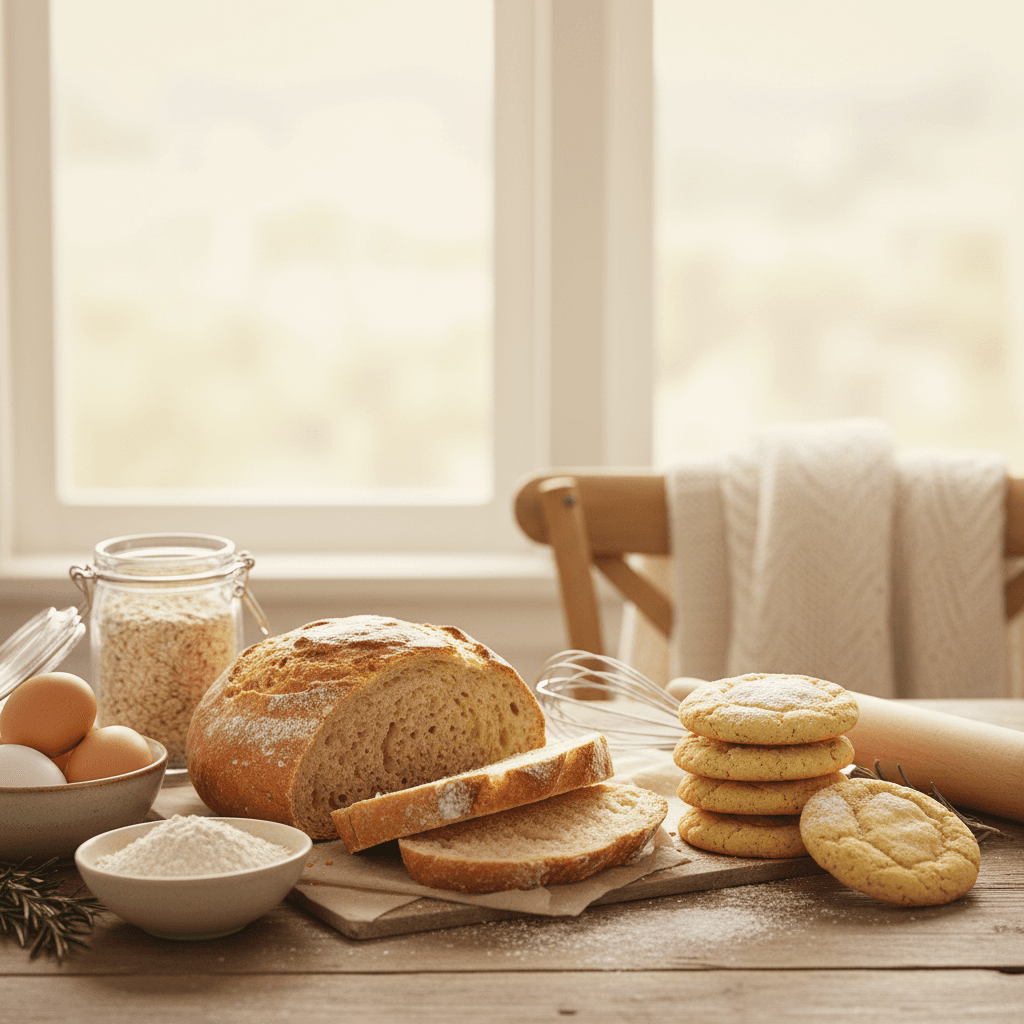
You want to know if starting a home bakery in 2026 is actually worth the time, money, and effort — or if it's one of those internet fantasies that sounds better than it is. We're going to break down real income ranges, actual profit margins by product type, and the specific advantages that make gluten-free home bakers especially well-positioned right now.
Key takeaways
- A home bakery side hustle can realistically generate $500 to $2,000 per month, while a full-time operation can replace a salary at $3,000 to $6,000 per month — but only with the right product mix and pricing strategy.
- Profit margins in home baking typically range from 50% to 75%, with decorated cookies, specialty cakes, and gluten-free items sitting at the high end.
- Gluten-free bakers command a significant pricing premium — customers expect to pay 30% to 60% more and are fiercely loyal once they find a baker they trust.
- Startup costs are low compared to most businesses, often between $200 and $1,500 depending on what equipment you already own.
- The biggest factor in profitability isn't talent — it's choosing high-margin products, pricing correctly from day one, and building a repeat customer base.
- Cottage food laws vary by state, and your revenue cap and allowed products will directly impact your earning potential.
How much can a home bakery actually make in 2026?
A home bakery can realistically earn between $500 and $6,000 per month depending on whether you're treating it as a side hustle or a full-time operation. Those numbers aren't pulled from thin air — they're based on what we see home bakers consistently report after they've moved past the first few months of figuring things out.
Here's what the income spectrum typically looks like:
| Level | Hours per week | Monthly revenue | Monthly profit (after costs) |
|---|---|---|---|
| Weekend side hustle | 8-12 | $500-$1,200 | $300-$850 |
| Serious part-time | 15-25 | $1,200-$2,500 | $750-$1,750 |
| Full-time replacement | 30-45 | $3,000-$6,000 | $1,800-$4,200 |
A few things to notice. First, revenue is not profit. Your ingredient costs, packaging, and supplies will eat 25% to 50% of your revenue depending on what you bake and how well you source ingredients. Second, the jump from part-time to full-time isn't just about more hours — it requires systems, repeat customers, and usually a shift toward higher-margin products.
The honest truth: most home bakers who quit do so in the first three months, not because the business model doesn't work, but because they underprice, burn out on low-margin items, or never build a real customer base beyond friends and family.
Which baked goods have the best profit margins?
Decorated sugar cookies and specialty cakes consistently deliver the highest profit margins for home bakers, often 65% to 75% after ingredient costs. But the real answer depends on your speed, your skill set, and your local market.
Let's look at margins by product category:
| Product | Typical price range | Ingredient cost | Profit margin | Notes |
|---|---|---|---|---|
| Decorated sugar cookies (dozen) | $36-$72 | $5-$10 | 70-85% | High labor, but premium pricing accepted |
| Custom cakes | $60-$200+ | $12-$35 | 65-80% | Skill-dependent; design complexity drives price |
| Gluten-free bread loaves | $8-$14 | $2-$4 | 60-75% | Repeat orders are the real money here |
| Cupcakes (dozen) | $30-$48 | $6-$12 | 55-70% | Good entry point; moderate labor |
| Pies | $25-$45 | $8-$15 | 50-65% | Seasonal demand spikes help |
| Standard bread loaves | $5-$8 | $1.50-$3 | 50-60% | Low price point means volume matters |
| Brownies/bars (dozen) | $18-$30 | $4-$8 | 55-70% | Easy to batch; good for markets |
The pattern is clear: the more specialized or customized the product, the higher the margin. A standard loaf of white bread is a commodity. A beautifully decorated set of custom cookies for a baby shower is an experience — and people pay for experiences.
One thing we see new bakers get wrong is chasing volume with low-margin items. Selling 50 loaves of banana bread at $6 each sounds impressive until you realize you spent 12 hours baking and your profit was $150. Compare that to 3 dozen decorated cookies at $48 per dozen — similar time, but $100+ in profit.
If you're building your baking pantry on a budget, start with the ingredients that serve your highest-margin products first.
Why gluten-free home bakers have a pricing advantage
Gluten-free bakers can charge 30% to 60% more than conventional bakers for comparable products, and customers not only accept it — they expect it. This is one of the most underappreciated advantages in the home bakery world right now.
Here's why the economics work so well:
Ingredient costs are higher, but pricing premiums are even higher. Yes, almond flour, tapioca starch, and specialty blends cost more than all-purpose wheat flour. But customers who need gluten-free products are already conditioned to pay premium prices at stores — a loaf of gluten-free bread at the grocery store runs $7 to $9 and tastes like cardboard. When you offer something that actually tastes good and is made fresh, $10 to $14 per loaf is completely reasonable.
The competition is thin. In most local markets, there might be dozens of home bakers making conventional cakes and cookies. The number making dedicated gluten-free products? Usually zero to two. Less competition means more pricing power.
Customer loyalty is extraordinary. When someone with celiac disease or a serious gluten sensitivity finds a baker they trust — someone who understands gluten-free baking and takes cross-contamination seriously — they don't shop around. They become repeat customers for years. We've heard from bakers whose gluten-free customers order weekly, refer friends constantly, and never haggle on price.
If you're considering the gluten-free niche, our Confident Gluten-Free Baker Toolkit covers the foundational techniques and flour blending knowledge you'll need to produce consistently excellent results — the kind that turn first-time buyers into lifelong customers.
Real startup costs for a home bakery in 2026
Most home bakers can get started for $200 to $500 if they already own basic equipment, or $800 to $1,500 if they're starting from scratch. This is one of the lowest barriers to entry of any real business. Put these numbers in the startup-costs section of your bakery business plan before you spend anything.
Here's a realistic breakdown:
| Category | Already have basics | Starting from scratch |
|---|---|---|
| Mixer (stand mixer) | $0 | $200-$400 |
| Baking pans and sheets | $0-$30 | $50-$120 |
| Food scale | $0 | $15-$30 |
| Initial ingredients | $50-$100 | $100-$200 |
| Packaging (boxes, bags, labels) | $30-$60 | $50-$100 |
| Cottage food license/permit | $0-$75 | $0-$75 |
| Food handler's certification | $10-$25 | $10-$25 |
| Business cards/basic branding | $20-$50 | $20-$50 |
| Total | $200-$500 | $800-$1,500 |
If you're watching your budget, our guide to affordable baking tools for beginners covers everything you need without overspending. And if you're ready to invest in equipment that will hold up to production-level use, our professional equipment guide breaks down which upgrades actually matter.
The key insight: don't over-invest before you have customers. Start with what you have, prove the demand, then upgrade strategically as revenue justifies it.
The biggest threats to home bakery profitability
Underpricing is the single biggest profitability killer for home bakers, and it's not even close. But there are several other real threats worth understanding before you start.
Pricing too low
New bakers almost always underprice. They calculate ingredient costs, add a small markup, and completely forget about their time, packaging, energy costs, and the value of their skill. If you're making custom cakes for $30, you're running a charity, not a business. Price based on the market value of the finished product, not just your ingredient receipt.
Cottage food law limitations
Every state has different rules about what you can sell, where you can sell it, and how much you can earn. Some states cap annual revenue at $25,000 or $50,000 — which directly limits your growth. Some don't allow certain products or require specific labeling. Research your state's cottage food laws thoroughly before you plan your menu.
Burnout from overcommitting
Taking every order that comes in sounds like good business until you're baking until 2 AM on a Tuesday for a $40 order. Profitable home bakers learn to say no to low-margin orders and focus on their most profitable products and best customers.
Not tracking actual costs
If you're not tracking every ingredient cost, your packaging expenses, and your time per order, you have no idea whether you're actually profitable. We've talked to bakers who thought they were making good money until they sat down and realized they were earning $4 per hour. A simple spreadsheet is all you need — but you need it from day one. Once orders pick up, our comparison of accounting software for bakery businesses shows when a free app is worth switching to.
How to maximize profit margins as a home baker
The most profitable home bakers focus on a narrow menu of high-margin items and build a base of repeat customers who order consistently. Here's the playbook that actually works:
Specialize, don't generalize. The baker who does "everything" competes with everyone. The baker who's known as the best gluten-free cookie maker in town — or the go-to for custom celebration cakes — commands premium prices. Pick a lane.
Batch strategically. Make your highest-margin products in large batches. If you're already making one batch of brown rice flour cookies, making a triple batch barely adds time but triples your output. Time is your most expensive ingredient.
Build a weekly order system. The real money in home baking isn't one-off orders — it's the customer who orders a loaf of gluten-free sandwich bread every single week. Subscription-style ordering creates predictable income and lets you plan your baking schedule efficiently.
Use premium ingredients where they matter. Knowing which premium ingredients actually make a difference versus where you can save is a real competitive advantage. Customers taste the difference in quality butter and real vanilla — they don't taste the difference in your brand of baking powder.
Raise prices before you think you should. If you've never lost a customer over price, you're probably too cheap. Test a 15-20% price increase on your next round of orders. Most home bakers find that demand barely changes.
Is a gluten-free home bakery more profitable than a conventional one?
Yes, in most local markets a gluten-free home bakery has higher profit potential per order than a conventional one, primarily because of premium pricing acceptance and dramatically less competition. The margins are genuinely better.
Consider this comparison for a standard product:
| Factor | Conventional home bakery | Gluten-free home bakery |
|---|---|---|
| Average price per item | $5-$8 | $8-$14 |
| Ingredient cost per item | $1-$2.50 | $2-$4 |
| Profit margin | 55-65% | 60-75% |
| Local competitors | 10-30+ | 0-3 |
| Customer loyalty/repeat rate | Moderate | Very high |
| Price sensitivity | High | Low |
The trade-off is that gluten-free baking has a steeper learning curve. You need to understand flour blending, how to avoid gummy centers, how to prevent dry crumbly texture, and how to handle cross-contamination for customers with celiac disease. But that learning curve is exactly what creates the barrier to entry that protects your pricing power.
What a realistic first-year timeline looks like
Don't expect to replace your income in month one. Here's an honest timeline of what building a profitable home bakery typically looks like:
Months 1-2: Testing and setup. You're perfecting recipes, getting your cottage food license, figuring out packaging, and taking your first orders — mostly from friends, family, and their immediate networks. Revenue: $100-$400/month.
Months 3-4: Building momentum. Word of mouth starts working. You're getting orders from people you don't personally know. You've identified which products sell best and started narrowing your menu. Revenue: $400-$1,000/month.
Months 5-8: Finding your groove. You have repeat customers. Your process is more efficient. You've raised prices at least once. You're starting to turn away low-margin work. Revenue: $800-$2,000/month.
Months 9-12: Real business territory. Consistent weekly orders, a waiting list for custom work during busy seasons, and a clear picture of your actual hourly earnings. Revenue: $1,500-$3,500/month for serious operators.
This timeline assumes you're actively marketing (even just word of mouth and a simple social media presence), pricing correctly, and treating this like a business rather than a hobby. Some bakers move faster, many move slower. The ones who succeed are the ones who don't quit during the slow months 1-2 phase.
Frequently asked questions
How much does a home baker make per month?
A home baker typically makes $500 to $2,000 per month as a side hustle and $3,000 to $6,000 per month running it as a full-time business. Your actual income depends on your product mix, pricing, and how effectively you build repeat customers. Gluten-free and specialty bakers tend to earn at the higher end of these ranges because of premium pricing.
What is the most profitable thing to bake and sell from home?
Decorated sugar cookies and custom cakes are generally the most profitable items, with margins of 65% to 85%. Gluten-free specialty items also carry excellent margins because customers expect and willingly pay premium prices. The key is choosing products where your skill and time create value that customers can't easily get elsewhere.
Do you need a license to sell baked goods from home?
In most US states, you need to operate under a cottage food law, which may require a basic permit, food handler's certification, and specific labeling on your products. Requirements and annual revenue caps vary significantly by state — some allow up to $75,000 in annual sales while others cap you at $25,000. Always check your specific state's cottage food regulations before selling.
Is gluten-free baking harder to learn for a home bakery?
Gluten-free baking does have a steeper learning curve than conventional baking because you need to understand how gluten-free flours behave differently — including issues like gritty texture, poor rise, and staling. However, this learning curve is exactly what makes the niche profitable: fewer bakers are willing to master it, which means less competition and higher prices for those who do.
How much should I charge for gluten-free baked goods?
Gluten-free baked goods typically sell for 30% to 60% more than their conventional equivalents. A gluten-free loaf of bread commonly sells for $8 to $14, gluten-free cupcakes for $4 to $6 each, and gluten-free custom cakes starting at $75 and up. Price based on the market value and your local competition, not just your ingredient costs — your expertise and the scarcity of quality gluten-free options in most areas justify premium pricing.
Ready to build a profitable home bakery?
If you've read this far and you're still interested — good. That means you're the kind of person who wants real information, not hype. And that realistic mindset is exactly what separates home bakers who build sustainable income from those who burn out in three months.
The numbers work. The margins are real. But the path from "I'm thinking about it" to "I have consistent weekly orders" requires a clear plan.
Want to see the exact path from first order to stable income? This free masterclass is taught by a home baker who built a full-time income in 3 months — and shows you how to get consistent repeat customers without relying on social media.

Written by
Co-founder, BakingSubs
Co-founder of BakingSubs, where he turns the science of ingredient substitutions into tested, reliable guidance for home bakers.
Related Posts
Gluten-Free Flour Weight Chart: Grams per Cup for 9 Major Brands (and Why the Spread Is Over 20%)
Best Low Carb Tortillas (2026): 6 Brands Compared by Net Carbs
Best Sugar-Free Cake Mix and Brownie Mix (2026): 14 Options Ranked by Net Carbs, Sweetener, and Price
Bake with Confidence
See all
Confident Gluten-Free Baker Toolkit
The science-based system that replaces gluten's seven invisible jobs so your baking turns out soft, fluffy, and foolproof — every time.

Gluten-Free Recipe Vault
Instant access to our complete library of proven gluten-free recipes — no waiting, no guesswork, just results that work tonight.

Fix Your Gluten-Free Bread
Learn the 3-step formula to make bread rise and stay soft, discover why your loaves collapse, and get a tested sandwich bread recipe that actually works.