
Gluten-free Thanksgiving stuffing recipes and brands: homemade and store-bought options that actually taste like the holidays
Gluten-free Thanksgiving stuffing recipes and the best store-bought brands. Homemade from scratch, easy adaptations, and 5 buyable options for a stress-free holiday.

Malik
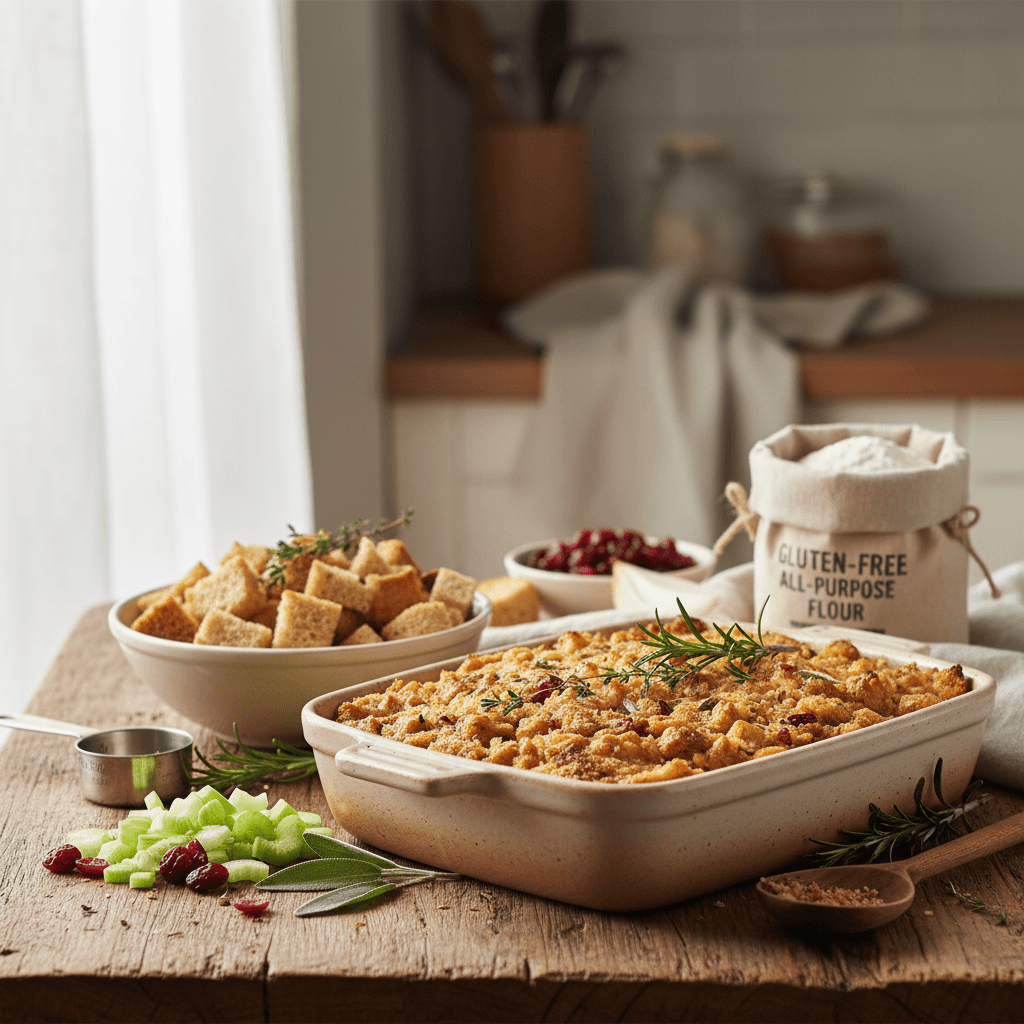
Thanksgiving stuffing is one of those dishes that hits different when you can't have it. If you've been diagnosed with celiac disease or a gluten sensitivity, watching everyone else dig into grandma's stuffing while you pick at a side salad is genuinely heartbreaking. The good news: you absolutely do not have to miss out this year. Here's everything you need to make incredible gluten-free stuffing from scratch, adapt your family's recipe, or grab a great store-bought option.
Key takeaways
- You can make traditional-tasting gluten-free stuffing from scratch using gluten-free bread cubes that you dry out overnight or toast in the oven.
- Several excellent store-bought gluten-free stuffing mixes exist, including options from Three Bakers, Aleia's, and Olivia's Croutons, and most ship within 3-5 days from Amazon.
- The secret to great gluten-free stuffing is using enough butter and broth to compensate for the drier texture of gluten-free bread, plus letting it rest before serving.
- You can adapt almost any traditional family stuffing recipe to gluten-free by swapping the bread and thickener — the herbs, vegetables, and technique stay exactly the same.
- Order store-bought mixes by early November to guarantee delivery before Thanksgiving, especially if you need certified gluten-free products.
Homemade gluten-free Thanksgiving stuffing from scratch
The best gluten-free stuffing starts with good gluten-free bread that you cube and dry out yourself. This gives you total control over texture and flavor, and honestly, most guests won't be able to tell the difference from the wheat version.
Classic herb stuffing with gluten-free bread
This is the foundational recipe that works every time. You'll need about a pound of gluten-free sandwich bread (roughly a full loaf), cubed into half-inch pieces and left out overnight on a sheet pan to go stale. If you're short on time, toast the cubes at 250°F for 25-30 minutes.
For the base, sauté one diced onion and three stalks of diced celery in half a cup of butter until soft, about 8 minutes. Add two teaspoons of dried sage, one teaspoon of dried thyme, half a teaspoon of dried rosemary, and salt and pepper to taste. Toss the herb mixture with the bread cubes, then add 1 to 1.5 cups of chicken or vegetable broth — enough to moisten everything without making it soggy. Stir in two beaten eggs to help bind it all together.
Transfer to a buttered 9x13 baking dish, cover with foil, and bake at 350°F for 25 minutes. Remove the foil and bake another 15-20 minutes until the top is golden and crispy. If you need an egg substitute to make this dairy-free or vegan, flax eggs work well here since the eggs are acting primarily as a binder.
A few tips that make a real difference: use more butter than you think you need (gluten-free bread absorbs fat differently), and don't skip the overnight drying step. Fresh gluten-free bread turns to mush in stuffing. If your stuffing comes out dry and crumbly, add broth a quarter cup at a time until you hit the right consistency.
If you're looking to level up your gluten-free baking beyond the holidays, our Confident Gluten-Free Baker Toolkit walks you through the fundamentals of working with gluten-free flours and binders so every recipe turns out right.
Cornbread stuffing variation
Cornbread stuffing is a natural fit for gluten-free baking because cornmeal is already gluten-free. Make a batch of gluten-free cornbread the day before (using a gluten-free flour blend in place of all-purpose flour), crumble it, and use it in place of the bread cubes in the recipe above. The cornbread version is richer and slightly sweeter, which pairs beautifully with sage and sausage.
For a Southern-style sausage cornbread stuffing, brown a pound of gluten-free breakfast sausage and fold it into the cornbread mixture along with the sautéed vegetables. Check your sausage labels carefully — many brands add wheat-based fillers.
Sourdough-style gluten-free stuffing
If you bake gluten-free sourdough at home (or can find it at a local bakery), it makes phenomenal stuffing. The tangy flavor adds a complexity that regular gluten-free sandwich bread can't match. Canyon Bakehouse and Bread SRSLY both make gluten-free sourdough loaves that work well if you don't bake your own. Cube the bread and dry it out just like the classic recipe above.
How to adapt your family's stuffing recipe to gluten-free
The easiest approach is to swap only what contains gluten and keep everything else identical. In most stuffing recipes, the only gluten-containing ingredient is the bread itself. Here's what to swap and what to keep:
| Ingredient | Contains gluten? | Gluten-free swap |
|---|---|---|
| White or wheat bread | Yes | Any gluten-free sandwich bread, cubed and dried |
| Butter | No | Keep as-is (check labels if very sensitive) |
| Chicken broth | Sometimes | Use certified GF broth — some brands add wheat starch |
| Dried herbs and spices | No | Keep as-is |
| Eggs | No | Keep as-is |
| Onion and celery | No | Keep as-is |
| Sausage or bacon | Sometimes | Check labels for wheat fillers |
The biggest adjustment is the amount of liquid. Gluten-free bread tends to absorb broth faster and more unevenly than wheat bread, so add your broth gradually and let it sit for five minutes before deciding if you need more. You want the mixture moist but not waterlogged.
If your family recipe calls for cream of mushroom soup as a binder (some do!), look for a gluten-free version or make a quick roux with arrowroot powder or cornstarch and mushroom broth instead.
Best store-bought gluten-free stuffing mixes and bread cubes
Not everyone wants to bake from scratch during the busiest cooking day of the year, and that's completely valid. These store-bought options range from ready-to-use stuffing mixes to pre-cubed bread that you can season yourself.
| Brand | Type | Certified GF | Best for |
|---|---|---|---|
| Three Bakers | Herb stuffing cubes | Yes | Closest to traditional texture |
| Aleia's | Seasoned stuffing mix | Yes | Convenience — just add broth and butter |
| Olivia's Croutons | Stuffing seasoned croutons | Yes | Crispy-top stuffing lovers |
| Canyon Bakehouse | Sandwich bread (cube yourself) | Yes | DIY with your own seasonings |
| Schar | Bread cubes (cube yourself) | Yes | Widely available in grocery stores |
The Three Bakers Herb Stuffing Cubes are our top pick for people who want the closest thing to traditional stuffing with minimal effort. They come pre-seasoned and pre-cubed — just add butter, broth, and your sautéed vegetables.
For a fully seasoned mix where you literally just add liquid, Aleia's Gluten-Free Stuffing Mix is excellent. The seasoning is well-balanced and it tastes homemade even though it takes about 10 minutes of active work.
Olivia's Croutons Stuffing Seasoned are perfect if you like your stuffing with a really crispy, crunchy top layer. They hold their shape well and don't turn to mush.
If you prefer to control the seasoning entirely, grab a loaf of Canyon Bakehouse Heritage Style bread and cube it yourself. It dries out beautifully and takes on whatever flavors you add.
For those who want to keep it simple with something available at most grocery stores, Schar white bread is reliable and widely stocked. It won't win any artisan bread awards, but it makes perfectly good stuffing when properly dried and well-seasoned.
When to order for Thanksgiving delivery
If you're ordering online, place your order by the first week of November. Most Amazon shipments arrive within 3-5 business days, but gluten-free specialty items can sell out or experience delays as the holiday approaches. By mid-November, you risk out-of-stock notices on popular items like Three Bakers and Aleia's. If you're reading this in late November and panicking, check your local Whole Foods, Sprouts, or health food store — they typically stock gluten-free stuffing options seasonally.
Make it easy: the no-bake-from-scratch approach
If you just want stuffing on your plate without spending hours in the kitchen, here's the simplest possible path:
- Buy a box of Aleia's Gluten-Free Stuffing Mix.
- Sauté half a diced onion and two stalks of celery in four tablespoons of butter.
- Combine the stuffing mix, vegetables, and 1.5 cups of hot gluten-free chicken broth in a casserole dish.
- Cover and bake at 350°F for 20 minutes, then uncover for 10 more minutes.
- Done. Total active time: about 15 minutes.
You can dress this up with additions like dried cranberries, toasted pecans, crumbled cooked sausage, or fresh herbs. Nobody needs to know you didn't make it from scratch. We won't tell.
Tips for making gluten-free stuffing taste as good as the original
Gluten-free stuffing can absolutely be just as good as the wheat version, but it does behave a little differently. Here's what we've learned from years of making it:
- Dry your bread thoroughly. This is the single most important step. Undried gluten-free bread turns into a gummy, pasty mess. Leave cubes out overnight, or toast them low and slow in the oven.
- Be generous with fat. Butter is your friend. Gluten-free bread lacks the protein structure that holds moisture in wheat bread, so extra butter keeps everything tender and flavorful.
- Add broth gradually. Pour in half the amount the recipe calls for, stir, wait five minutes, then add more as needed. Gluten-free bread absorbs liquid at different rates depending on the brand.
- Use eggs or a binder. Two eggs for a 9x13 pan of stuffing helps hold everything together. Without gluten providing structure, you need something else doing that job. Check our guide on how eggs function in baking to understand why this matters.
- Let it rest. After baking, let the stuffing sit for 10 minutes before serving. It firms up as it cools slightly, which gives you cleaner portions and better texture.
- Season boldly. Gluten-free bread can taste blander than wheat bread, so don't be shy with the sage, thyme, salt, and pepper. Taste your broth mixture before adding it to the bread.
If you're dealing with a gummy center in your stuffing, it almost always means the bread wasn't dried enough or there was too much liquid. Spread the stuffing thinner in the pan (use two dishes if needed) so heat can reach the center.
Adapting stuffing for other dietary needs
Many families dealing with gluten-free eating are also navigating other allergies or dietary preferences at the same table. Here are quick adaptations:
- Dairy-free: Replace butter with a good vegan butter (Earth Balance works well) or olive oil. Use vegetable broth instead of chicken broth. Check our guide to choosing milk alternatives if your recipe calls for any dairy liquid.
- Egg-free: Use two flax eggs (two tablespoons ground flaxseed mixed with six tablespoons water, rested for 10 minutes) in place of two eggs. The stuffing will be slightly more delicate but still holds together.
- Vegan: Combine the dairy-free and egg-free swaps above, use vegetable broth, and skip the sausage or use a plant-based crumble.
- Low-sugar: Stuffing is naturally low in sugar, but check your store-bought bread and broth labels. Some gluten-free breads contain added sugars.
Frequently asked questions
Is regular stuffing mix gluten-free?
No, traditional stuffing mixes like Stove Top contain wheat bread and wheat flour. You need to buy a specifically labeled gluten-free stuffing mix, or make your own using gluten-free bread. Always check the label for a certified gluten-free seal, especially if you have celiac disease.
What bread works best for gluten-free stuffing?
A sturdy gluten-free sandwich bread works best because it holds its shape when cubed and dried. Canyon Bakehouse, Schar, and Three Bakers all make good options. Avoid very soft or thin-sliced gluten-free breads, which tend to crumble too much. If your stuffing is falling apart, the bread choice is usually the issue — and making sure you troubleshoot dry, crumbly texture can help.
Can you stuff a turkey with gluten-free stuffing?
Yes, gluten-free stuffing can go inside the turkey just like traditional stuffing. Make sure the internal temperature of the stuffing reaches 165°F for food safety. Keep in mind that stuffing cooked inside the bird will be moister and softer than stuffing baked in a casserole dish, so reduce the broth slightly if you're going this route.
How far in advance can you make gluten-free stuffing?
You can assemble the stuffing (everything mixed but unbaked) up to 24 hours in advance and refrigerate it covered. Add an extra 10-15 minutes of baking time since it'll be going into the oven cold. You can also cube and dry the bread up to three days ahead and store it in an airtight container at room temperature.
Why does my gluten-free stuffing taste gummy?
Gummy stuffing is almost always caused by too much liquid or bread that wasn't dried out enough before assembling. Gluten-free bread lacks the protein network that gives wheat bread its resilience, so it breaks down faster when wet. Dry your bread cubes thoroughly, add broth gradually, and spread the stuffing in a thinner layer so it bakes evenly. Our guide to fixing gummy centers in gluten-free baking has more detailed troubleshooting.

Written by
Co-founder, BakingSubs
Co-founder of BakingSubs, where he turns the science of ingredient substitutions into tested, reliable guidance for home bakers.
Related Posts
Best Low Carb Bread Brands (2026): 8 Compared by Net Carbs, Ingredients, and Price
Best Keto Buns, Bagels, and English Muffins: 10 Products Compared by Net Carbs and Ingredients
Gluten-Free Flour Weight Chart: Grams per Cup for 9 Major Brands (and Why the Spread Is Over 20%)
Bake with Confidence
See all
Confident Gluten-Free Baker Toolkit
The science-based system that replaces gluten's seven invisible jobs so your baking turns out soft, fluffy, and foolproof — every time.

Gluten-Free Recipe Vault
Instant access to our complete library of proven gluten-free recipes — no waiting, no guesswork, just results that work tonight.

Fix Your Gluten-Free Bread
Learn the 3-step formula to make bread rise and stay soft, discover why your loaves collapse, and get a tested sandwich bread recipe that actually works.