

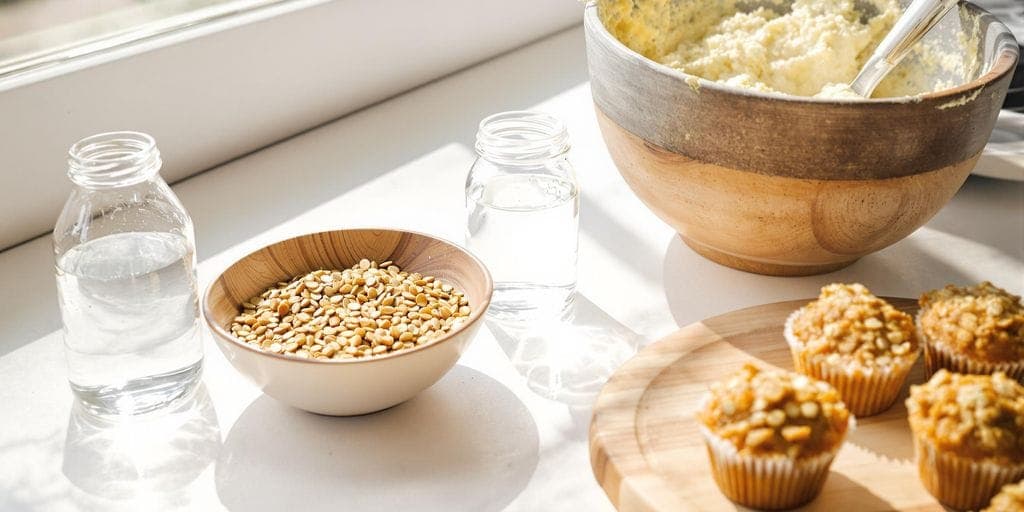
If you've been dabbling in plant-based baking, you've probably heard about the magical flax egg. It's a simple, go-to substitute for eggs that works wonders in many recipes.
Whether you're vegan, have an egg allergy, or just ran out of eggs, learning how to make a flax egg can save the day. Plus, it's super easy to whip up.
Key Takeaways
- A flax egg is a mix of ground flaxseed and water, used as a vegan egg substitute.
- The standard ratio for making a flax egg is 1 tablespoon of flaxseed to 2.5–3 tablespoons of water.
- Flax eggs work well in cookies, muffins, and quick breads.
- They are not ideal for dishes that rely heavily on eggs for structure, like meringues.
- Let the flax and water mixture sit for 5-10 minutes to thicken before using.
Understanding the Basics of a Flax Egg
Aquafaba, the liquid from canned chickpeas, is a magical substitute for recipes that need fluffiness, like meringues or macarons. While flax eggs are great for binding, they can’t whip up into peaks like aquafaba. If you’re making something airy, aquafaba is your go-to. But for everyday baking? Flax eggs win for simplicity and versatility.
Feature | Flax Eggs | |
|---|---|---|
Preparation | Quick and easy | Requires whipping |
Best Use Cases | Cookies, pancakes | Meringues, soufflés |
Unique Trait | Binding power | Whips into stiff peaks |
Flax eggs are a reliable, all-around option for most baking needs, but knowing when to swap them for chia, applesauce, or aquafaba can take your plant-based recipes to the next level.
Troubleshooting Common Issues with Flax Eggs
Why Isn’t My Flax Egg Gelling?
If your flax egg isn’t thickening, it’s probably due to one of these reasons:
- Incorrect Ratio: Make sure you’re using the right balance of flaxseed to water. The standard is 1 tablespoon of ground flaxseed to 2.5–3 tablespoons of water.
- Coarsely Ground Flaxseed: The finer the grind, the better it absorbs water and forms a gel-like texture.
- Not Enough Time: Let the mixture sit for at least 5–10 minutes. Patience is key here, so don’t rush it.
Pro Tip: If it’s still not gelling, try warming the water slightly before mixing. This can speed up the process.
How to Fix a Runny Flax Egg
A runny flax egg can throw off your entire recipe. Here’s how to troubleshoot:
- Add more ground flaxseed, about ½ teaspoon at a time, and stir well.
- Let it sit for a few extra minutes to thicken.
- If it’s still too runny, double-check the freshness of your flaxseed. Older seeds might not work as effectively.
When to Avoid Using Flax Eggs
Flax eggs are versatile, but they’re not perfect for every recipe. Avoid using them in:
- Recipes that rely heavily on eggs for structure, like soufflés or meringues.
- Dishes where a neutral flavor is crucial, as flax eggs can add a slight nuttiness.
- Recipes requiring more than 2–3 eggs, as the texture might become too dense.
Remember, flax eggs shine in recipes like cookies, muffins, and quick breads where moisture and binding are more important than lift.
Wrapping It Up
So, there you have it—making a flax egg is as simple as mixing ground flaxseeds with water and letting it sit for a few minutes. It’s a quick, easy, and super handy trick for anyone diving into plant-based baking. Whether you’re whipping up cookies, muffins, or pancakes, this little swap can make a big difference. Plus, it’s always nice to know you’ve got a reliable, egg-free option in your back pocket. Give it a try in your next recipe and see how it works for you!
Frequently Asked Questions
What is a flax egg, and how does it work?
A flax egg is made by mixing ground flaxseed with water. The mixture thickens into a gel-like consistency, which acts as a binder in recipes, similar to how eggs work.
Why should I use flax eggs instead of regular eggs?
Flax eggs are plant-based, making them perfect for vegans or those with egg allergies. They are also packed with nutrients like omega-3 fatty acids and fiber.
How do I make a flax egg?
To make a flax egg, mix 1 tablespoon of ground flaxseed with 2.5–3 tablespoons of water. Let it sit for about 5 minutes until it thickens.
Can flax eggs be used in all baking recipes?
Flax eggs work best in recipes like cookies, muffins, and quick breads. They may not be ideal for recipes requiring a lot of structure, like meringues or soufflés.
What’s the difference between flax eggs and chia eggs?
Both are made by mixing seeds with water, but flax eggs use ground flaxseed while chia eggs use whole or ground chia seeds. Chia seeds create a thicker gel and add a bit more texture.
How should I store leftover flaxseed or prepared flax eggs?
Ground flaxseed should be kept in the fridge or freezer to stay fresh. Prepared flax eggs should be used immediately for best results.

Written by
Co-founder, BakingSubs
Co-founder of BakingSubs, where he turns the science of ingredient substitutions into tested, reliable guidance for home bakers.
Related Posts

Erythritol vs Stevia for Baking: 6 Differences That Actually Change Your Results
Allulose vs Erythritol for Baking: 6 Differences That Actually Change Your Results

Allulose as Sugar Substitute for Baking: 5 Things That Change (and 2 That Catch Bakers Off Guard)
Bake with Confidence
See all
Confident Gluten-Free Baker Toolkit
The science-based system that replaces gluten's seven invisible jobs so your baking turns out soft, fluffy, and foolproof — every time.

Gluten-Free Recipe Vault
Instant access to our complete library of proven gluten-free recipes — no waiting, no guesswork, just results that work tonight.

Fix Your Gluten-Free Bread
Learn the 3-step formula to make bread rise and stay soft, discover why your loaves collapse, and get a tested sandwich bread recipe that actually works.