

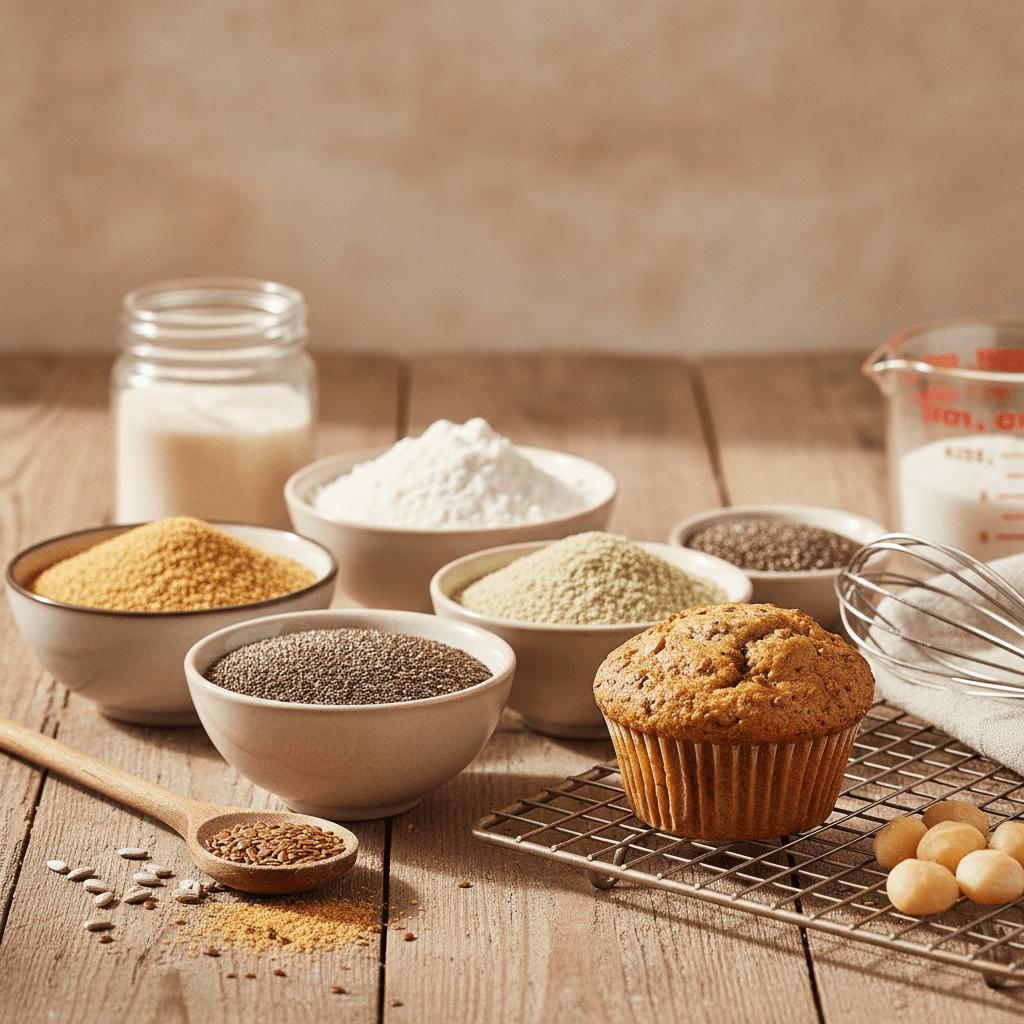
Sunflower seed flour is a go-to for nut-free keto baking, but it has quirks — it turns green in some recipes, it can taste bitter, and it's not always easy to find at a reasonable price. If you need to swap it out, here are six substitutes that keep your net carbs low while actually producing something worth eating.
Key takeaways
- Almond flour is the closest 1:1 swap for sunflower seed flour in most keto recipes, but it is not nut-free.
- Pumpkin seed flour is the best nut-free alternative, with a similar fat content and protein level.
- Coconut flour absorbs roughly 3–4 times more liquid than sunflower seed flour, so you cannot swap it at the same ratio.
- Flaxseed meal works well as a partial replacement (up to about 25–30% of the flour) but turns gummy when used alone.
- Sesame seed flour and hemp heart flour are viable but less common, and both bring strong flavors that limit which recipes they suit.
- No single substitute perfectly replicates sunflower seed flour's neutral flavor and moderate moisture absorption — blending two options often produces the best results.
Why sunflower seed flour works in keto baking (and why substitutes struggle)
Sunflower seed flour is made from finely ground, defatted or partially defatted sunflower seeds. It typically lands around 4–5g net carbs per quarter cup, with a generous amount of protein and fat. That macronutrient profile makes it popular in keto muffins, pancakes, and quick breads, especially for bakers avoiding tree nuts.
The challenge with replacing it is threefold. First, it absorbs moisture at a moderate rate — less than coconut flour, more than almond flour. Second, it has a relatively neutral, slightly nutty flavor that doesn't overpower other ingredients. Third, it provides structure without gluten, relying on its protein and fat content to hold crumbs together. Any substitute needs to address at least two of those three properties, or you'll notice the difference.
1. Almond flour — the most predictable swap
Almond flour is the easiest substitute if nut allergies aren't a concern. It has a similar particle size when made from blanched almonds, a mild flavor, and a fat content that keeps keto baked goods moist.
You can generally use almond flour at a 1:1 ratio by weight for sunflower seed flour. The net carb count is comparable — roughly 3g net carbs per quarter cup for finely ground blanched almond flour, depending on the brand. The protein content is slightly lower than sunflower seed flour, so you may notice a marginally more tender crumb.
Where almond flour falls short: it doesn't bind as firmly as sunflower seed flour in some applications, particularly bread-style recipes where you want a chewier texture. Adding a small amount of a binding agent like psyllium husk powder (around 1–2 teaspoons per cup of flour) can help compensate. For a deeper comparison of how almond flour behaves versus other keto flours, see our guide on almond flour vs coconut flour for keto baking.
Best for: Muffins, cookies, pancakes, quick breads. Nearly any recipe that originally calls for sunflower seed flour.
Not ideal for: Nut-free baking, or recipes where you need a firmer, more bread-like structure without additional binders.
2. Pumpkin seed flour — the best nut-free alternative
If you need sunflower seed flour because of a tree nut allergy, pumpkin seed flour is your strongest option. It comes from ground pumpkin seeds (pepitas) and shares a similar nutritional profile: high in protein, moderate in fat, and low in net carbs. The flavor is earthier and more distinctly

Written by
Co-founder, BakingSubs
Co-founder of BakingSubs, where he turns the science of ingredient substitutions into tested, reliable guidance for home bakers.
Related Posts

Bake with Confidence
See all
Confident Gluten-Free Baker Toolkit
The science-based system that replaces gluten's seven invisible jobs so your baking turns out soft, fluffy, and foolproof — every time.

Gluten-Free Recipe Vault
Instant access to our complete library of proven gluten-free recipes — no waiting, no guesswork, just results that work tonight.

Fix Your Gluten-Free Bread
Learn the 3-step formula to make bread rise and stay soft, discover why your loaves collapse, and get a tested sandwich bread recipe that actually works.