
Pennsylvania Limited Food Establishment Rules for Home Bakers (2026): Fees, Inspections, and What You Can Sell
Pennsylvania's Limited Food Establishment program lets home bakers sell shelf-stable baked goods with no sales cap. Learn the $35 registration, inspection, allowed foods, labeling rules, and venues for 2026.

Malik
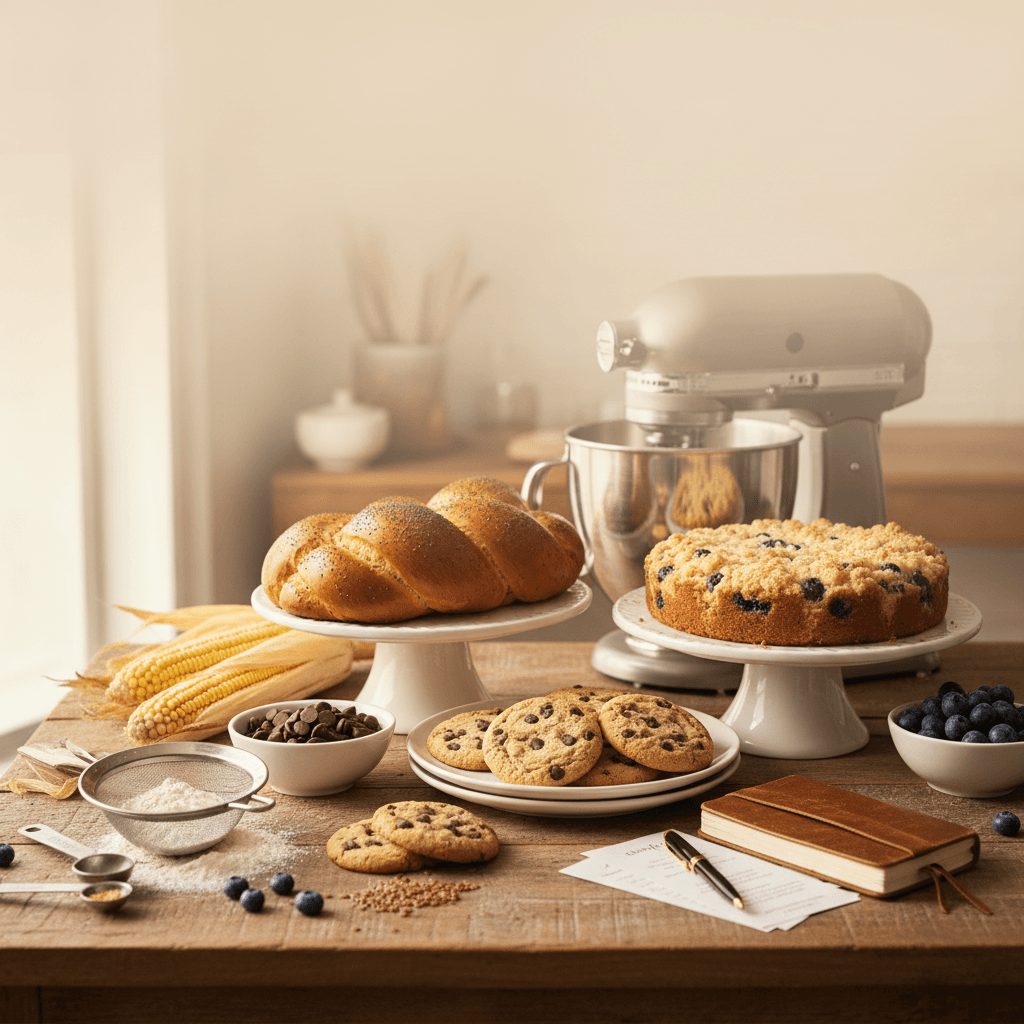
Pennsylvania allows home bakers to sell certain baked goods under its Limited Food Establishment (LFE) program, administered by the Pennsylvania Department of Agriculture (PDA). There is no annual sales cap, you need a $35 state registration (not a full food license) that includes a home kitchen inspection, and most shelf-stable baked goods are allowed. Below is everything you need to know about fees, inspections, labeling, allowed venues, and the foods you can and cannot sell.
Last verified: September 2026
This post is for informational purposes only and does not constitute legal advice. Always confirm current requirements directly with the Pennsylvania Department of Agriculture's Limited Food Establishment page.
Key takeaways
- Pennsylvania's LFE program has no annual sales cap. PDA publishes no dollar limit for registered home kitchens.
- Registration costs $35, collected at your opening inspection, with a $35 annual renewal. No separate county permit is required by the state, but local zoning approval is, and LFE registration is not available in Philadelphia County.
- Your home kitchen is inspected before you can open and on a routine basis afterward. PDA does not list a food safety course as an LFE requirement, though operators must demonstrate basic food safety knowledge at inspection.
- Only non-time/temperature-control-for-safety (non-TCS) foods are allowed — breads, cookies, brownies, dry mixes, and similar shelf-stable items.
- Registration covers sales direct from your home, including internet sales. Wholesale is allowed, and farmers market or event stands may need a separate Retail Food Facility license. Interstate shipping is possible but brings federal (FDA) registration and labeling requirements.
- Labels must include the product name, your name and address, an ingredient list with sub-ingredients, allergen declarations, and net weight or unit count. Pennsylvania does not require a "made in a home kitchen" disclaimer.
- No pets may be in the home at any time unless the kitchen is fully walled off with its own entrance, and children may not be in the kitchen during production.
What is the limited food establishment program?
Pennsylvania's LFE program operates under the Pennsylvania Food Safety Act (3 Pa.C.S. §§ 5721–5737, enacted as Act 106 of 2010), which requires every food establishment in the Commonwealth to register. It gives home-based food producers a path to legal sales without building a commercial kitchen. The governing agency is the Pennsylvania Department of Agriculture, Bureau of Food Safety and Laboratory Services.
The program is sometimes confused with a "cottage food law," and while it serves a similar purpose, Pennsylvania officially uses the term "Limited Food Establishment." The distinction matters when you search the PDA website — look for "LFE" or "Limited Food Establishment" to find the correct forms and guidance documents.
Annual sales cap and what counts toward it
There is no annual sales cap. Unlike most states' cottage food laws, Pennsylvania's LFE registration does not limit how much you can gross from a home kitchen. What limits you is the product list (non-TCS foods only) and the kitchen itself, not a dollar figure.
For context, a baker who charges $28 per dozen decorated sugar cookies and sells 34 dozen per week would gross about $50,000 a year, and that is perfectly legal under an LFE registration. What changes as you grow is federal exposure: once you wholesale or ship across state lines, FDA facility registration and nutrition labeling rules can apply (more on that below).
If you are planning your revenue targets and pricing strategy, our guide on pricing baked goods for a home bakery covers how to calculate your true costs per item so you know exactly where you stand.
Registration, food safety training, and fees
You do not need a full food establishment license. Instead, you register as a Limited Food Establishment with the PDA. Here is what that involves:
Registration fee
The registration fee is $35, collected by your food inspector at the end of a compliant opening inspection, and the annual renewal is also $35. There is no separate county or municipal fee required by the state program, but PDA requires you to confirm with your municipality that local zoning allows a food business at your address before you apply. One hard exclusion: LFE registration is not permitted in Philadelphia County, where the city health department has jurisdiction.
Plan ahead. PDA asks for the application at least 60 days before you intend to open, reviews it within about 15 business days, and mails the formal registration within 60 days of inspection (your inspection report serves as approval in the meantime).
Food safety training requirement
PDA's LFE application materials do not list a food safety course or certification as a requirement. What they do say is that everyone involved "must demonstrate basic food safety knowledge and adhere to good hygiene, processing and sanitary" practices, which the inspector will discuss with you at your opening inspection. A ServSafe Food Handler course (typically about $15–$18 online) is an easy way to be ready for that conversation, but confirm with your regional PDA office whether anything is required in your case.
Home kitchen inspections
Under the LFE program, your home kitchen is inspected. An opening inspection must be completed before you can operate, and PDA states that registration "involves inspection of the food production site on a routine basis." Inspectors can also require pH or water activity testing of questionable products before approving them. Keep your kitchen clean, your business ingredients stored separately from household food, and your records organized.
Pets, children, and water
PDA's rules are strict here. No animals or pets are permitted in the home at any time if you use your personal kitchen. The only exception is a kitchen that is physically separated from any pet-accessible area by a fully closing door (baby gates do not count) and that has its own entrance so you never carry ingredients or product through pet areas. Caged fish, reptiles, and hamsters kept away from the kitchen do not count as pets. Children may not be in the kitchen during business production. If you are on a private well, the water must be tested for coliform bacteria (annually) and nitrate/nitrite, with results submitted with your application.
Which foods are allowed (and which are not)
The rule is straightforward: you may only sell non-TCS (non-time/temperature-control-for-safety) foods. These are foods that do not require refrigeration or hot-holding to remain safe.
Allowed foods
- Breads, rolls, and buns (including gluten-free versions)
- Cookies, brownies, and bars
- Cakes without cream, custard, or cream cheese fillings or frostings
- Muffins and scones
- Fruit pies (shelf-stable fillings; PDA lists fruit pies among traditional bakery items)
- Dry baking mixes
- Candy, including fudge, hard candy, lollipops, and chocolates
- Jams and jellies (PDA expects written formulas and at least 65% soluble solids for standard-of-identity jams and jellies)
- Acidified foods such as salsa, pickled vegetables, and barbecue sauce (only with lab pH testing and a PDA-approved process flow)
- Granola, snack mixes, herb blends, and dry seasoning mixes
Prohibited foods
- Anything requiring refrigeration: cream pies, cheesecakes, custard and meringue pastries, and pumpkin pies (PDA names these specifically)
- Cream cheese frostings and other frostings or fillings made with perishable dairy that have not been tested for shelf stability
- Baked goods containing meat or cheese
- Low-acid canned foods (pH above 4.6), such as soups, gravies, and un-pickled vegetables
- Chocolate-covered fruit, unless the fruit has a pH of 4.6 or below (most apples and strawberries qualify)
- Any TCS food, period
A common question from gluten-free bakers: yes, gluten-free breads and cookies made with almond flour, brown rice flour, or other alternative flours are allowed as long as they are shelf-stable and non-TCS. The flour type does not change your eligibility — the safety classification of the finished product does.
The gray area: frostings and fillings
Buttercream made with butter, powdered sugar, and vanilla is generally considered non-TCS because of its low water activity. However, if you add cream cheese, fresh fruit puree, or whipped cream, the product likely becomes TCS and falls outside LFE rules. When in doubt, contact your regional PDA office or have your product tested for water activity (Aw) and pH. PDA states that questionable baked goods "shall be tested for pH and Available Water (Aw) by the producer" and that the sanitarian evaluates the product from those results. A water activity reading below 0.85 generally classifies a food as non-TCS.
Where you can sell
PDA states that LFE registration "includes sales direct from the production site including internet sales." In practice, the venues break down like this:
- Your home — customers can pick up orders at your residence, and this is the core of what the registration covers
- Online orders with pickup or delivery — you can take orders through a website, Facebook, or Instagram and hand off locally or ship within Pennsylvania
- Farmers markets, fairs, and community events — allowed, but PDA notes that "a Retail Food Facility License may also be required for sales at an event or Farmer's Market." PDA's farmers market guidance says vendors selling only pre-packaged shelf-stable items like baked goods are exempt from the license fee but still must apply and be inspected for the stand. Where a county or city health department has jurisdiction, that stand license comes from them instead.
- Roadside stands — a stand at your production site is covered by the registration; a stand elsewhere is treated like a market stand
What about shipping and wholesale?
Wholesale is allowed. The LFE application itself asks whether you plan to sell "wholesale in state, wholesale out of state, internet, at a local farmers market, retail" and lets you register as retail only, wholesale only, or both. So a local coffee shop can carry your muffins, provided the product is fully labeled (see below). PDA does note that facilities that wholesale may need to register with FDA under the Food Safety Modernization Act, though businesses run from a private residence and businesses whose sales are primarily direct-to-consumer are generally exempt.
Interstate shipping is not prohibited by PDA, but it triggers federal rules. PDA's packet says products sold across state lines must carry nutrition labeling (most LFEs qualify for FDA's small business exemption but must apply for it) and that processors selling interstate, "which include internet sales," may need to register with FDA. Talk to your FDA small business representative before shipping to New Jersey or Ohio. Shipping within Pennsylvania falls under the same internet-sales language as any other direct sale.
Summary table: Pennsylvania LFE at a glance
| Requirement | Details |
|---|---|
| Governing agency | Pennsylvania Department of Agriculture (PDA), Bureau of Food Safety |
| Program name | Limited Food Establishment (LFE) under the PA Food Safety Act (3 Pa.C.S. §§ 5721–5737) |
| Annual sales cap | None |
| Registration required? | Yes — registration with PDA; not available in Philadelphia County |
| Registration fee | $35 at opening inspection; $35 annual renewal |
| Food safety training | Not listed as a requirement; operators must show basic food safety knowledge at inspection |
| Home inspection | Yes — opening inspection before operating, then routine inspections |
| Pets / children | No pets in the home (unless kitchen is fully separated with its own entrance); no children in the kitchen during production |
| Allowed foods | Non-TCS only: breads, cookies, cakes (no cream/custard), jams, candy, dry mixes, tested acidified foods |
| Prohibited foods | TCS foods: cream pies, cheesecakes, pumpkin pies, baked goods with meat or cheese, low-acid canned foods, anything requiring refrigeration |
| Sales venues | Home (including internet sales); farmers markets and events may need a separate Retail Food Facility license |
| Online sales | Yes — covered by registration |
| Shipping | In-state — yes. Interstate — allowed but subject to FDA registration and nutrition labeling rules |
| Wholesale | Allowed (in state and out of state); FDA registration may apply |
Label requirements for Pennsylvania LFE bakers
Packaged products must carry a label. PDA lists these required elements:
- Product name — "Chocolate Chip Cookies," "Sourdough Bread," etc.
- Name and address of the manufacturer — your name (or business name) and your registered LFE address
- Ingredient list — in descending order by weight, including sub-ingredients (list what is inside your baking powder or chocolate chips, not just "baking powder")
- Net weight or unit count — PDA accepts either; if you use weight, following FDA's dual-unit format (e.g., 12 oz / 340 g) is the safe choice
- Allergen declaration — "if needed," meaning whenever a major allergen is present. Federal law covers milk, eggs, wheat, soy, peanuts, tree nuts, fish, shellfish, and sesame
Notice what is not on that list: Pennsylvania does not require a "made in a home kitchen" disclaimer statement, unlike many cottage food states. Do not copy one from another state's guide.
There is also a bakery exemption. PDA says bakery items "made and sold directly to a Commonwealth consumer, by the baker (or their employee), do not require any labeling information directly on the products," as long as ingredient information is available on request. The full label is required once your product is sold at a retail facility you do not own (packaged goods need the label on the package; bulk displays need the information posted at the display). Any claim such as "gluten free" or "sugar free" must be substantiated through ingredient documentation or testing, and adding a claim can trigger nutrition labeling requirements.
If you sell gluten-free products, be especially careful with allergen labeling. Cross-contamination in a home kitchen is a real concern, and you should disclose shared equipment. For example: "Made in a kitchen that also processes wheat, tree nuts, and eggs." This protects both your customers and your business.
How much it actually costs to get started
Here is a realistic breakdown of the minimum startup costs for a Pennsylvania LFE home bakery:
| Expense | Estimated cost |
|---|---|
| LFE registration (annual) | $35 |
| ServSafe Food Handler course (optional) | $15–$18 |
| Labels (first batch, about 250 labels) | $30–$60 |
| Food scale (accurate to 1g) | About $25–$40 |
| Packaging (bags, boxes, tissue — first order) | $50–$100 |
| Ingredients for first production run | $75–$150 |
Total startup cost: roughly $230–$403 before any optional expenses like a website, business cards, or liability insurance, plus any well-water testing or product pH testing PDA requires for your situation. That is remarkably low compared to states that require commercial kitchen rental, which can run $15–$25 per hour.
Speaking of insurance — Pennsylvania does not require LFE bakers to carry liability insurance, but many farmers markets do. A basic product liability policy for a home bakery typically costs $250–$500 per year. It is worth having even if no one requires it, because a single foodborne illness claim could wipe out years of profit.
Common mistakes Pennsylvania home bakers make
Based on PDA's published guidance, these are the most frequent stumbling blocks:
Selling TCS foods without realizing it
Pumpkin cream cheese muffins are a classic example: the cream cheese filling makes them TCS, so they cannot be sold under an LFE registration, and a baker who adds them to a market table may have to pull the product and reformulate with a shelf-stable filling. If you are unsure whether your recipe qualifies, get a pH and water activity test done — labs charge roughly $30–$75 per sample.
Selling at a farmers market on the LFE registration alone
Your registration covers sales from your production site. A market stand or event booth may need its own Retail Food Facility license from PDA or the local health department, even though shelf-stable vendors are exempt from the license fee. Ask the market manager who has jurisdiction and apply before your first market day.
Missing the allergen declaration
Federal allergen labeling is not optional just because you are a small home operation. Every label must list major allergens. "Contains: wheat, eggs, milk" is the standard format. Skipping this exposes you to liability and potential fines.
Forgetting to renew, or letting a pet in
Your LFE registration renews annually for $35. If you forget to renew and keep selling, you are operating illegally. Set a calendar reminder 30 days before your renewal date. And remember that the no-pets rule applies at all times, not just while you bake. Getting a dog after you register can end your eligibility unless your kitchen meets PDA's physical-separation standard.
Tips for growing within the LFE framework
With no sales cap, the LFE framework can support a meaningful side income or even a modest full-time business. Here are concrete strategies:
Price for profit, not volume. If you sell cookies at $2 each, you need to move 25,000 cookies to gross $50,000. If you sell decorated sugar cookie sets at $42 per dozen, you only need about 1,190 dozen — roughly 23 dozen per week. Higher-value products give you more margin and less production stress. Pricing your baked goods correctly from day one is the single most important business decision you will make.
Focus on 3–5 signature items. Bakers who try to offer everything burn out fast. Pick a few items you can produce efficiently and that have strong demand at your local markets. A gluten-free baker, for example, might focus on almond flour brownies, sourdough-style sandwich bread using brown rice flour blends, and seasonal fruit pies.
Build a repeat customer base. Farmers market sales are great for exposure, but the real money is in weekly standing orders. Offer a subscription box or weekly bread share where customers pre-pay for a month of deliveries. This smooths out your revenue and reduces waste.
How Pennsylvania compares to neighboring states
If you live near a state border, you might wonder how PA stacks up. The short version: Pennsylvania is unusual in having no sales cap, in requiring an actual kitchen inspection, and in allowing wholesale. New York, for example, requires a free registration with the Department of Agriculture and Markets, has no sales cap, and limits all sales to within New York State. New Jersey, Ohio, and Maryland each run their own cottage food programs with different caps, fees, and shipping rules.
Note: Neighboring state rules change frequently and are not verified here. Check each state's agriculture or health department directly before making business decisions based on another state's program.
Confirm current rules with the PDA
Rules change. Fees adjust. New amendments pass. Always verify the current requirements directly with the Pennsylvania Department of Agriculture's Limited Food Establishment page, which links to the current application packet, or call the Bureau of Food Safety and Laboratory Services at 717-787-4315. Your regional food sanitarian can answer specific questions about whether your product qualifies.
You can also find the full text of the Pennsylvania Food Safety Act (3 Pa.C.S. §§ 5721–5737) through the Pennsylvania General Assembly website.
Frequently asked questions
Do I need a commercial kitchen to sell baked goods in Pennsylvania?
No. Pennsylvania's Limited Food Establishment program allows you to prepare and sell non-TCS baked goods from your home kitchen. You register with the Pennsylvania Department of Agriculture ($35, then $35 per year), pass an opening inspection of your kitchen, and keep pets out of the home. Your kitchen is subject to routine PDA inspections after that. Philadelphia County residents cannot register as an LFE.
Can I sell cakes with cream cheese frosting under Pennsylvania's LFE program?
Generally no. Cream cheese frosting is considered a TCS (time/temperature-control-for-safety) food, which means it requires refrigeration and falls outside the LFE program's allowed products. You can sell cakes with non-TCS frostings like standard buttercream made from butter, powdered sugar, and vanilla. If you want to use cream cheese, you would need to have the finished product tested for water activity and pH to confirm it is shelf-stable.
Can I sell my home-baked goods online and ship them in Pennsylvania?
Yes. PDA says LFE registration covers "sales direct from the production site including internet sales," so taking orders online and delivering or shipping within Pennsylvania is covered. Shipping to other states is not prohibited by PDA, but products sold in interstate commerce must meet federal nutrition labeling rules (most LFEs can apply for FDA's small business exemption) and you may need to register with FDA. Talk to FDA's small business representative before you ship out of state.
Is there a sales cap for Pennsylvania Limited Food Establishments?
No. PDA does not set an annual sales limit for LFE registrants. You can grow as large as your home kitchen and product list allow. The practical ceilings are that you can only make non-TCS foods, you cannot hire your way into a commercial-scale operation in a residential kitchen, and wholesale or interstate sales can bring federal registration and labeling requirements.
Do I need liability insurance to sell baked goods from home in Pennsylvania?
Pennsylvania does not require LFE bakers to carry liability insurance. However, many farmers markets require vendors to have a product liability policy, typically with $1 million in coverage. A basic policy for a home bakery runs about $250–$500 per year. Even if no one requires it, carrying insurance protects your personal assets if a customer has an allergic reaction or illness they attribute to your product.

Written by
Co-founder, BakingSubs
Co-founder of BakingSubs, where he turns the science of ingredient substitutions into tested, reliable guidance for home bakers.
Related Posts
Bake with Confidence
See all
Confident Gluten-Free Baker Toolkit
The science-based system that replaces gluten's seven invisible jobs so your baking turns out soft, fluffy, and foolproof — every time.

Gluten-Free Recipe Vault
Instant access to our complete library of proven gluten-free recipes — no waiting, no guesswork, just results that work tonight.

Fix Your Gluten-Free Bread
Learn the 3-step formula to make bread rise and stay soft, discover why your loaves collapse, and get a tested sandwich bread recipe that actually works.