

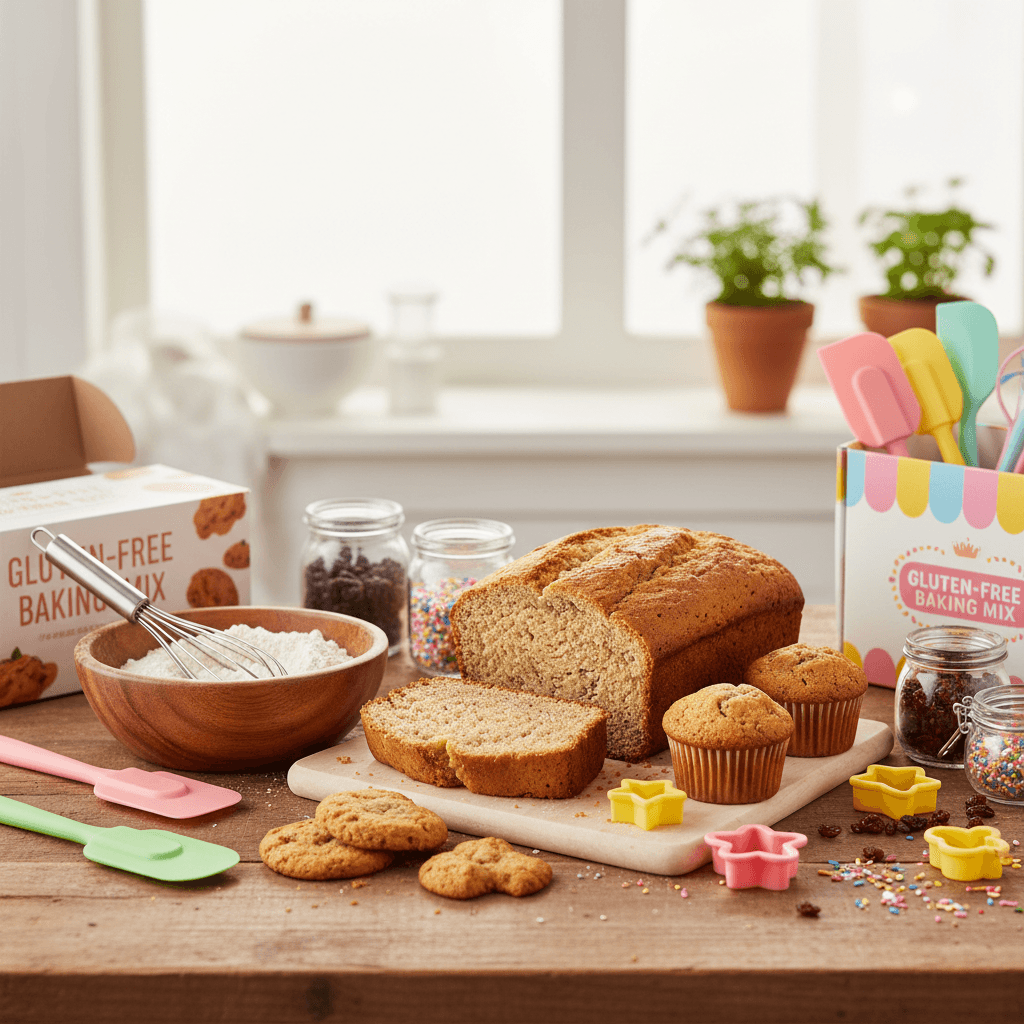
Getting kids into the kitchen is one of the best things we can do as parents and caregivers — and having the right tools and ingredients makes it safer, less stressful, and a whole lot more fun. Here's our curated guide to the best baking products for kids and family baking, organized by category so you can build the perfect setup for your crew.
Key takeaways
- Kid-safe tools like nylon knives, silicone spatulas, and lightweight mixing bowls make baking accessible for children as young as three.
- Gluten-free baking mixes are a great entry point for family baking because they simplify measuring and reduce mess.
- A kitchen scale is safer and more educational for kids than measuring cups, and it cuts down on spills significantly.
- Silicone baking mats and pans are safer than metal for little hands and easier to clean after a chaotic family session.
- You don't need to spend a fortune — a solid family baking setup can start under $50 and grow from there.
- Baking with kids builds math skills, confidence, and creates memories that last far longer than any cookie.
Best kid-safe baking tools that parents actually trust
The most important factor when choosing baking tools for kids is safety, followed closely by durability — because little hands are not gentle. Look for tools with soft grips, rounded edges, and lightweight construction that won't tire small arms.
A good kids' baking set should include a whisk, spatula, rolling pin, and measuring tools sized for small hands. The Baketivity Kids Baking Set is one of our favorites because it includes real tools (not flimsy toys) scaled down for children ages 4 and up. For individual tools, silicone spatulas and whisks from brands like OXO's "Little" line are sturdy enough to survive being dropped repeatedly.
One tool we think every family kitchen needs is a good digital kitchen scale. Kids love watching the numbers change, it teaches basic math concepts, and it eliminates the mess of scooping flour with measuring cups. If you're just getting started with tools, our guide to affordable baking tools for beginners covers the essentials for under $100.
What to look for in kids' baking tools
| Feature | Why it matters for kids |
|---|---|
| Silicone or nylon construction | Won't scratch pans, stays cool, and is dishwasher safe |
| Short, thick handles | Easier for small hands to grip and control |
| Lightweight materials | Prevents fatigue and reduces risk of dropping heavy items |
| Bright colors | Keeps kids engaged and helps them identify "their" tools |
| BPA-free certification | Essential for anything that touches food |
Best baking mixes for family baking sessions
Baking mixes are the secret weapon for family baking because they cut prep time in half and let everyone focus on the fun parts — stirring, decorating, and tasting. For gluten-free families, mixes also remove the guesswork of blending multiple flours.
We like Simple Mills for their clean ingredient lists. Their cookie and cake mixes use almond flour as a base and require only a few add-ins like eggs and oil — perfect for little helpers to crack and pour. Krusteaz gluten-free mixes are another excellent budget-friendly option that kids love, especially their pancake and cookie mixes.
For families managing multiple dietary needs, check out our guide to allergy-friendly baking products which covers options that are gluten-free, nut-free, dairy-free, and more.
If you're looking to build confidence with gluten-free baking beyond mixes, our Confident Gluten-Free Baker Toolkit walks you through the fundamentals so you can eventually bake from scratch with your kids and know exactly what you're doing.
Best baking pans and mats for families with kids
Silicone bakeware is the clear winner for family baking. It's flexible, virtually unbreakable, lightweight enough for kids to carry, and it releases baked goods without greasing — which means less mess and fewer stuck-on disasters.
The Silpat silicone baking mat is a useful kitchen staple. Kids can place cookie dough directly on it without worrying about sticking, and cleanup is just a quick wipe. For pans, silicone muffin tins and novelty-shaped cake molds (dinosaurs, stars, animals) turn ordinary baking into an event. They're also much safer than metal pans fresh from a hot oven since silicone stays cooler to the touch on the exterior.
For a deeper comparison of pans at different price points, our baking pans budget vs premium comparison breaks down exactly where to save and where to invest.
Best ingredients to stock for kid-friendly baking
When baking with kids, simple recipes with forgiving ingredients work best. Stock your pantry with basics that are hard to mess up and that kids enjoy eating straight from the bowl (because they will).
Flour and starches
A good all-purpose gluten-free flour blend is the foundation. Bob's Red Mill 1-to-1 Baking Flour is our go-to recommendation for families because it works in nearly any recipe without modification. For families exploring different flours, almond flour makes wonderfully forgiving cookies that taste great even when kids over-mix the dough.
Sweeteners and flavorings
Regular brown sugar and granulated sugar are the easiest for kids to work with. For vanilla, a good imitation vanilla is perfectly fine for family baking — we break down the real differences in our cheap vs premium vanilla extract comparison. Sprinkles, chocolate chips, and colored sugars are non-negotiable for keeping kids excited about the process.
Eggs and binders
Eggs are the ingredient kids love cracking most (and the one that causes the most mess). If you're baking egg-free, applesauce is the most kid-friendly substitute because it's easy to measure, impossible to over-pour, and adds natural sweetness. Check our guide to choosing egg substitutes for more options.
Family baking products by price
Whether you're building a first baking kit for a birthday gift or outfitting the whole family, here's what to expect at each price point.
| Budget | What you get | Price range |
|---|---|---|
| Starter | Basic kids' tool set, 2-3 baking mixes, silicone mat, measuring cups | Under $30 |
| Mid-range | Quality tool set, digital scale, silicone pans, 4-5 mixes, sprinkles and decorating kit | $30-$75 |
| Premium | Full kids' baking station with aprons, stand mixer attachment, premium mixes, decorating supplies, and recipe book | $75-$150+ |
Our guide to baking essentials under $50 is a great starting point if you want to keep costs down while still getting quality items.
Best baking kits and subscription boxes for kids
Pre-assembled baking kits take the planning out of family baking entirely. They arrive with pre-measured ingredients, kid-friendly instructions (often with pictures), and sometimes even the tools.
The Baketivity subscription box is designed specifically for kids and includes everything needed for one baking project per month, with educational content woven in. It's a fantastic gift idea for grandparents or anyone who wants to give an experience rather than another toy. For a broader look at subscription options, we compared seven popular boxes in our baking subscription box comparison.
Tips for making family baking sessions actually enjoyable
Having great products is only half the equation. Here are the strategies that make family baking work in real life.
- Prep everything first. Measure ingredients into small bowls before the kids come to the counter. This "mise en place" approach keeps things moving and reduces overwhelm.
- Assign age-appropriate tasks. Toddlers can pour pre-measured ingredients and stir. School-age kids can crack eggs and use the scale. Teens can handle the oven and timing.
- Embrace imperfection. Lumpy batter and uneven cookies are part of the experience. The goal is connection, not perfection.
- Keep a damp towel nearby. This is the single most practical tip we can offer. Flour-covered hands touching everything is inevitable — a damp towel within reach saves your sanity.
- Let kids decorate freely. Even if the baking part is structured, give them full creative control over decorating. A basic decorating kit with a few tips and bags opens up endless possibilities.
Frequently asked questions
What age can kids start baking?
Kids as young as two or three can participate in baking with close supervision. At that age, they can stir ingredients, pour pre-measured items into bowls, and press cookie cutters into dough. By age five or six, most children can handle cracking eggs, using a scale, and following simple recipe steps with guidance.
Are silicone baking tools safe for children?
Yes, food-grade silicone baking tools are one of the safest options for kids. They're BPA-free, heat-resistant, flexible, and won't shatter if dropped. Silicone spatulas, mats, and muffin pans are all excellent choices for family baking because they stay cooler than metal and are easy to clean.
What are the best gluten-free baking mixes for kids?
Simple Mills and Krusteaz both make excellent gluten-free mixes that kids enjoy. Simple Mills uses clean, recognizable ingredients like almond flour, while Krusteaz offers more traditional flavors at a lower price point. Both require minimal add-ins, which keeps the process simple for young bakers.
How do I set up a baking station for kids?
Choose a counter or table at your child's height, or use a sturdy step stool at the kitchen counter. Lay down a silicone mat to catch spills, set out pre-measured ingredients in small bowls, and provide kid-sized tools. Keep sharp items and hot surfaces out of reach, and designate a "tasting spoon" so little fingers stay out of the batter bowl.
What baking projects are best for beginners?
Cookies are the ideal first project for kids because the dough is forgiving, the process involves lots of hands-on mixing and shaping, and the bake time is short enough to hold a child's attention. No-bake treats, muffins, and banana bread are also great starter recipes that build confidence quickly.

Written by
Co-founder, BakingSubs
Co-founder of BakingSubs, where he turns the science of ingredient substitutions into tested, reliable guidance for home bakers.
Related Posts
Bake with Confidence
See all
Confident Gluten-Free Baker Toolkit
The science-based system that replaces gluten's seven invisible jobs so your baking turns out soft, fluffy, and foolproof — every time.

Gluten-Free Recipe Vault
Instant access to our complete library of proven gluten-free recipes — no waiting, no guesswork, just results that work tonight.

Fix Your Gluten-Free Bread
Learn the 3-step formula to make bread rise and stay soft, discover why your loaves collapse, and get a tested sandwich bread recipe that actually works.