
What to Bring to Your First Farmers Market as a Baker: The $300 Setup That Actually Sells
Exact setup, product mix, and pricing for your first farmers market as a home baker. Includes the $300 checklist, sales math, and the 3-5 product rule that outsells big tables.

Malik
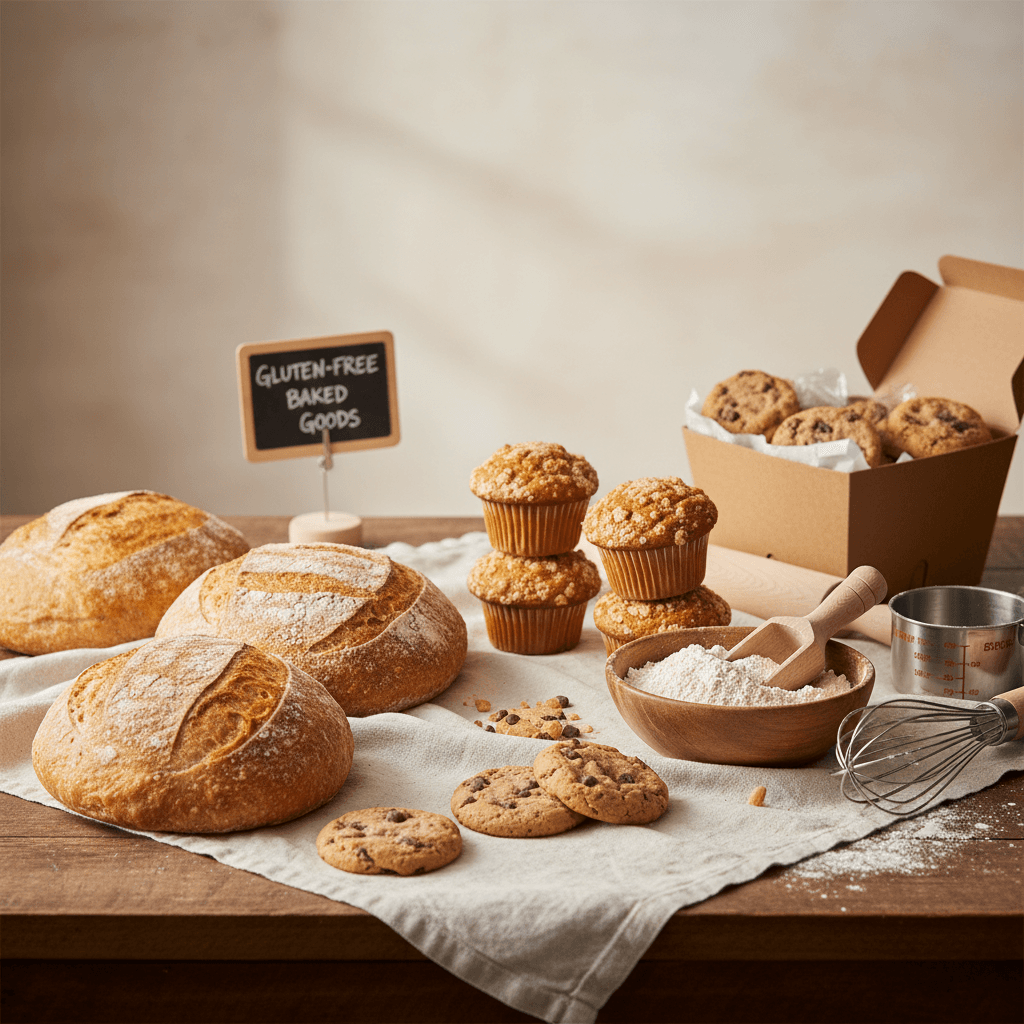
Your first farmers market is not a test run — it's a revenue day with a booth fee already paid. I've watched dozens of home bakers show up with too much product, not enough signage, and zero plan for what happens when the crowd thins at 11 a.m. Here's the exact setup, product mix, and pricing strategy that turns a $35 booth fee into $400+ in sales.
Key takeaways
- Budget $150–$300 for your first market setup, not counting product ingredients — and most of that is reusable for years.
- Bring 3–5 products maximum. A focused table outsells a cluttered one by a wide margin.
- Price in round numbers ($5, $8, $12) and keep most items under $10 for impulse buys.
- Your signage sells more than your samples. A clear price list visible from 10 feet away is non-negotiable.
- Expect 40–60% sell-through your first week. Anything above 75% means you underproduced.
- Collect emails from day one — your market table is a customer acquisition tool, not just a cash register.
How much your first farmers market actually costs
The booth fee is just the start. Most seasonal farmers markets charge $25–$50 per week, though year-round or high-traffic urban markets can run $75–$150. Before you commit, add up the full first-day cost so you know your break-even number.
| Expense | Estimated cost | Notes |
|---|---|---|
| Booth fee | $35 | Typical seasonal market |
| 10x10 canopy tent | $80–$120 | Reusable; skip the $40 ones — they break in wind |
| Folding table (6 ft) | $40 | Borrow if possible |
| Tablecloth + risers | $15–$25 | Linen or fabric, not plastic |
| Signage (banner + price cards) | $30–$50 | Vistaprint or hand-lettered |
| Packaging (bags, boxes, labels) | $25–$40 | Kraft bags with sticker labels work great |
| Cash box + change | $30 in bills/coins | Start with 20 ones, 4 fives, 10 quarters |
| Ingredients for product | $40–$80 | Depends on your menu |
| Total first market | $295–$530 | Most of this is one-time |
After your first market, your recurring weekly cost drops to booth fee + ingredients + packaging — usually $75–$120 total. That means if you sell $250 worth of product, you're netting $130–$175 before your labor. Not amazing, but not bad for 6 hours of work plus bake time, and the customer acquisition value is where the real math gets interesting.
The 3–5 product rule (and why more kills your sales)
Every new market baker wants to bring 12 items. Don't. Rachel, a home baker in Portland, brought 9 products to her first market and sold $180. The next week she cut to 4 items and sold $340 from the same booth. Why? Fewer choices means faster decisions, and faster decisions mean more transactions per hour.
Here's the framework for picking your lineup:
- 1 anchor product — your best seller, the thing people come back for. This should be priced $8–$15 and account for 40% of your table inventory.
- 1–2 impulse items — individually packaged, priced $3–$5. Cookies, muffins, scones. People grab these without thinking.
- 1 premium item — a full loaf, a layer cake by the slice, or a specialty item priced $12–$20. This lifts your average transaction.
- 1 optional sampler or bundle — a "try 3 for $10" deal that moves product and introduces variety.
If you're not sure which products to lead with, validate your home bakery idea before launching by testing at one or two markets before committing to a full season.
How to price for farmers markets specifically
Market pricing is different from custom order pricing. You're competing with impulse spending, not planned purchases. The psychology is simple: people walk markets with $20–$40 in "fun money" and they want to spend it quickly across multiple vendors.
Round numbers only. $5, $8, $10, $12. Not $7.50. Not $4.25. Every time someone has to do math, you lose a sale. I tracked this across 8 markets — switching from $3.50 cookies to $4 cookies (sold in pairs for $7) increased my cookie revenue by 22% despite the higher price.
Here's a sample pricing structure that works for a bread-and-cookies table:
| Product | Cost to make | Market price | Margin |
|---|---|---|---|
| Chocolate chip cookies (3-pack) | $1.80 | $6 | 70% |
| Sourdough loaf | $2.40 | $8 | 70% |
| Cinnamon rolls (2-pack) | $2.10 | $7 | 70% |
| Banana bread (full loaf) | $3.20 | $10 | 68% |
If those margins look high compared to your custom order work, they should. Market sales have zero customization labor, no back-and-forth messaging, and no delivery. That efficiency is the whole point. If you're still figuring out your baseline costs, the cookie pricing framework walks through the full cost calculation.
One contrarian note: I think most market bakers underprice by 15–20% because they're scared of being the expensive table. But the expensive table with good signage and professional packaging almost always outsells the cheap table with plastic wrap and masking tape labels. People at farmers markets expect to pay more than grocery store prices — that's why they're there.
The physical setup that sells for you
Your table layout is a silent salesperson. Here's what matters, in order of impact:
Signage you can read from 10 feet away
A 24x36 inch banner with your bakery name and a clear product/price list is the single highest-ROI item you'll buy. I've watched people walk past beautiful displays because they couldn't tell what was for sale or how much it cost. Print your prices big — at least 1-inch tall lettering. Hand-lettered chalkboard signs work if your handwriting is genuinely good. If it's not, spend $18 on a Vistaprint poster.
Height variation on your table
A flat table is invisible in a market row. Use wooden crates, cake stands, or even upside-down boxes under your tablecloth to create 3 levels. Your anchor product goes at eye level (the highest point). Impulse items go at the front edge where people can grab them.
Packaging that looks finished
Kraft paper bags with a printed label or sticker beat clear cellophane every time. They look intentional, they protect the product, and they give people something to carry that advertises your bakery to every other shopper in the market. Budget $0.15–$0.30 per unit for packaging. It pays for itself.
A way to take cards
Square or another mobile card reader is mandatory. At my markets, 65–70% of transactions are card or tap-to-pay. If you're cash-only, you're leaving a third of your potential revenue on the table. Square charges 2.6% + $0.10 per swipe — on a $300 sales day, that's about $8 in fees. Worth it.
How much product to bring (the math that prevents waste)
This is where first-timers get it wrong in both directions. Bring too much and you're eating $60 in unsold banana bread. Bring too little and you pack up at 10 a.m. with money left on the table.
The formula I use: Estimate foot traffic (ask the market manager — they'll tell you average vendor sales or visitor count). For a market with 500–800 visitors, plan for 40–60 transactions. Your average transaction will be $7–$10 at a baked goods table. That means you need $400–$600 worth of product at retail, expecting to sell 50–70% of it.
For your very first market, I'd bring $350–$400 worth of product at retail prices. Here's why: you'll probably sell 40–60% of it ($140–$240 in revenue), which covers your costs and gives you real data. The unsold product isn't wasted if you planned for it — freeze what you can, give some to neighbors, and adjust quantities for week two.
Marcus, a bread baker in Austin, brought 45 loaves to his first market and sold 19. He was discouraged until he realized those 19 sales gave him the exact data he needed: sourdough outsold whole wheat 3-to-1, the $8 price point moved faster than $10, and Saturday mornings before 9 a.m. were his peak window. By week four, he was bringing 30 loaves and selling 26. That's the trajectory you want.
The checklist: everything you need, nothing you don't
I've refined this over dozens of markets. Print this list the night before.
Non-negotiable items
- Canopy tent with weights (not stakes — most markets are on pavement)
- 6-foot folding table
- Tablecloth (fabric, not plastic)
- Product signage with prices visible from 10 feet
- Bakery name banner or sign
- All products, pre-packaged and labeled per your state cottage food requirements
- Cash box with $30 in small bills and coins
- Card reader (Square, SumUp, etc.)
- Business cards or postcards with your ordering info
- Email signup sheet or QR code to a signup form
- Hand sanitizer and disposable gloves
- Trash bag
Items that increase sales
- Sample tray with toothpicks and small cut pieces (check your market's sampling rules first)
- Risers or crates for table height variation
- A small menu board listing ingredients for allergy questions
- Branded stickers or labels on every package
- A "sold out" sign for items that run out (creates urgency for next week)
Items people bring that don't matter
- Elaborate decorations or fresh flowers — they take up selling space
- A full portfolio of your custom work — save that for Instagram
- More than 5 products — edit ruthlessly
- Fancy packaging that costs more than $0.40 per unit — diminishing returns
Collecting emails is worth more than any single sale
Here's the thing most bakers miss: a $6 cookie sale is worth $6. An email address from a customer who loved those cookies is worth $50–$200 over the next year in custom orders, holiday orders, and referrals. Every single market, you should be collecting emails.
The simplest method: a clipboard with a signup sheet that says "Get first access to holiday pre-orders and new flavors." That's it. No tablet needed, no complicated tech. After the market, enter those emails into your list. If you want to actually turn those emails into orders, email marketing for home bakers covers the full system.
Tina, a cookie baker in Nashville, collected 23 emails at her first market. By December, 9 of those people had placed holiday cookie orders averaging $45 each. That's $405 in revenue from a clipboard and a pen.
What to do when sales are slow (and they will be)
Your first market will have a slow stretch. Maybe it's 10:30–11:15 a.m. when the early crowd has passed and the late crowd hasn't arrived. Don't stand behind your table looking at your phone. That's the fastest way to signal "don't approach me."
Instead:
- Stand in front of or beside your table, not behind it. This one change can increase engagement by 30–40%.
- Offer samples proactively. "Would you like to try our brown butter chocolate chip cookie?" converts at roughly 1 in 3.
- Talk to neighboring vendors. They become referral sources and they'll send customers your way if they like you.
- Rearrange your display. Move your best-selling item to the front. Swap positions. A fresh layout catches returning browsers.
If your first few markets consistently underperform, the problem might be deeper than your booth setup. This diagnostic on why orders aren't coming in covers the five foundation gaps that trip up most home bakers.
After the market: the 30-minute debrief that makes week two profitable
Before you even unload your car, write down these numbers:
- Total revenue
- Number of transactions
- Which product sold out first and at what time
- Which product had the most left over
- How many emails you collected
- How many people asked for something you didn't have
That last one is gold. If 6 people asked "do you have anything nut-free?" or "do you sell bread?" — that's your market telling you what to bring next week. The bakers who treat each market as a data collection event are the ones who hit $500+ weeks by month two.
Use this data to adjust your product mix, quantities, and pricing. If your prices feel too low and everything sold out by 10 a.m., raise them $1–$2 next week. If your premium item barely moved, consider dropping it for another impulse-priced item.
Should you even do farmers markets? A decision framework
Farmers markets aren't right for every home baker. Here's when they make sense and when they don't:
Markets are a strong fit if:
- You bake items that sell well pre-packaged (cookies, bread, muffins, scones, brownies)
- You want to build a local customer base for custom orders and referrals
- You can commit to at least 6–8 consecutive weeks (consistency builds a following)
- Your cottage food law allows market sales (most do, but check)
Markets are a poor fit if:
- Your specialty is highly custom work (decorated cookies, tiered cakes) that can't be pre-made
- You can't commit to a regular weekly schedule
- The available markets in your area charge over $75/week and have low foot traffic
- You already have more orders than you can handle — your time is better spent fulfilling them
If you're on the fence, try a single-day pop-up or bake sale first to test your products and setup without committing to a full season.
Frequently asked questions
How much money can you make at a farmers market as a baker?
Most new bakers gross $150–$300 their first market and $300–$600 per market by month two or three. Experienced market bakers in high-traffic locations regularly hit $600–$1,000 per market day. Your net profit after booth fees, ingredients, and packaging is typically 40–55% of gross revenue, so a $400 sales day nets you roughly $160–$220 before labor.
Do I need a cottage food license to sell at a farmers market?
In most U.S. states, yes — you need to operate under your state's cottage food law, which typically requires registration or a permit (often $25–$75) and has rules about labeling, allowed products, and annual revenue caps. Some markets also require proof of a food handler's certificate or liability insurance. Contact your market manager before applying — they'll tell you exactly what paperwork they need.
What baked goods sell best at farmers markets?
Cookies, quick breads (banana bread, zucchini bread), muffins, and sourdough loaves consistently outsell other categories at markets. Items priced $5–$8 that are individually packaged and easy to carry tend to move fastest. Seasonal items — pumpkin bread in fall, lemon bars in summer — outperform year-round staples by 20–30% during their peak months.
How many items should I bring to my first farmers market?
Bring 3–5 products, not more. A focused selection with clear signage outsells a cluttered table every time. Choose one anchor product, one or two impulse items under $6, and one premium item. You can expand your lineup after you have 3–4 weeks of sales data telling you what your specific market wants.
Is it worth doing a farmers market if I already sell through Instagram?
Yes, but for a different reason than you might think. Markets are a customer acquisition channel, not just a sales channel. The emails you collect and the face-to-face relationships you build convert into consistent weekly orders, custom requests, and word-of-mouth referrals that social media alone struggles to generate. Many bakers find that their best custom order clients originally found them at a market.

Written by
Co-founder, BakingSubs
Co-founder of BakingSubs, where he turns the science of ingredient substitutions into tested, reliable guidance for home bakers.
Related Posts
Bakery Recipe Cost Sheet: How to Cost a Recipe in 6 Steps (With a Table You Can Copy)
Home Bakery Order Form Template: A Copy-Paste Layout That Cuts Mistakes by Half
Cottage Food Label Requirements and Template: What Every State Demands (With a Copy-Paste Layout)
Bake with Confidence
See all
Confident Gluten-Free Baker Toolkit
The science-based system that replaces gluten's seven invisible jobs so your baking turns out soft, fluffy, and foolproof — every time.

Gluten-Free Recipe Vault
Instant access to our complete library of proven gluten-free recipes — no waiting, no guesswork, just results that work tonight.

Fix Your Gluten-Free Bread
Learn the 3-step formula to make bread rise and stay soft, discover why your loaves collapse, and get a tested sandwich bread recipe that actually works.